The Dynasties of the Caesars
From Julius Caesar to Elagabalus — two and a half centuries of Roman emperors, told as four family trees. Blood, adoption, and murder pass the purple from one house to the next.
The Julio-Claudians
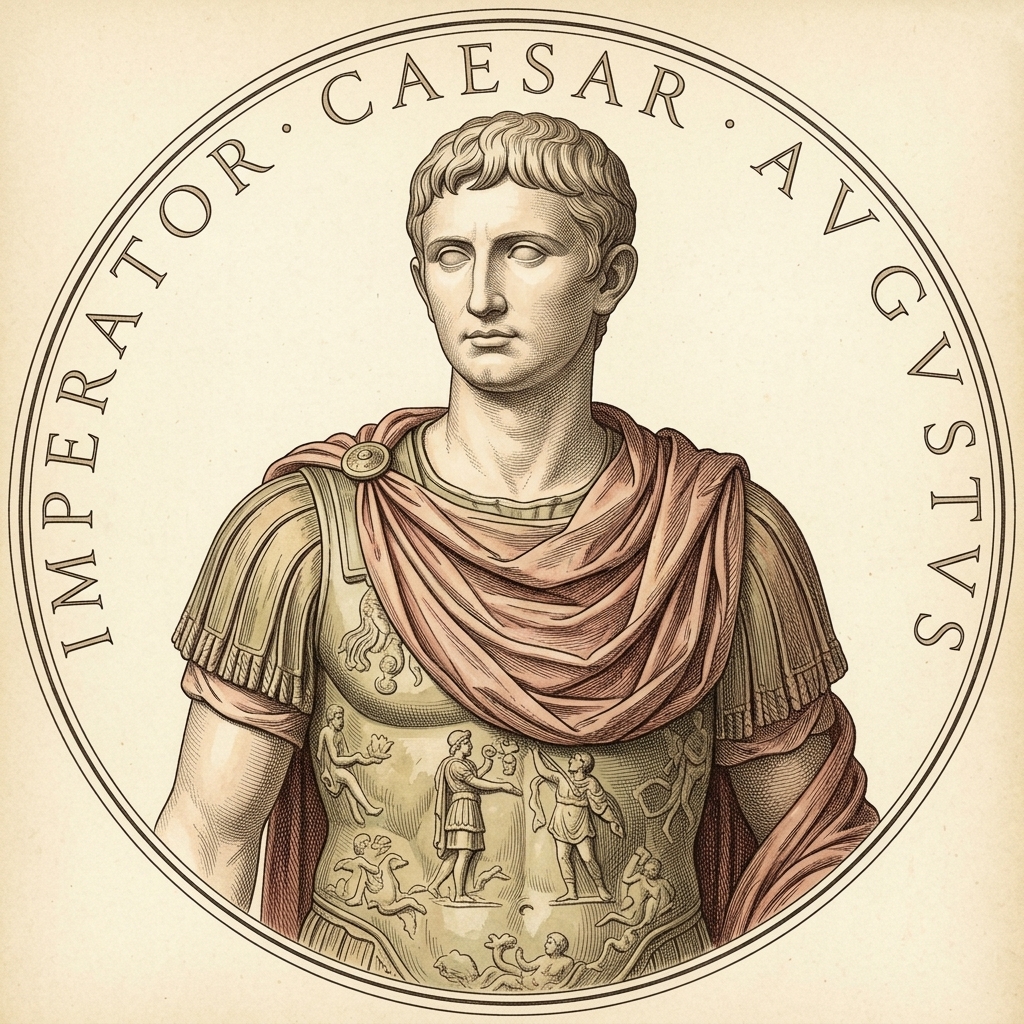
The first imperial dynasty was really two Roman families spliced together by marriage: the Julians of Caesar and Augustus, and the Claudians of Augustus's wife Livia. Because Augustus had no surviving son, the succession ran sideways and through the women — his daughter Julia, his sister Octavia, and Livia — until it reached the great-grandsons who became Caligula and Nero.
Every emperor after Augustus reached the throne by adoption or marriage rather than simple descent, and almost every link in the chain was sealed or broken by a killing. The line ran out of Caesars when Nero, cornered, took his own life in A.D. 68.
The Flavians
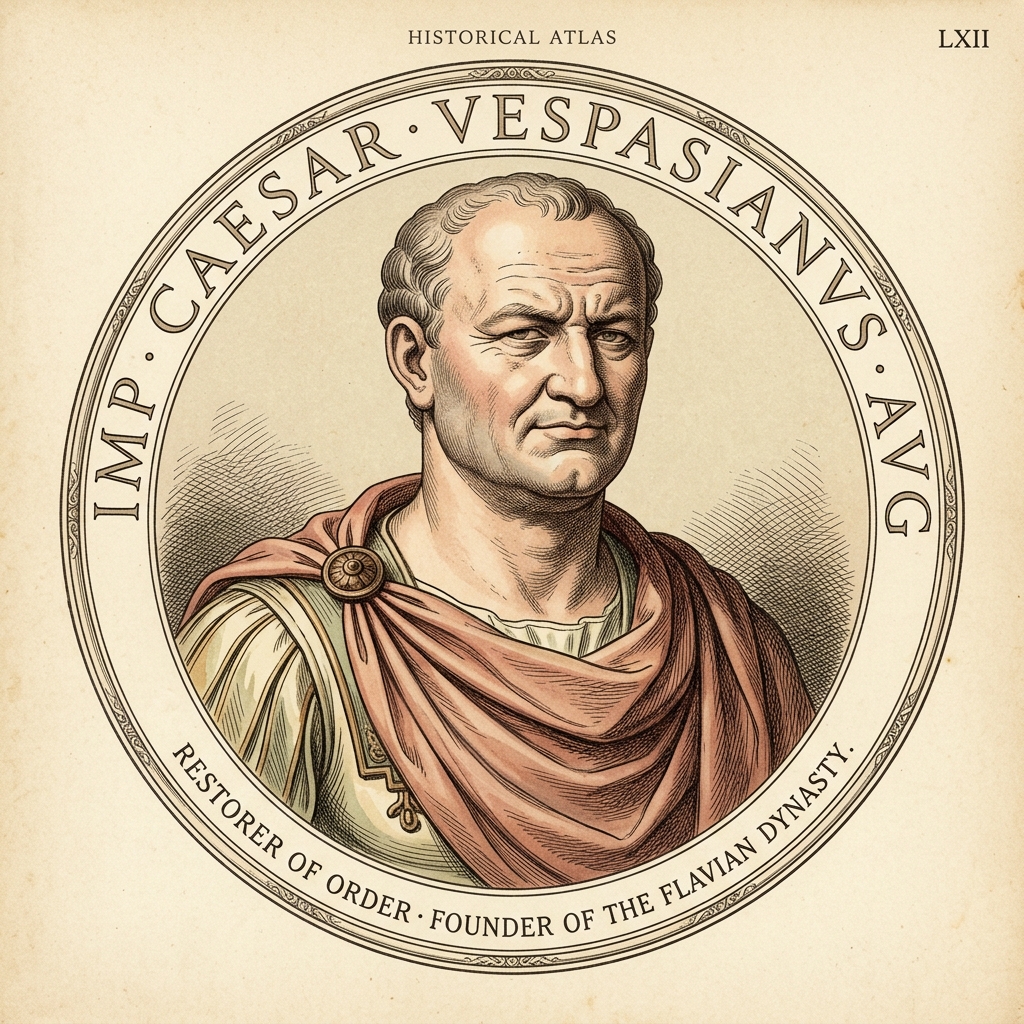
Nero's fall opened the Year of the Four Emperors — Galba, Otho and Vitellius rising and falling in months — until the general Vespasian won the throne and founded a short, stable dynasty of three: himself and his sons Titus and Domitian. It ended abruptly with Domitian's assassination in 96.
The Nerva–Antonine emperors
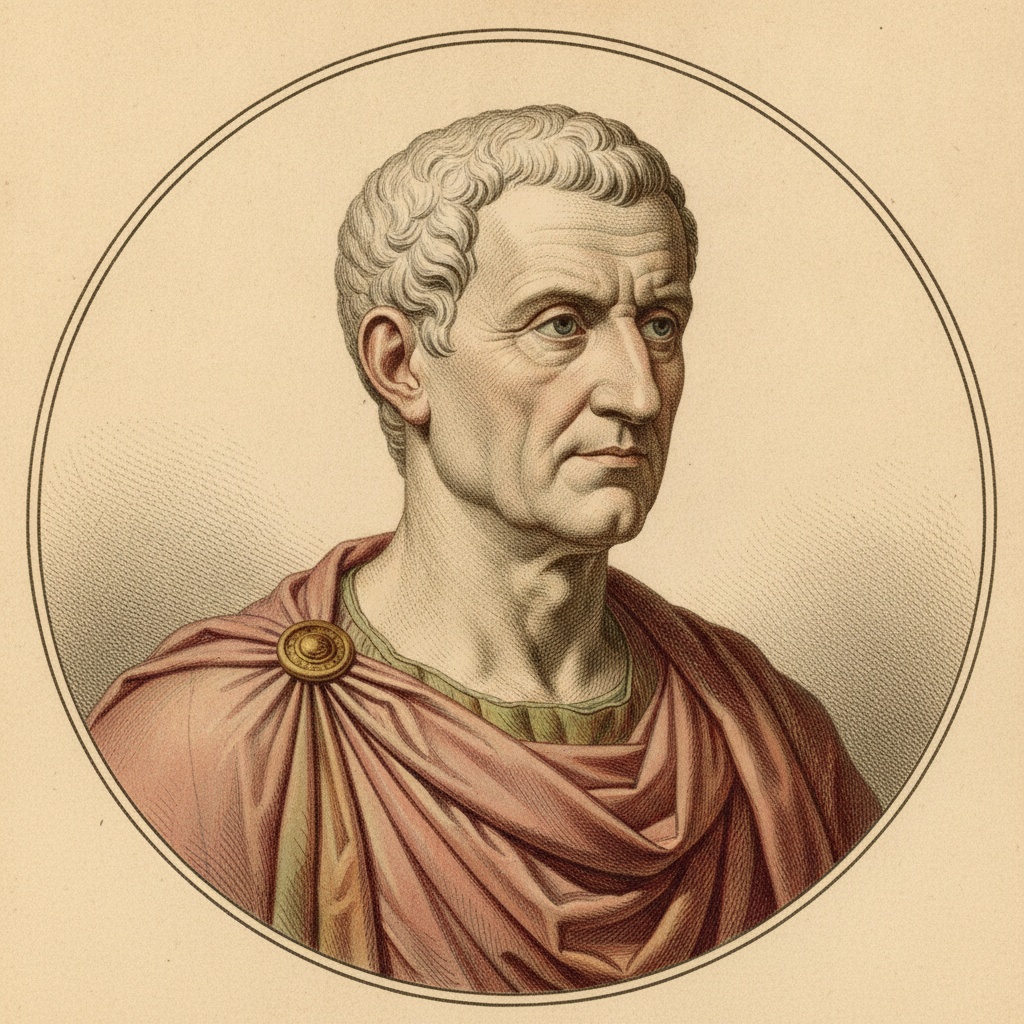
For most of a century the empire was handed on not to sons but to chosen heirs. Nerva adopted Trajan, who adopted Hadrian, who adopted Antoninus Pius, who in turn raised Marcus Aurelius — each match reinforced by marriage into the family. The system produced the "Five Good Emperors" and the high-water mark of Roman peace, and it broke the moment Marcus left the throne to his own son, Commodus.
The Severans
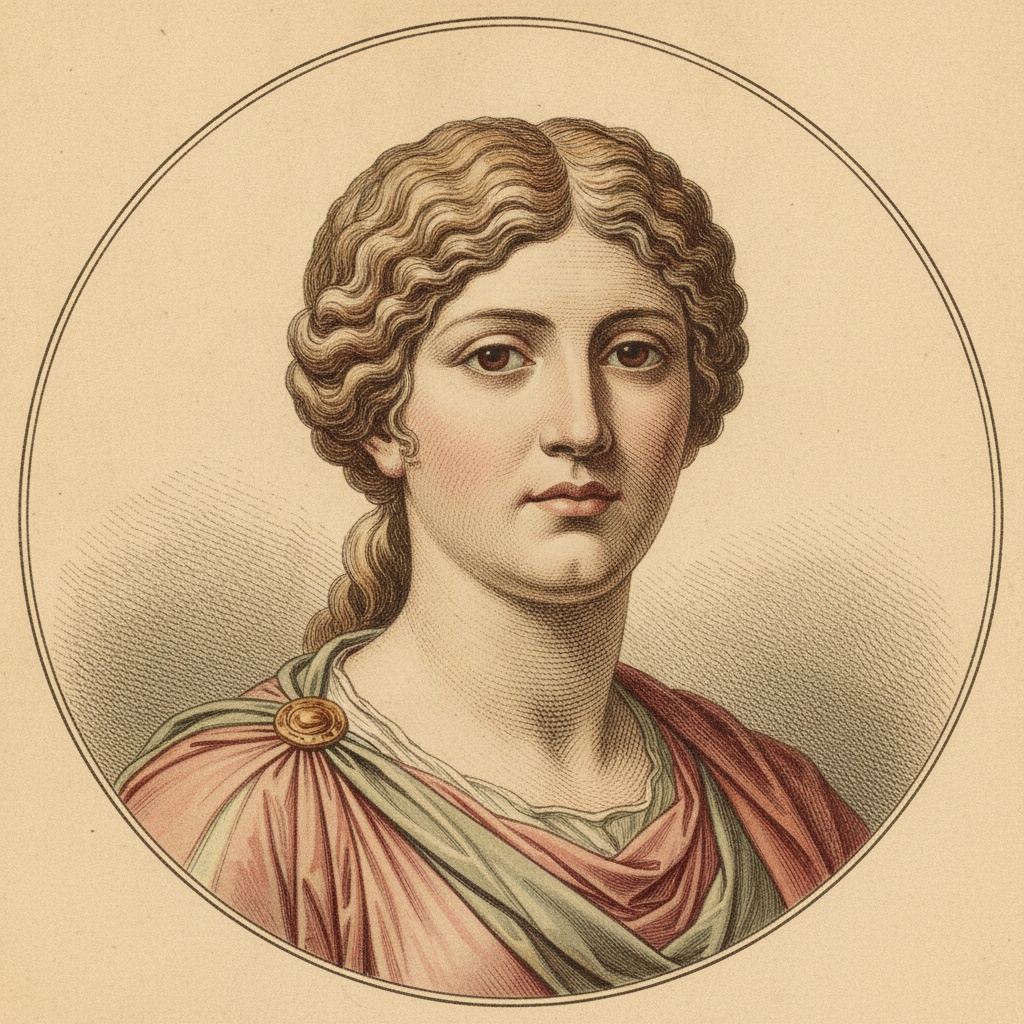
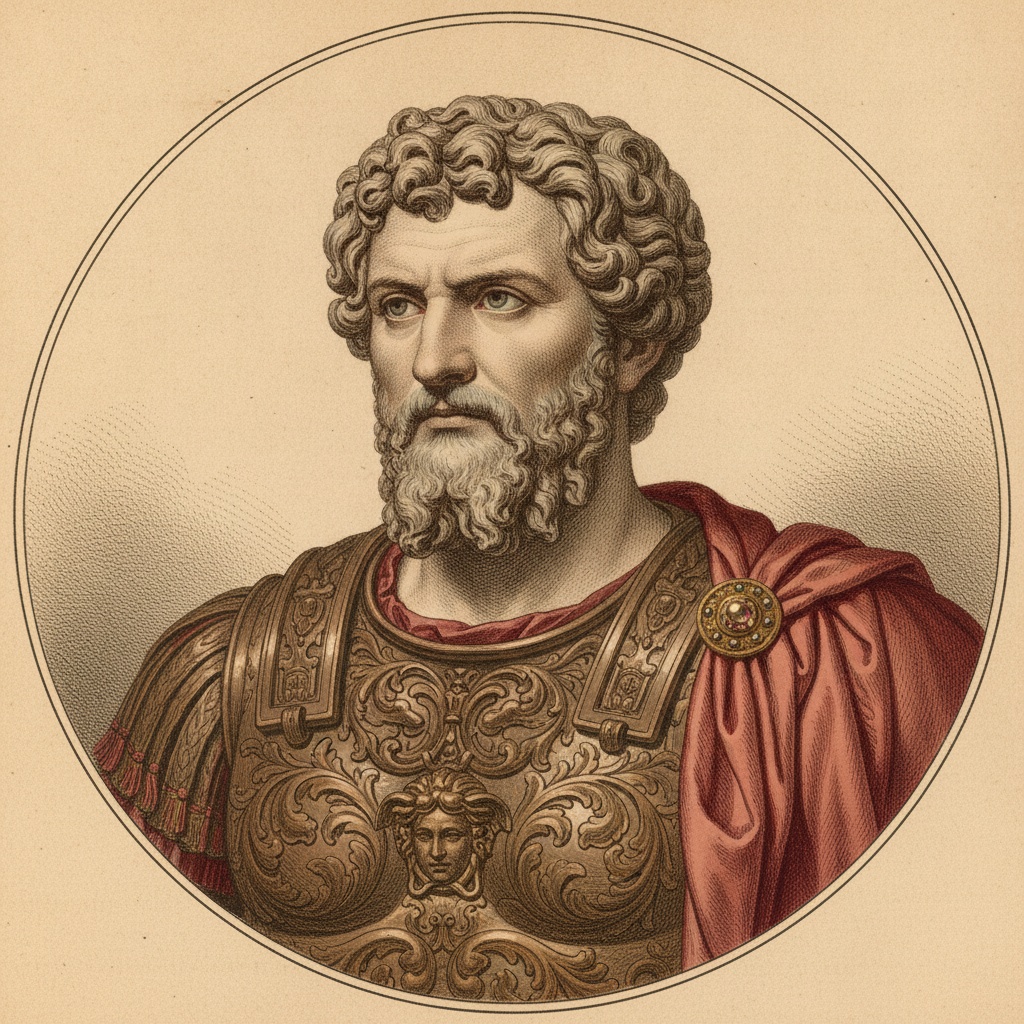
After a second year of civil war the African general Septimius Severus took the throne and married Julia Domna of Emesa in Syria. It was her family — above all her sister Julia Maesa and Maesa's daughters — who held the dynasty together, engineering the accession of the boy-priest Elagabalus and, after him, Severus Alexander.
The Blood Price of the Purple
To wear the purple in Rome after Marcus Aurelius was not to assume a throne; it was to paint a target upon one’s back in imperial scarlet. Between the assassination of Commodus on New Year’s Eve 192 and the quiet deposition of Romulus Augustulus in 476, more than seventy men claimed the title of Augustus or Caesar. Fewer than one in five died in their beds of natural causes. The rest were strangled in baths, butchered in palace latrines, lynched by mutinous legionaries, poisoned by relatives, felled by lightning, flayed by Persian kings, or hunted through bogs.
The statistical occupational mortality of an emperor exceeded that of a front-line auxiliary infantryman. Power was absolute, but legitimacy was zero: because the Principate had originated as an improvised sham republic rather than a sacred hereditary monarchy, any general with three legions and a sack of gold could claim the throne, while any legionary could decide that the bounty for murdering his commander exceeded the wages of loyalty. The result was a grotesque parade of cruelty, irony, and breathtaking brevity—men who bought the civilized world at auction only to be decapitated in sixty days, boys who reigned for three weeks, and dynasts who butchered their own kin in their mothers' arms.
1. The Auction and the Knives (A.D. 192–197)
Believed he was Hercules re-incarnate, fought in the amphitheatre with wooden clubs, and renamed Rome Colonia Commodiana. On New Year’s Eve 192, having drafted a list to execute his mistress Marcia and his chamberlain, Marcia poisoned his wine. When the robust athlete vomited the drug up, his conspirators sent in his personal wrestling partner, a freedman named Narcissus, who strangled the thirty-one-year-old emperor naked in his bath.
A distinguished, sixty-six-year-old senator and son of an ex-slave, Pertinax attempted to balance the depleted state treasury and enforce military discipline. Eighty-six days into his reign, three hundred mutinous Praetorian Guardsmen stormed the Palatine palace; Pertinax refused to flee, stepped forward to reason with them, and was run through with a spear. His severed head was carried through Rome on a pike to their camp.
The ultimate commercial irony of antiquity: following Pertinax’s murder, the Praetorian Guard climbed onto the ramparts of their camp and literally auctioned the Roman Empire to the highest bidder. Julianus outbid his rival by offering 25,000 sesterces per soldier. Sixty-six days later, as Septimius Severus approached Rome with the Danube legions, the terrified Senate declared Julianus a public enemy. An assassin dispatched to the palace found the millionaire emperor cowering in a deserted private bathroom, weeping his bewildered final words: “What evil have I done? Whom have I killed?” He was decapitated on the spot.
Severus hunted down his competitors with savage efficiency. Niger, acclaimed in the East, was defeated at Issus (194), caught fleeing toward Parthia, and beheaded; his head was paraded on a lance at Byzantium. Albinus, who controlled Britain and Gaul, was crushed in 197 at Lugdunum (Lyon) in a battle of 150,000 Romans. Cornered in a cellar, Albinus stabbed himself; Severus stripped the corpse, rode his warhorse repeatedly back and forth across the body, severed the head to send to Rome, and threw the mangled torso into the river Rhône alongside the slaughtered bodies of Albinus’s wife and children.
2. The Severan Slaughterhouse (A.D. 211–235)
Septimius Severus died in York with the famous advice to his sons: “Agree with each other, enrich the soldiers, and despise all others.” His elder son Caracalla ignored the first instruction. Feigning a reconciliation conference in the private apartments of their mother, Julia Domna, Caracalla signalled centurions who burst through the doors and hacked twenty-two-year-old Geta to death as he clung to his mother’s neck, soaking her face and clothing in his blood.
A brutal tyrant who massacred thousands of citizens in Alexandria for staging a satirical play at his expense. In April 217, while journeying from Edessa to Carrhae in Mesopotamia, Caracalla dismounted by the roadside to relieve his bowels. A disgruntled bodyguard named Julius Martialis, resentful over having been passed over for promotion to centurion, stepped behind the squatting emperor and drove a dagger into his back.
The praetorian prefect who arranged Caracalla’s murder. Overthrown after fourteen months when Julia Maesa bribed the legions to support her grandson. Macrinus shaved his head and beard, dressed as a courier, and fled across Asia Minor; intercepted at Chalcedon when he sent a servant for money, he was dragged back and beheaded by a centurion.
The fourteen-year-old Syrian sun-priest whose transvestite palace marriages and religious excesses scandalized Rome. When his grandmother Julia Maesa transferred her support to his cousin Severus Alexander, Elagabalus attempted to assassinate him. The Praetorians revolted, cornering Elagabalus and his mother Julia Soaemias in a palace latrine. Both were butchered; Elagabalus’s corpse was stripped, dragged through the streets of Rome, jammed into a sewer drain that proved too narrow, and finally hurled with a heavy stone tied to his torso into the yellow mud of the Tiber.
A mild, cultured youth dominated entirely by his mother Julia Mamaea. Confronting Germanic raiders near Mogontiacum (Mainz), Alexander attempted to negotiate peace and pay subsidies rather than launch an assault. Contemptuous of an emperor governed by a woman’s apron-strings, the legionaries mutinied and proclaimed the giant soldier Maximinus Thrax. Centurions broke into the imperial tent and slaughtered the twenty-six-year-old emperor and his mother in each other’s arms.
3. The Barracks Abyss: Two-Week Emperors and Stuffed Skins (A.D. 235–270)
An eight-foot-tall Thracian peasant who never set foot in Rome during his reign, financing continuous frontier warfare by looting temples and municipal treasuries. When the Senate revolted, Maximinus marched into Italy and was stopped by the resolute defense of Aquileia. Starving and exhausted, his own soldiers mutinied in the midday heat, murdered Maximinus and his young son in their tent, cut off their heads, and sent them to Rome in a leather saddlebag.
The shortest joint reign in Roman history. Acclaimed in Africa against Maximinus, the eighty-year-old scholar Gordian I appointed his son Gordian II as co-Augustus. Gordian II was killed outside Carthage fighting the third legion under Capelianus; upon hearing the news, eighty-year-old Gordian I locked himself in his bedchamber and hanged himself with his silken belt. Their entire imperial reign lasted exactly twenty-one days.
Two aristocratic senators chosen jointly by the Senate to succeed the fallen Gordians. They loathed and distrusted each other from the day of their accession. While arguing furiously in the Palatine palace over whether German bodyguards were loyal, the Praetorians broke through the gates, stripped both elderly magistrates naked, dragged them bleeding through the streets, mocked them, and hacked them to death.
Elevated at age thirteen to appease the Roman plebs. Campaigned against Shapur I of Persia; died under mysterious circumstances at nineteen near Circesium—either killed in battle or, as Roman historians insisted, starved and murdered on the orders of his praetorian prefect, Philip the Arab.
Celebrated Rome’s one-thousandth birthday in 248 with magnificent secular games and gladiatorial spectacles. The next year, defeated in battle near Verona by Decius; Philip was either killed in the fighting or assassinated by his troops, his head split open through the teeth, while his eleven-year-old son was murdered in Rome by the Praetorians.
Staunch conservative who launched the first empire-wide persecution of Christians. Confronting the Goths at Abrittus in modern Bulgaria, his son Herennius was shot through the heart with an arrow before his eyes. Decius cried to his weeping soldiers that “the loss of one man is of small account to the Republic,” and led the charge into a treacherous quagmire. Surrounded in the marshland, the Roman army was annihilated; Decius’s body was swallowed by the mud and never found—the first Roman Augustus to die at the hands of a foreign enemy.
Decius’s surviving younger son, elevated alongside Trebonianus Gallus. Spared the sword of the Goths only to succumb four months later in Rome to the catastrophic Plague of Cyprian.
Father and son. Marched north from Rome to confront the rebel governor Aemilianus; when their soldiers observed the superior numbers and discipline of Aemilianus’s Danube legions, they decided civil war was unprofitable, murdered both emperors at Interamna (Terni), and went over to the rebel for his cash bounty.
Acclaimed after defeating Goths on the Danube. No sooner had he entered Rome and received senatorial recognition than Valerian marched down from the Rhine with an overwhelming army. Aemilianus’s troops, executing the exact same calculation they had performed three months earlier, murdered Aemilianus near Spoleto to claim Valerian’s pay.
A ghost of the imperial ledger. Known almost entirely from two surviving silver antoniniani coins. Seized control of the mint in Rome during the chaotic weeks between Aemilianus’s murder and Valerian’s arrival; quietly liquidated by Valerian’s advance guard after a reign of barely fourteen days.
The most humiliating catastrophe in imperial history. Besieged by plague at Edessa, Valerian entered personal negotiations with Shapur I of Persia and was treacherously seized. Valerian spent his remaining years in Persian captivity, forced to crouch on all fours so Shapur could step on his back to mount his horse. When he died, the Persians flayed his skin, dyed it scarlet with vermilion, stuffed it with straw, and hung the grotesque humanoid effigy from the rafters of a Zoroastrian temple as a permanent monument to Roman defeat.
Valerian’s resilient son, who preserved the central empire while Britain, Gaul, and Palmyra broke away. While besieging the rebel general Aureolus at Mediolanum (Milan), his senior Illyrian commanders—including the future emperors Claudius Gothicus and Aurelian—staged a false night alarm shouting that the enemy was sallying; when Gallienus rushed unarmed from his tent, he was cut down in the dark by his own staff officers.
Brother of Claudius Gothicus, recognized by the Senate at Rome. When the battle-hardened Danube legions proclaimed Aurelian, Quintillus realized his position was hopeless. Deserted by his guards, he opened his veins in a warm bath, his reign ending after barely two to three weeks.
4. The Ill-Fated Restorers (A.D. 275–285)
Restitutor Orbis (“Restorer of the World”), who reunited the broken empire and built Rome’s colossal brick walls. Murdered through a petty clerk's panic: his private secretary Eros, caught in extortion, forged an imperial execution list containing the names of Aurelian’s top generals and showed it to them. Convinced they were marked for death by their notoriously severe master, the officers ambushed Aurelian at Caenophrurium in Thrace and ran him through. Discovering the forgery, the horrified assassins wept, buried him with imperial honours, and fed the secretary to wild beasts.
A seventy-five-year-old senator chosen by the army in a rare burst of constitutional deference. Campaigned in Asia Minor; died after six months in Cappadocia—either broken by the harsh climate and military exhaustion, or murdered by mutinous troops following the assassination of his kinsman Maximinus.
Half-brother of Tacitus, who seized the purple without waiting for Senate or legionary consensus. When the eastern armies acclaimed Probus, Florianus’s soldiers in Cilicia decided a civil war in the summer heat was inconvenient, mutinied at Tarsus, and murdered Florianus after fewer than eighty-eight days.
A brilliant general who cleared Gaul and Germany of invaders. In peacetime, Probus put his soldiers to civil labour, using legionaries to drain the malarial swamps around his hometown of Sirmium and plant vineyards. Enraged at being treated as manual labourers in the scorching summer heat, the soldiers mutinied, pursued the fleeing emperor into an iron-plated watchtower, and hacked him to death.
Campaged deep into Persia, sacking Seleucia and Ctesiphon. In July 283, during a violent thunderstorm on the banks of the Tigris, Carus died inside his imperial tent. Officially, he was incinerated by a direct strike of divine lightning; in reality, his praetorian prefect Arrius Aper was widely suspected of having smothered or stabbed him under cover of the thunder.
Carus’s younger son, returning from Persia with the army. Suffering from a severe eye inflammation, the young emperor travelled in a closed, curtained carriage. After several days of marching through Asia Minor, soldiers noticed a sickening stench of putrefaction seeping from the vehicle; tearing back the curtains, they discovered Numerian had been dead and rotting for days, secretly murdered by his father-in-law Aper, who had continued issuing orders in his name.
Carus’s elder son, notorious for cruelty and serial debauchery. At the Battle of the Margus against Diocletian in 285, Carinus’s army was winning the day when an aristocratic military tribune whose wife Carinus had seduced slipped behind the emperor’s battle line and drove a dagger into his throat.
5. The Christian Monarchy: Rafters, Worms, and Apoplexy (A.D. 305–364)
Diocletian’s co-ruler. Forced to abdicate in 305, he could not bear private life. Rebelled against his son Maxentius, then conspired against his son-in-law Constantine. Captured at Marseilles after attempting to murder Constantine in his bed, Constantine offered him the choice of death; Maximian hanged himself with a rope from the palace rafters.
The fiercest champion of the Great Persecution against Christians. In 311, struck down by an agonizing, rotting cancer of the bowels and gangrene; Christian chroniclers recounted with grim satisfaction that his lower organs turned to liquid putrefaction, infested with swarms of living maggots, before he issued a deathbed edict of toleration.
Elevated to Western Augustus by Galerius. Besieged in Ravenna by Maximian, Severus surrendered under solemn oath that his life would be spared. Maximian paraded him as a captive to Rome, locked him in a cell at Tres Tabernae, and ordered his veins severed.
Master of Rome. Defeated by Constantine at the Milvian Bridge in October 312. In the panic-stricken flight across a temporary bridge of boats, Maxentius was shoved by terrified cavalry into the Tiber; dragged to the riverbed by the weight of his gilded iron cuirass, he drowned in the mud. His body was dragged out the next day, decapitated, and his head carried on a pike into Rome.
Defeated in civil war by Licinius; fled across the Taurus mountains disguised as a domestic slave. Cornered at Tarsus, Daza drank poison; the lethal concoction burned through his stomach, scorched his optic nerves, and blinded him. He thrashed on the ground for four days in delirium, beating his head against the stone floor, before expiring.
Constantine’s brother-in-law and co-ruler. Defeated at Adrianople and Chrysopolis in 324. Surrendered after his wife Constantia pleaded for his life, Constantine swearing an oath to spare him. Interned at Thessalonica, Constantine had him quietly hanged from the fortress walls six months later on trumped-up charges of treason.
Constantine the Great’s eldest son. Invaded Italy to wrest territory from his younger brother Constans. While marching through forested country near Aquileia, ambushed by Constans’s vanguard; Constantine was run through with javelins, and his body was tossed into the murky current of the river Alsa.
Overthrown by the Frankish general Magnentius. Fleeing toward Spain, Constans sought sanctuary in a church at Castrum Helenae in the Pyrenees; dragged from the altar by Magnentius’s cavalry officers, he was murdered on the chapel steps.
The barbarian usurper who slew Constans. Defeated by Constantius II at Mursa Major in Pannonia in antiquity's most devastating civil slaughter (fifty-four thousand soldiers killed). Cornered at Lugdunum (Lyon) two years later, Magnentius drew his sword and threw himself onto the blade.
The philosopher-emperor who sought to dismantle Christianity and revive pagan Hellenism. Invaded Persia with sixty-five thousand men, reaching Ctesiphon. During a fighting retreat through the burning Mesopotamian summer, Julian rushed into the fray without his cuirass to rally his cavalry; a flying cavalry spear struck him through the ribs, piercing his liver and intestines. He died in his tent at thirty-one, debating the nature of the soul with his philosophers.
Elected on the Persian battlefield to save the army. Conceded five provinces to Persia to buy a safe retreat. Eight months later, halting at Dadastana on the Galatian border, Jovian went to sleep in a freshly plastered bedroom warmed by a brazier of burning charcoal; he was found dead the next morning, suffocated in his sleep by carbon monoxide fumes.
Fierce, brutal soldier-emperor who fortified the Rhine and Danube. In November 375, at Brigetio in Pannonia, received an embassy of barbarian Quadi. Outraged at their insolent excuses, Valentinian flew into such a blind, uncontrollable apoplectic fury that a blood vessel burst in his brain; he collapsed, vomiting blood and choking on his own tongue, and died within hours.
Valentinian’s brother, ruling the East. Refused to wait for his nephew Gratian and attacked the Visigoths at Adrianople in August 378. The Roman cavalry fled, and two-thirds of the field army was massacred. Valens, struck by an arrow, was carried by his bodyguards into a two-storey peasant cottage; the pursuing Goths piled brushwood around the timber walls and set it ablaze, burning the Emperor of the Romans alive.
6. The Puppet Emperors and the Sacks of Rome (A.D. 383–455)
Valentinian I’s cultured son. Deserted by his troops outside Paris in favour of the British usurper Magnus Maximus. Fled toward Italy; intercepted at Lugdunum (Lyon) by Maximus’s general Andragathius, who invited him to a banquet under pledge of safety and murdered him at the dining table.
Spanish-born usurper from Britain who ruled Gaul and Spain. Invaded Italy; crushed by Theodosius I at Siscia and Poetovio. Besieged in Aquileia, Maximus was dragged before Theodosius, stripped of his purple robes and diadem, and beheaded by the soldiers.
Twenty-one-year-old figurehead confined as a virtual prisoner in his palace at Vienne by his Frankish master-of-soldiers Arbogast. When Valentinian handed Arbogast a letter dismissing him, the barbarian general tore it to shreds in his face. Days later, Valentinian was found hanging dead from his bed canopy by a silken cord—murdered by Arbogast, or driven to suicide in humiliation.
A Christian grammar-teacher elevated by Arbogast as a puppet ruler. Defeated by Theodosius I at the Battle of the Frigidus in 394 when a sudden fierce Alpine wind (the Bora) blew the usurper's arrows back into his own men. Captured and beheaded on the field; Arbogast fled into the mountains and fell on his sword.
Senior palace civil servant who usurped the Western throne at Ravenna upon the death of Honorius. Betrayed by his garrison to Eastern Roman cavalry; his right hand was amputated, he was tied backward onto a donkey, paraded around the hippodrome of Aquileia to the mockery of the populace, and decapitated.
Weak, suspicious ruler who in 454 personally stabbed his supreme general, Flavius Aetius (the victor over Attila), to death in the palace with a sword. A courtier famously observed: “You have cut off your right hand with your left.” Six months later, while watching archery practice on the Campus Martius in Rome, two barbarian retainers of Aetius stepped from the crowd and plunged daggers into Valentinian's skull and groin in broad daylight, while his imperial guards stood by and watched.
Orchestrated Valentinian III’s murder and forced the widowed empress Licinia Eudoxia to marry him. Seventy-seven days into his reign, Gaiseric’s Vandal fleet was sighted sailing up the Tiber. Maximus panicked and attempted to gallop out of Rome alone; an enraged mob recognized him, pelted him with paving stones, dragged him from his horse, tore his body into pieces, and threw the bloody remnants into the river.
7. The Shadow Emperors and the Final Irony (A.D. 455–476)
Gallic aristocrat elevated by the Visigoths. Deposed by the barbarian generalissimo Flavius Ricimer at Piacenza; forced to resign the purple and consecrated Bishop of Piacenza; died within months, strangled or starved while fleeing toward sanctuary in the Alps.
The last heroic figure of the Western empire, who mounted campaigns to recover Spain and Gaul from barbarian kings. Returning to Italy after his fleet was betrayed at Alicante, he was ambushed near Tortona by Ricimer, stripped of his purple and diadem, tortured for five days, and beheaded on the bank of the river Iria.
An obscure Lucanian senator appointed by Ricimer as an empty figurehead; unrecognized by Constantinople or Gaul; died quietly in Rome in 465, widely recorded as having been poisoned by Ricimer when his master grew weary of him.
Distinguished Eastern patrician sent by Constantinople to restore the West. Quarrelled with Ricimer, who besieged him in Rome for five months. Disguising himself in rags, Anthemius hid among the destitute in the church of Santa Maria in Trastevere; discovered by Ricimer’s nephew Gundobad, he was dragged from the altar and beheaded on the church threshold.
Roman senator and son-in-law of Valentinian III, installed by Ricimer during the siege of Rome. Died six months later of severe dropsy (edema), having accomplished nothing.
Palace commander proclaimed at Ravenna by the Burgundian prince Gundobad. When Julius Nepos landed with Eastern legions at Ostia, Glycerius surrendered without resistance; spared his life, he was stripped of the purple and consecrated Bishop of Salona in Dalmatia.
The last legally recognized Western emperor. Driven out of Italy in 475 by his barbarian master-of-soldiers Orestes; fled across the Adriatic to Dalmatia, where he claimed the title in exile until 480, when he was assassinated in his country villa near Salona by his own retainers, reportedly with the connivance of the former emperor Glycerius.
The sixteen-year-old son of Orestes, carrying the mocking diminutive Augustulus (“little Augustus”). In September 476, the Scirian chieftain Odoacer executed Orestes, captured Ravenna, and formally deposed the boy. And here Roman history delivered its supreme, gentle irony: struck by his youth and handsome countenance, Odoacer refused to slaughter the last Caesar of the West. He granted the boy an annual pension of six thousand gold solidi and sent him with his family to live at the Castellum Lucullanum—the luxurious seaside palace on the Bay of Naples built five centuries earlier by Lucullus, the conqueror of the East. There, in quiet comfort while barbarian kings divided the provinces and the Senate sent the imperial ornaments to Constantinople, the last Augustus tended his gardens in peace and faded into obscurity—the only Western emperor of his century to escape the knife.
The end of dynasty
With the murder of Severus Alexander in 235 the last dynasty of the early empire failed, and Rome fell into the fifty-year emergency of the third-century crisis — a churn of soldier-emperors, invasion and near-collapse, until Aurelian and then Diocletian rebuilt the state on new foundations. That is where the next chapter begins.
Four dynasties, thirty-odd emperors, and a single throne passed by blood, adoption, and the knife — from Caesar to the boy-priest Elagabalus.