Era VI · Byzantium and Islam

Belisarius Restores the West

From Constantinople, Justinian sends a young general and a small army to win back the lost Roman West — and, for a moment, they do.

A.D. 533–540  ·  Africa, Sicily, and Italy
After Procopius, who was there. A map study — the campaign is told on the interactive map below; the fuller narrative essay is in preparation.
✦   ❧   ✦
Scroll to begin ↓
A.D. 533 · Justinian looks west

A small army wins back Africa and Italy

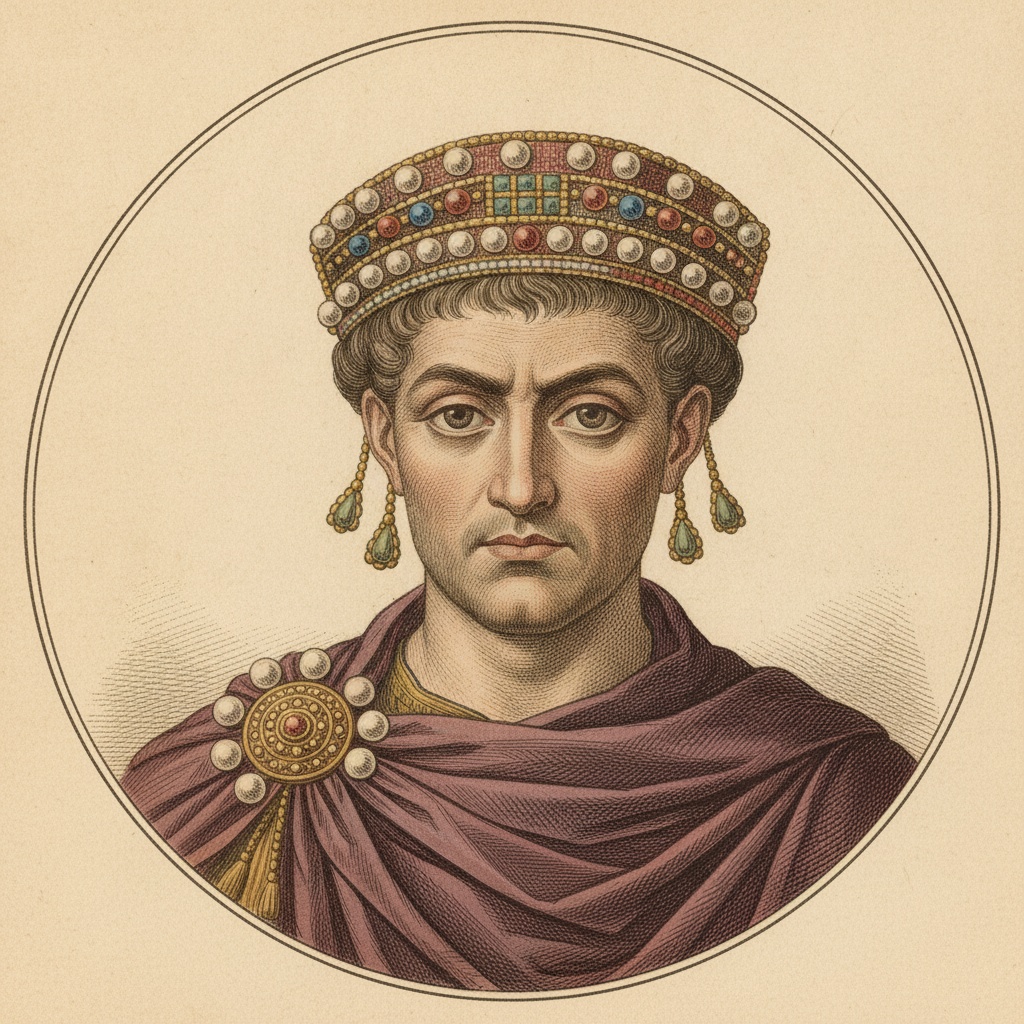
Restored portrait of Justinian I
Justinian IEastern Roman emperor, r. 527–565 A.D.
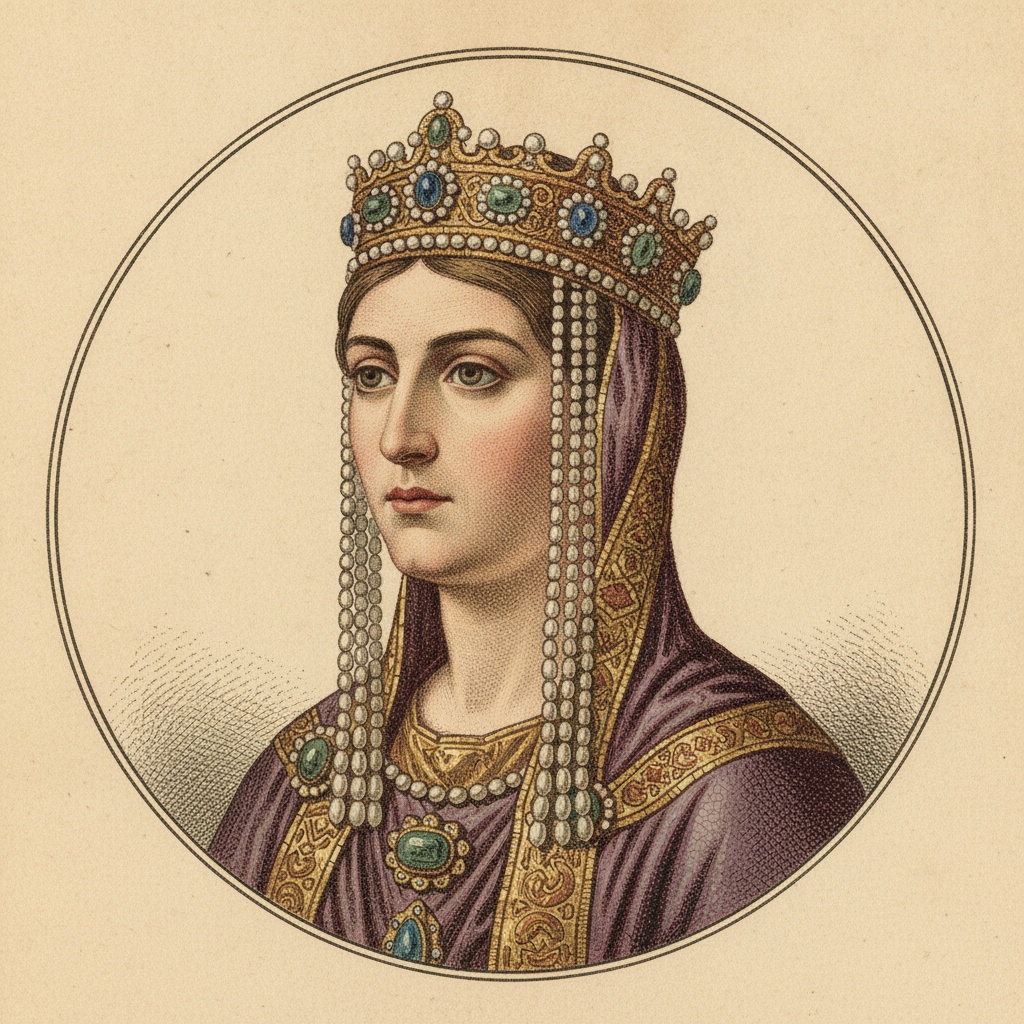
Restored portrait of Theodora
TheodoraEmpress and Justinian’s partner in power, c. 500–548 A.D.
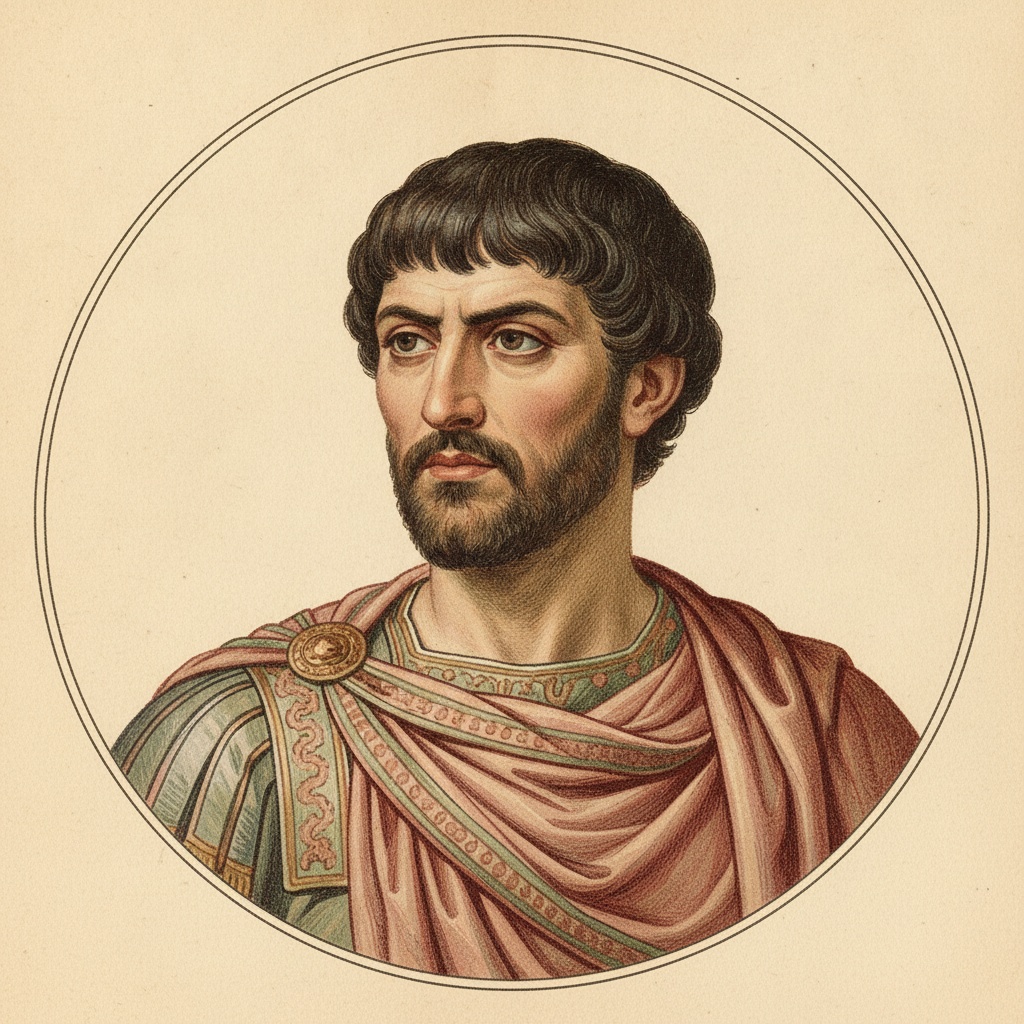
Restored portrait of Belisarius
BelisariusThe emperor’s general, c. 500–565 A.D.

From Constantinople the emperor Justinian set out to recover the lost Roman West, and his instrument was a young general named Belisarius with a modest expeditionary army. In 533–534 Belisarius destroyed the Vandal kingdom of Africa in a single lightning campaign, winning at Ad Decimum and Tricamarum and taking Carthage. Then he crossed to Italy: Sicily, Naples, and Rome fell to him, and he held the city of Rome through a year-long Ostrogothic siege before taking Ravenna — and the Gothic king — in 540.

It was the first time in nearly sixty years that Rome, Carthage, and Ravenna all answered to an emperor again.

Late Antiquity · The Justinianic Reconquest

Belisarius Restores the West, 533–540 A.D.

Scroll to follow Flavius Belisarius as he destroys the Vandal kingdom in Africa, defends Rome against Witiges, and captures Ravenna.

533 A.D.

The Lost Empire & Justinian's Mandate

A half-century after the fall of the Western Empire, Emperor Justinian resolves to restore Roman dominion over the Mediterranean. Having negotiated the 'Endless Peace' with Sassanid Persia, he dispatches an armada of 500 transports and 92 war galleys from Constantinople. Command is given to Flavius Belisarius, with an elite expeditionary force of barely 15,000 men — including his ferocious personal bucellarii and Hunnic mounted archers — to overthrow the Vandal Kingdom in North Africa.
Autumn 533 A.D.

Ad Decimum & The Liberation of Carthage

Belisarius stages in Sicily and lands unopposed at Caput Vada on the Tunisian coast, enforcing strict discipline to win over the local Roman population. King Gelimer attempts an ambush at the tenth milestone (Ad Decimum) outside Carthage. Belisarius outmaneuvers the divided Vandal forces, shatters their vanguard, and sends Gelimer fleeing into the hills. On September 15, Belisarius enters Carthage in triumph, dining in Gelimer’s palace without a single house looted.

533–534 A.D.

Tricamarum & Africa Restored

Gelimer rallies every remaining Vandal warrior for a final stand at Tricamarum. Belisarius attacks without waiting for his infantry; three successive charges by the Roman cataphracts break the Vandal center and kill Gelimer’s brother Tzazon. Gelimer surrenders at Mount Pappua, ending 99 years of Vandal rule. Africa, Sardinia, Corsica, and the Balearics are returned to the Roman Empire, and Belisarius celebrates a formal Triumph in Constantinople — the first granted to a private citizen since Augustus.

535–536 A.D.

Invasion of Italy & The Aqueduct of Naples

With Africa secured, Justinian strikes the Ostrogothic Kingdom. While Mundus marches down the Dalmatian coast to seize Salona, Belisarius lands in Sicily, capturing Panormus (Palermo) by hoisting archer-filled longboats to the top of his ships’ masts to shoot down into the citadel. Crossing the Strait of Messina at Rhegium, he races up the Italian coast. At Neapolis (Naples), when siege engines fail, four hundred Roman soldiers crawl through the dry conduit of the city aqueduct at midnight, seizing the battlements from within.

536–538 A.D.

One Year and Nine Days: The Siege of Rome

On December 9, 536, Belisarius enters Rome through the Porta Asinaria as the Gothic garrison flees north. New Gothic king Witiges marches from Ravenna with an immense host of 50,000 warriors and completely surrounds Rome. With only 5,000 veterans, Belisarius mounts catapults on the Aurelian Walls, cuts off barbarian assault towers with ballistae, and conducts over sixty devastating cavalry sorties. Despite plague and famine, supplies brought via Portus sustain the defense until Witiges, having lost half his army, burns his siege camps and retreats in despair.

538–540 A.D.

Ravenna Surrenders & The Crown of the West

Pursuing the retreating Goths, Belisarius relieves Ariminum and starves out the mountain stronghold of Auximum. He then corners Witiges inside the impenetrable marsh-fortress of Ravenna. In desperation, the Ostrogothic nobles offer Belisarius their allegiance as Emperor of the West if he will rule them. Belisarius feigns acceptance to avert a protracted siege, enters the city in May 540, immediately proclaims it for Justinian, and seizes the royal treasury. In seven years, Belisarius had restored Africa, Sicily, and Italy to the Roman world.

533 A.D.
Belisarius Restores the West, 533–540 A.D. The reconquests of Flavius Belisarius under Emperor Justinian: the destruction of the Vandal kingdom in Africa, the invasion of Sicily and Italy, the defense of Rome, and the capture of Ravenna. ITALIA SICILIA ILLYRICVM GRAECIA THRACIA AFRICA MARE IONIVM MARE TYRRHENVM MARE HADRIATICVM MARE AEGAEVM REGNVM OSTROGOTHICVM REGNVM VANDALORVM IMPERIVM ROMANVM RESTITVTOR OCCIDENTIS ConstantinopolisCapital & launch point, 533 Caput VadaArmada lands, 533 Ad DecimumGelimer routed, 533 CarthagoLiberated 533 · Capital of Africa TricamarumVandals crushed, Dec 533 SyracusaeSicily base, 535 PanormusTaken from mastheads, 535 SalonaMundus takes Dalmatia, 535 RhegiumMainland crossed, 536 NeapolisAqueduct infiltration, 536 RomaLiberated 536 · Epic siege 537–538 PortusNaval supply lifeline AriminumSiege relieved, 538 AuximumGothic garrison yields, 539 RavennaOstrogoth capital surrenders, 540
Roman imperial strongholdbarbarian kingdom capitalmajor battle / siegeBelisarius’s marchimperial naval expeditionGothic counter-march

Sites: Pleiades. Land, lakes and rivers: Natural Earth (public domain). Campaign routes and marches are schematic — reconstructed after Procopius, History of the Wars (De Bellis: Vandalic and Gothic Wars). Realm boundaries are labels only.

What it changed

Aftermath

The reconquest was dazzling and ruinously incomplete. The Gothic war flared up again and dragged on for twenty years, wrecking Italy far more thoroughly than the fall of the Western empire ever had, and the plague of 541 drained the resources that might have held the gains.

The long view · A.D. 192–700

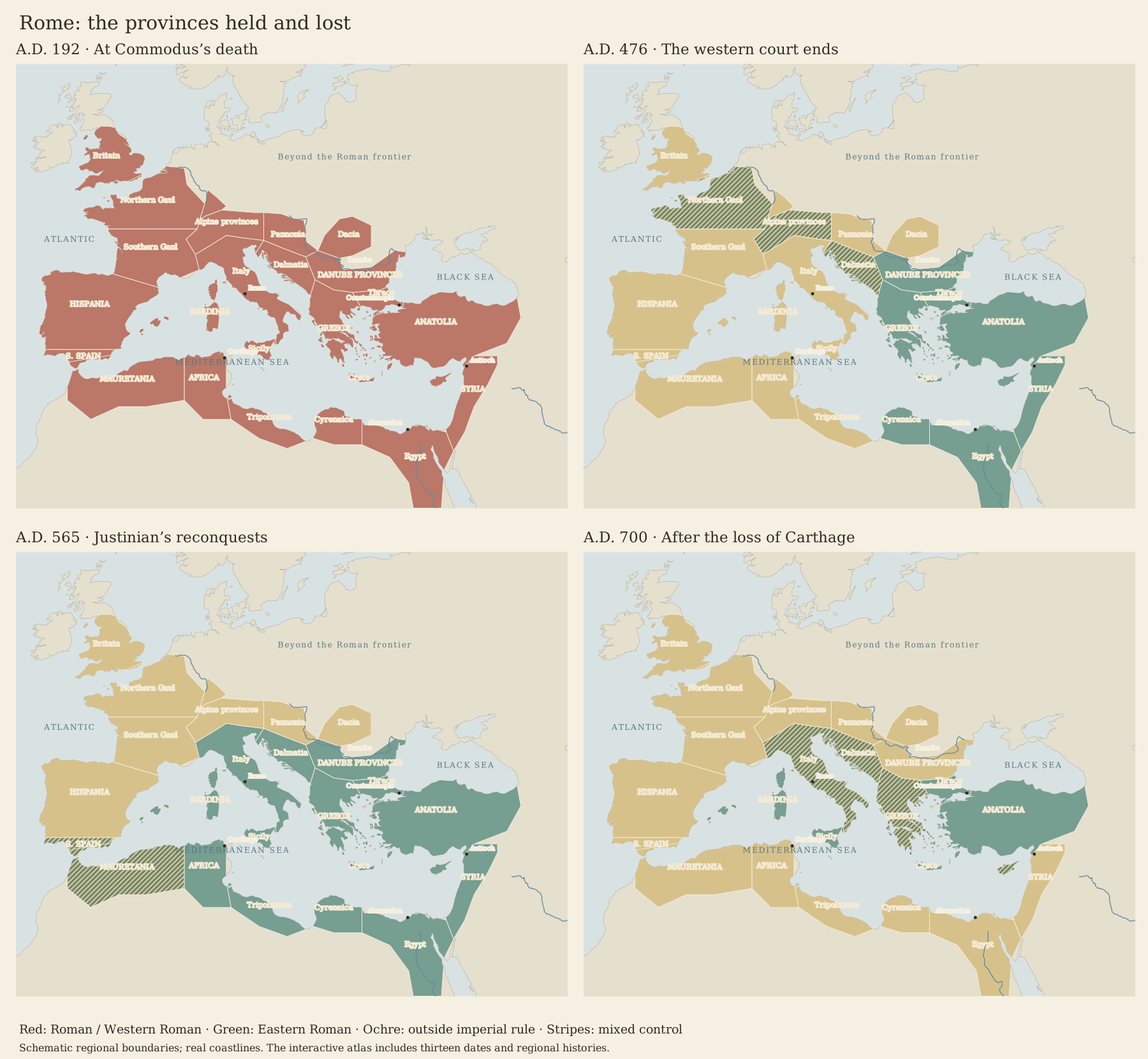
Rome: the provinces held and lost

From Commodus’s death to the loss of Carthage. Choose a date, or step through them, and follow the colour of the land from the Atlantic to Syria.

A.D. 1921 / 13
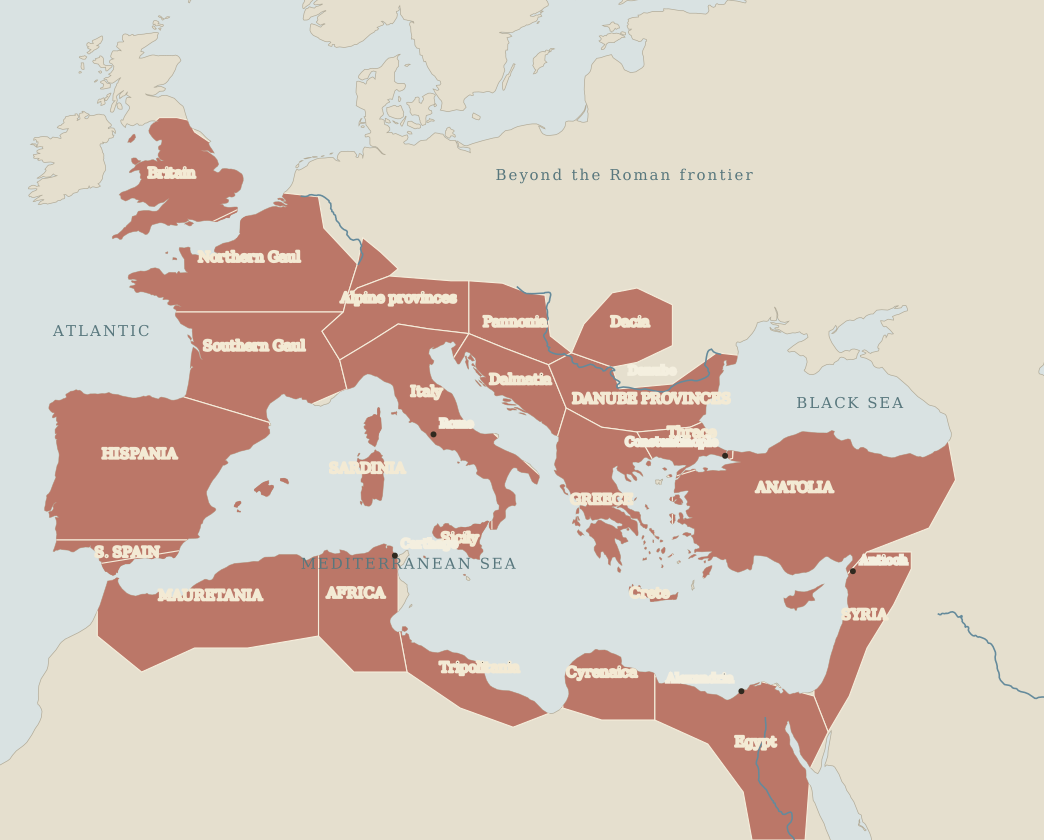
Roman world at Commodus’s death
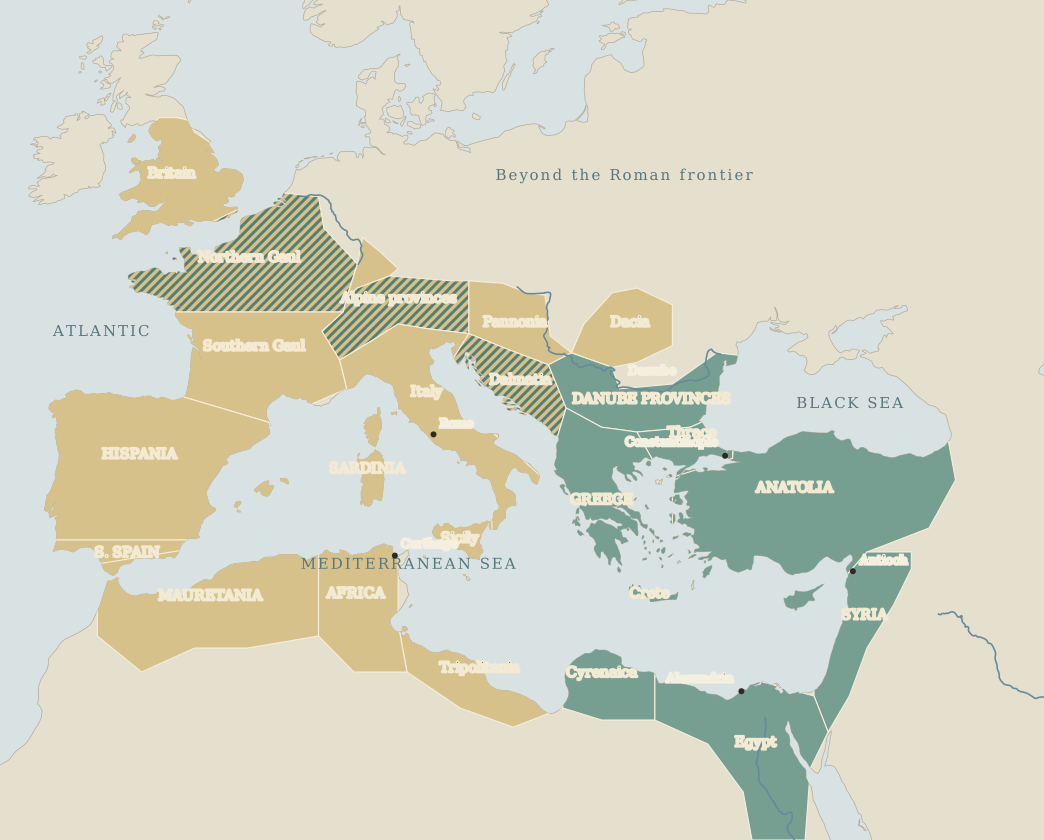
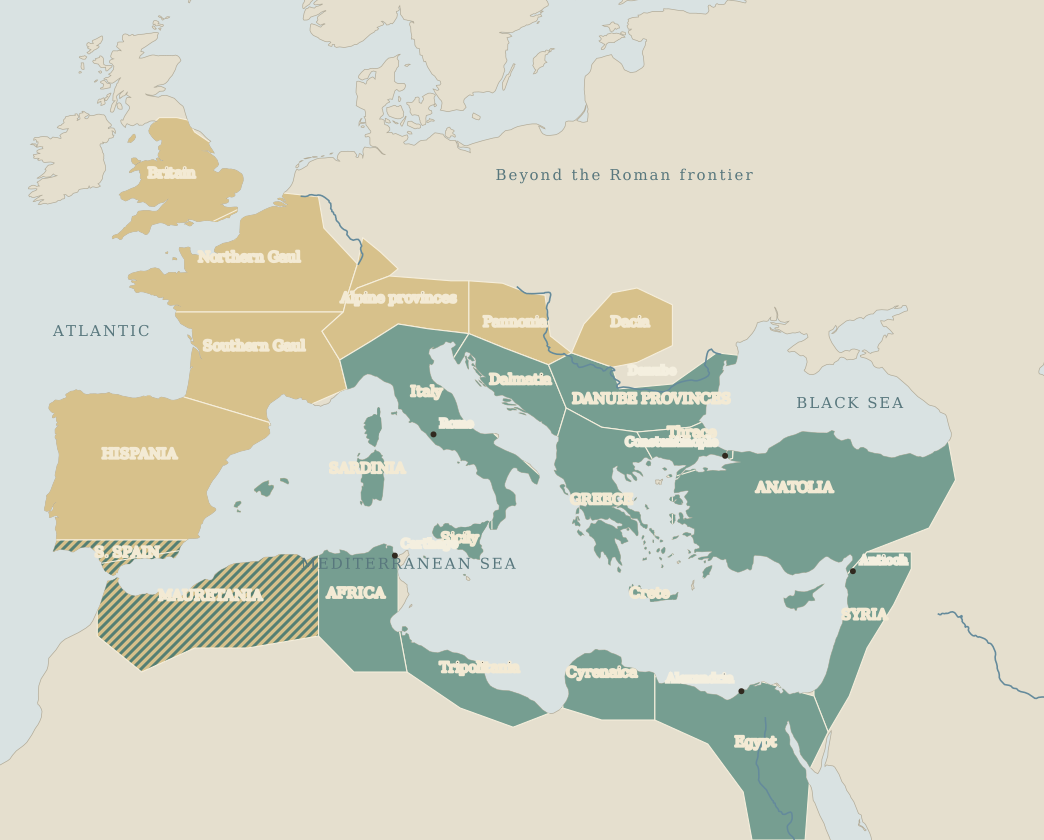
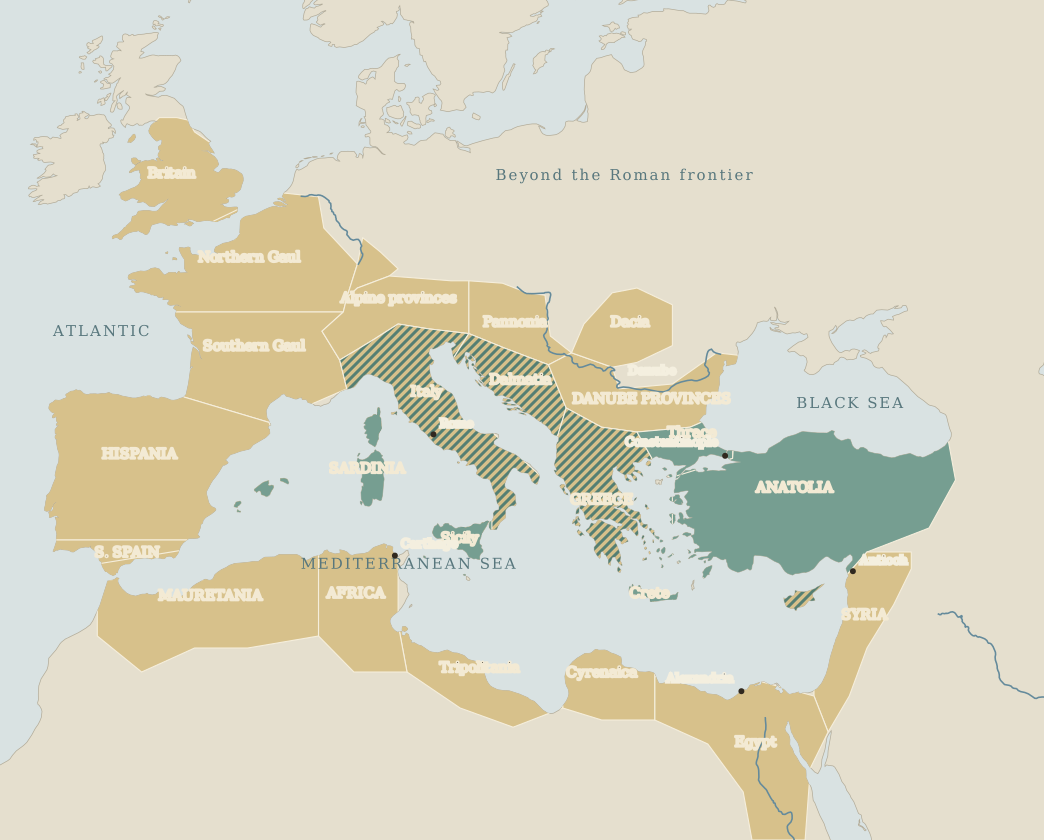
Roman territories, A.D. 192 Approximate large regions of the Roman world. Solid colours show Roman rule, eastern Roman rule, breakaway rule, or territory outside imperial rule. Hatching shows mixed control. Select a region for its history. Britain: Roman Empire Northern Gaul: Roman Empire Southern Gaul: Roman Empire Iberian interior and north: Roman Empire Southern Spain: Roman Empire Balearic Islands: Roman Empire Upper Rhine frontier: Roman Empire Alpine provinces: Roman Empire Italy: Roman Empire Sicily: Roman Empire Sardinia and Corsica: Roman Empire Pannonia: Roman Empire Dalmatia: Roman Empire Middle and lower Danube: Roman Empire Dacia: Roman Empire Greece and Macedonia: Roman Empire Thrace: Roman Empire Anatolia: Roman Empire Aegean islands: Roman Empire Crete: Roman Empire Cyprus: Roman Empire Syria and Palestine: Roman Empire Egypt: Roman Empire Cyrenaica: Roman Empire Tripolitania: Roman Empire Africa and eastern Numidia: Roman Empire Mauretania and western Numidia: Roman Empire Britain Northern Gaul Southern Gaul HISPANIA S. SPAIN Alpine provinces Italy Sicily SARDINIA Pannonia Dalmatia DANUBE PROVINCES Dacia GREECE Thrace ANATOLIA Crete SYRIA Egypt Cyrenaica Tripolitania AFRICA MAURETANIA MEDITERRANEAN SEA BLACK SEA ATLANTIC Beyond the Roman frontier Rome Carthage Constantinople Alexandria Antioch Danube
Roman / Western RomanEastern RomanOutside imperial ruleBreakaway regimeMixed controlChanged at this date

Approximate regional extents, not exact provincial boundaries. Uncoloured land is outside the regions followed here. Hatching does not show the precise location or proportion of each ruler’s territory.

How to read the losses

Ochre means that a region is outside the emperor’s government at the selected date. It does not mean its inhabitants ceased to be Roman. Green remains Roman: the eastern empire continued long after the western court ended in A.D. 476.

The dates follow turning points rather than equal intervals. A fifty-year sequence would hide the loss and recovery of Syria and Egypt between A.D. 625 and 650. Compare with 192 keeps the original territory available as a reference.

Sources and the limits of this map

Large regions group several ancient provinces. Their inland edges are editorial approximations clipped to Natural Earth coastlines; they are not surveyed or independently sourced ancient boundary polygons. Narrow frontier changes, small enclaves, Mesopotamian acquisitions after 192 and most campaigning are omitted. The map follows the large regions held in 192, not every later imperial acquisition. The northern edge of the frame omits the far north of Europe.

Southern Spain, later Italy, Mauretania and the Balkan interior use hatching where a single owner would mislead. The A.D. 439 African colour groups the capture of Carthage with the wider settlement of 442. Dacia’s withdrawal is grouped at 275. Cyprus is hatched after the Arab attacks and later shared arrangement.

    Static atlas plates: 192 · 476 · 565 · 700.