Era IX · Industry, Nation, and Empire

Ulm and Austerlitz

Out of the Revolution rises a soldier who remakes the map of Europe; in one autumn campaign he destroys two great-power armies.

1805  ·  From the Channel to the Danube
A campaign of the Napoleonic Wars. A map study — the campaign is told on the interactive map below; the fuller narrative essay is in preparation.
✦   ❧   ✦
Scroll to begin ↓
1805 · The Grande Armée marches east

The sharpest stroke of Napoleon’s career

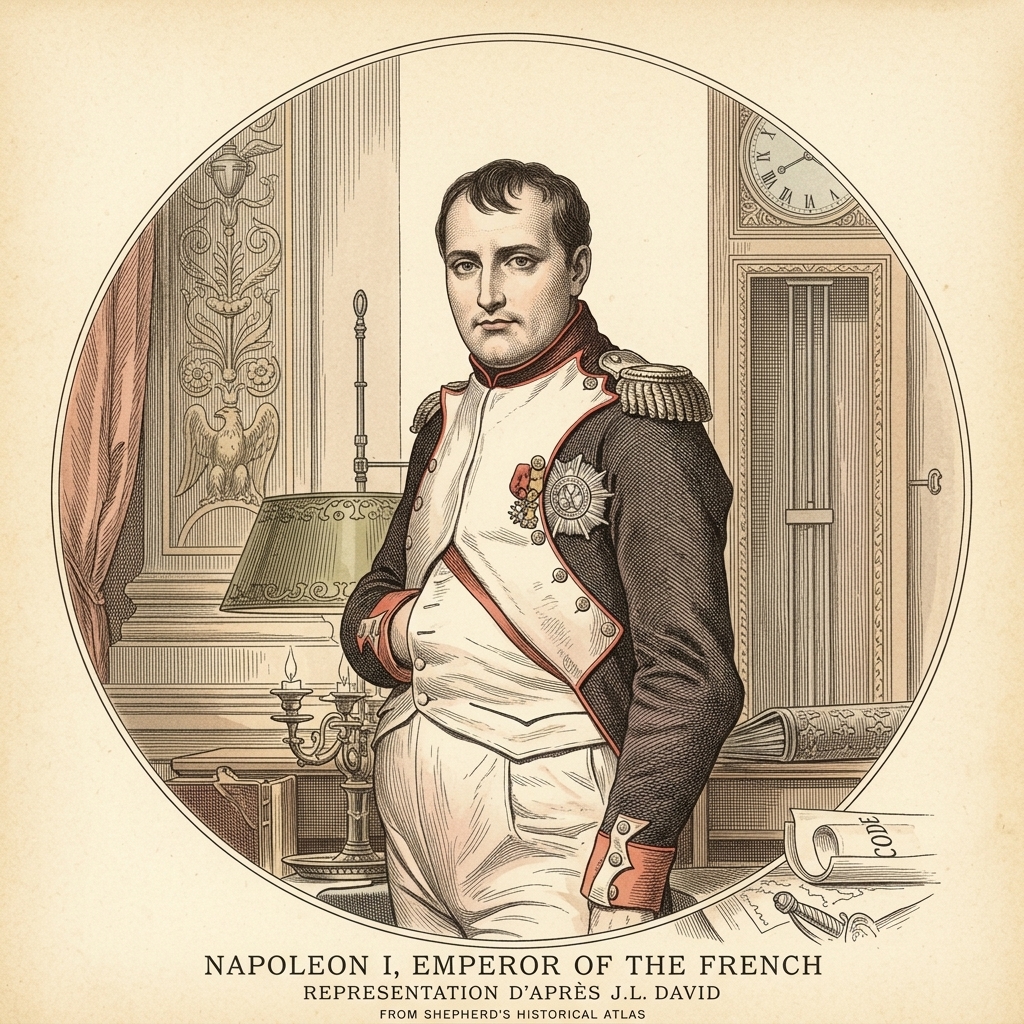
Restored portrait of Napoleon Bonaparte
Napoleon BonaparteEmperor of the French, 1769–1821Neoclassical bust by Canova 🔍
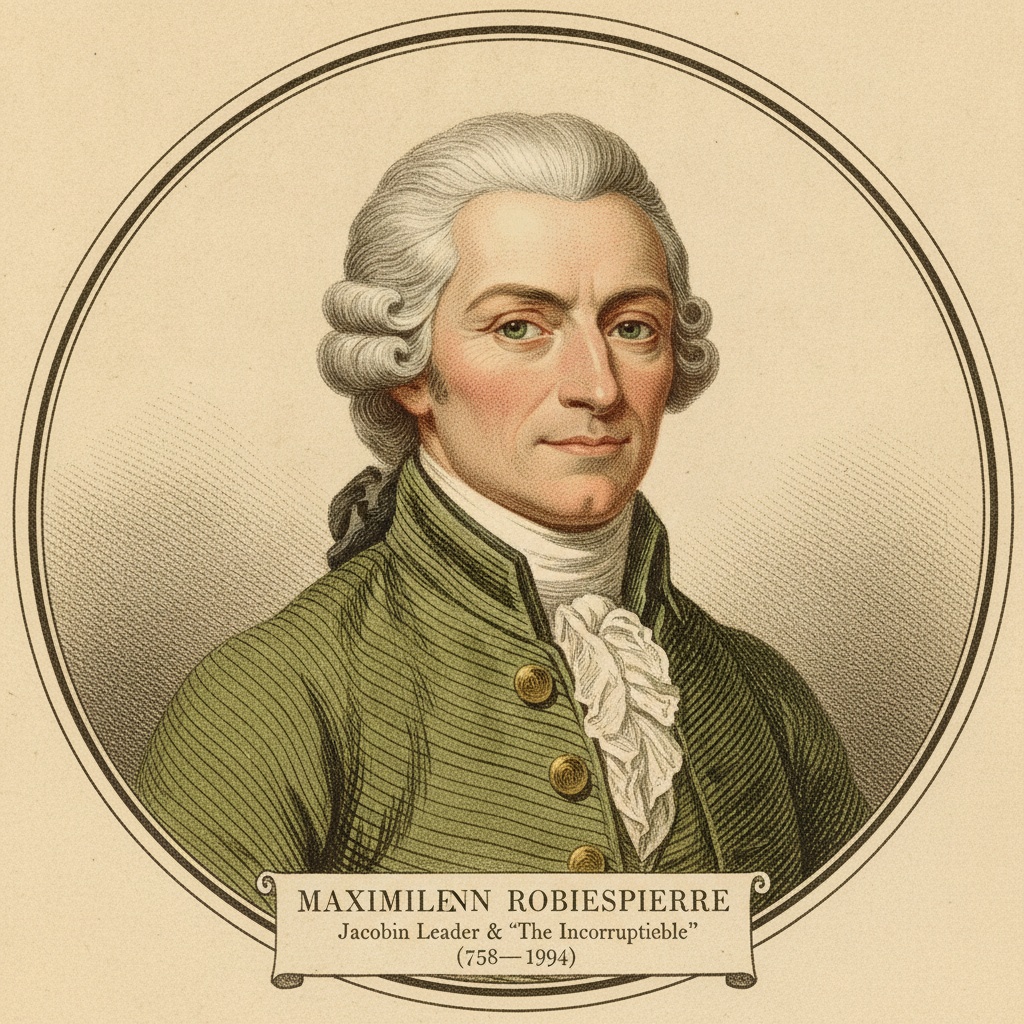
Restored portrait of Maximilien Robespierre
Maximilien RobespierreLeader of the Revolution’s radical phase, 1758–1794
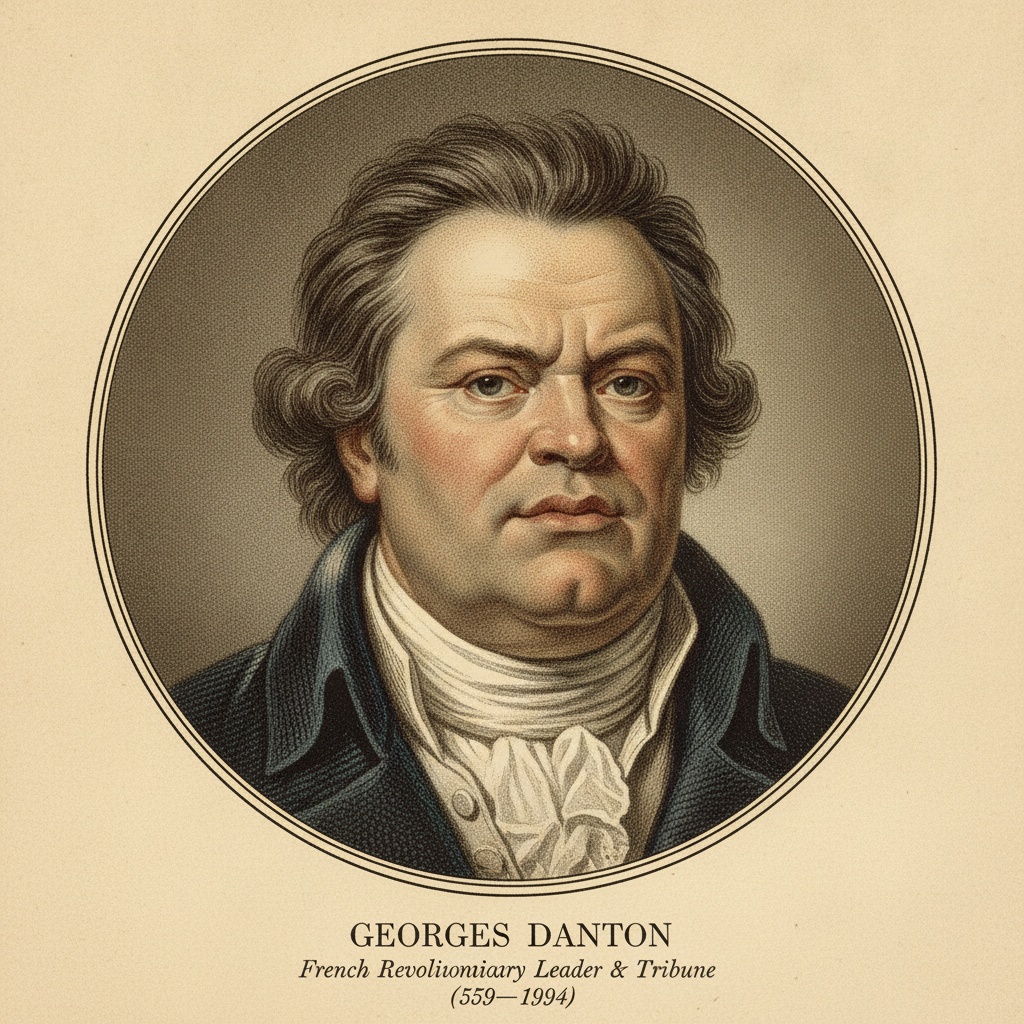
Restored portrait of Georges Danton
Georges DantonRevolutionary orator, 1759–1794
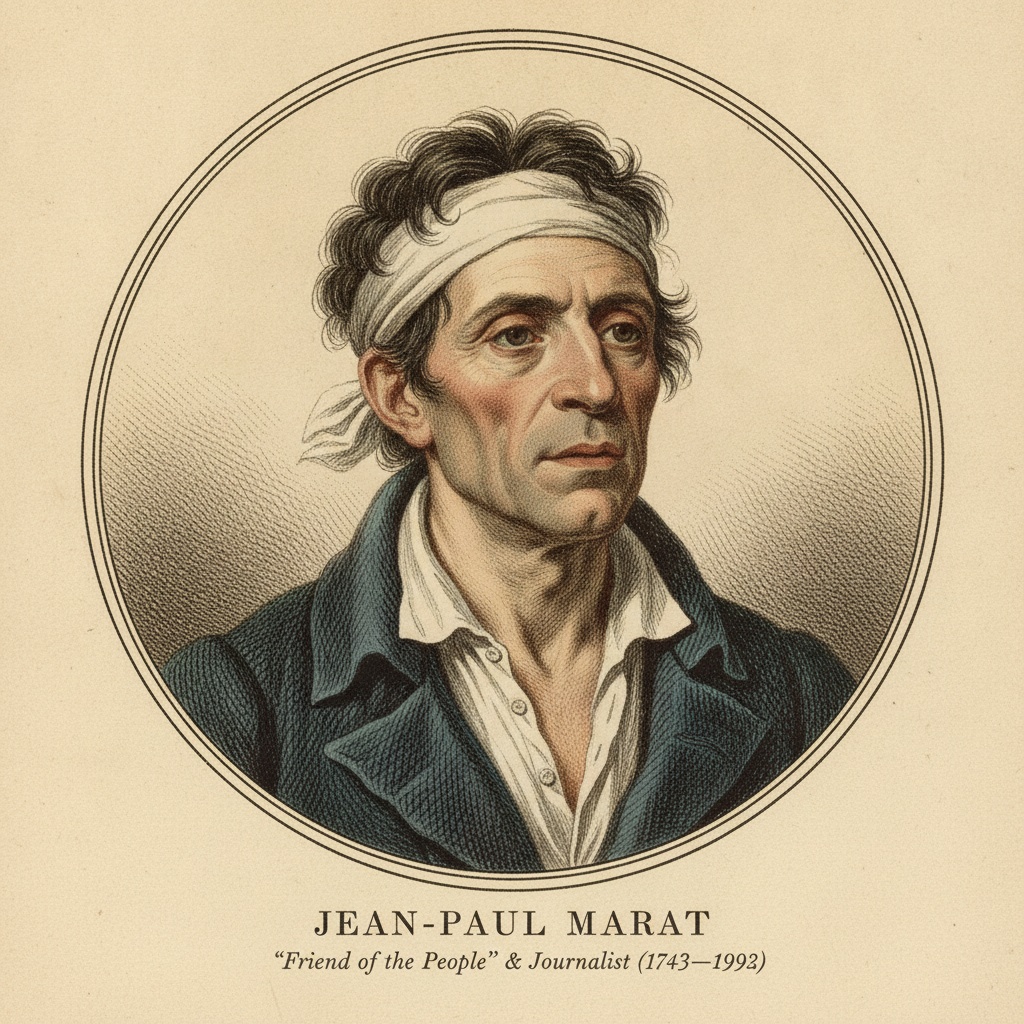
Restored portrait of Jean-Paul Marat
Jean-Paul MaratRevolutionary journalist, 1743–1793

Out of the French Revolution rose a soldier who would rule France and redraw the map of Europe. In 1805, facing a new coalition of Austria, Russia, and Britain, Napoleon marched the Grande Armée from the Channel coast to the Danube, encircled an entire Austrian army at Ulm, and on 2 December — the first anniversary of his coronation — destroyed the combined Austrian and Russian forces at Austerlitz, the battle he thought his finest.

Napoleon is the man of this campaign; the three beside him are the Revolution that produced him — the decade of upheaval that swept away the French monarchy and cleared the ground on which he built his empire.

Napoleonic Era · The War of the Third Coalition

Napoleon’s Masterpiece: Ulm and Austerlitz, 1805

Scroll to follow the Grande Armée as it wheels from the English Channel to encircle an Austrian army at Ulm and shatter the Third Coalition at Austerlitz.

August 1805

The Camps of Boulogne & The Third Coalition

Two hundred thousand men of the newly baptized Grande Armée stand poised on the chalk cliffs of Boulogne, ready to embark for the invasion of England. Suddenly, Prime Minister William Pitt finances the Third Coalition: Austria and Russia mobilize immense armies. Austrian General Mack impetuously invades Bavaria with 72,000 troops, entrenching at Ulm on the upper Danube to await Kutuzov's Russian army marching from Galicia. On August 27, Napoleon makes his decision: the invasion of England is abandoned; the Grande Armée must execute a 180-degree turn.

September 1805

The Great Turn: Speed and Secrecy

In the most astonishing strategic maneuver in military history, seven corps march silently across France on parallel routes. Covering up to thirty miles a day in dust and rain, two hundred thousand soldiers cross the Rhine from Strasbourg to Mannheim. General Mack fixates on the Black Forest, expecting a direct frontal assault. Instead, Napoleon’s northern corps sweep wide through Würzburg, executing a colossal right wheel to sever the Danube bridges behind the Austrian army.

October 1805

The Encirclement of Ulm: War Without Bloodshed

Operating behind the enemy, Marshal Ney and Murat cut off every road of escape. Baffled by contradictory cavalry reports, Mack realizes too late that he is surrounded. On October 20, on the heights of the Michelsberg overlooking Ulm, Mack capitulates. Thirty thousand Austrian soldiers lay down their arms and sixty cannon without a pitched battle. Napoleon writes proudly: 'I have destroyed the Austrian army simply by marching; our soldiers have made war with their legs.' Bavaria is liberated, and the road to Vienna lies open.

November 1805

The Fall of Vienna & The Moravian Trap

The Grande Armée races down the Danube valley in pursuit of the retreating Russians. On November 13, Marshals Lannes and Murat walk brazenly onto the great wooden bridge across the Danube at Vienna, bluffing the Austrian demolition guards into believing an armistice is signed while French grenadiers rush the fuses. Vienna falls without destruction. Kutuzov skilfully withdraws into Moravia, uniting with Tsar Alexander I and Austrian Emperor Francis II at Brünn (Brno). Deep in enemy territory with winter descending, Napoleon deliberately feigns panic and exhaustion to lure the allies into battle.

December 2, 1805

The Sun of Austerlitz: The Pratzen Heights

On the anniversary of his coronation, Napoleon baits the trap on the rolling plateau of Austerlitz. He intentionally weakens his right flank under Marshal Davout along the frozen Goldbach brook. Believing they can cut the French off from Vienna, forty thousand Russian and Austrian soldiers abandon the dominant Pratzen Heights to assault Davout. Davout holds with superhuman stubbornness. At 9:00 AM, as the morning mist burns off under the blinding Sun of Austerlitz, Napoleon unleashes Marshal Soult’s IV Corps. In twenty minutes, the French storm the deserted heights, severing the Allied army in two.

December 1805

The Battle of the Three Emperors & Peace of Pressburg

From the conquered Pratzen Heights, French artillery pours fire down into the disordered allied wings. Panic grips the Russian forces as they retreat across the frozen Satschan ponds; French cannonballs shatter the ice, engulfing hundreds in freezing water. Thirty-six thousand Allied troops are killed, wounded, or captured; Tsar Alexander weeps in defeat. On December 26, 1805, the Treaty of Pressburg is signed in Slovakia. Austria cedes vast territories, and the thousand-year-old Holy Roman Empire is formally dissolved. At thirty-six, Napoleon stands as the undisputed master of Europe.

August 1805
Napoleon’s Masterpiece: Ulm and Austerlitz, 1805 The 1805 campaign of the Grande Armée from the English Channel to the Danube, the encirclement of Mack at Ulm, and the triumph at Austerlitz. FRANCE GERMANIA BAVARIA AUSTRIA MORAVIA FRETUM GALLICUM COALITIO TERTIA IMPERATOR NAPOLEON BoulogneGrande Armée camps, Aug 1805 ParisImperial capital StrasbourgRhine crossed, Sept 1805 MannheimNorthern corps cross, 1805 WürzburgNorthern wheeling axis UlmMack surrenders 30,000, Oct 20 MünchenBavarian ally liberated WienCaptured unopposed, Nov 13 BrünnAllied emperors concentrate AusterlitzDecisive triumph, Dec 2 PressburgPeace signed, Dec 26
French imperial positionCoalition strongholdmajor battle / capitulationGrande Armée marchTreaty of Pressburg

Sites: Historical staff and military records (Correspondance de Napoléon Ier; David Chandler, The Campaigns of Napoleon). Land, lakes and rivers: Natural Earth (public domain). Routes are schematic.

What it changed

Aftermath

Austerlitz broke the Third Coalition and left Napoleon master of the continent. The reckoning — the ulcer of Spain, the catastrophe of Russia in 1812, and the final defeat at Waterloo — was still to come.