The Early Roman Republic
From the fall of the kings to the sack of the city by the Gauls — a century and a half in which Rome fought, twice, over who would rule her, and answered the second time by writing the law down where anyone could read it.
The Republic BornAn oath against kings
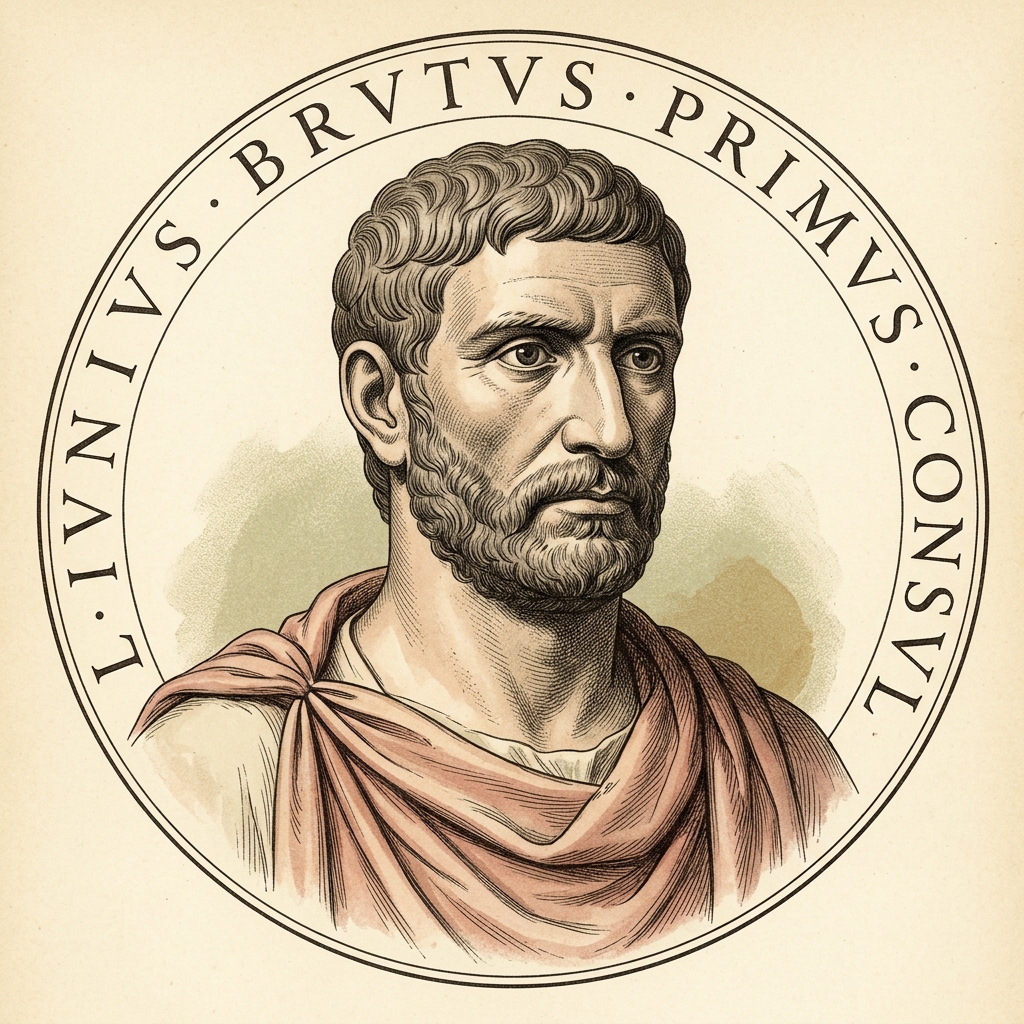
Rome had been a kingdom for two and a half centuries when, by the account every Roman schoolchild later learned, the cruelty of King Tarquinius Superbus and a crime committed by his son brought the monarchy down in a single year. A nobleman named Lucius Junius Brutus led the revolt; the king and his family were driven into exile; and in their place the Romans set up a new kind of magistracy — two consuls, elected annually, each able to block the other, neither permitted to hold the fasces of command at the same moment as his colleague.
 Click to enlarge
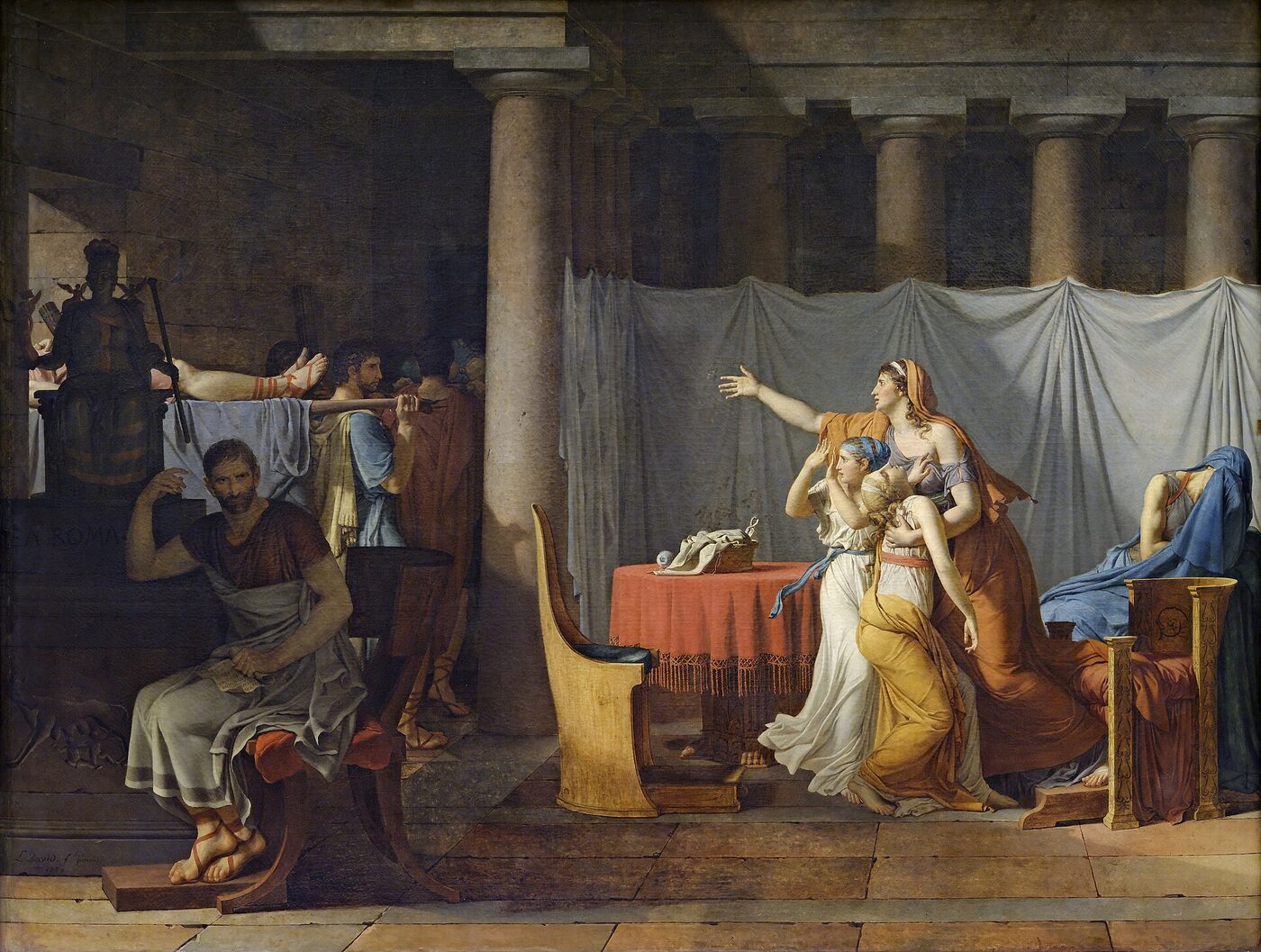
Modern historians treat the vivid details — Lucretia's death, Brutus feigning idiocy for years to survive the tyrant, the dagger drawn over her body — as later legend wrapped around a real event: the consular lists (fasti) that Romans kept for centuries do converge on a genuine transition, close to the traditional date, from kingship to an annual, shared, revocable magistracy. What the story insists on, and what the institutions bear out, is the lesson Rome drew from it: never again would one man hold power in the city without limit of time or partner. Brutus is said to have made the citizens swear to it directly.
 Click to enlarge
“He therefore made them take an oath that they would not suffer any man to reign in Rome.” Livy, History of Rome, II.1 — trans. Rev. Canon Roberts (1912, public domain)
The office the Romans built to replace the kings kept almost all of a king's old authority — the same jurisdiction, the same escort of lictors bearing the fasces, the bundled rods and axe that stood for a magistrate's power over a citizen's body. Only two things had changed: the power was now split between two men, and it expired every year. That single change — limited, shared, temporary command — is the thread that runs through everything in this chapter. Rome would spend the next hundred and twenty years discovering how much argument, sacrifice, and occasional bloodshed it took to keep that thread from snapping.
 Click to enlarge
The First SecessionA fable about a stomach
The new Republic was, from its first years, a republic of two peoples living in one city: the patricians, a closed circle of noble clans who alone could hold priesthoods and, for generations, the consulship; and the far more numerous plebeians — everyone else, from prosperous farmers down to the destitute. What set the plebeians marching, according to the tradition, was debt. Small farmers conscripted year after year for Rome's wars against her neighbors came home to ruined fields, borrowed to survive, and pledged their own bodies as security under a contract called nexum. A debtor who defaulted could be bound, worked, even sold by his creditor — a citizen-soldier of Rome reduced to bondage in the city he had just fought for.
Tradition dates the breaking point to 494 B.C., though the Cambridge Ancient History's own contributors think the story may compress a struggle that really played out over a longer stretch of the early fifth century. Whatever the exact year, the plebeian soldiery, ordered out of the city on campaign, refused to disband. They marched instead to a hill outside the walls — the Sacred Mount, by the most widely followed account — and simply sat down, armed, leaderless, and orderly, waiting to see what a city without their labor and their spears would do.
The Senate, badly frightened, sent Menenius Agrippa, a patrician said to be popular with the plebs, to talk them down. He is remembered for a single fable.
“In the days when all the parts of the human body were not as now agreeing together, but each member took its own course and spoke its own speech, the other members, indignant at seeing that everything acquired by their care and labour and ministry went to the belly … entered into a conspiracy; the hands were not to bring food to the mouth, the mouth was not to accept it when offered, the teeth were not to masticate it … Then it became evident that the belly rendered no idle service.” Livy, History of Rome, II.32 — trans. Rev. Canon Roberts (1912, public domain)
Fable or not, a bargain followed. The plebeians won a new magistracy found nowhere else in the Roman constitution: tribunes of the plebs, elected by the plebeians alone, personally sacrosanct — to lay hands on one was a capital religious offense — and armed with the power of intercessio, the right to physically stop almost any act of any other magistrate with a single word, veto, “I forbid.” Alongside them stood a plebeian assembly, the concilium plebis, that could pass its own resolutions. Rome now had, inside its one government, an institution built expressly to obstruct the rest of it — a strange machine, but one that would outlive the Republic itself by four centuries.
The Fabii at the CremeraWhen a family went to war
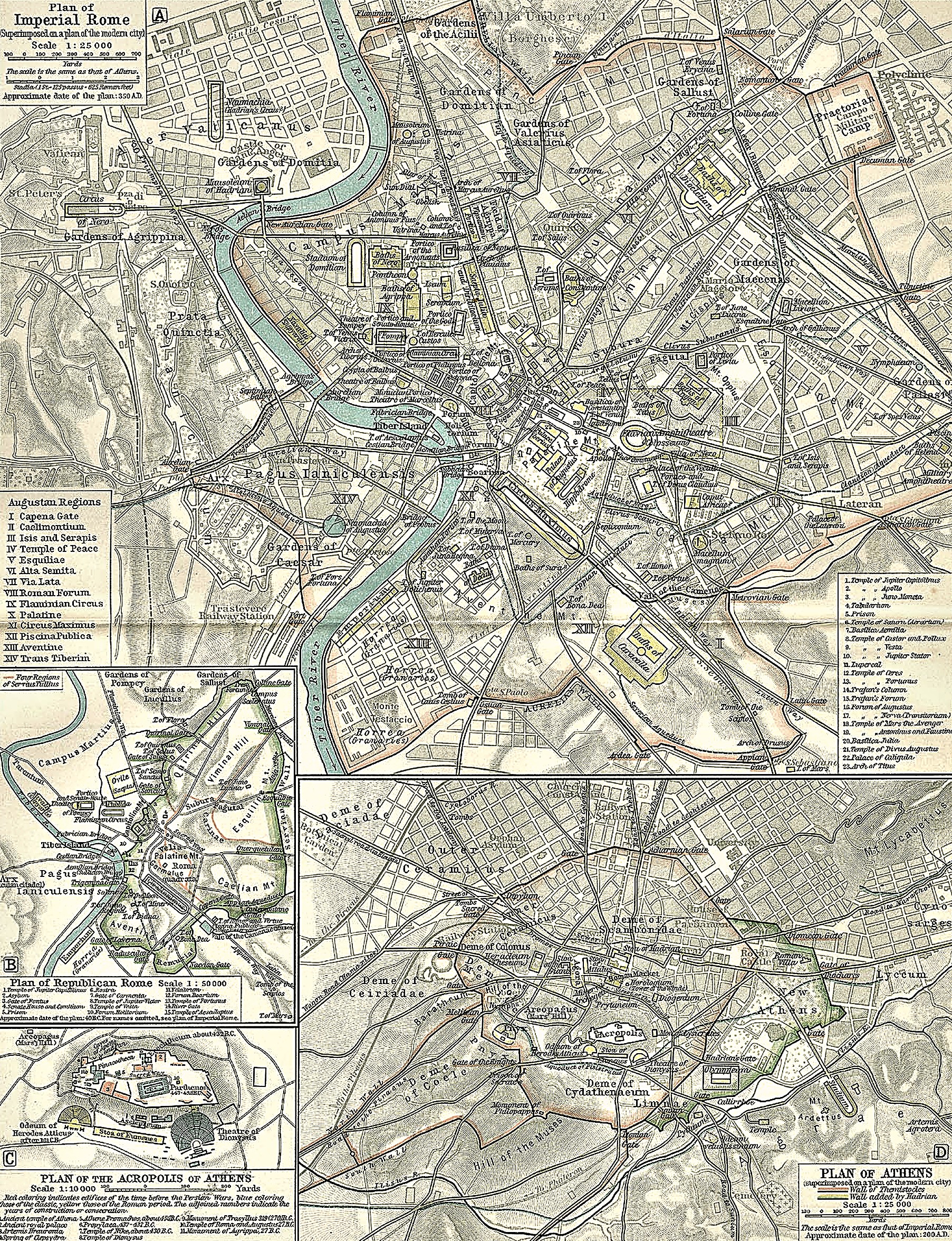
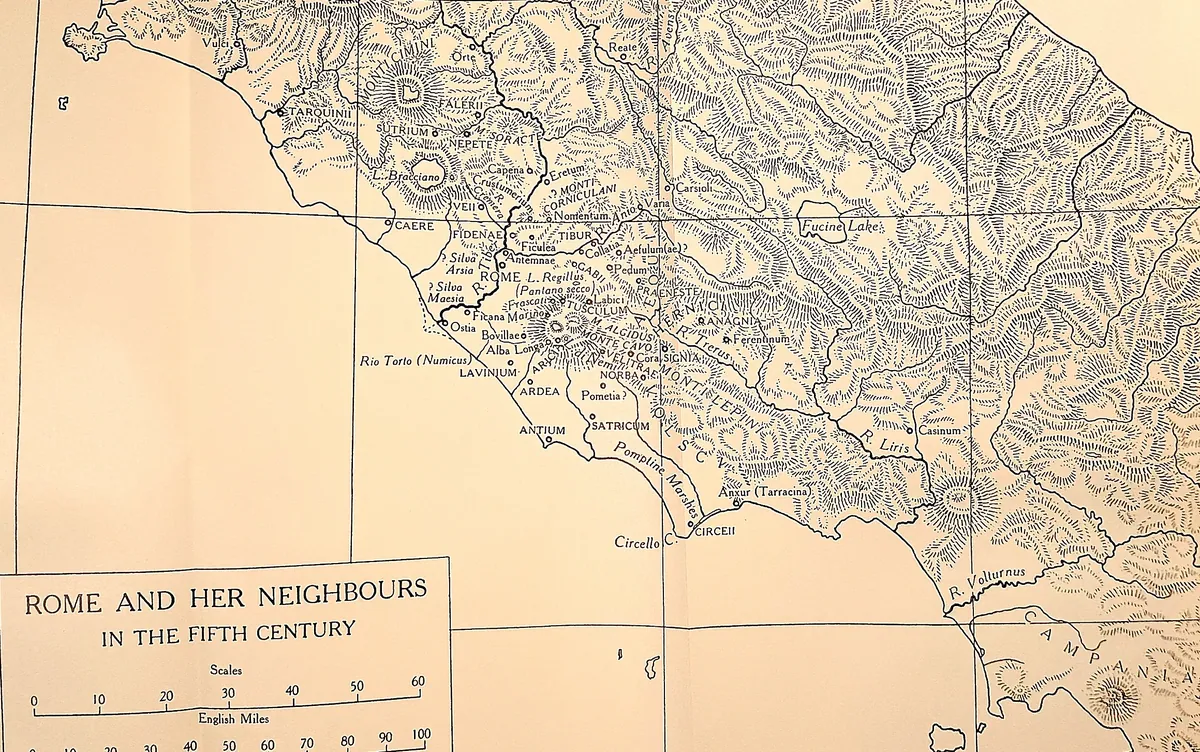
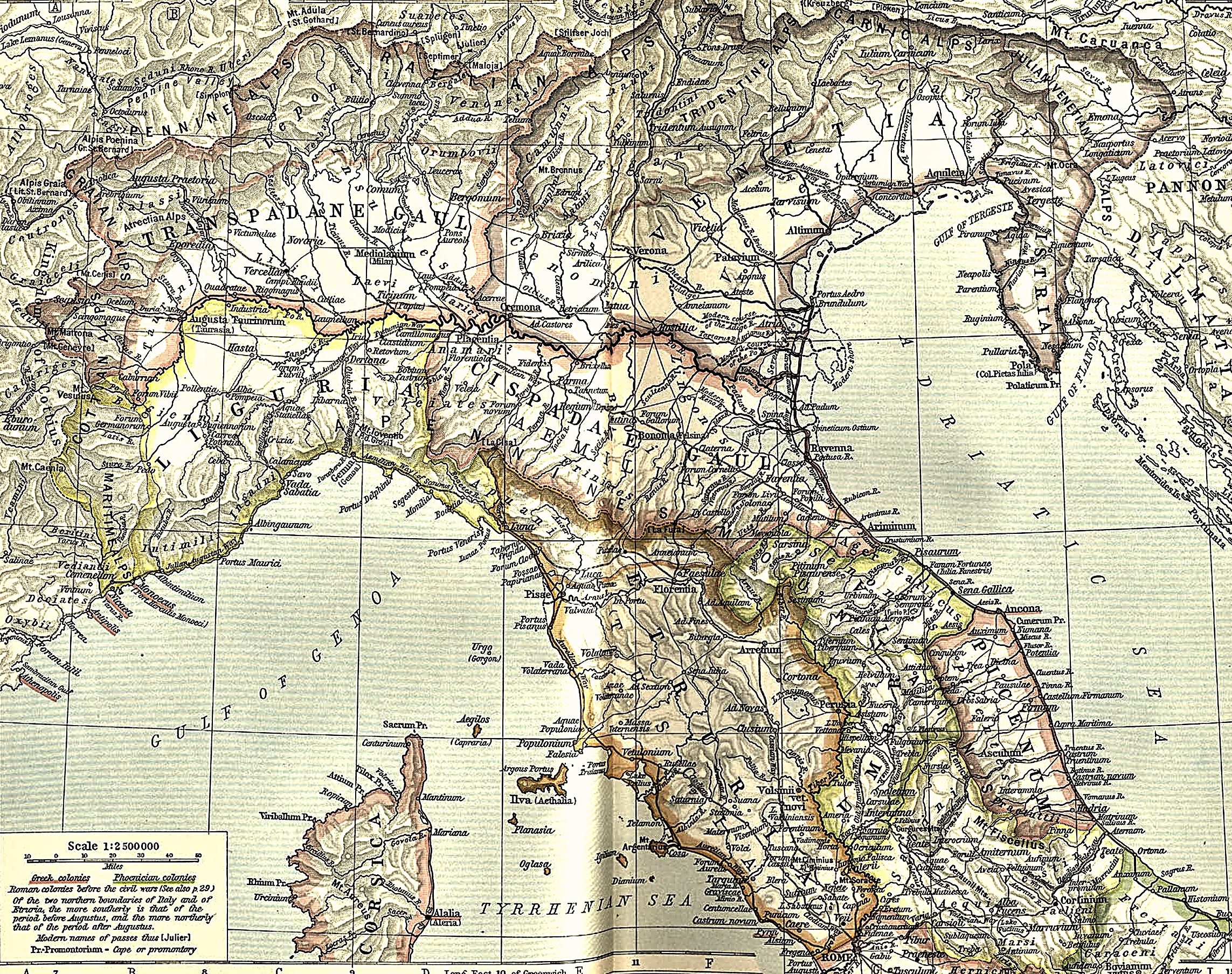
Rome's most persistent enemy in these early decades was not a distant king but a near neighbor: Veii, a large and wealthy Etruscan city barely ten miles up the Tiber, its territory and Rome's tangled together along the river crossings that carried trade — and salt — between the coast and the interior. The wars between the two cities were fought in bursts across a century, each side trying to pin down the fords and bridgeheads the other needed.
In 479 B.C., with a Veientine garrison dug in on the Janiculum hill in plain sight of Rome, one of the city's great patrician houses took the war into its own hands. The gens Fabia — a clan, not the state — marched out three hundred and six men strong, together with their own clients and dependants, to hold a fort of their own building on the river Cremera, directly on Veii's frontier. For two years the Fabii raided Veientine land as a private army fighting what was, in effect, a family war for family stakes. In 477 B.C. they were drawn into an ambush and annihilated to the last man who had marched with them; only a single boy of the clan, too young to have gone, lived to carry the Fabian name forward. For years afterward the family vanishes from the list of consuls it had dominated.
 Click to enlarge
 Click to enlarge
CincinnatusThe dictator who went home
 Click to enlarge
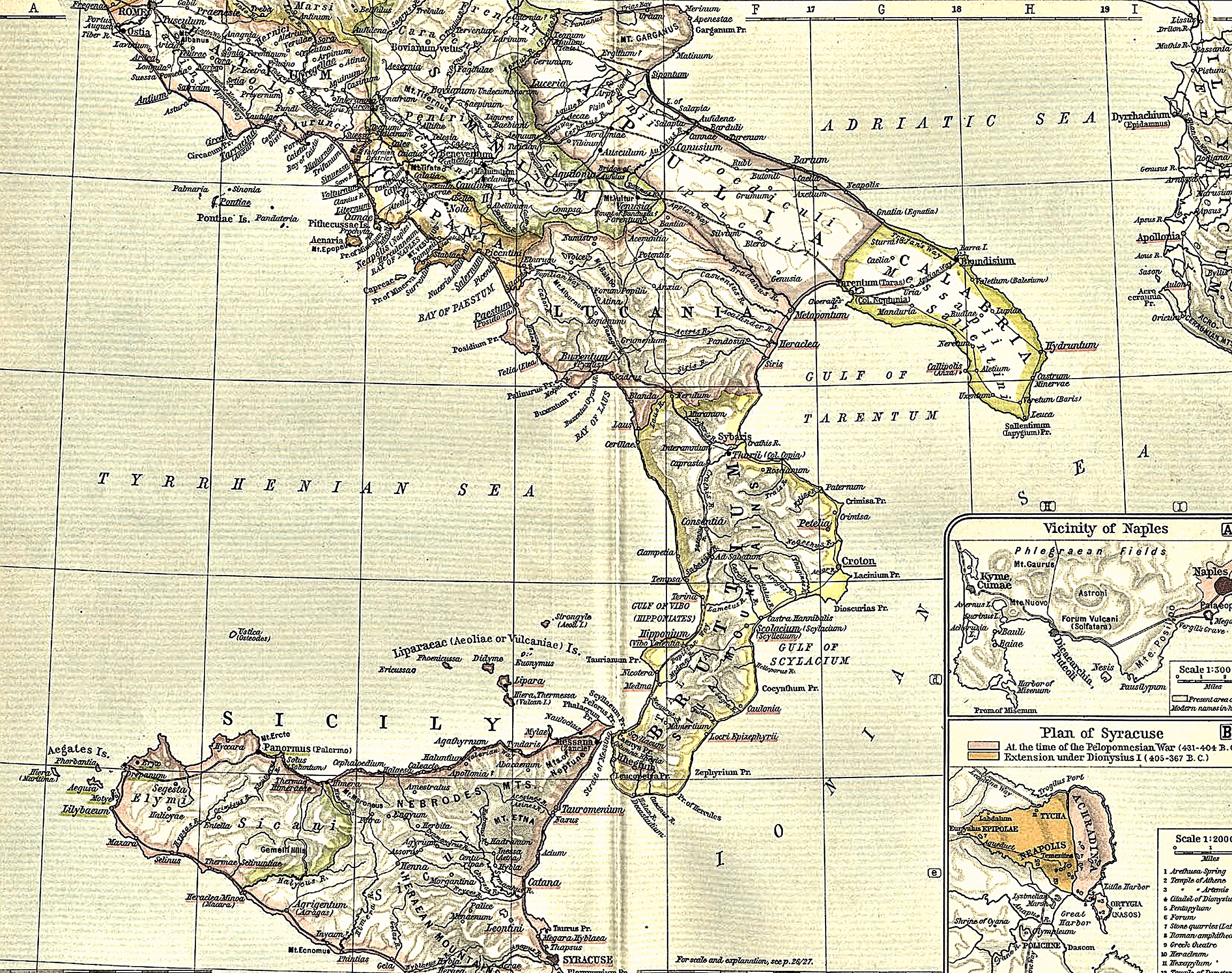
War with the hill peoples south and east of Rome — chiefly the Aequi and the Volsci — was almost constant in these decades. In 458 B.C. a consul, Minucius, let his army be trapped and surrounded on Mount Algidus. Rome had already built one emergency device for moments like this: the dictatorship, a single magistrate given absolute command, answerable to no colleague, for up to six months — the sharpest possible concentration of power, deliberately built with an expiry date.
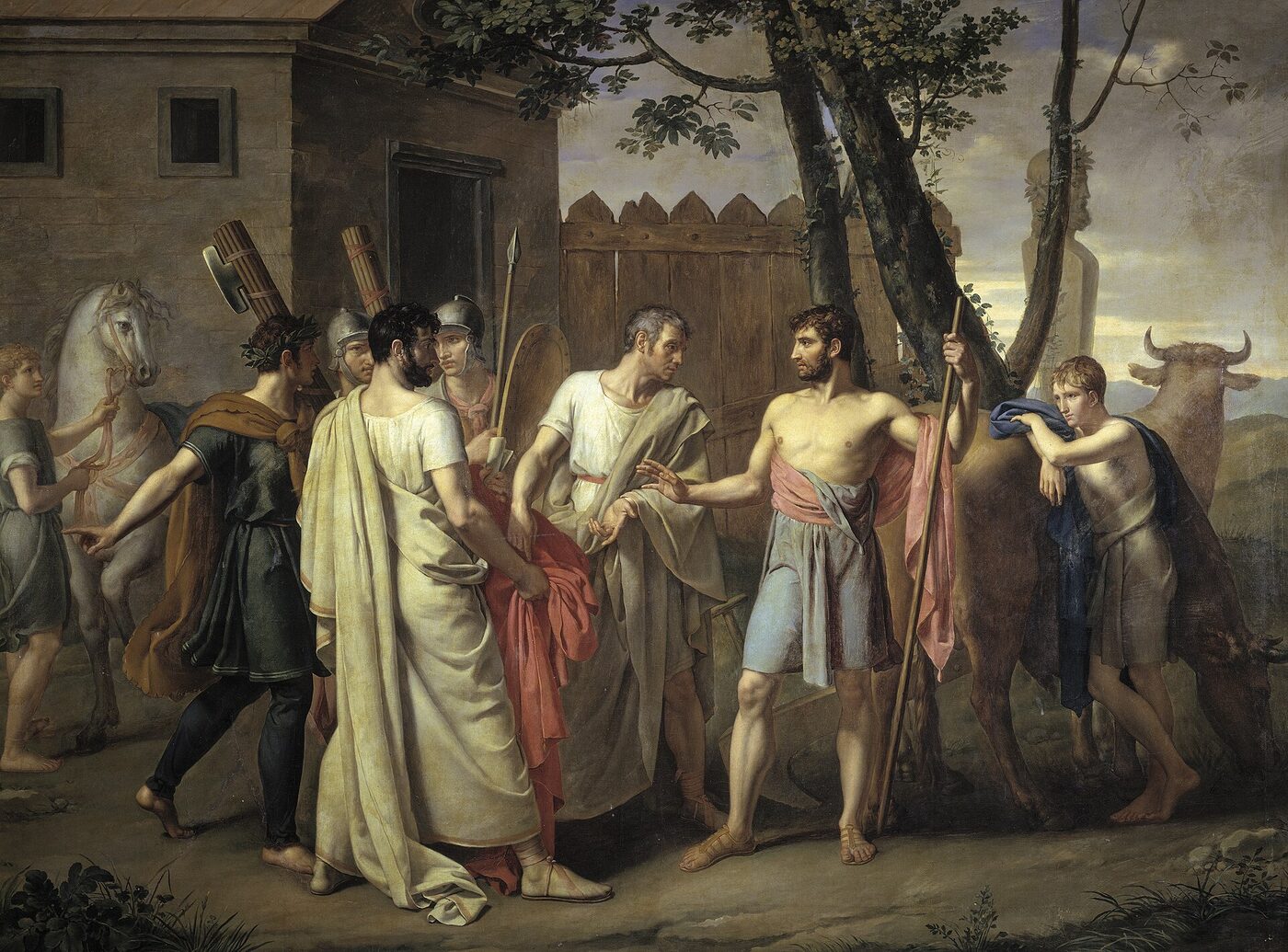
The man the Senate turned to, Lucius Quinctius Cincinnatus, was a patrician of reduced fortune farming a plot of some four acres of his own across the river. The senators' deputation found him at work.
“There he was found by the deputation from the senate either digging out a ditch or ploughing … Wiping off the dust and perspiration, he put it on and came forward, on which the deputation saluted him as Dictator.” Livy, History of Rome, III.26 — trans. Rev. Canon Roberts (1912, public domain)
Cincinnatus raised an army within a day, marched to Algidus, and trapped the Aequian besiegers in turn, forcing their surrender. Then, with the emergency over, he did not wait out his six months. Tradition remembers him laying the dictatorship down within a matter of days and going back to his four acres — the Republic's founding image of a citizen who held total power and handed it back unasked, simply because the reason for holding it had passed. Four centuries later, when another Roman held Rome by force of arms far longer than any crisis required, he would still find it useful to be compared, however imperfectly, to this same story.
 Click to enlarge
The Twelve TablesThe Republic writes down the law
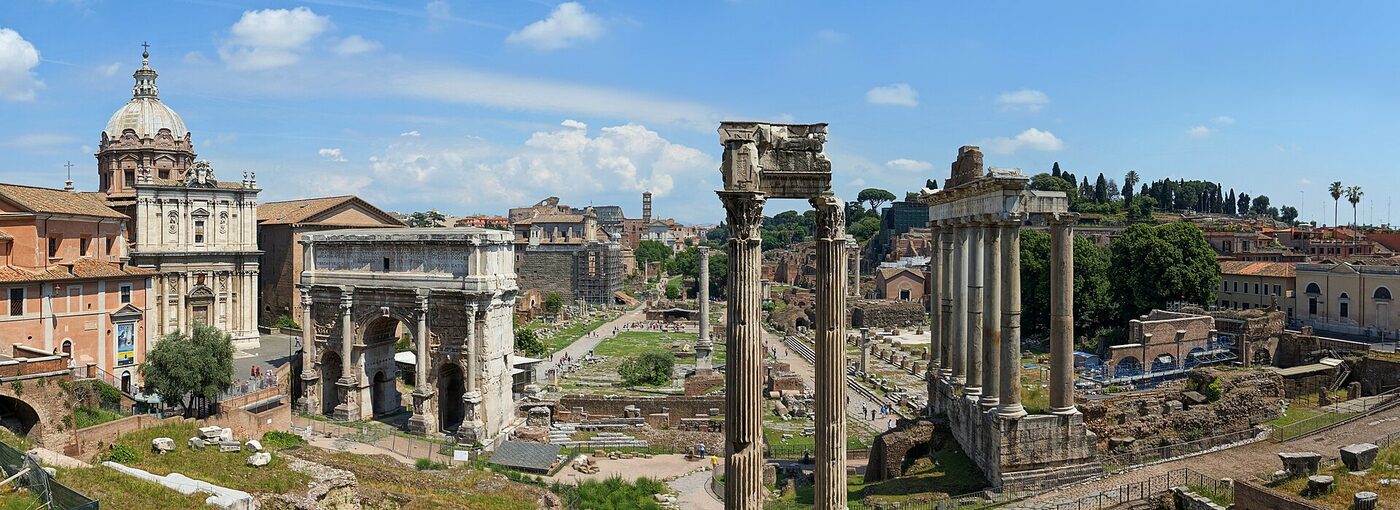
The plebeians' grievance was never only debt or land. Roman law itself, in the Republic's first sixty years, existed nowhere but in patrician memory. It was patrician magistrates who knew what the custom was, patrician magistrates who declared it in each case, and a plebeian standing trial had no way to know in advance what rule would be used to judge him. Tribunes had pressed for years for the law to be written down and published where everyone could read it — an idea the Romans called aequatio iuris, equality before the law. In 451 B.C. the ordinary magistracies were suspended for a year and power was handed instead to ten men, the decemviri consulari imperio legibus scribundis — “board of ten with consular power to draft the laws” — subject to no appeal at all.
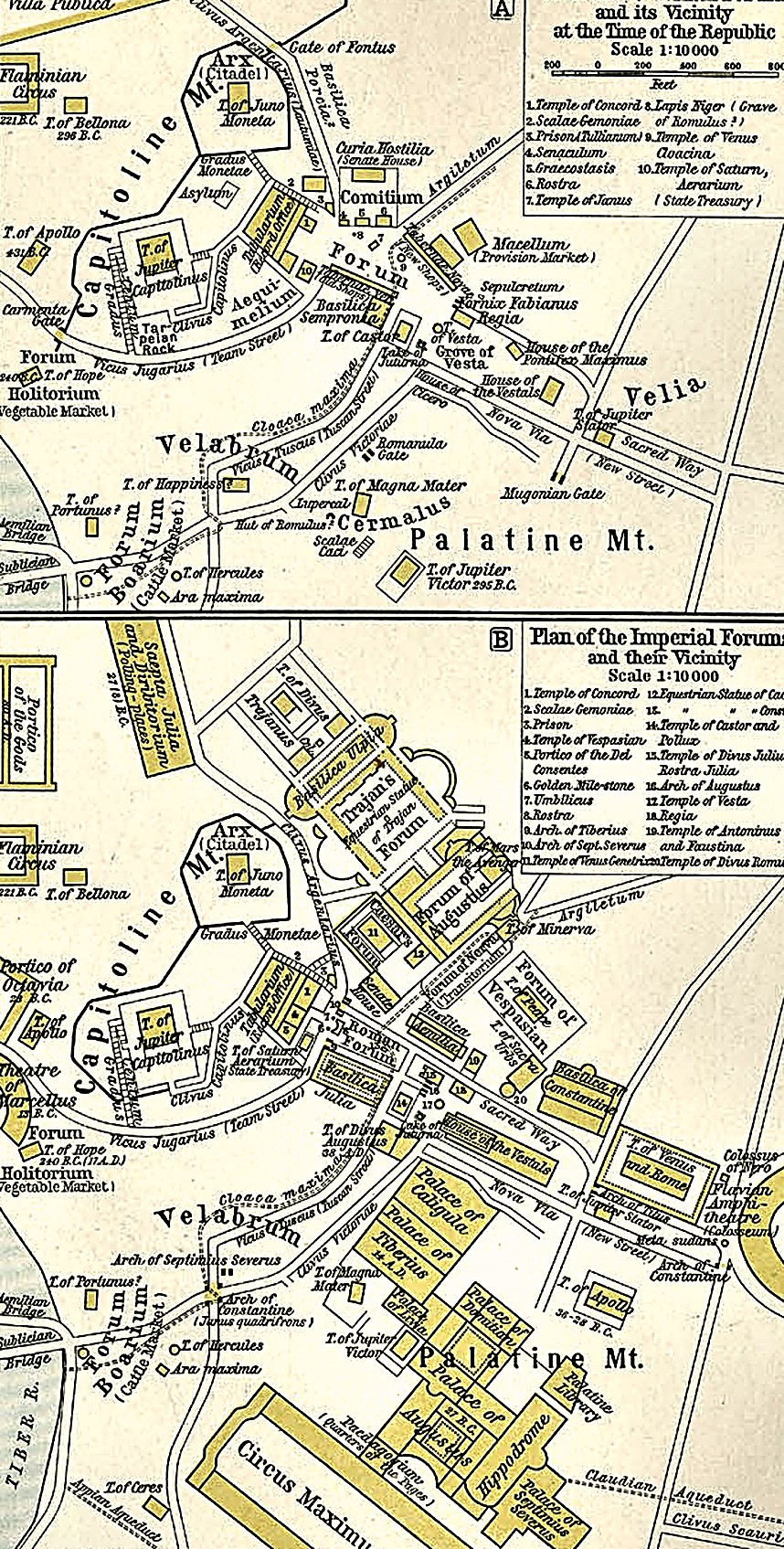
The first board, headed by the patrician Appius Claudius, produced ten tables of law and had them ratified by the citizens in assembly and set up in the Forum for anyone to read. Everyone agreed two more tables were still needed, so a second board was elected for 450 B.C. — Appius Claudius again at its head — and it was this second board that turned its extraordinary, appeal-proof power into naked tyranny. All ten decemvirs now went about at once with the full twelve lictors apiece that a consul alone had carried before.
“The Forum was filled with one hundred and twenty lictors … They presented the appearance of ten kings.” Livy, History of Rome, III.36 — trans. Rev. Canon Roberts (1912, public domain)
Tyrannical or not, the code the two boards produced — the Twelve Tables — became the founding document of Roman law, and it survives only because later writers quoted fragments of it; the original bronze tablets standing in the Forum were destroyed when the Gauls burned the city forty years later, in the last section of this chapter. What survives is mostly a plain, harsh, practical code for a community of small farmers: procedure for summoning a defendant to court, the father's power of life and death over his household (patria potestas), the guardianship of women, inheritance among the male kin group, damages for injury and theft, and — starkly — what a creditor could do to a debtor who could not pay.
From the Law of the Twelve Tables
Table III · On debt“One who has confessed a debt … shall have thirty days to pay it in. After that forcible seizure of his person is allowed … the creditor … shall fasten him in stocks or fetters, with not less than fifteen pounds of weight … On the third market day let them divide his body among them. If they cut more or less than each one's share it shall be no crime.”
Table IV · The power of a father“If a father sell his son three times, the son shall be free from his father.”
Table VIII · Injury and false witness“If one has broken a bone of a freeman with his hand or with a cudgel, let him pay a penalty of three hundred coins. If he has broken the bone of a slave, let him have one hundred and fifty coins … A person who had been found guilty of giving false witness shall be hurled down from the Tarpeian Rock.”
Table XI · On marriage“Marriages should not take place between plebeians and patricians.”
Trans. Oliver J. Thatcher, The Library of Original Sources, Vol. III (1901) — Internet History Sourcebooks Project, Fordham University. Public domain; short excerpts, Table numbering as in the original.Modern scholars doubt the debtor was really ever cut to pieces in practice — most think the clause was a maximum threat, rarely if ever carried out, and that the more usual outcome was the sale of a defaulter's whole estate — but they take the clause itself, and the code's severity generally, as authentic testimony to how raw and unmediated debt bondage still was for Rome's small farmers in 450 B.C. Table XI's ban on intermarriage between the orders was itself repealed within five years, by the lex Canuleia of 445 B.C.; it had been, if anything, proof of how anxious the patriciate still was to keep the two peoples legally distinct.
Whatever its harshness, the code held. It was never formally repealed, and for a thousand years Roman jurists treated it as the root of everything that came after.
“Even in the mass of legislation to-day … they still form the source of all public and private jurisprudence.” Livy, History of Rome, III.34 — trans. Rev. Canon Roberts (1912, public domain)
“That single little book of the Twelve Tables, if anyone look to the fountains and sources of laws, seems to me, assuredly, to surpass the libraries of all the philosophers, both in weight of authority, and in plenitude of utility.” Cicero, De Oratore, I.44 — trans. in Thatcher, Library of Original Sources (1901, public domain)
 Click to enlarge
 Click to enlarge
VerginiaThe decemvirate falls
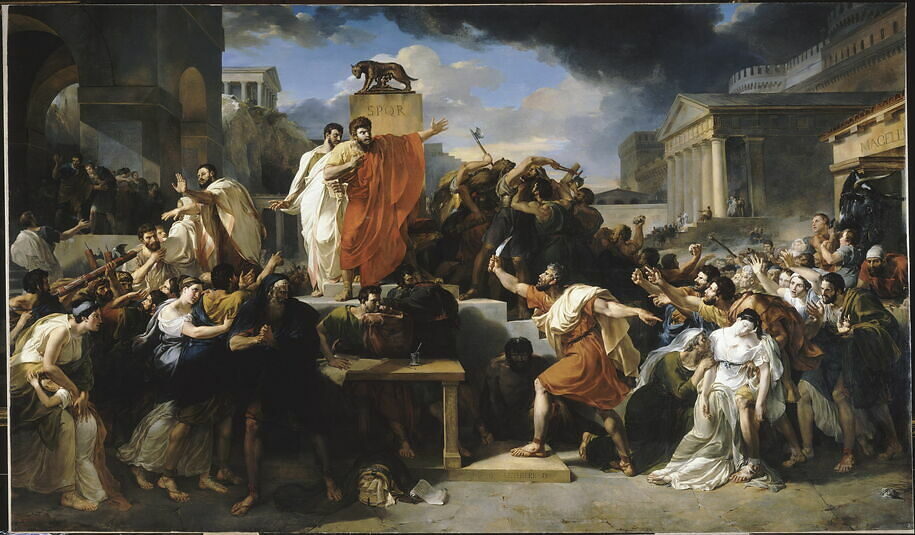
The tyranny of the second decemvirate reached its limit in the person of Appius Claudius himself. He desired a freeborn plebeian girl, Verginia, daughter of a respected centurion serving with the army and already betrothed to a former tribune, Icilius. Unable to have her by consent, Appius had one of his own clients claim in court — his own court — that she was in fact a runaway slave, wrongly raised as Verginius's daughter. When Icilius protested publicly, Appius threatened him with his lictors.
“I am, at your orders, Appius, to be removed at the point of the sword, that you may stifle all comment on what you want to keep concealed. I am going to marry this maiden, and I am determined to have a chaste wife.” Icilius, in Livy, History of Rome, III.45 — trans. Rev. Canon Roberts (1912, public domain)
 Click to enlarge
Appius delayed judgment only long enough to send secret orders holding Verginius under arrest with the army — orders that arrived too late, because Verginius had already set out for Rome. The next morning, before a crowd that included Verginius himself, Appius declared his own case's outcome: Verginia was a slave, to be handed over on the spot. Her father, seeing no other way to keep her from Appius, led her aside on the pretext of questioning her nurse, seized a knife from a butcher's stall, and killed her in front of the Forum.
“In this the only way in which I can, I vindicate, my child, thy freedom … By this blood, Appius, I devote thy head to the infernal gods.” Verginius, in Livy, History of Rome, III.48 — trans. Rev. Canon Roberts (1912, public domain)
Verginius rode straight for the army camp; the soldiers rose a second time, seceding as the plebs had seceded in 494 B.C. The decemvirs were forced out of office; Appius Claudius, imprisoned to await trial, died — by his own hand, tradition says — before it could take place. The consuls elected to replace the decemvirate, Valerius and Horatius, passed a package of laws that restored the tribunate, reaffirmed the citizen's right of appeal against a magistrate's sentence (provocatio), and — the single clause future generations would find most consequential — gave the resolutions of the plebeian assembly binding force in at least some matters, a principle that would not be made fully general until the lex Hortensia of 287 B.C., nearly two centuries later.
Patricians, Plebeians, and the VoteThe machine beneath the drama
Behind the secessions and the show trials stood a working constitution, and it is worth pausing, as the Cambridge history itself does, to look at how it actually ran. At its center sat the Senate — some three hundred men, patrician in its core, called the patres, “the fathers,” and after plebeians began to be enrolled, patres et conscripti, “the fathers and those enrolled with them.” The Senate was, in law, only an advisory council to the magistrates. In practice, controlling finance, foreign policy, and the calendar of public religion, it was the nearest thing Rome had to a permanent government, since consuls changed every year and the Senate did not.
Around the great patrician houses ran the invisible machinery of clientela: free citizens of lesser means attached themselves to a powerful family as clientes, trading political support and, when it came to it, their spears, for legal protection and material help. It was this bond, more than any office, that let a single clan like the Fabii field what amounted to a private regiment.
Voting ran through more than one body, and the differences mattered enormously. The oldest, the comitia curiata, organized by thirty ancient kinship wards from the regal period, had faded by the fifth century into a largely ceremonial role. Real power lay with two younger, rival assemblies. The comitia centuriata, traditionally credited to King Servius Tullius, mustered citizens as though for war and had them vote, not as individuals, but as “centuries” grouped by property: eighteen centuries of cavalry and eighty of the wealthiest infantry voted first, and if those ninety-eight centuries agreed, the matter was already decided before the remaining ninety-five centuries — including the entire bottom class of the poor, crowded into a single century regardless of its numbers — were ever polled. It was, quite deliberately, a machine for letting property outvote population. Set against it stood the newer comitia tributa, organized by residence into tribes — four urban tribes and a growing number of rural ones — where a poor citizen's vote and a rich one's counted the same. It was this tribal assembly that elected the tribunes and, increasingly, carried the plebeian cause.
 Click to enlarge
The Fall of VeiiRome's first long war
Two generations after the Cremera disaster, Rome and Veii fought their war to a finish. Unlike the old raiding seasons, this siege — by tradition begun in 406 B.C. — ran on through winter after winter, and for the first time Roman soldiers were kept under arms and paid a wage, a stipendium, rather than serving a single summer campaign and going home to the harvest. Historians count it as a real step away from the citizen-farmer army of Cincinnatus's day and toward something more like a standing force.
Command eventually fell to the patrician Marcus Furius Camillus, elected dictator for the purpose. In 396 B.C., after roughly a decade of siege, Camillus took Veii — legend says by a tunnel driven into the citadel itself — and evacuated its people, ending forever the city that had once threatened to be Rome's equal on the Tiber. His plan to resettle half of Rome's own citizens in the conquered city was blocked by the Senate and the tribunes alike; soon after, accused of mishandling the Veientine plunder, Camillus was condemned and went into exile. Rome had just destroyed its oldest enemy. Within a few years it would need Camillus back rather badly.
Click to enlarge
The Gallic SackWoe to the vanquished
A Celtic people, the Senones, had been pressing south into Italy under a chieftain the Romans called Brennus. In 390 B.C. — the traditional date; some ancient chronologies put it a few years later — they met a hastily raised Roman army at the river Allia, eleven miles from the city, and destroyed it so completely that Romans marked the anniversary, the dies Alliensis, as unlucky for centuries afterward. The city itself fell within days; only the citadel on the Capitoline Hill held out, its defenders warned of one night attack, famously, by the honking of Juno's sacred geese rather than by the watchdogs, who slept through it.
 Click to enlarge
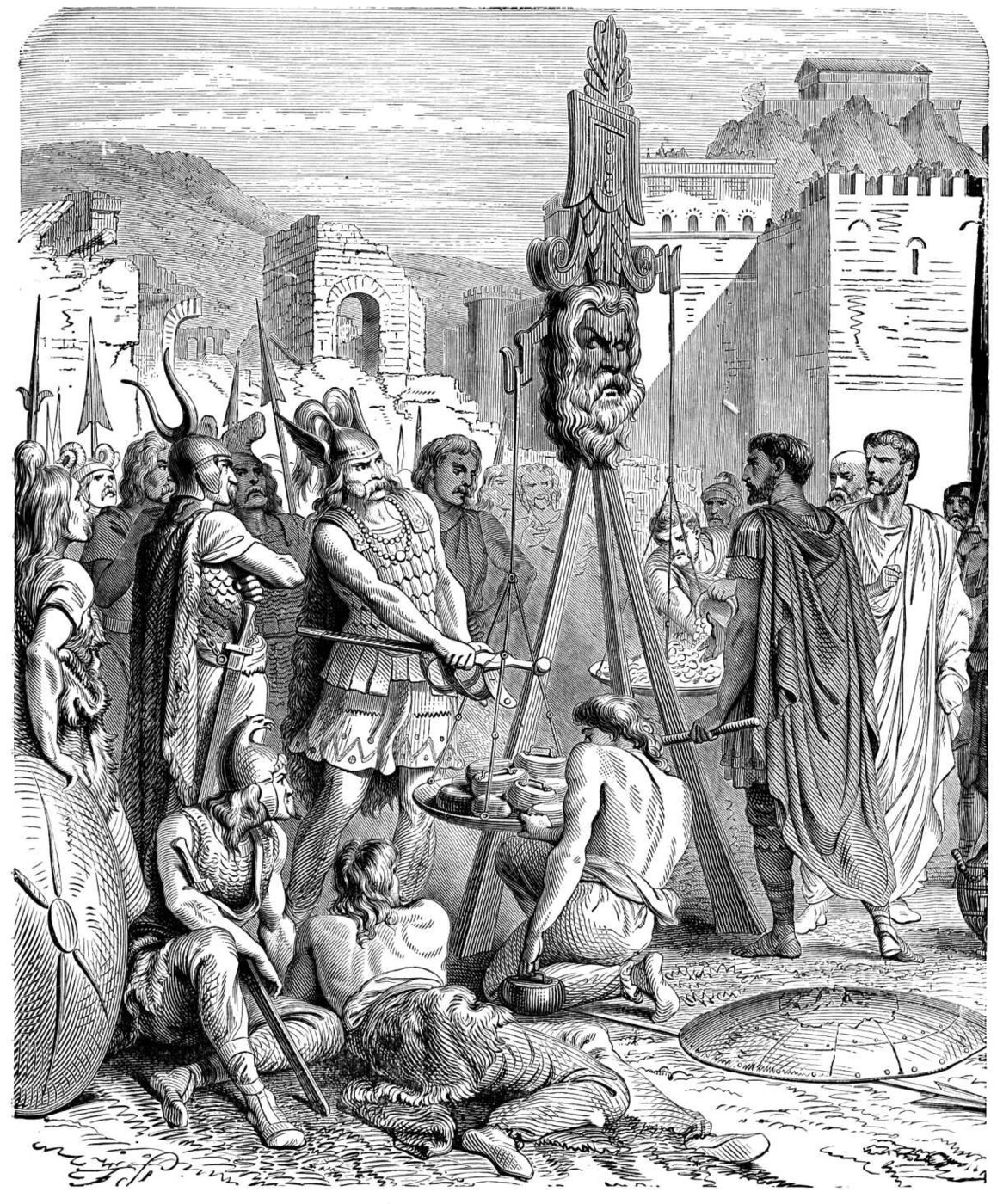
Siege, hunger, and disease wore down both sides until the Romans agreed to buy the Gauls off: a thousand pounds of gold. When the Gauls were found weighing it with false measures and the Roman officer in charge protested, Brennus is said to have thrown his own sword onto the scale.
“Woe to the vanquished!” Brennus, in Livy, History of Rome, V.48 — trans. Rev. Canon Roberts (1912, public domain)
 Click to enlarge
Tradition — and this part the ancient sources themselves treat with some suspicion, since it conveniently rescues Roman pride at the last possible moment — holds that the exiled Camillus was recalled, made dictator a second time, and arrived while the gold was still being weighed. He is said to have declared the bargain void, since no agreement made without a dictator's sanction could bind Rome, and to have driven the Gauls out in the battle that followed.
“A Romulus,” “The Father of his country,” “The Second Founder of the City.” Soldiers' acclamation of Camillus, in Livy, History of Rome, V.49 — trans. Rev. Canon Roberts (1912, public domain)
 Click to enlarge
Rome rebuilt her burned city within the year. The tribunate, the right of appeal, the Twelve Tables, the wealth-weighted centuries and the tribal assembly that opposed them — every institution this chapter has described survived the fire that destroyed the bronze tables themselves. A century and a half after the kings were expelled, Rome had learned that she could tear herself in two, lose an entire clan in an afternoon, watch her own magistrate turned tyrant, and be burned to the ground by a people she had never even fought before — and still not quite come apart. That durability, bought at exactly this cost, is what the Rome of the Gracchi and Sulla would one day inherit, and one day spend.