From the defeat of Philip of Macedon to the destruction of Corinth — the years in which Rome became the arbiter of the Greek world without ever quite deciding to rule it, and in which the wealth of that conquest began to unmake the small farmer at home.
200 – 133 B.C. · The Roman Republic · Macedon, Greece, Asia Minor & Italy
Drawn from The Cambridge Ancient History, 2nd ed., Vol. VIII — Rome and the Mediterranean to 133 B.C.
✦ ❧ ✦
Scroll to begin ↓
I201 – 200 B.C. · An exhausted republic votes for another war
Rome Looks EastVictory over Hannibal leaves an opening, and a debt
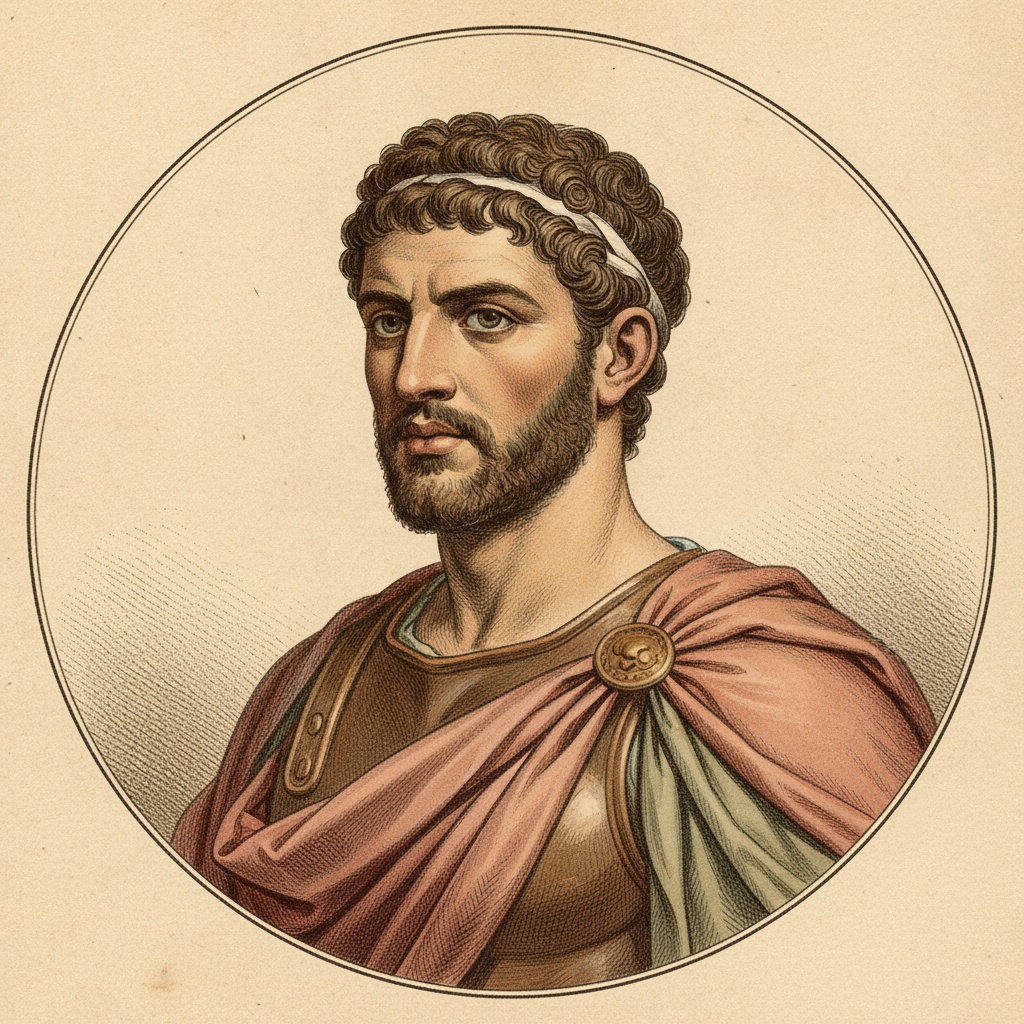
Philip VKing of Macedon, r. 221–179 B.C.Royal tetradrachm, British Museum 🔍
Rome had just spent seventeen years fighting for its own survival against Hannibal, and the citizen assembly, when first asked to approve a new war across the sea, said no. What changed its mind was a pair of embassies from the Aegean. The island republic of Rhodes and the kingdom of Pergamon, both alarmed by the aggression of Philip V of Macedon — who had allied with Hannibal during the darkest years of the Italian war and was now carving up the possessions of a weakened Ptolemaic Egypt in a secret pact with the Seleucid king Antiochus III — appealed to the one power capable of stopping him. The Senate, freed at last from the Carthaginian emergency and unwilling to let a hostile king rebuild the kind of eastern base Pyrrhus once had, pushed for war. The centuriate assembly, exhausted and reluctant, refused the first time it was asked and had to be asked again.
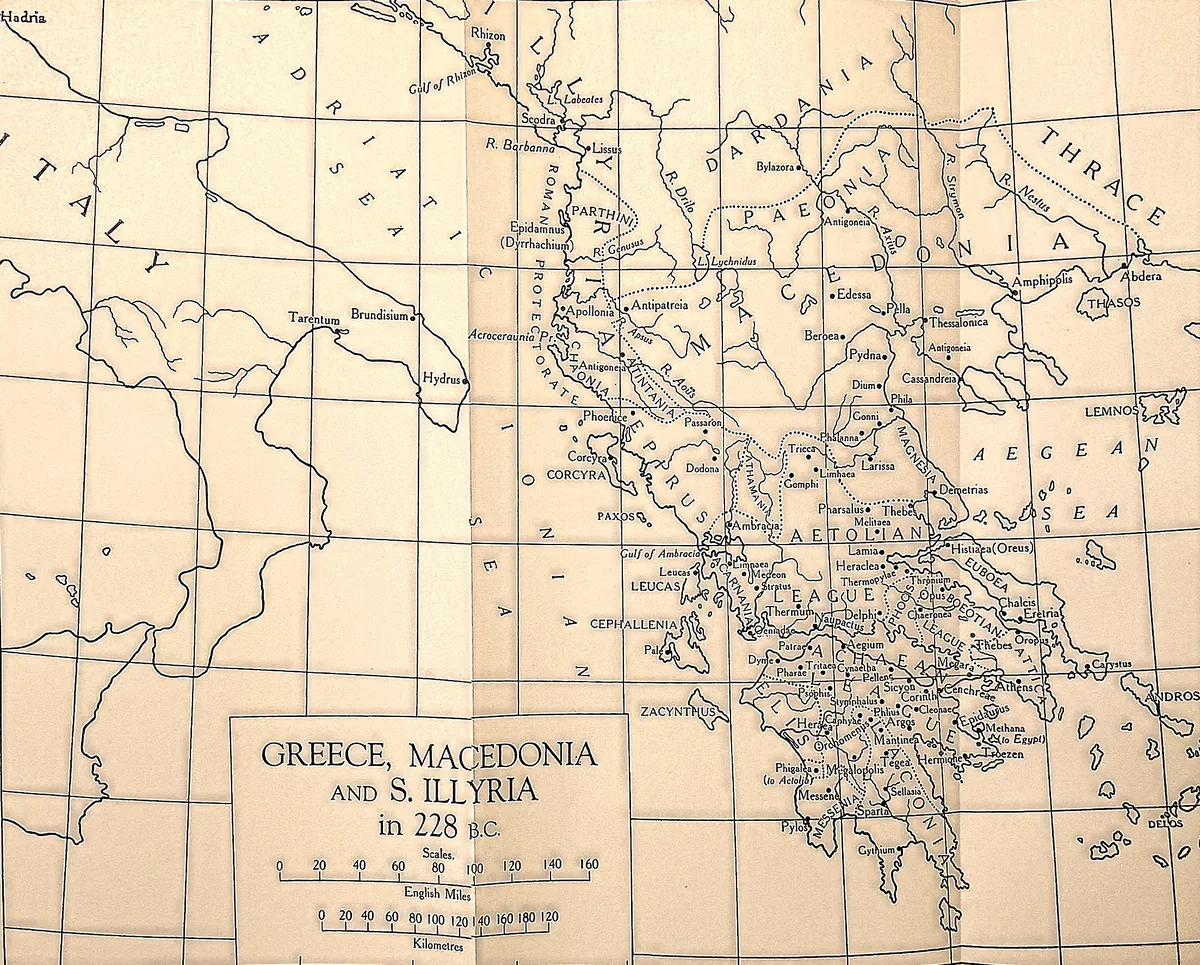
Plate · Greece and Macedonia, 228 B.C.Click to enlarge
The world Rome was about to enter. Macedon under its own king; the Achaean and Aetolian Leagues holding most of the south; Sparta and Athens reduced to two cities among many; and on the Adriatic coast the narrow Roman protectorate won in the Illyrian wars — the foothold from which everything that follows in this chapter was launched.
The Cambridge Ancient History, Cambridge Ancient History, Vol. VII, Map 10 (to face p. 768).
That second vote is worth pausing on, because it is not the vote of a state hungry for glory. Rome went to war with Macedon in 200 B.C. as a war-weary republic persuaded, not a conquering one straining at the leash — and it is a caution against reading everything that follows as a plan laid in advance. What Rome had, rather, was a habit: when an eastern king threatened the balance that Roman arms had just finished securing in the west, the Senate no longer waited to be attacked at home. It sent a consul and two legions across the Adriatic instead.
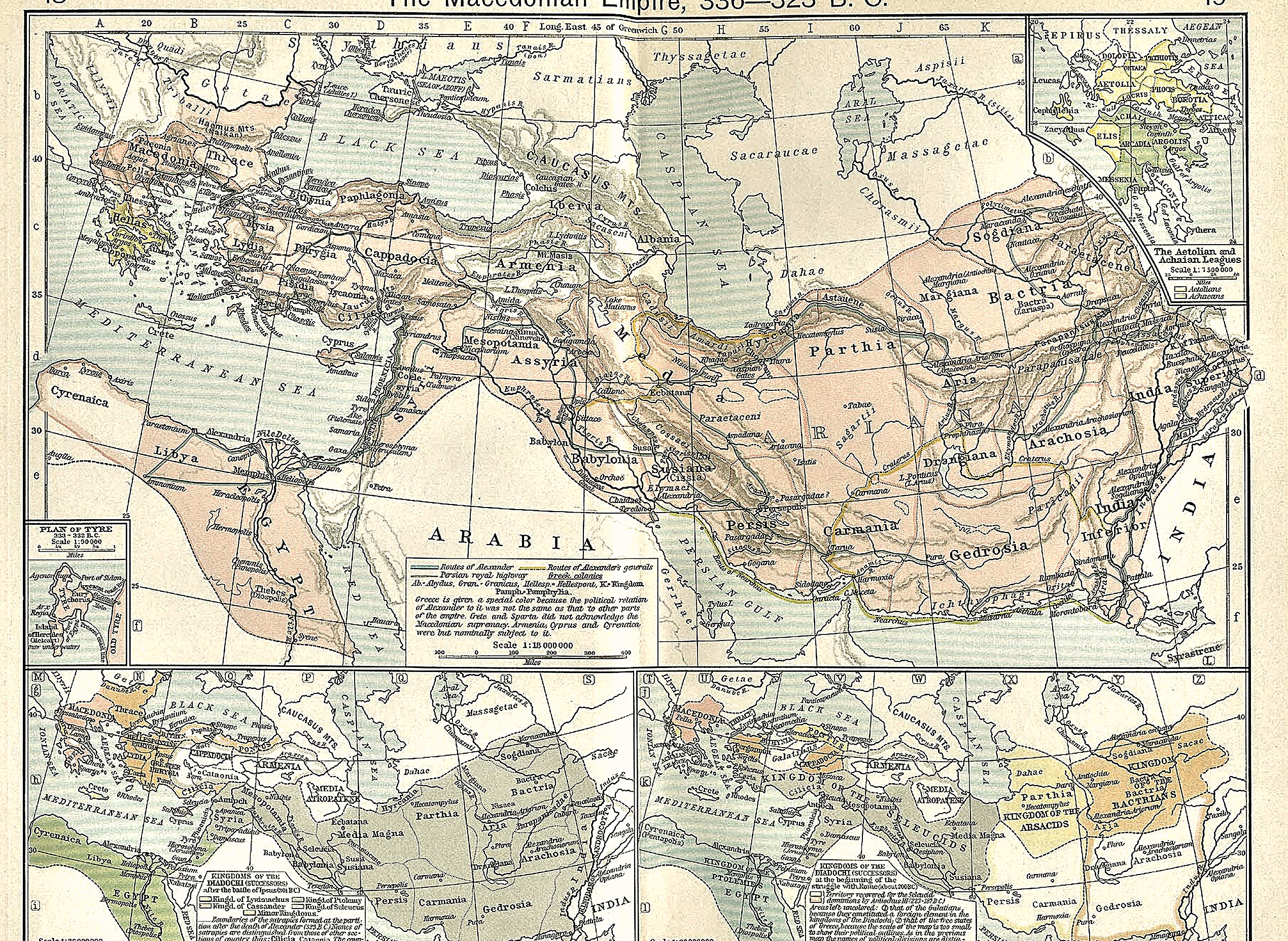
Shepherd plate · The Greek EastClick to enlarge · zoom
The inheritance Rome crossed the Adriatic to enter. The main plate shows Alexander's empire; the insets at right and below show the Aetolian and Achaean Leagues and the successor kingdoms about 200 B.C. — the political world Rome confronted after Hannibal's defeat.
William R. Shepherd, Historical Atlas (1911), public domain; restored from the University of Texas scan.
The instrument Rome sent was not the pike-armed phalanx that had dominated the eastern battlefield since Alexander, but the Roman legion in its post-Hannibalic form: smaller, sword-armed maniples that could pivot and fill gaps on broken ground, backed by allied Italian cavalry and light infantry that a Macedonian army no longer fielded in comparable numbers. Neither side yet knew which system was better. Within four years, on a ridge of hills in Thessaly, they would find out.
II197 – 196 B.C. · A battle of terrain, and a proclamation
CynoscephalaeThe phalanx meets the legion on broken ground
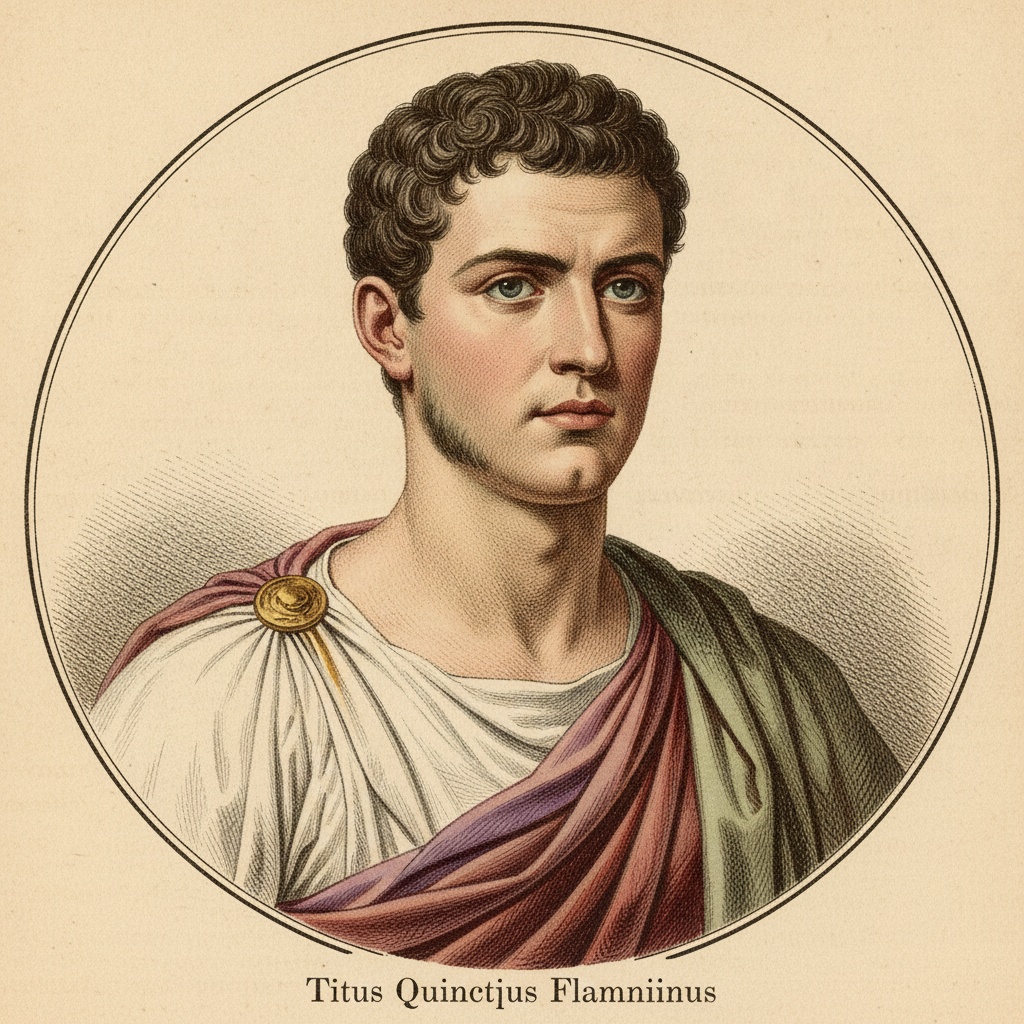
T. Quinctius FlamininusConsul, 198 B.C.Gold stater, British Museum 🔍
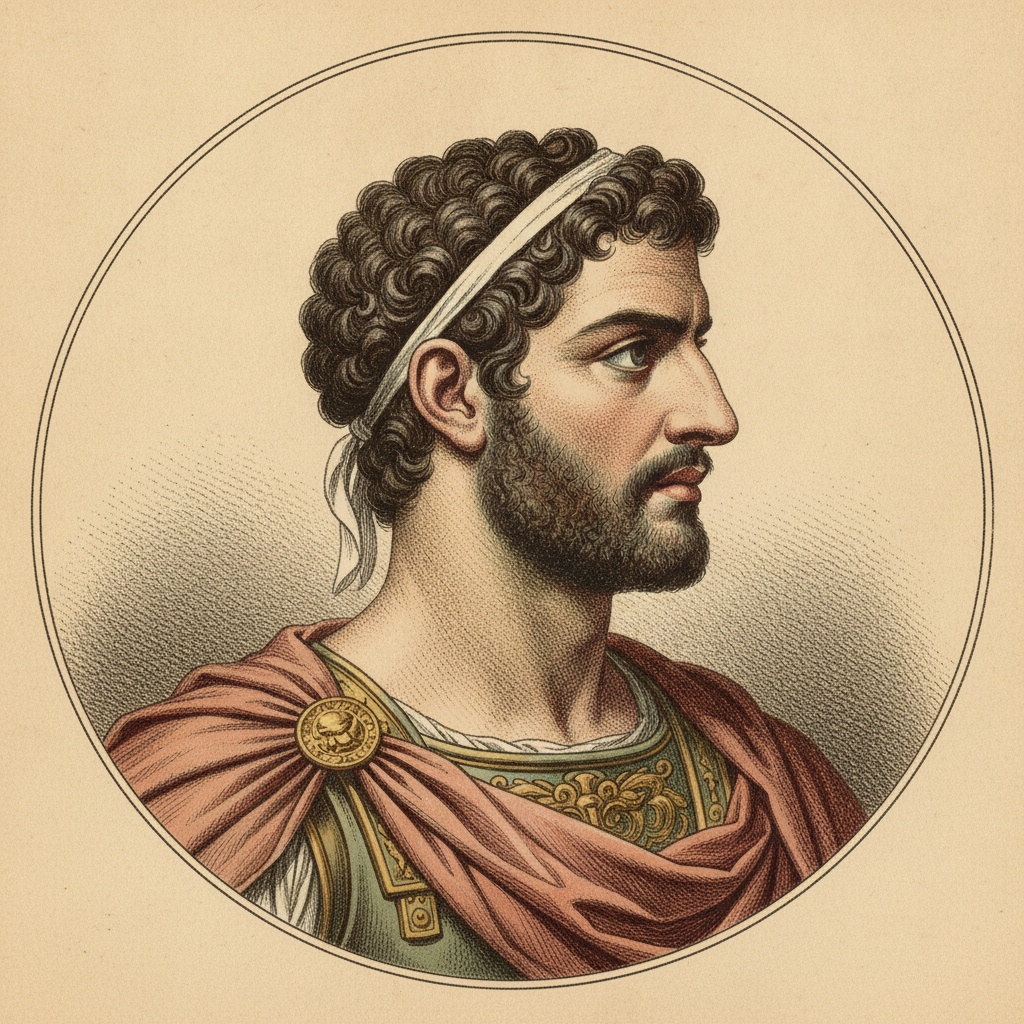
Command in Greece went to Titus Quinctius Flamininus, a consul still in his early thirties who had grown up reading Greek and, unusually among Roman commanders, seems to have meant it when he spoke of Greek freedom rather than merely finding the phrase useful. In 197 B.C. his army met Philip's Macedonian phalanx near a range of hills called Cynoscephalae — the “dogs’ heads” — in a battle that began as an accidental skirmish in fog and became a set engagement once both commanders committed their full lines. The Macedonian phalanx, formed up and advancing downhill, broke the Roman line in front of it. But the ridged, broken ground would not let the whole phalanx keep its files closed and its long pikes level; where the formation buckled or a gap opened, Roman maniples with short swords got in among the pikemen, where a sarissa eighteen feet long was worse than useless. An unnamed Roman officer, on his own initiative, wheeled a detachment behind the Macedonian right and finished the collapse.
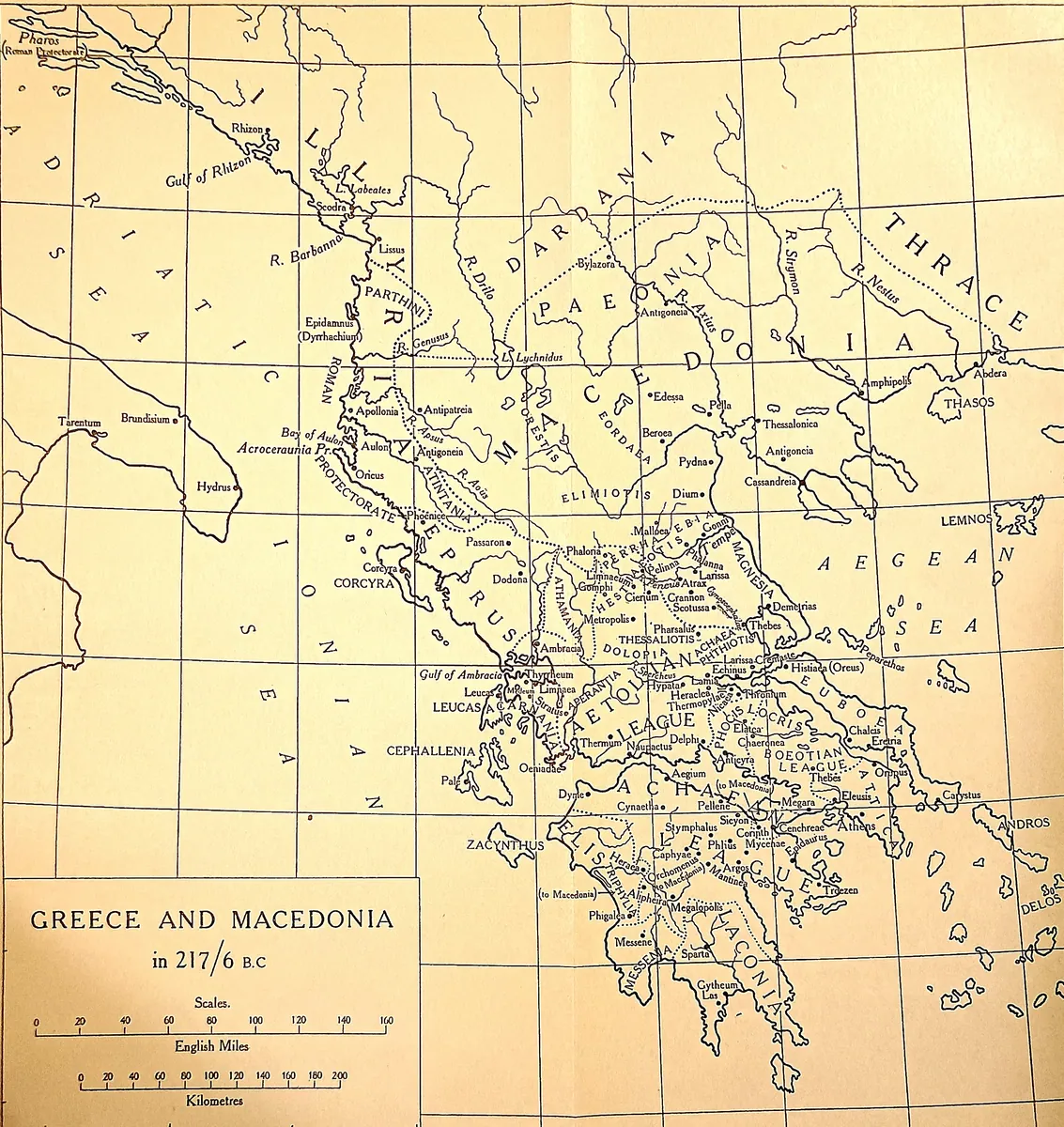
Plate · Greece and Macedonia, 217/6 B.C.Click to enlarge
Philip’s Greece, on the eve. Thessaly, where Cynoscephalae was fought, sits in the middle of the sheet between the Macedonian kingdom and the leagues of the south. The plate dates from the year Philip V made peace at Naupactus and turned toward the Adriatic — the decision that brought Rome back.
The Cambridge Ancient History (1st ed., Cambridge University Press), map plate “Greece and Macedonia in 217/6 B.C.” — photographed from the fold-out sheet and cleaned.
Philip escaped with the wreck of his army and sued for peace. Flamininus, who wanted Macedon weakened but not destroyed — a buffer against the tribes to the north, not a vacuum for someone else to fill — granted survivable terms: an indemnity, a reduced army, and the loss of Macedon's garrisons in Greece proper. The garrisons were the point. The following year, at the Isthmian Games near Corinth, before an audience of Greeks from across the peninsula, a herald read out Flamininus's proclamation.
“The Roman senate and Titus Quintius, the proconsular general, having vanquished King Philip and the Macedonians, restored the Corinthians, Locrians, Phocians, Euboeans, Achaeans of Phthiotis, Magnetians, Thessalians, and Perrhaebians to their own lands, laws, and liberties; remitting all impositions upon them, and withdrawing all garrisons from their cities.”
Plutarch, Life of Flamininus, 10 — trans. J. Dryden, rev. A. H. Clough (public domain)
Plutarch reports that the roar of the crowd was so loud that crows flying overhead reportedly fell stunned into the stadium — a detail he himself repeats as report rather than fact, and one this chapter repeats the same way. Whatever the noise really was, the substance of the proclamation was real and, for the moment, sincere: Rome withdrew every soldier from Greek soil. It had also just demonstrated, in the clearest possible terms, that no Greek city or league could any longer arrange its affairs without Roman permission. Freedom and hegemony had arrived in the same sentence, and would not be easy to pull apart again.
III192 – 188 B.C. · The Seleucid king tests the new order
The King from AsiaThermopylae again, and a settlement that redraws Asia Minor
Antiochus III “the Great”King of the Seleucid Empire, r. 223–187 B.C.Musée du Louvre 🔍
Rome's declared withdrawal from Greece left a question unanswered: who would police the freedom it had just proclaimed? Antiochus III, the Seleucid king who had spent a decade rebuilding his empire's eastern frontier and now controlled most of the Anatolian and Syrian coast, crossed into Europe in 192 B.C. at the invitation of the one major Greek power still resentful of Roman tutelage, the Aetolian League. He brought with him, as a military adviser, the most famous refugee in the Mediterranean: Hannibal, who had fled Carthage rather than be handed to Rome and now offered the Seleucid court the one thing it lacked — direct experience of beating Roman armies.
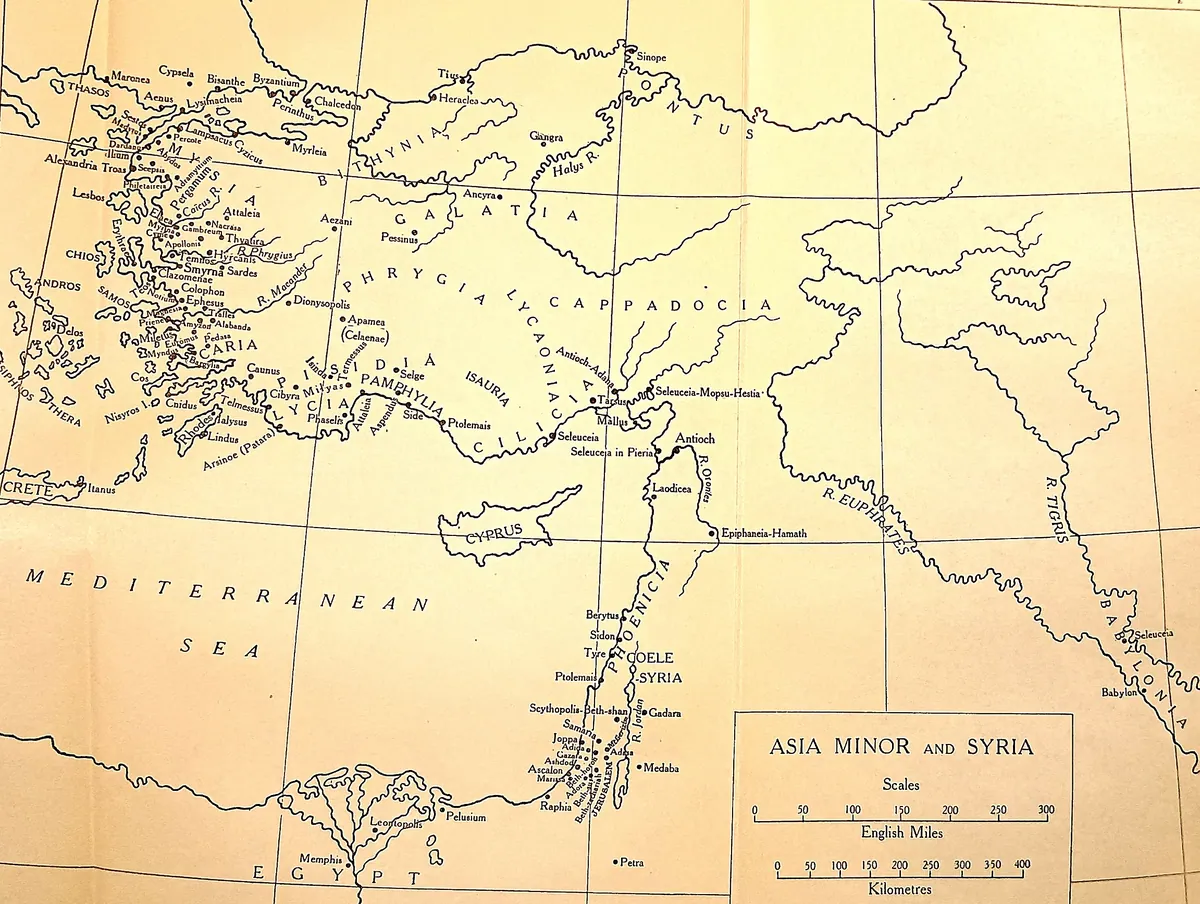
Plate · Asia Minor and SyriaClick to enlarge
What Magnesia redistributed. The Seleucid west: Ionia and Caria on the Aegean, the Phrygian and Lycaonian plateau, the Cilician Gates, and Antioch beyond the Amanus. After 188 B.C. Rome pushed Antiochus behind the Taurus and handed most of the rest to Pergamum and Rhodes without keeping any of it.
The Cambridge Ancient History (1st ed., Cambridge University Press), map plate “Asia Minor and Syria” — photographed from the fold-out sheet and cleaned.
Antiochus's advice-taking did not match his adviser's reputation. Rome answered the invasion by doing what it had done to Pyrrhus and Hannibal in turn: absorbing an early shock and then out-organizing the opponent's logistics and alliances. A Roman army caught Antiochus at Thermopylae — the same pass where three hundred Spartans had once died buying time — and, using a flanking route over the mountains that echoed the Persian maneuver of 480 B.C., broke his position and drove him back into Asia. Rome pursued him across the Aegean, defeated his fleet, and in 190/189 B.C. crushed his main army at Magnesia near Smyrna, where a Roman force perhaps half the size of the Seleucid host again exploited the same weakness: an oversized, heterogeneous army whose separate contingents — cataphract cavalry, scythed chariots, Galatian mercenaries, elephants — could not coordinate under pressure the way a legion did.
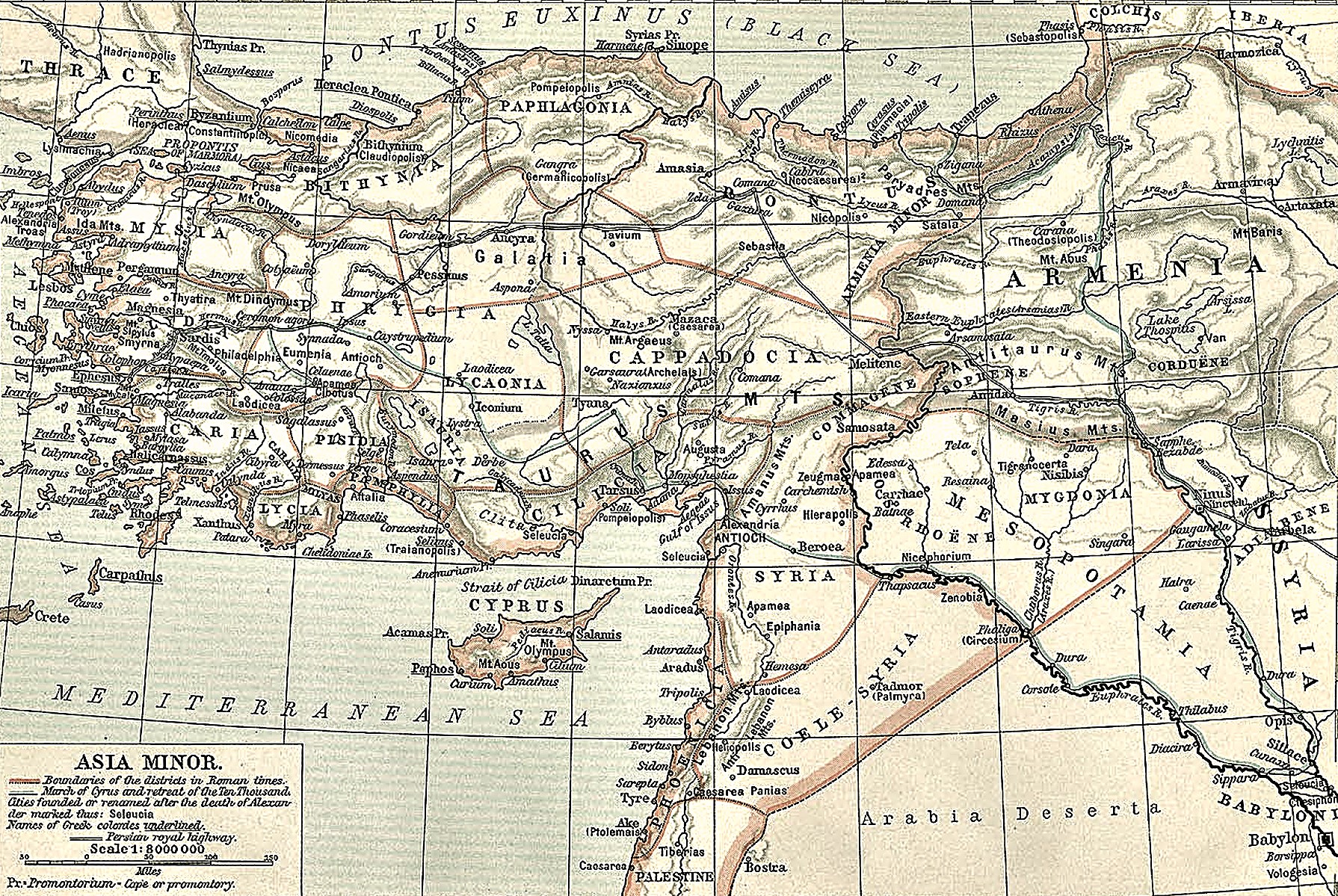
Map · Asia MinorClick to enlarge
The ground Apamea redrew. The Treaty of Apamea (188 B.C.) pushed Seleucid power out of Asia Minor entirely, north and west of the Taurus range shown here — territory that Rome did not keep for itself but handed to its allies Pergamon and Rhodes, preferring loyal client states to the cost and exposure of direct rule.
After Shepherd, Historical Atlas (1911), “Asia Minor.”
The peace of Apamea that followed set the pattern for a generation of Roman policy in the East: Rome dismantled a great power's ability to threaten the Aegean, but declined the trouble and expense of governing the ground itself, parceling former Seleucid territory out to Pergamon and Rhodes instead. It was cheap, effective, and utterly dependent on every client understanding exactly who had made them a gift of that territory. Hannibal fled again, further east, and eventually took his own life rather than be captured — the last act of the Second Punic War playing out a decade after that war's official end, in a story this site's chapter on Rome and Carthage tells in full.
IV171 – 168 B.C. · A kingdom ends
PydnaThe Antigonid monarchy is broken into four republics
PerseusLast king of Macedon, r. 179–168 B.C.Royal tetradrachm, British Museum 🔍
Philip V died in 179 B.C. still nominally Rome's ally, and his son Perseus inherited a Macedon that had spent two decades quietly rebuilding its army, its treasury, and its standing among Greek states uneasy about Roman power. Rome read this recovery as exactly the threat it had gone to war twice before to prevent, and after a long diplomatic build-up — the sources describe Roman embassies collecting grievances the way a prosecutor collects evidence — the Senate declared the Third Macedonian War in 171 B.C. It took three indecisive years and a change of Roman command before the consul Lucius Aemilius Paullus, a disciplined veteran with none of Flamininus's romantic attachment to Greek freedom, brought Perseus to battle at Pydna in 168 B.C.
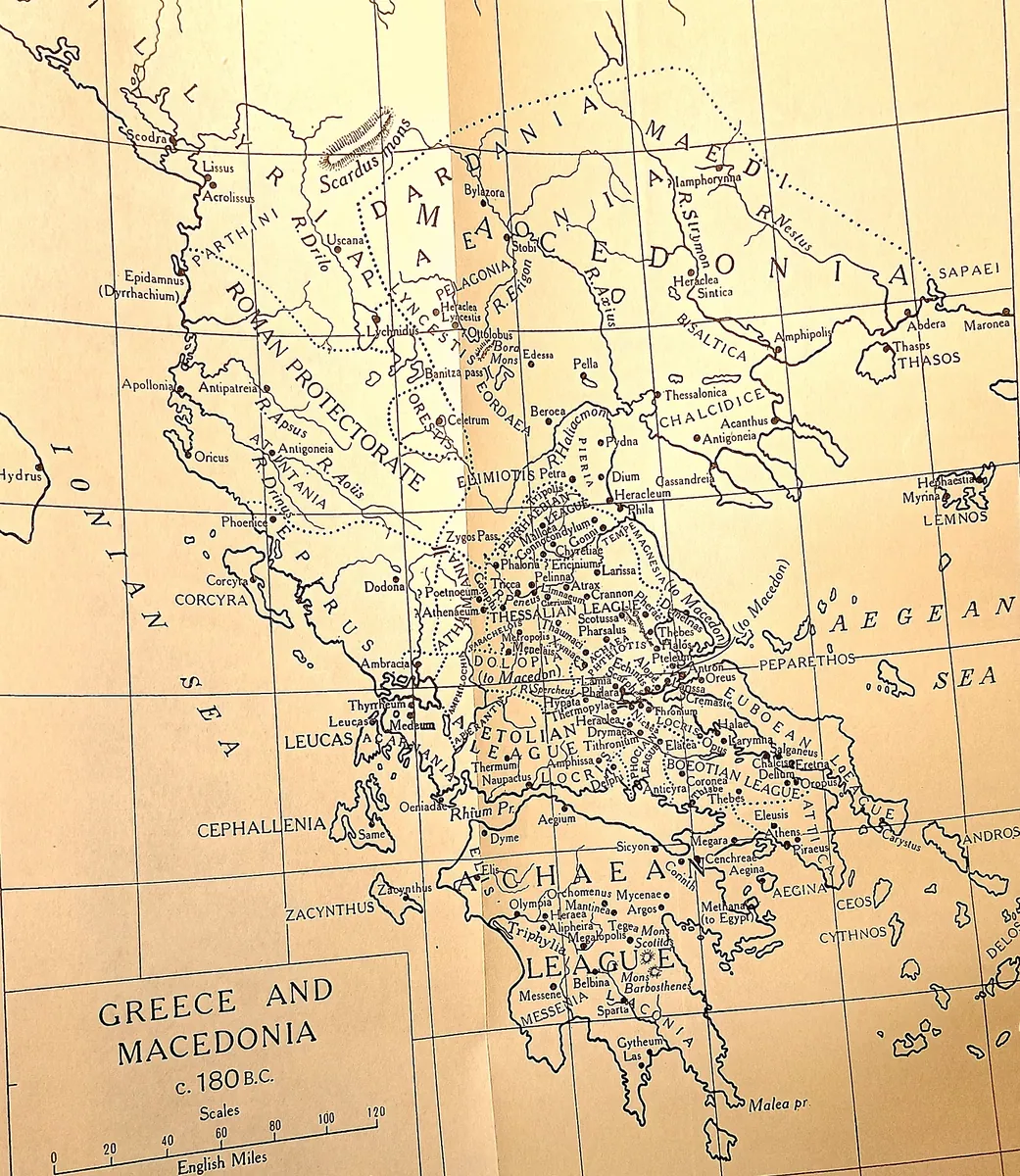
Plate · Greece and Macedonia, c. 180 B.C.Click to enlarge
The kingdom Perseus inherited. Macedon still whole, the Roman protectorate on the Illyrian coast, the Thessalian, Aetolian, Boeotian and Achaean Leagues each with their own frontier. After Pydna in 168 B.C. the kingdom on this sheet was cut into the four republics that were forbidden to trade or marry across their new borders.
The Cambridge Ancient History (1st ed., Cambridge University Press), map plate “Greece and Macedonia c. 180 B.C.” — photographed from the fold-out sheet and cleaned.
The pattern held once more: the Macedonian phalanx, advancing on level ground this time, was formidable while it held its front, and Roman officers who fought that day were later said to admit they had never seen anything so terrifying as a fully formed sarissa wall coming forward. But a phalanx that has to cross uneven terrain in contact with the enemy inevitably tears itself into separate blocks, and Aemilius Paullus, an experienced enough soldier to wait for exactly that moment, fed his maniples into the gaps. The battle broke Macedonian resistance in under an hour; the pursuit and the political settlement took much longer to finish. Perseus was captured, paraded in Aemilius Paullus's triumph at Rome, and died in Italian custody. The monarchy of Alexander's own homeland, three generations removed from Alexander himself, ceased to exist. Macedon was carved into four separate republics forbidden to intermarry, trade freely, or exploit its gold mines without Roman license — free, in the same hollow sense Flamininus had once proclaimed for Greece, and closely watched.
The victors did not treat every ally gently. Rome suspected the neighboring kingdom of Epirus of sympathizing with Perseus, and the Senate authorized Aemilius Paullus to make an example of it: by the ancient count, seventy Epirote towns were sacked in a single coordinated operation and as many as 150,000 people were said to have been sold into slavery — a figure transmitted by Livy that modern historians treat with real caution, but that nonetheless marks 167 B.C. as the year Rome showed the Greek world what defeat, rather than mere hegemony, could now cost.
Chapter V · The East is broken
Three battles that broke the Hellenistic world
Scroll through the three wars, a generation apart, that ended the kingdoms of Alexander’s heirs.
197 B.C.
Cynoscephalae
On the broken hill-country of Thessaly the consul Flamininus catches Philip V's phalanx before it can form, and destroys it. The next year, at the Isthmian games near Corinth, he has the “freedom of the Greeks” proclaimed — Rome as liberator, not yet ruler.
191 B.C.
Thermopylae
Invited into Greece by the Aetolians, Antiochus III, the greatest king of the East, is routed at the pass of Thermopylae and thrown back across the Aegean within a season.
190 B.C.
Magnesia ad Sipylum
A Roman army crosses into Asia for the first time and annihilates his host at Magnesia. By the peace of Apamea in 188 the Seleucids give up Asia Minor, and Rome's ally Pergamon is enlarged with the spoils.
168 B.C.
Pydna
A generation later Philip's son Perseus rebuilds Macedon's strength. At Pydna the phalanx is broken a last time, the capital Pella is taken, and the monarchy of Alexander's heirs is abolished — Macedon carved into four powerless republics.
197 B.C.
battle that broke a kingdom’s armyMacedonian holdingRome or an ally of Rome
Sites: Pleiades. Kingdoms and leagues are cartographic labels, not data borders — none of this ground is Roman yet. Land: Natural Earth. Three wars, one generation: 200–197, 192–188, 171–168 B.C.
V167 – 150 B.C. · A Greek historian explains Roman success to Greeks
A Hostage Explains RomeThe best witness this chapter has was a prisoner of it
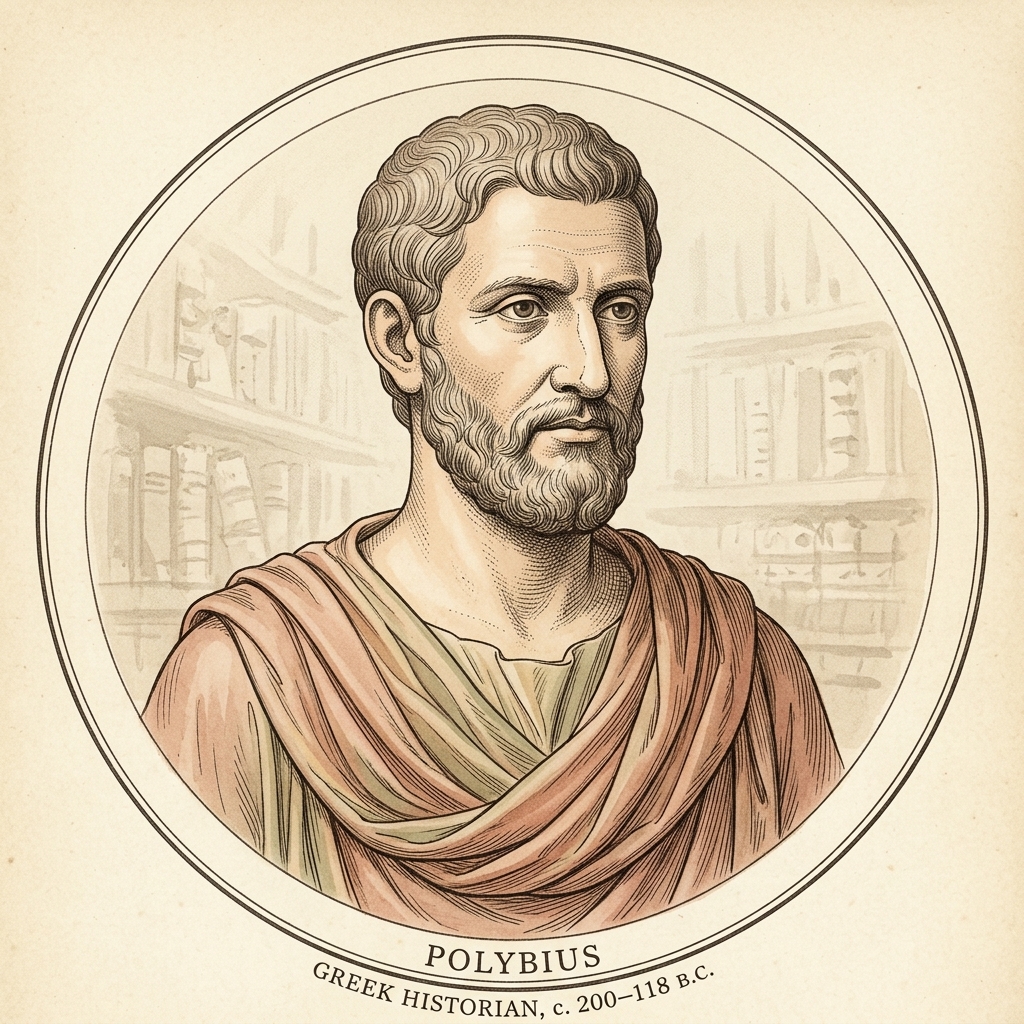
PolybiusAchaean statesman & historian, c. 200–118 B.C.Bust of Polybius, Megalopoli 🔍
After Pydna, Rome moved to break the political independence of the one Greek power still capable of acting as a bloc: the Achaean League, a federal union of city-states in the Peloponnese that had never fought Rome directly but was judged too autonomous to be trusted. Rome's solution was administrative rather than military — it deported roughly a thousand leading Achaeans to Italy as hostages, on the untested charge of insufficient loyalty during the Macedonian war, and held them for seventeen years without trial. Among them was a cavalry officer and future League statesman named Polybius.
Polybius's captivity became, almost by accident, one of antiquity's most consequential postings. Rather than being confined, he was taken into the household of Aemilius Paullus's own family and became tutor and lifelong friend to the future Scipio Aemilianus — giving a Greek intellectual a front-row seat inside the Roman elite at the precise moment Rome was deciding what to do with the Mediterranean it now dominated. Polybius set out to answer, for a Greek audience that still found Roman success almost impossible to credit, the central question of his history.
“For who is so worthless or indolent as not to wish to know by what means, and under what system of polity, the Romans in less than fifty-three years have succeeded in subjecting nearly the whole inhabited world to their sole government — a thing unique in history?”
Polybius, Histories, 1.1 — trans. E. S. Shuckburgh (1889, public domain)
His answer, developed across forty books of which only a fraction survives complete, pointed to the Roman constitution's mixture of monarchic, aristocratic, and democratic elements — consuls, Senate, and popular assemblies checking one another — as a system unusually resistant to the internal collapses that had repeatedly wrecked Greek and Macedonian power. He was not a neutral observer; he owed his position to the family that had broken Macedon, and his account of Rome's rise reads, in places, like an explanation offered to console the losing side. But he had watched the machine from inside it, and no other surviving source came as close.
VI150 – 146 B.C. · The hinge year
146 B.C.: Two Cities FallMacedon becomes a province; Greek political freedom ends at Corinth
The settlement of 168 B.C. did not hold indefinitely. In 149 B.C. a Macedonian adventurer named Andriscus, claiming descent from Perseus, raised a rebellion and briefly reunited the four republics Rome had carved apart. Rome crushed him within two years and, rather than experiment again with a nominally free federation, annexed Macedon outright as a Roman province — the first permanent Roman territory on the Greek mainland, garrisoned and taxed directly rather than managed through client diplomacy. The era of hegemony without occupation, inaugurated by Flamininus's proclamation five decades earlier, was quietly over for Macedon.
The Achaean League, still smarting from the hostage deportations and now goaded by a reckless leadership faction under a man named Critolaus, chose the same year to defy Rome outright — attacking a Roman ally, Sparta, and then Roman forces sent to arbitrate the dispute. The war that followed was brief and one-sided. In 146 B.C. the consul Lucius Mummius defeated the League's army and, on Senate instruction, destroyed the city of Corinth as an example: its male population killed or enslaved, its women and children sold, its famous artworks shipped to Rome, the city itself left unoccupied for a century.
Corinth's destruction ended, more completely than Macedon's annexation had, the fiction that Rome merely arbitrated among free Greek states. Individual cities kept their local laws and civic life; Achaea itself was not immediately organized as a province, and full provincial status for Greece was still decades away. But the political capacity of Greek states to act together, in league or in defiance of Rome, had been demonstrated to end in ruins. Freedom, as Flamininus had proclaimed it at the Isthmian Games, had always meant freedom to be governed indirectly rather than freedom to disagree; Corinth was the lesson for anyone who had still doubted it.
VII168 – 133 B.C. · Victory abroad, strain at home
What Conquest BoughtThe eastern wars reshape the Roman countryside
Half a century of wars in Macedon, Greece, and Asia Minor paid Rome in ways that showed up far from any battlefield. Indemnities, royal treasuries, and the plunder of cities like Corinth and the seventy towns of Epirus poured bullion into Rome on a scale the Republic had never handled before — so much that, by tradition, direct taxation of Roman citizens in Italy was suspended in 167 B.C., paid for instead out of the spoils of empire. Alongside the money came people: the Epirote sack alone was said to have produced 150,000 new slaves, and eastern wars over the following decades added many more, feeding a slave market that Italian landowners used to staff a new kind of estate.
Senators and other wealthy Romans used their share of this wealth to buy up land — much of it public land (ager publicus) originally taken from defeated Italian peoples in earlier centuries and simply occupied in excess of the legal limit — and to work it with slave gangs rather than tenant farmers or hired citizen labor. Slaves did not need to be released for annual military campaigns the way a citizen-soldier did, and unlike a free tenant, they generated no complaints to a tribune. The result was a countryside increasingly organized around large slave-worked estates, the latifundia, at the direct expense of the small citizen-farmers who had traditionally filled the legions' ranks and whose land, mortgaged or abandoned during long overseas service, was often the very land being absorbed.
It was this specific, traceable chain — eastern conquest, slave imports, the growth of latifundia, the displacement of the small farmer-soldier — that the tribune Tiberius Sempronius Gracchus pointed to in 133 B.C. when he proposed enforcing the old legal limit on public land and redistributing the surplus to landless citizens. The proposal split the Republic along a line that had never fully closed again by the time this chapter's companion volume on the fall of the Republic ends with Caesar's murder. The Republic that had spent half a century deciding what freedom meant for Greek cities it did not wish to govern directly was about to spend the next century failing to answer the same question for its own citizens.
✦ ❧ ✦
Rome had made itself the unchallenged arbiter of the Mediterranean world without building, yet, the institutions to govern what it had won — and the wealth of that unfinished conquest was already pulling the Republic's own foundations apart.