A.D. 235–249Soldier emperors
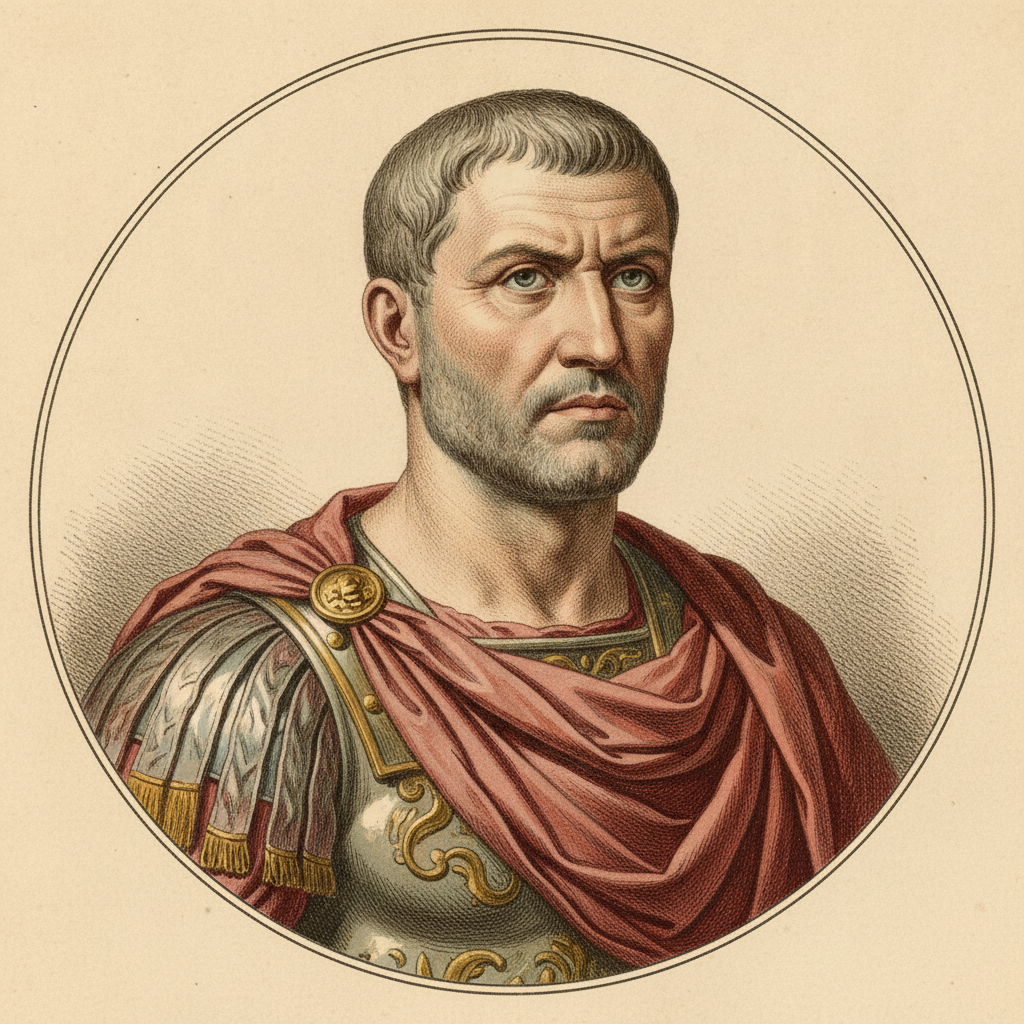
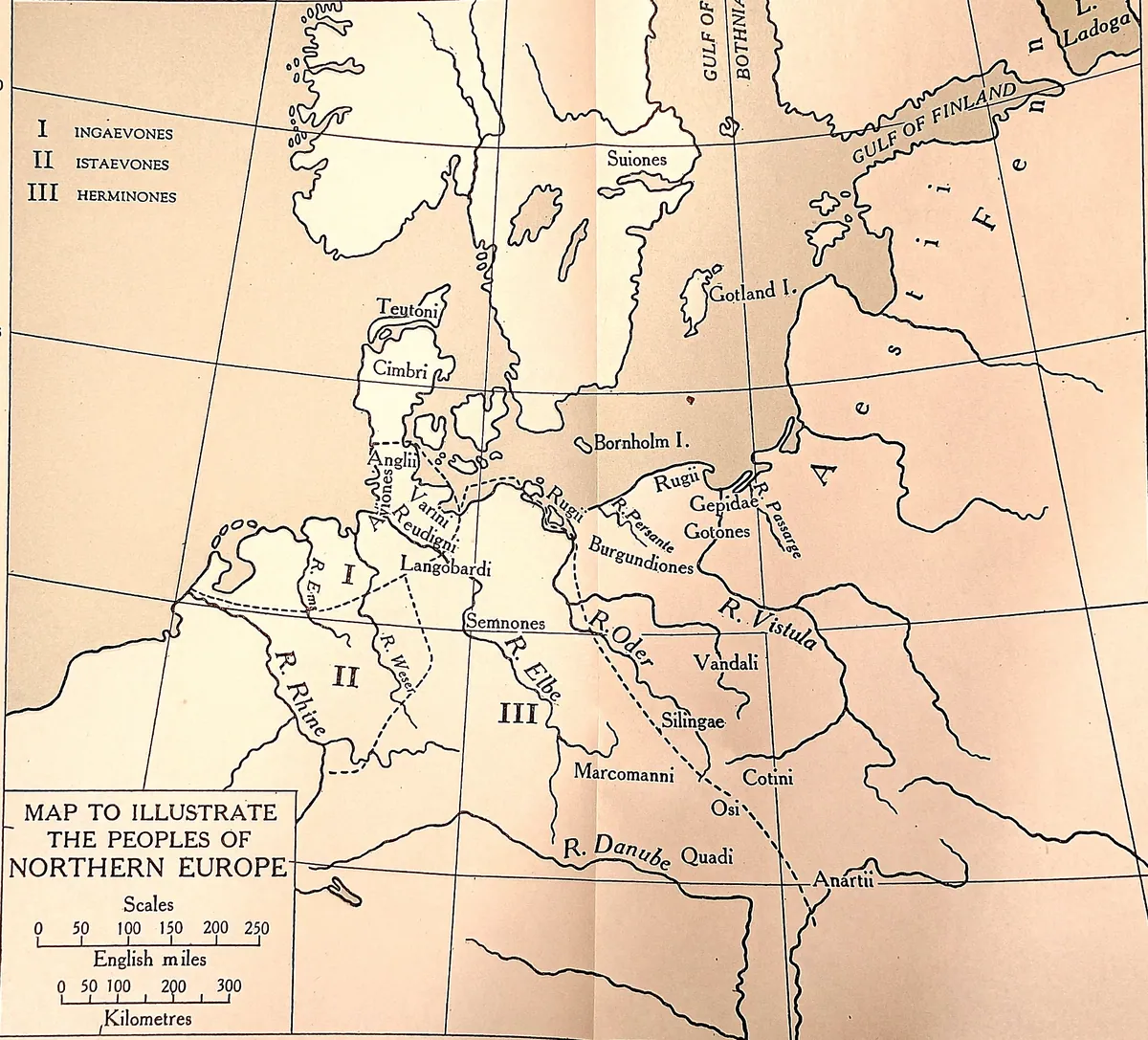
Maximinus, the Thracian whom the Rhine army made emperor in March 235, had risen from the ranks without ever holding a civil office, and he governed accordingly. He crossed the Rhine and beat the Germans deep in their own country, a battle whose site, on a wooded ridge in Lower Saxony, was found by metal-detectorists in 2008 and is the farthest Roman battlefield yet known; he fought the Sarmatians and Dacians from Sirmium; and to pay an army whose wages, Herodian says, he doubled, he squeezed the cities, confiscated temple treasures and the funds that paid for the corn dole and the games. He never went to Rome. In the spring of 238 the landowners of the province of Africa, ruined by his procurator, murdered the man and proclaimed the aged proconsul Gordian and his son at Thysdrus. The Senate, which loathed Maximinus, recognised them with relief, and within three weeks both Gordians were dead, killed by the one legion in Africa, whose commander had a grudge. The Senate, committed, then did something it had not done since the Republic: it elected two of its own members, Pupienus and Balbinus, as joint emperors, and organised the defence of Italy. Maximinus marched on Italy, was held at Aquileia by its walls and a hungry countryside, and was killed by his own starving soldiers outside it in May. In July the Guard killed Pupienus and Balbinus in the palace, and the empire fell to the Gordians’ thirteen-year-old grandson.
 Click to enlarge
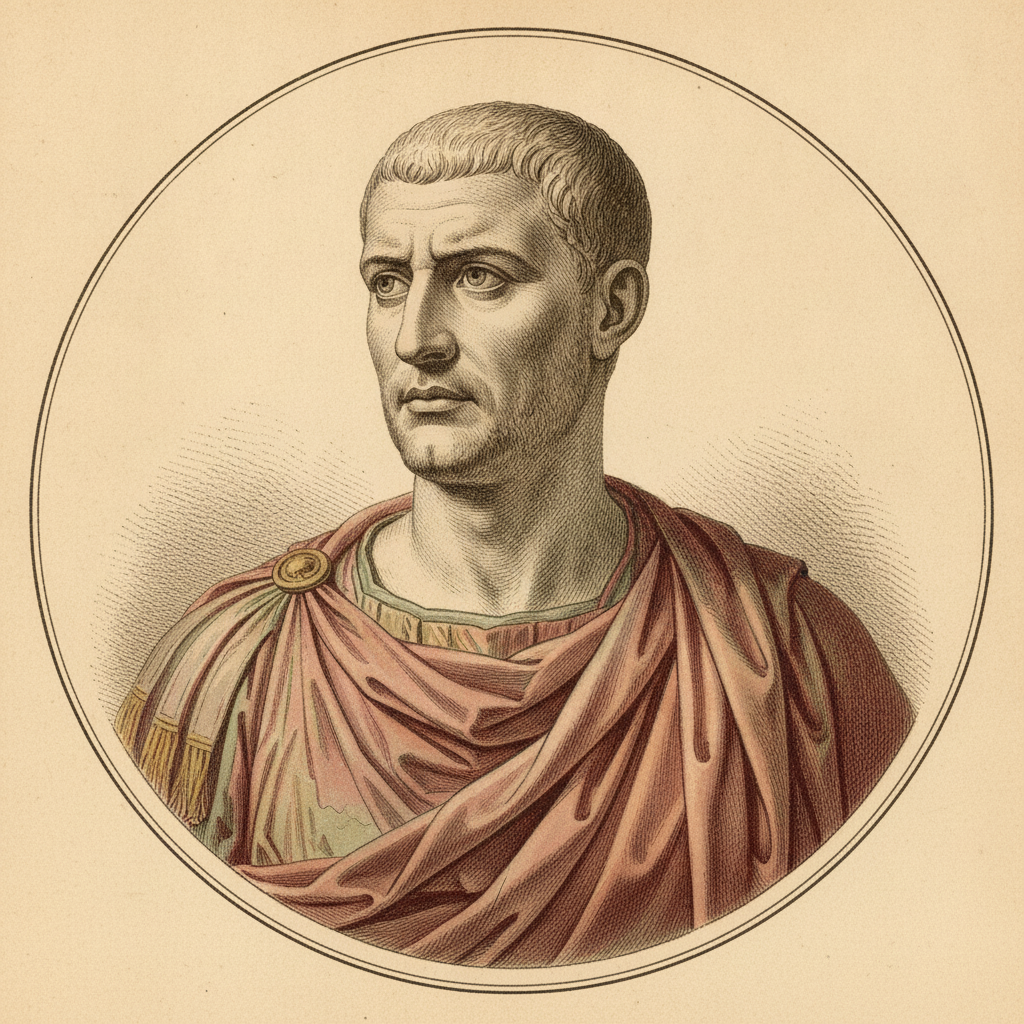
Gordian III reigned six years under the guidance of his father-in-law Timesitheus, an able equestrian prefect who died in 243 on the way to fight the new Persia. Shapur I, Ardashir’s son, had taken Hatra and was pressing on Mesopotamia; the Roman army under Gordian and the new prefect Philip, an Arab from the Hauran, fought him at Misiche near the Euphrates in early 244, and Gordian died. The Roman sources say Philip had him murdered; Shapur’s own inscription, carved in three languages on a tower at Naqsh-e Rustam, says he was killed in the battle. Philip bought peace for half a million gold pieces and went home, and in April 248 celebrated with games the thousandth year of Rome, the last such celebration the city would see. In 249 Decius, a Pannonian senator sent to restore order on the Danube, was proclaimed there by the troops, and Philip died fighting him at Verona.
A.D. 249–253Decius and the Goths
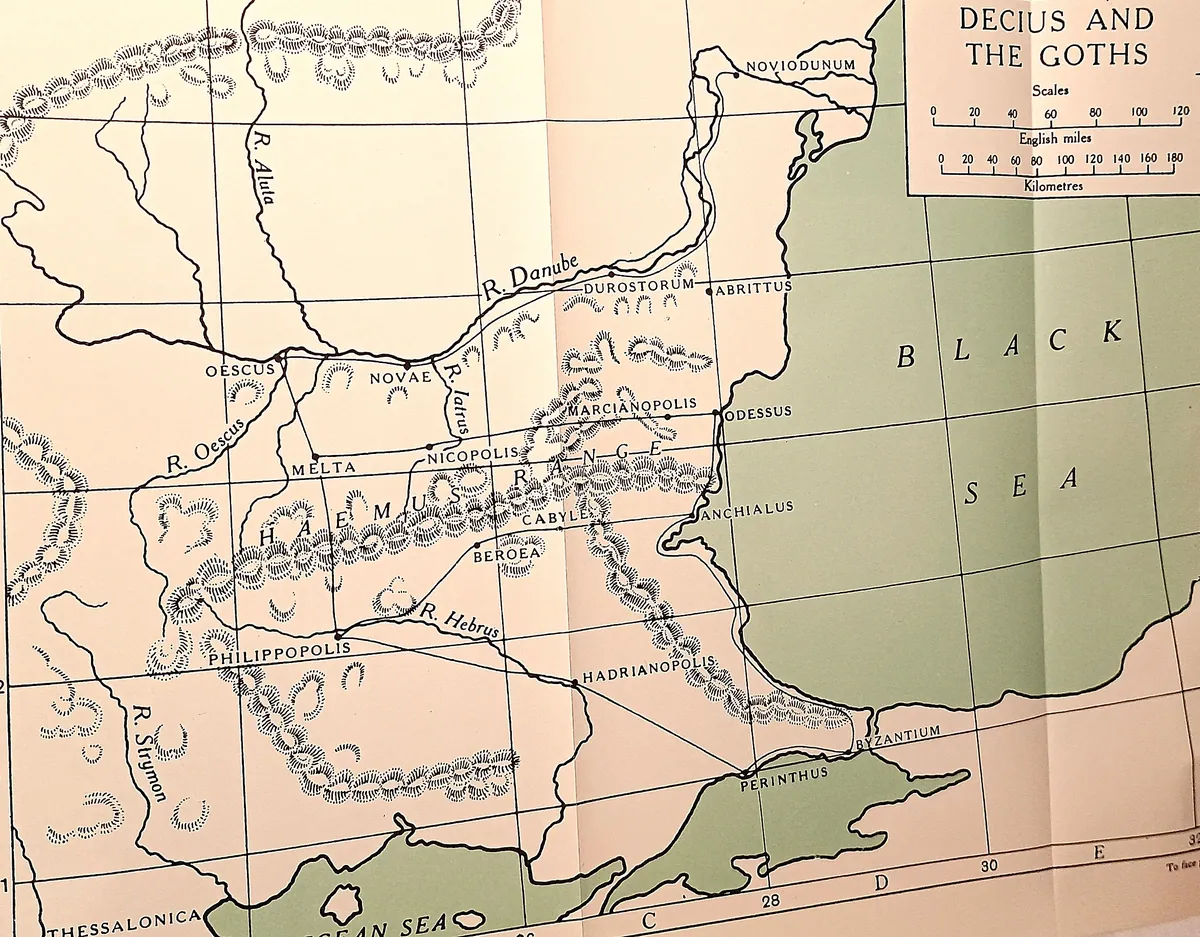
Decius believed the empire could be saved by a return to the old gods, and in the winter of 249 or 250 he ordered every inhabitant to sacrifice before a local commission and obtain a certificate. Dozens of such certificates survive from Egypt, filled in by frightened villagers. The order was general, not aimed at the Christians alone, but they were the ones it caught: the bishop of Rome was executed in January 250, the bishops of Antioch and Jerusalem died in prison, and thousands who complied or bought certificates left the churches with a problem, what to do with the lapsed, that occupied Cyprian of Carthage for the rest of his life. Meanwhile the Goths, a people who had come down from the Vistula to the Black Sea over the previous century, crossed the Danube in strength under a king named Cniva, and after a long siege took and sacked Philippopolis in Thrace. In June 251 Decius caught them at Abrittus in the Dobruja and was drawn into a marsh, where he and his son and most of his army were killed. He was the first Roman emperor to die in battle against a foreign enemy. His successor Trebonianus Gallus let the Goths go home with their loot and their prisoners and agreed to pay them a subsidy, and in the same year a plague, which Cyprian describes, began fifteen years in which it was scarcely ever absent from some province. Gallus was killed by his own troops in 253 on the approach of a rival, who was killed by his in turn on the approach of Valerian.
 Click to enlarge
A.D. 253–260Valerian and Shapur
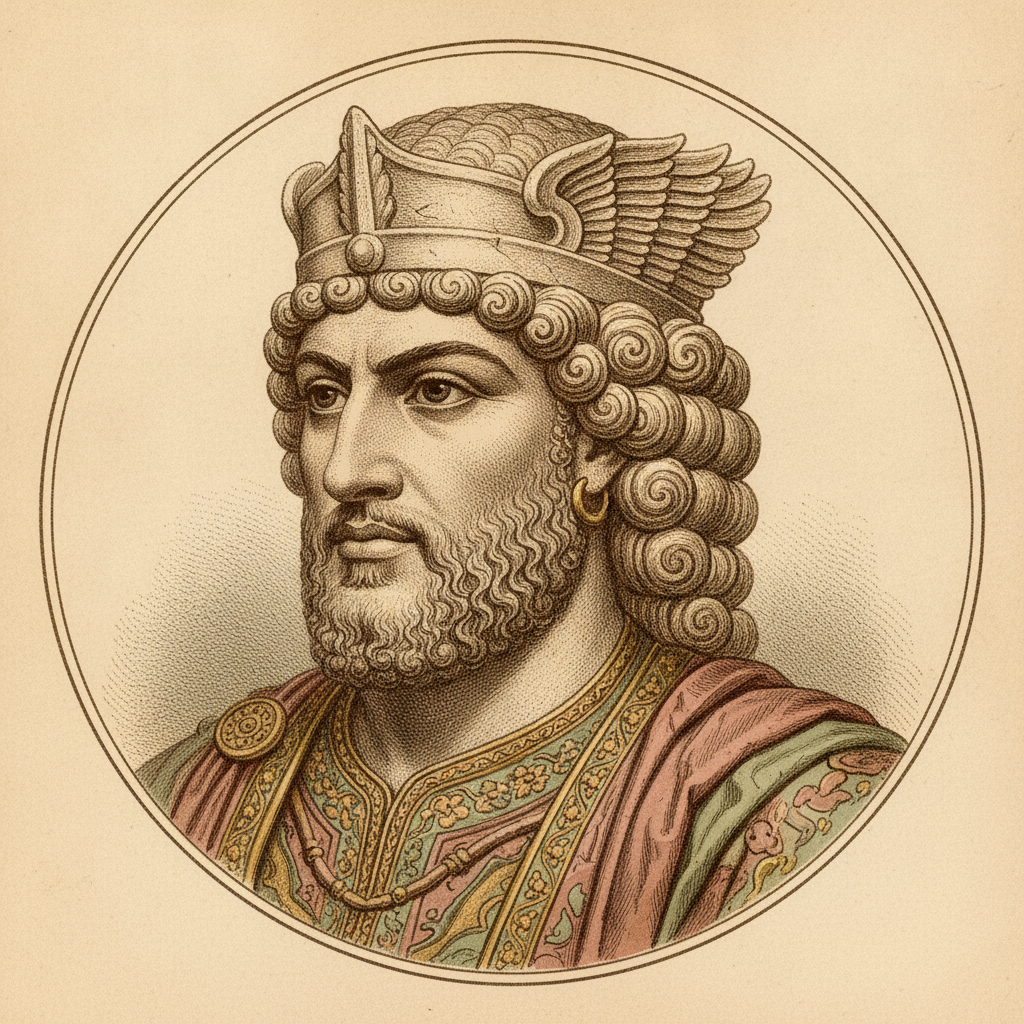
Valerian, an elderly senator of the old kind, made his son Gallienus co-emperor, gave him the West, and took the East himself, because the empire could no longer be defended from one place. In 257 and 258 he renewed the attack on the Christians, this time on their leaders and property: bishops and clergy were to sacrifice or die, senators and knights who were Christians lost their rank, church buildings and cemeteries were confiscated. Sixtus of Rome was killed in the catacombs and Cyprian beheaded outside Carthage on 14 September 258. It did not help. Shapur had already sacked Antioch, and about 256 his engineers took Dura-Europos on the Euphrates by mining, leaving the town so suddenly abandoned that its synagogue, its Christian house-church and its Mithraeum were found intact under the sand. In 260 Valerian marched to relieve Edessa with an army weakened by the plague, and during a parley, or a battle, Shapur took him alive. He is the only Roman emperor ever captured by an enemy. Shapur carved the scene on the cliffs of his ancestors, the Roman kneeling before the mounted king, and the Christian Lactantius, fifty years later, claimed that the king used him as a mounting block and had his skin tanned and hung in a temple when he died. What is certain is that he was never ransomed and never came home.
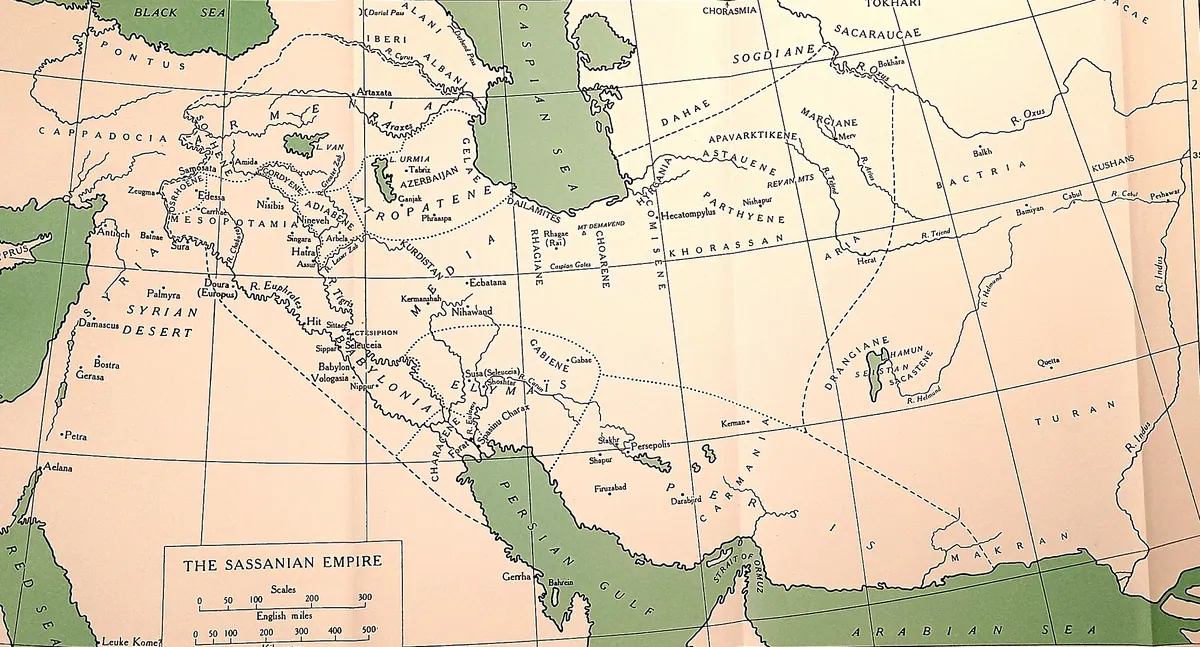 Click to enlarge
The year of his capture is the low point. Shapur’s cavalry raided to Antioch again and to the coast of Cilicia. The Franks, the first time the name is heard, crossed the lower Rhine, marched the length of Gaul and Spain and sacked Tarraco; some took ships and reached Africa. The Alamanni came through the Alps to Milan, where Gallienus beat them. Gothic and Herulian war bands from the Black Sea learned to use ships and for a decade plundered Asia Minor and Greece by sea: the temple of Artemis at Ephesus was burned, and Athens was taken and sacked in 267, its walls unrepaired since Sulla, after which the historian Dexippus led a band of citizens into the hills to harass the raiders and the Athenians built a new wall round a fraction of their old city. Every city in the empire that could afford it began to build walls, on a smaller circuit than before, out of the stones of its own tombs and temples.
A.D. 260–268Three empires
When the news of Valerian reached the Rhine the army there proclaimed its commander Postumus, who killed Gallienus’ son at Cologne and set up an empire of his own. It was not a barbarian kingdom but a Roman state, with Gaul, Britain and Spain, its own senate, consuls, praetorian guard and mint at Trier, and it did what Rome could no longer do, which was to hold the Rhine; it lasted fourteen years under five emperors until Aurelian ended it. In the East the same thing happened in another form. Odaenathus, a senator and the leading man of the caravan city of Palmyra in the Syrian desert, raised his own force of archers and heavy cavalry, fell on Shapur’s army as it went home loaded with the loot of Antioch, and in two campaigns, in 262 and 266, drove the Persians back to the walls of Ctesiphon. Gallienus, who could do nothing else, gave him the title of corrector of the whole East and let him govern it. When Odaenathus was murdered in 267 his widow Zenobia ruled Syria, Arabia and, from 270, Egypt in the name of their small son, and in Rome’s name only when it suited her. The empire had three governments, and only the middle one, from the Alps to the Aegean, answered to the emperor.
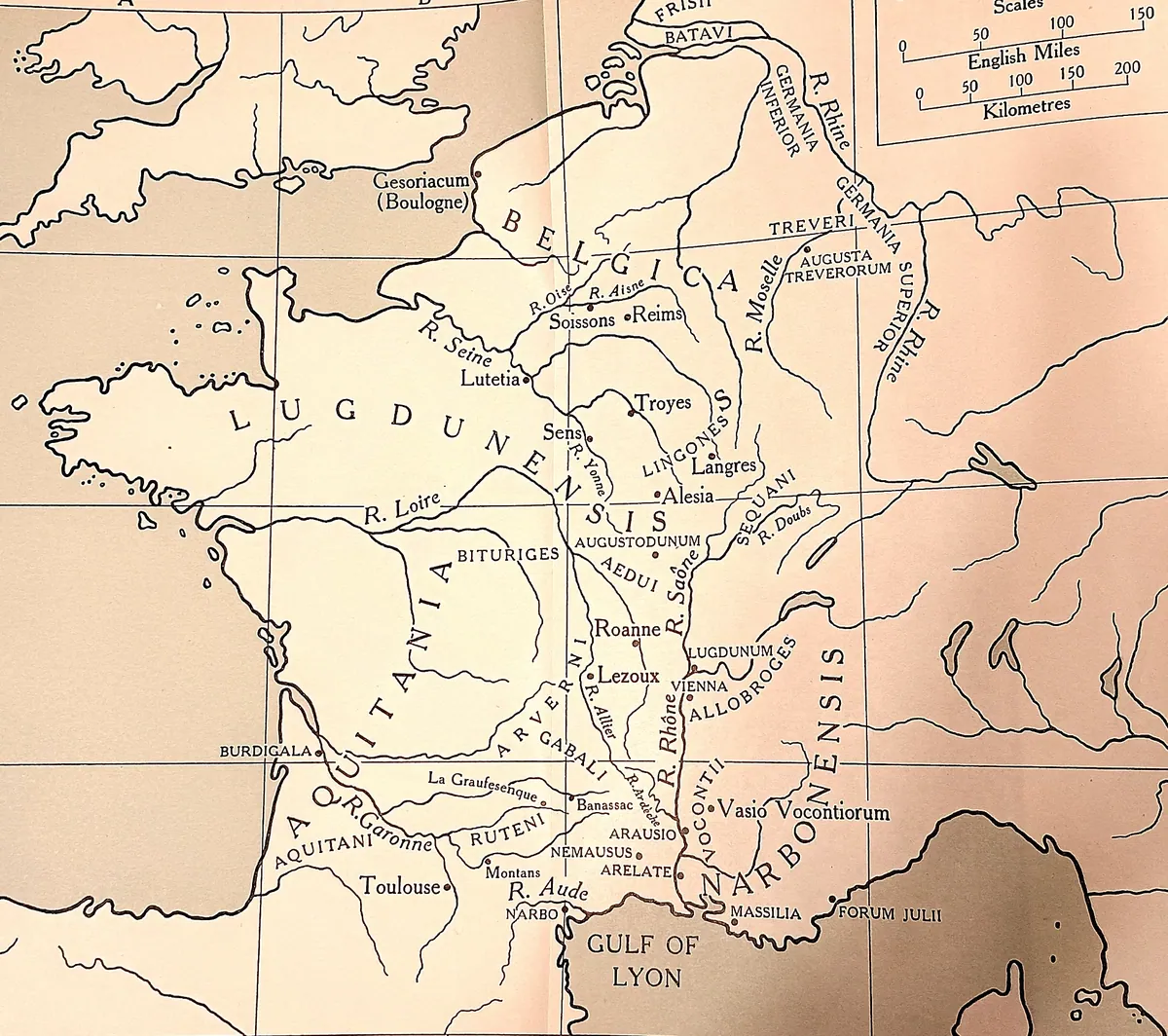 Click to enlarge
Gallienus held that middle for eight years against a dozen usurpers and never lost it, and the senators who wrote his history hated him because in the course of doing so he took the army away from them. Aurelius Victor says he forbade senators to command legions; whether or not there was a formal edict, from his reign the legions and the new provincial commands went to equestrian officers who had come up through the ranks, mostly from the Danube provinces, and it was these men, Claudius, Aurelian, Probus, Diocletian, Constantius, who saved and remade the empire. He gathered the cavalry of the legions into a separate mobile corps at Milan, from which it could reach the Rhine, the Danube or the Alpine passes, and a corps of guards officers, the protectores, who were the school of the next generation of generals. The money to pay them was found by ruining the coinage. The antoninianus that Caracalla had struck at half silver contained under five per cent by 268, and was washed in silver to hide it; prices rose accordingly, the government took its taxes increasingly in kind, and hoards of the worthless coins are found across the empire, buried and never recovered. He also, at the start of his sole reign, ended his father’s persecution and returned the churches their property, which gave the Christians forty years of peace in which they became too numerous to destroy.
A.D. 268–270Claudius Gothicus
In 268 the cavalry commander Aureolus revolted at Milan and Gallienus besieged him there, and in the siege lines his own senior officers, Claudius and Aurelian among them, had him killed. Claudius, a Danubian soldier, took the throne and the Gothic war. The largest sea-borne invasion of the century, a fleet the sources put in the thousands and an army of Goths and Heruli that had failed before Thessalonica, was moving north through Macedonia, and at Naissus in 269 Claudius destroyed it, killing, the sources claim, fifty thousand. The survivors were hunted through the Balkans for a year, and those who surrendered were settled on the land or enrolled in the army, a pattern the next two centuries would repeat. Claudius took the name Gothicus, and in 270 died at Sirmium of the plague, mourned by the Senate as no emperor had been since Marcus. His brother Quintillus reigned a few weeks; the army wanted Aurelian, and the map takes up the story from there.
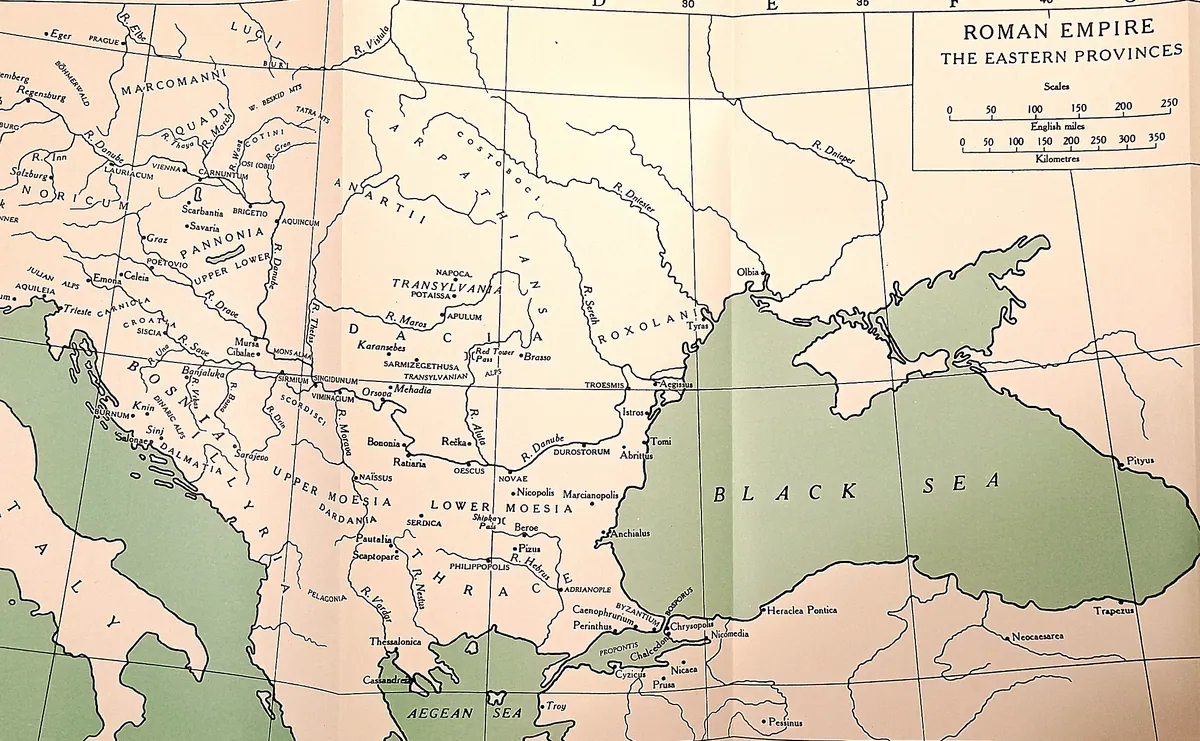 Click to enlarge
Why it mattered
Between 235 and 270 the empire had, depending on how one counts, some twenty emperors recognised at Rome and as many again who were not, almost all of them killed by their own soldiers. An emperor captured, an emperor dead in a marsh, Athens sacked, the Rhine and the East governed from Trier and Palmyra: contemporaries thought it was the end, and the Christians of the time, Cyprian for one, wrote that the world was growing old. It was not the end, and the reasons it was not are the substance of the next three chapters. The Danubian officers Gallienus promoted knew how to fight; the provincial cities that walled themselves survived; the peasant army was loyal to whoever paid it, and it could still be paid. What the crisis destroyed was the second-century world of open cities, sound coin, senatorial generals and an emperor who lived in Rome. The empire that came back was a different state.