4 B.C.–A.D. 36Judaea when it began
Herod the Great died in 4 B.C. and Augustus divided his kingdom among his sons. Galilee went to Antipas, who held it for forty years; Judaea went to Archelaus, who governed it so badly that in A.D. 6 Augustus deposed him and made Judaea a province under an equestrian prefect at Caesarea, with the legate of Syria, Quirinius, sent in to take a census for the tax. The census provoked a rising under Judas the Galilean, whose followers held that to pay tribute to Caesar was to deny God, and whose sons were crucified forty years later and whose family was still in arms against Rome in the great revolt. Under the prefects the high priest and the Temple aristocracy governed Jerusalem day to day; the Romans kept the high priest’s vestments under their own lock as a reminder of who appointed him. Josephus, a priest who wrote after the Temple was gone, describes three schools among the Jews: the Sadducees of the priestly families, who accepted only the written Law and denied the resurrection; the Pharisees, teachers of a spoken tradition that applied the Law to daily life, who expected the dead to rise; and the Essenes, who withdrew into disciplined communities to wait for the end. The library of one such community, hidden in caves above the Dead Sea when the Romans came in 68, was found in 1947. The expectation those scrolls breathe, of a judgement soon and a deliverer anointed by God, a messiah, was in the air of the whole country.
John, called the Baptist, preached repentance and washed his followers in the Jordan, and Antipas, who feared a crowd, executed him; Josephus records it. A Galilean from Nazareth named Jesus, who had been baptised by John, preached for perhaps two or three years in the villages round the lake, healing, telling parables of a kingdom of God that was at hand, and gathering a following that alarmed the priests. At Passover, about the year 30 or 33, he was arrested in Jerusalem, examined by the high priest, and crucified by the prefect Pontius Pilate as a claimant to kingship, the charge nailed above him. Tacitus, writing eighty years later and with contempt, confirms the execution under Pilate in the reign of Tiberius, and Josephus mentions him twice, once in a passage that Christian copyists later improved. That is the whole of the record outside the movement itself. What the movement itself recorded is that his followers, who had scattered, met again within days convinced that he had been raised from the dead and had appeared to them. The earliest surviving witness to that claim is not a gospel but a letter of Paul to the Corinthians written about 54, which lists the appearances as something he had been taught when he joined.
Scripture and expectationA Jewish movement, in a world expecting deliverance
Jesus, his first disciples and Paul were Jews. Their God was the God of Israel; their arguments concerned Israel’s Law, prophets and promised deliverance. Christianity’s Old Testament is inherited Israelite and Jewish scripture, not a Christian account invented to precede Jesus. The books of the Jewish Tanakh form its core. The collections are not quite identical: Christians arranged the books differently, and Catholic and Orthodox Old Testaments retain further Jewish writings absent from the Jewish canon and most Protestant Old Testaments. Greek-speaking Christians commonly read the Septuagint, the Greek scriptural tradition developed by Jews before Christianity.
The New Testament likewise grew out of Jewish texts and disputes, but a precise ethnic census of its authors is impossible. Paul identifies himself as an Israelite; several other books have uncertain or disputed authorship, and the gospels do not name their authors within their narratives. Luke is traditionally described as a Gentile, partly because Colossians 4 distinguishes him from named circumcised companions. That inference does not settle either his ancestry or his identification with the author of Luke–Acts. The tradition credits him with two books, the Gospel of Luke and Acts, not one chapter. Ancient authorship cannot be established by counting the names attached to later manuscripts. [1]
Nor did the expectation of an approaching judgement belong to Christians alone. Daniel had described kingdoms brought down by divine intervention. Josephus records rival Jewish schools, wilderness prophets and leaders who promised deliverance: Theudas drew followers to the Jordan, and an Egyptian prophet gathered a crowd on the Mount of Olives. These movements differed; a promise of a miraculous rescue was not necessarily a complete doctrine of the end of the world. Judaea was the movement’s birthplace. Syria and Asia Minor became fields of expansion, where Jewish congregations, local gods, philosophical schools and cults offering initiation or divine protection already competed for allegiance. They were not all versions of one apocalyptic religion. In the second century, the Christian prophets of Phrygia would give imminent expectation a new voice. [2]
A.D. 30–64From Jerusalem to the Gentiles
The first community lived in Jerusalem as a sect within Judaism, attending the Temple, led by Peter the fisherman and by James, the brother of Jesus. Its Greek-speaking members were the first to be driven out, after one of them, Stephen, was stoned, and they carried the message to Damascus and to Antioch, the capital of Syria, where the followers were first called Christians, the book of Acts claims, and where Gentiles were first admitted without becoming Jews. Saul of Tarsus, a Pharisee of the diaspora who had taken part in the persecution, was converted on the Damascus road about the year 33 to 36 by a vision he never afterwards doubted, and as Paul spent the years from roughly 46 to 57 founding and revisiting congregations in Cyprus, the cities of Galatia, Philippi, Thessalonica, Corinth and Ephesus. He earned his keep as a tentmaker, was flogged, stoned and imprisoned, and wrote letters, of which thirteen survive under his name and seven are undisputed. The first of them, to the Thessalonians about the year 50, is the oldest Christian document in existence, older than any gospel by a generation. An inscription found at Delphi fixes the proconsul Gallio in Achaea in 51–52, and since Acts has Paul brought before Gallio at Corinth it is the one firm date in his life.
The decisive quarrel concerned the price of admission. Must a Gentile — a non-Jew — accept circumcision and the Law of Moses? Paul insisted that trust in Christ, rather than becoming a Jewish proselyte, admitted the convert. Judaism already accepted converts; the innovation was entry into this community without undertaking the full obligations of conversion to Judaism. Circumcision was a formidable bodily and social barrier for an adult Greek. Food restrictions complicated the common table. Paul’s refusal to make them conditions of salvation gave the mission a much wider reach.
These were contested decisions, not a programme agreed by all Greek-speaking Jews. In Galatians, Paul recalls resisting demands to circumcise Titus and publicly confronting Peter for withdrawing from meals with Gentiles. Acts 15 presents a Jerusalem settlement requiring Gentiles to abstain from food polluted by idols, blood, strangled meat and sexual immorality; its relation to Paul’s account remains disputed. Pork eventually ceased to be forbidden to most Christians, but there was no single decree simply abolishing Jewish food law for everyone. Paul allowed market meat while rejecting participation in idol worship, and urged consideration for believers with dietary scruples. He also resisted making observance of days and seasons a condition of belonging. Monotheism, sexual discipline and the rejection of sacrifices to other gods remained demanding obligations. The mission lowered particular barriers while imposing others. [3]
Paul himself was arrested in Jerusalem, held at Caesarea and sent to Rome, according to Acts, which ends with him preaching under house arrest. First Clement, written from Rome towards the end of the century, recalls the sufferings and deaths of Peter and Paul without supplying the detailed Roman execution stories of later tradition. The mission had reached the capital; its leaders had no protection against the men who governed it.
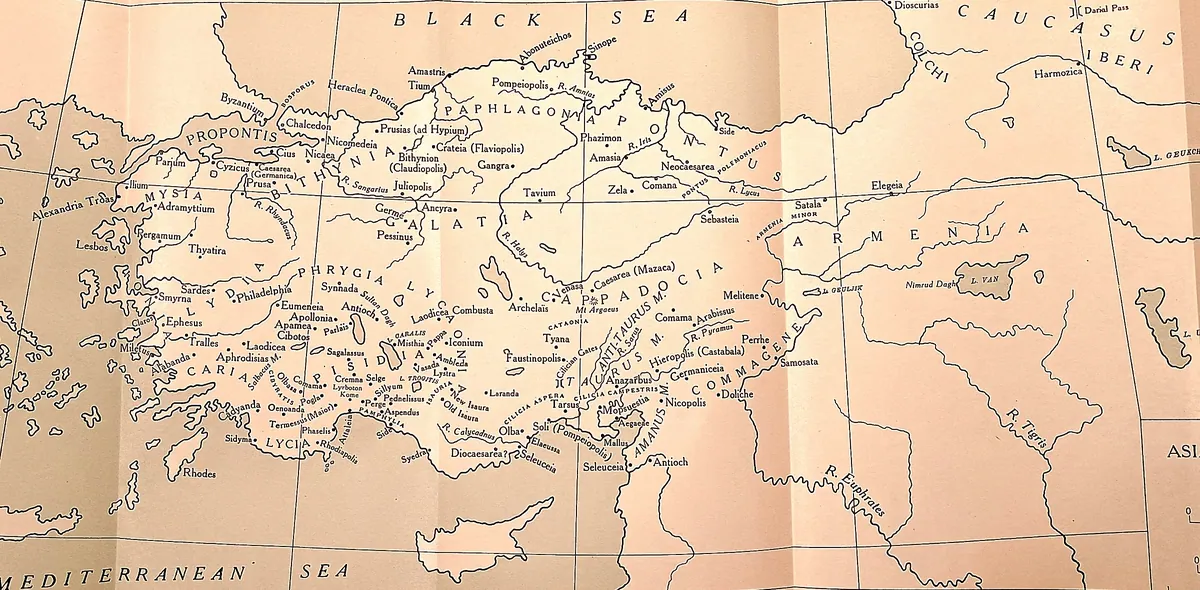 Click to enlarge
The household missionWomen, patrons, and persuasion
At Philippi, Acts places a woman’s house at the centre of Paul’s first foothold. Lydia, a dealer in purple cloth from Thyatira, accepted baptism with her household and offered the missionaries lodging. Paul’s own letter to Rome commends Phoebe, who had supported many believers, including himself, and greets Prisca and Aquila and the congregation in their house. Luke names women who supported Jesus from their own resources, including Joanna, wife of Chuza, an official of Herod’s household. Money, hospitality and personal connections carried the message into places a public sermon might not reach.
Marriage supplied another route. First Peter urged Christian wives to win unbelieving husbands through their conduct. Celsus gave household evangelism a hostile interpretation: in Origen’s account, he accused Christian artisans of approaching children and ignorant women away from the scrutiny of educated male household heads. His picture of credulous recruits tells us how an opponent disparaged the mission; it cannot establish women’s gullibility as its cause. Nor can the surviving evidence show that women alone, or everywhere first, spread Christianity. What it does reveal is a religion advancing through domestic relationships as well as preaching, with women acting as patrons and intermediaries. [9]
The reversal of rankThe poor, the foolish, and the condemned
Writing to Corinth, Paul reminded his converts that few possessed the learning, power or noble birth their neighbours honoured. God had chosen those the world counted foolish and weak to confound its wise and mighty. Luke’s Jesus blessed the poor and hungry, pronounced woe upon the rich and well-fed, and told of a rich man suffering after death while the beggar Lazarus received comfort. Mary’s song placed the mighty below the humble. The reversal was explicit: the social order could no longer certify its own moral worth. [4]
Humility, mercy, forgiveness, fidelity, almsgiving and love of one’s enemy supplied a different scale of excellence. The crucified man, exposed to public disgrace by Roman power, became its central figure. The repentant criminal beside him could receive paradise; tax collectors and prostitutes could enter the kingdom before religious authorities who refused repentance. Birth, reputation and a magistrate’s judgement no longer decided who stood closest to God.
That is stronger and more exact than saying criminals or the unintelligent were virtuous because they were criminal or unintelligent. Paul condemned theft and fraud; the criminal in Luke acknowledged his guilt. The promise was that disgrace need not be final, and that education and rank gave no claim upon salvation. Celsus, the second-century pagan critic preserved by Origen, attacked Christianity for recruiting the ignorant and socially insignificant. Origen answered that it sought to educate and reform them. Their quarrel concerned who could be taught truth, and by whose authority.
The attack upon worldly pride did not consistently become an attack upon government. Romans 13 required obedience to governing authorities; Christian households could include wealthy patrons, and Christian texts could instruct slaves to obey their masters. A king was not damned merely for being a king. The contradiction would become institutional: a religion that denied wealth and birth any privilege before God could shelter under emperors, acquire estates and defend social obedience. Its reversal of honour was more radical than its programme for redistributing power.
The approaching kingdomWhat was this life worth?
Paul wrote to the Thessalonians about believers who had died before Christ returned. Their deaths raised an urgent problem because the expected deliverance had not arrived. He assured the living that the dead would rise and share it. To Corinth he urged detachment from marriage, possessions and business because the present order was passing away. Treasure in heaven could outlast property on earth; a disciple might surrender family security or life itself rather than abandon Christ. Eternal judgement made earthly success provisional.
For Nietzsche, this was the point at which consolation became an indictment of existence. If the decisive life lies elsewhere, the body, ambition, pleasure and the building of a durable earthly civilisation can all stand accused before an invisible tribunal. Renunciation acquires a rank that achievement once possessed. A defeat here can be entered as a victory in the world to come.
The earliest hope, however, was not simply that an immortal soul should escape a worthless body. Paul defended the resurrection of the dead; Revelation ended with a renewed creation. Christian communities fed the hungry and cared for bodies whose future resurrection they expected. Nor did willingness to suffer martyrdom amount to a general command to kill oneself. Christianity subordinated present life to salvation, sometimes severely; the claim that it therefore emptied life of value is Nietzsche’s judgement upon that hierarchy. [5]
A later judgement · 1887–1888Nietzsche: the victory of resentment
In The Genealogy of Morals, Nietzsche asked who benefited when the scale of honour changed. His aristocratic type began with an affirmation of its own strength, courage and abundance. The opposing morality began with an enemy. Unable to strike back directly, the injured person could condemn the victor as evil and redescribe his own condition as goodness: inability to retaliate became forgiveness, submission became humility, deprivation became merit. Nietzsche called the motive ressentiment, an enduring resentment which creates the values by which it judges its adversary.
“The revolt of the slaves in morals begins in the very principle of resentment becoming creative and giving birth to values”
Friedrich Nietzsche, The Genealogy of Morals, First Essay §10; trans. Horace B. Samuel (1913). Excerpt; emphasis omitted.
This was not a census of slaves, and Nietzsche’s noble type was not identical with every titled aristocrat or reigning emperor. His question was whether a morality cultivated independent, creative human beings or taught them to distrust their own powers. In his account, the priest made suffering intelligible by turning it into guilt. The sufferer was directed to examine his own sin, and the interpreter who diagnosed that sin acquired authority over its remedy. Relief and dependence could grow together.
The Antichrist attacked pity on the same ground. Nietzsche thought it multiplied suffering, preserved exhausted forms of life and made the exceptional person answerable to the needs of everyone else. This is the severity of his position: he did not merely accuse Christians of hypocrisy. He challenged the moral supremacy of compassion itself. Whether care restores a person’s powers or entrenches helplessness is a distinction his sweeping condemnation too readily suppresses.
“When the centre of gravity of life is placed, not in life itself, but in ‘the beyond’—in nothingness—then one has taken away its centre of gravity altogether.”
Nietzsche, The Antichrist §43; trans. H. L. Mencken (1920). Emphasis omitted; quotation marks and dashes regularised.
His accusation against the afterlife was therefore practical as well as metaphysical. An imagined eternity could devalue every finite achievement. Equality of souls could deny the higher rank he claimed for exceptional accomplishment. The promise of judgement could preserve revenge beneath the language of forgiveness: the powerless surrendered punishment to a God whose sentence no earthly ruler could escape.
Nietzsche also distinguished Jesus from the church. In §§33–39 of The Antichrist, he imagined Jesus as practising an immediate freedom from hostility, then charged Paul in §§40–42 with replacing that way of living with doctrines of sacrificial death, resurrection and judgement. The distinction makes his attack more interesting, but his reconstruction is conjectural. Paul’s own earliest surviving account says he received the resurrection proclamation from others; he did not originate it alone. Likewise, Nietzsche’s genealogy locates the inversion in Jewish priestly valuation, but its depiction of a whole people pursuing revenge is polemic, not evidence of collective intention. Jewish traditions themselves contained kingship, worldly flourishing, charity and sharply competing accounts of righteousness. The historical subject is a conflict over values within and beyond Judaism, not an ethnic character. [6]
A.D. 64–100Nero’s fire and the fall of the Temple
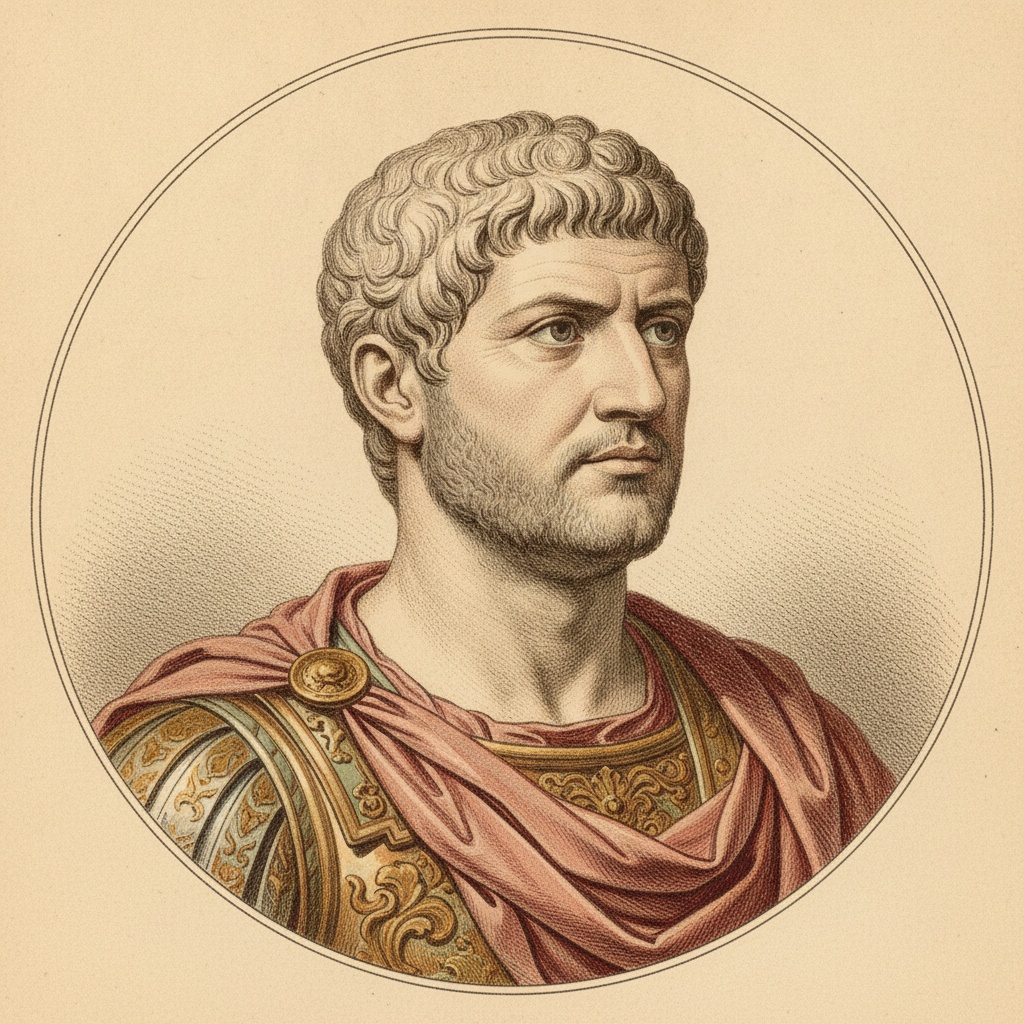
In July 64 a fire burned for nine days, levelled three of the fourteen regions of Rome and gutted seven more. Rumour said the emperor had started it, and Nero, Tacitus reports, found a scapegoat in a class the crowd already hated for its vices, whom the common people called Christians after a Christus executed by Pilate. Those who confessed were arrested, and on their information a great number were convicted, less for arson, Tacitus says, than for hatred of the human race; they were dressed in animal skins and torn by dogs, crucified, or burned as torches to light the emperor’s gardens at night, until even a people that thought them guilty began to pity them. It is the first time a Roman government distinguished Christians from Jews, and it fixed the pattern: Christianity was not formally outlawed, but a Christian who came to the notice of a magistrate could be killed for the name alone.
The Jewish revolt of A.D. 66–70 and the destruction of the Temple by Titus changed the setting without producing one final separation between Jews and Christians. A later Christian tradition places the Jerusalem congregation’s refuge at Pella. Jewish religious life continued through different communities and institutions, while Christian relations with synagogues varied by place; the dating and targets of the synagogue’s curse against heretics remain disputed. In these decades the gospels took written form: Mark is commonly placed around the fall of the Temple, Matthew and Luke later, and John towards the century’s end, though their dates and literary relationships are debated. Revelation’s visions made imperial magnificence a disguise for violence and corruption. First Clement, sent from Rome to Corinth, meanwhile shows communities intervening in one another’s affairs. The end was still expected; institutions were being made to endure.
A.D. 100–180Trajan’s rule, and the martyrs
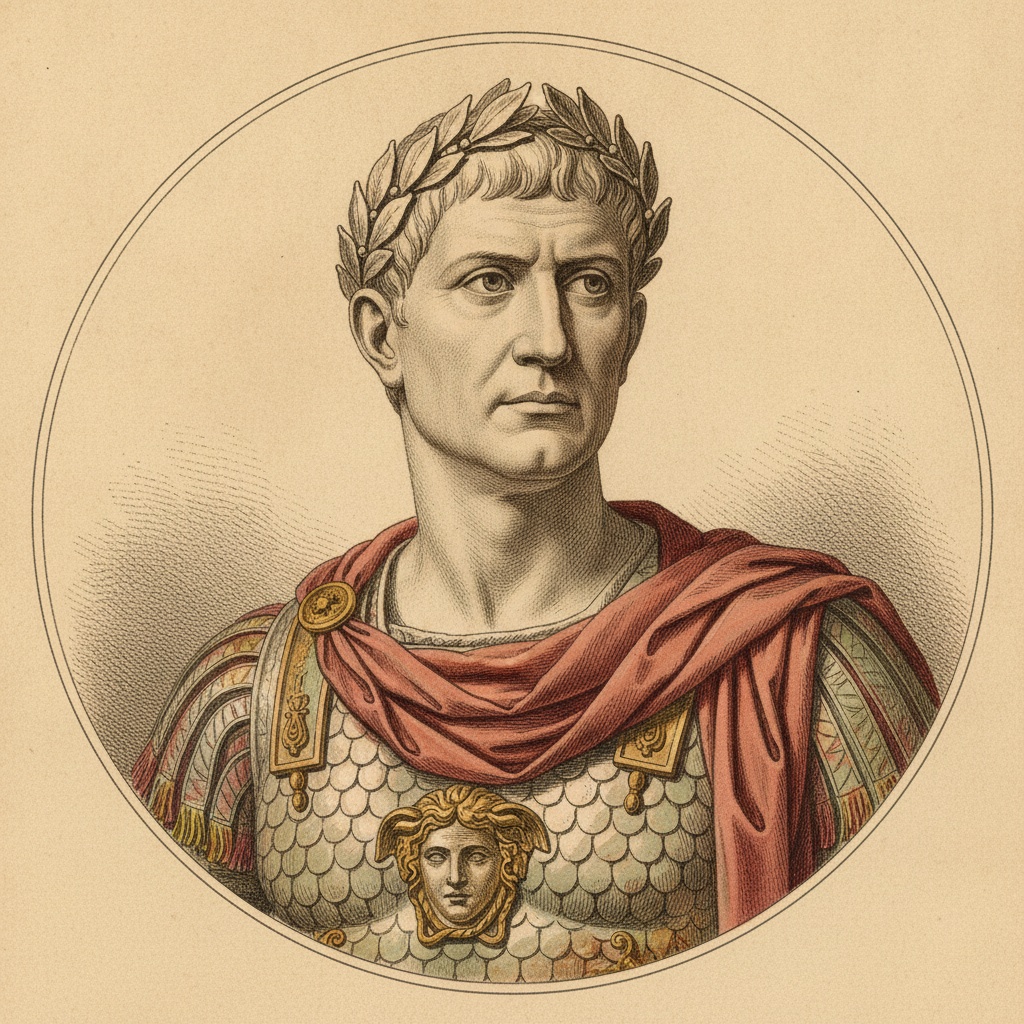
What the Roman state made of the new religion is best seen in a single exchange of letters. About 112 Pliny the Younger, governing Bithynia and Pontus for Trajan, wrote to ask what to do about the Christians denounced to him, since he had never attended such a trial. He had asked the accused three times whether they were Christians, warning them of the penalty, and had those who persisted executed, for whatever their creed, he reasoned, such obstinacy deserved it; citizens he sent to Rome. An anonymous pamphlet had then produced a flood of names, and the numbers, in towns and villages alike, had alarmed him; the temples had been emptying and the sellers of sacrificial meat losing their trade. He had questioned two slave women whom the Christians called deaconesses under torture and found nothing but, in his words, a depraved and immoderate superstition: they met before dawn on a fixed day, sang a hymn to Christ as to a god, bound themselves by oath not to steal or commit adultery, and ate together an ordinary meal. Trajan answered in a few lines that became the law for a hundred and forty years. Christians were not to be sought out. If accused and convicted they were to be punished, unless they denied it and proved it by sacrificing to the gods, in which case they were to be pardoned whatever their past. Anonymous accusations were not to be accepted in any matter, being unworthy of the age.
So the second century passed with the church in the open and in danger at once. Ignatius, bishop of Antioch, was sent to Rome under guard to die in the arena about 110 and wrote seven letters on the way that are the first to speak of a single bishop ruling each church and to use the phrase catholic church. Polycarp, bishop of Smyrna, who had known men who had known the apostles, was burned in the stadium there about 155, aged eighty-six, having refused to curse a Christ who, he told the proconsul, had never done him wrong. Justin, a philosopher in the cloak who had tried the Stoics and Platonists before he found the prophets, wrote two defences of the faith addressed to Antoninus and the Senate, and was beheaded at Rome about 165 by the prefect Rusticus, the Stoic who had taught Marcus Aurelius. In the summer of 177, under the same Marcus, the churches of Lyon and Vienne were destroyed by a mob and a governor together, and a letter they sent to Asia, which Eusebius preserved, describes the slave girl Blandina outlasting her torturers. On 17 July 180 twelve Christians from Scillium in Africa were beheaded at Carthage after a hearing whose record, the first Christian document in Latin, is a page long. Marcus himself, in his notebooks, mentions the Christians once, as an example of dying from mere obstinacy rather than reasoned judgement. About the same time the Platonist Celsus wrote the first serious pagan attack on the religion, as a vulgar superstition of slaves, women and children built on a Jewish sect and a crucified sorcerer. Origen answered it seventy years later, book by book, which is why we have it.
c. A.D. 140–200The Church takes shape
No reliable census tells us how many Christians lived in the empire by A.D. 200. Their organisation is more visible than their numbers. In many cities a single bishop increasingly directed teaching, discipline and the common purse. The development was uneven, but it gave congregations officers who could correspond, distribute relief and decide who belonged. About A.D. 251, Cornelius of Rome listed forty-six presbyters and more than fifteen hundred widows and people in need supported by his church. Eusebius preserves the letter. Charity had become an enduring institution, and the office that administered it held material as well as spiritual power.
The structure was forged in argument. Marcion rejected the identification of Jesus’ Father with the creator and lawgiver of Jewish scripture; his collection contained a gospel related to Luke and ten Pauline letters. His opponents maintained the unity of the two Testaments. Valentinus and other teachers grouped under the name Gnostic offered differing accounts of divine beings, creation and saving knowledge. Docetic teachings made Christ’s flesh or suffering an appearance. In Phrygia, Montanus, Priscilla and Maximilla claimed prophetic inspiration and proclaimed demanding discipline and urgent expectation. Their opponents challenged their authority and the character of their prophecy.
Against rival teachings, Irenaeus appealed to four gospels, a public rule of faith and the succession of bishops from the apostles. Such arguments helped establish boundaries; they did not instantly produce a universally settled Bible. Athanasius’ Easter letter of A.D. 367 supplies the earliest surviving list matching all twenty-seven books of today’s New Testament. Reception still varied afterwards. Nicaea did not choose the biblical books. A creed defining belief, a canon defining scripture and a hierarchy defining authority were connected achievements, made over generations. [7]
The religion also found learned advocates. Clement of Alexandria treated Greek philosophy as a preparation for Christian truth; Origen made scriptural interpretation a vast scholarly undertaking. Tertullian’s Latin advocacy exposed the difficulty in Trajan’s policy: why refuse to search for people whose confession could warrant execution? These writers were themselves evidence against the simple claim that Christian faith required stupidity. The more durable conflict concerned whether learning could question revelation or must finally serve it.
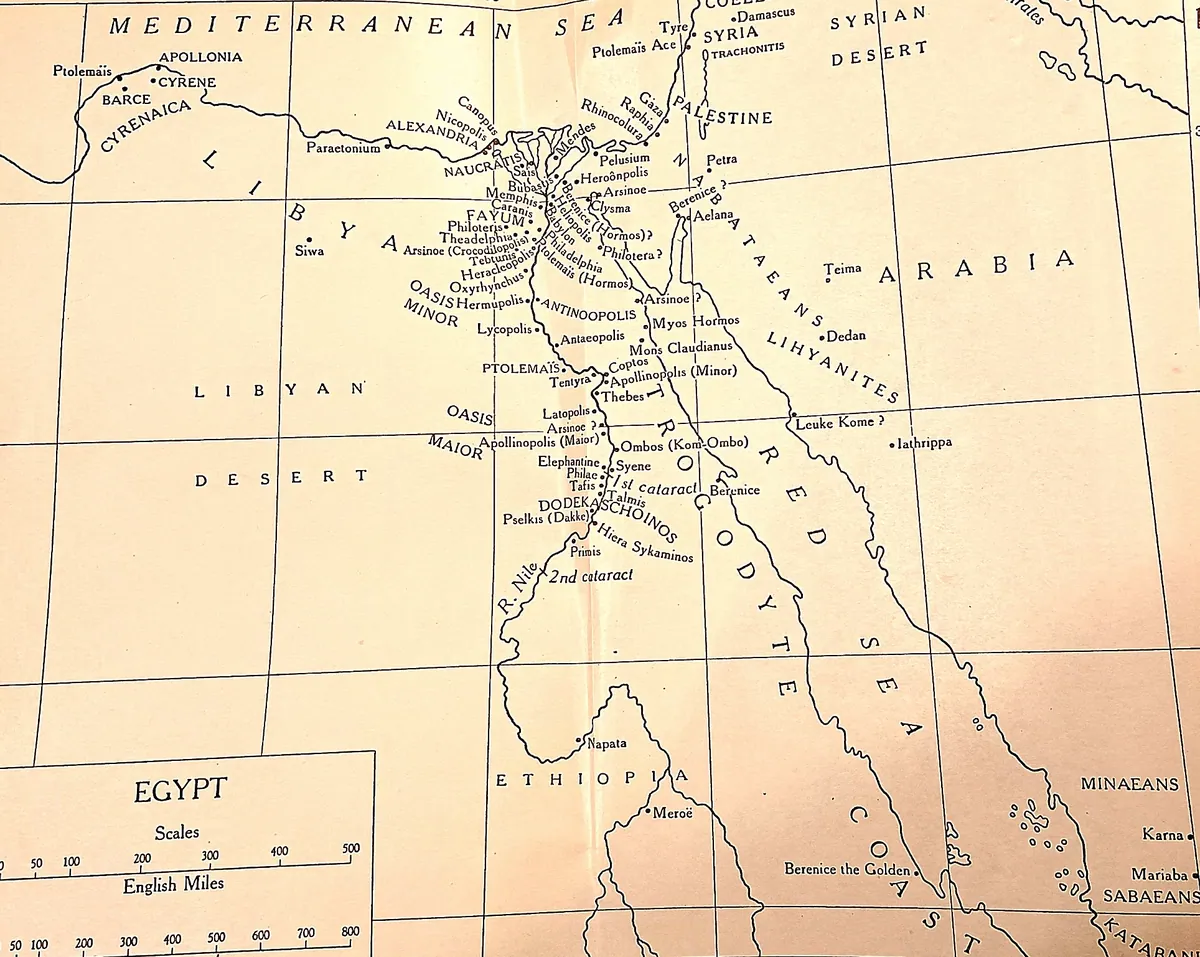 Click to enlarge
Aftermath · A.D. 250–451When disagreement acquired an emperor
Heresy meant a teaching condemned by those claiming the church’s authority; it was not a neutral name for every defeated alternative. The principal early disputes concerned different questions. Novatianists, and later Donatists in North Africa, contested the restoration or authority of Christians compromised by persecution. Arius and his opponents disputed the Son’s relation to the Father; Nicaea in A.D. 325 affirmed the Son’s shared divine substance with the Father, but decades of reversals followed. Modalist accounts were condemned for failing adequately to distinguish Father, Son and Spirit; Apollinarius for denying Christ a complete human mind. The Pelagian controversy concerned sin, human willing and divine grace. These were not interchangeable rebellions against an already finished system.
Once emperors supported a church, exclusion could carry confiscation, exile and armed enforcement. Rival bishops competed for buildings and imperial decisions; crowds fought over possession. Ammianus, a pagan observer, reports 137 dead in a Roman basilica during the struggle between supporters of Damasus and Ursinus in A.D. 366. That was a contested episcopal election, not a dispute over Christ’s nature, but it shows the stakes the office had acquired. In A.D. 385 the emperor Magnus Maximus had Priscillian and companions executed following proceedings for magic; Christian opponents had pursued the case, while Martin of Tours opposed the resort to bloodshed. Violence had identifiable patrons and opponents within Christianity itself.
Ephesus in A.D. 431 condemned Nestorius; Chalcedon in A.D. 451 defined Christ as one person in two natures, divine and human. Those who rejected Chalcedon did not all deny his humanity, and the label Monophysite can obscure their insistence upon a united incarnate nature. Churches outside the imperial settlement endured. Thus a dominant orthodoxy emerged through argument, councils, patronage and coercion, but no single meeting ended Christian disagreement. The court of appeal against worldly power had acquired worldly power of its own. [8]
Later courts · fourth–sixth centuriesA queen’s faith and a ruler’s decision
Clotild, the Burgundian wife of the Frankish king Clovis, is the clearest royal example. Gregory of Tours, writing generations later, describes her repeated attempts to persuade her husband, her insistence upon their children’s baptism, and her bringing Bishop Remigius into the work of conversion. His narrative makes Clovis’ appeal to Christ during battle against the Alamanni the turning point. Clotild’s persuasion belongs in the account; Gregory’s reported speeches and providential battle scene are a bishop’s retrospective narrative, not a transcript. The date of the baptism remains disputed. Clovis’ adoption of Catholic Christianity brought his kingship into closer religious alignment with the Gallo-Roman bishops.
Constantine presents a different case. Helena was his mother, not his wife, and Eusebius credits the emperor with drawing her towards Christian devotion, rather than recording her conversion of him. Her patronage of churches and pilgrimage in Palestine helped establish the dynasty’s Christian presence. Eusebius wrote to praise Constantine, so his account cannot settle every private influence; it nevertheless gives no warrant for reversing the relationship into a story of a mother converting her son.
Theodora, Justinian’s wife and empress from A.D. 527, exercised influence within an already Christian monarchy. She protected opponents of Chalcedon and supported clergy and networks that imperial religious policy threatened. The dispute concerned which Christianity would receive protection; she did not convert a pagan Justinian. These women therefore illustrate distinct forms of power: persuasion towards baptism, dynastic patronage, and intervention in doctrine and appointments. Household access could influence a sovereign, and a sovereign’s decision could give a religious allegiance resources and reach far beyond the household. [10]
Why it mattered
Christianity severed the connection between earthly eminence and final worth. Its communities gave that judgement a practical form: the poor received support, the disgraced could begin again, and a provincial congregation could recognise obligations beyond its city. The same faith could subordinate inquiry to revelation, present renunciation as superiority and place punishment beyond the reach of earthly appeal. Nietzsche’s challenge remains exact where it asks whether a value enlarges life or teaches resentment of it. It becomes inadequate where every act of care is reduced to weakness and every convert to an instrument of revenge.
By A.D. 200 this was still a vulnerable network of congregations. Persecution and imperial favour would change its scale. Decius’ demand for sacrifice in A.D. 250 and Diocletian’s attack from A.D. 303 tested its loyalties; Constantine’s patronage after A.D. 312 transformed its resources. A religion that had promised judgement upon the mighty was becoming an institution through which the mighty governed.
Sources & method — texts, arguments and disagreements
The narrative draws on ancient testimony and the older Cambridge histories; the sections on values use Nietzsche as an explicitly identified critic. His psychological explanations are arguments, not recovered motives. Biblical stories are evidence for what their writers taught, not independent proof that every narrated event occurred.
- Jewish origins and authorship. Romans 11:1; Philippians 3:5; Luke 1:1–4; Acts 1:1–2; Colossians 4:10–14. B. H. Streeter, “The Rise of Christianity,” Cambridge Ancient History, first edition, XI (1936), ch. VII, especially §§III–V. Distinguish the inherited Jewish scriptures from their differing Christian arrangements and canons. Luke’s Gentile ancestry and traditional authorship are inferences; neither permits an ethnic count of all biblical writers. Biblical references use the King James text for passage checking; their wording is paraphrased.
- Expectations and competing movements. Daniel 7, 12; Josephus, Jewish War 2.119–166, 2.259–263; Antiquities 20.97–99, 20.169–172; Eusebius, Ecclesiastical History 5.16–18 on the Phrygian prophets. Josephus is hostile to popular prophetic leaders. Streeter, ch. VII §§IV–VI. Shared religious surroundings do not establish direct borrowing or identical beliefs.
- The Gentile mission. Galatians 2; 4:8–11; 5:2–6; Acts 15:1–29; Romans 14; 1 Corinthians 8; 10:14–33; First Clement 5. Streeter, ch. VII §V, pp. 268–273. Acts’ settlement and Paul’s account must not be silently combined into a single uncontested record. Relaxing entry requirements had practical effects; a cynical collective scheme is not established by those effects.
- Rank and repentance. 1 Corinthians 1:18–29; 6:9–11; Luke 6:20–26; Luke 1:46–55; 16:19–31; 23:39–43; Matthew 5–7; 21:28–32; Romans 13:1–7; Philemon; 1 Peter 2:18. Celsus’ accusations and Origen’s replies: Against Celsus 3.44–55, 3.59–65, trans. Frederick Crombie, Ante-Nicene Fathers IV (1885). The surviving quotations of Celsus are selected by his Christian opponent.
- Resurrection and renunciation. 1 Thessalonians 4:13–18; 1 Corinthians 7:29–35; 15:12–58; Mark 8:34–38; Matthew 6:19–21; Revelation 21–22. These texts distinguish resurrection and renewed creation from the simple escape of a soul out of matter. Nietzsche’s life-denial thesis is a judgement on their priorities.
- The critical argument. The Genealogy of Morals (1887), First Essay §§7–10, 13–16; Third Essay §§11–15, 28, trans. Horace B. Samuel (1913). The Antichrist (written 1888), §§5–7, 24–27, 33–43, 58–59, trans. H. L. Mencken (1920). The two displayed excerpts were checked against those downloaded translations. Against Nietzsche’s attribution of resurrection belief to Paul’s invention, compare 1 Corinthians 15:3–11. Neither work establishes a collective Jewish intention behind Christian history.
- Persecution, institutions and books. Tacitus, Annals 15.44; Pliny, Letters 10.96–97; Eusebius, Ecclesiastical History 4.15, 5.1, 5.24, 6.43; Irenaeus, Against Heresies 3.3, 3.11.8; Athanasius, Festal Letter 39 (A.D. 367), §§4–7. Cambridge Medieval History, I (1911), ch. VI, “The Organisation of the Church,” supplements Streeter’s account. The martyrs’ narratives preserve the communities’ own commemorations; dates and details are not uniformly secure. The chronology of Jewish–Christian separation was regional and protracted.
- Disputes and coercion. Cambridge Medieval History, I, ch. V (Arian controversy), ch. VI (organisation), ch. XVII, Religious Disunion in the Fifth Century. Ammianus Marcellinus, Res Gestae 27.3.12–13 (Damasus and Ursinus); Sulpicius Severus, Chronicle 2.46–51 (Priscillian and Martin); councils of Nicaea (325), Constantinople (381), Ephesus (431) and Chalcedon (451). This is a brief selection of major ancient controversies, not a list of every later heresy. The aftermath deliberately extends beyond the chapter’s main A.D. 200 boundary.
- Women and the household mission. Luke 8:1–3; Acts 16:14–15, 40; Romans 16:1–5; 1 Peter 3:1–2. These distinguish narrated episodes in Luke–Acts, Paul’s commendations, and instructions about a hoped-for conversion. Joanna’s husband’s office does not establish that she converted him. Celsus’ accusation survives in Origen, Against Celsus 3.55, with Origen’s reply in 3.56–58. This hostile portrayal does not provide a demographic count or evidence of an innate female susceptibility.
- Royal and imperial women. Gregory of Tours, Histories 2.28–31, trans. Ernest Brehaut (1916): Clotild and Clovis, written decades after the king’s death. Eusebius, Life of Constantine 3.42–47, especially 3.47 on the direction of religious influence; trans. Ernest Cushing Richardson (1890). Cambridge Medieval History, II (1913), ch. I, “Justinian,” on Theodora’s patronage and religious policy. Its confident psychological portraits are not adopted as established motives. These court comparisons extend the chapter’s aftermath into the sixth century.