Quintus Sertorius, the white fawn, and the eight-year alternative Roman state in Spain, 80–72 B.C.
80–72 B.C. · Hispania · Told after Plutarch, Appian, and Sallust.
A Tier-2 episode: a focused narrative set-piece built around a dynamic campaign map.
✦ ❧ ✦
Scroll to begin ↓
I80 B.C. · The Outlaw Returns
An Outlaw on the BaetisA commander without a city
When Sulla entered Rome in 82 B.C. and drew up his proscription lists, one officer of the defeated Marian party escaped him. Quintus Sertorius was no ordinary partisan. Born of Sabine stock at Nursia, he had learned war under Gaius Marius against the Cimbri and Teutones. In battle he had lost an eye, an injury he wore as a lifelong badge of honour. Driven from his Spanish praetorship by Sulla’s legions, he had been hunted through North Africa and reduced to the life of a corsair.
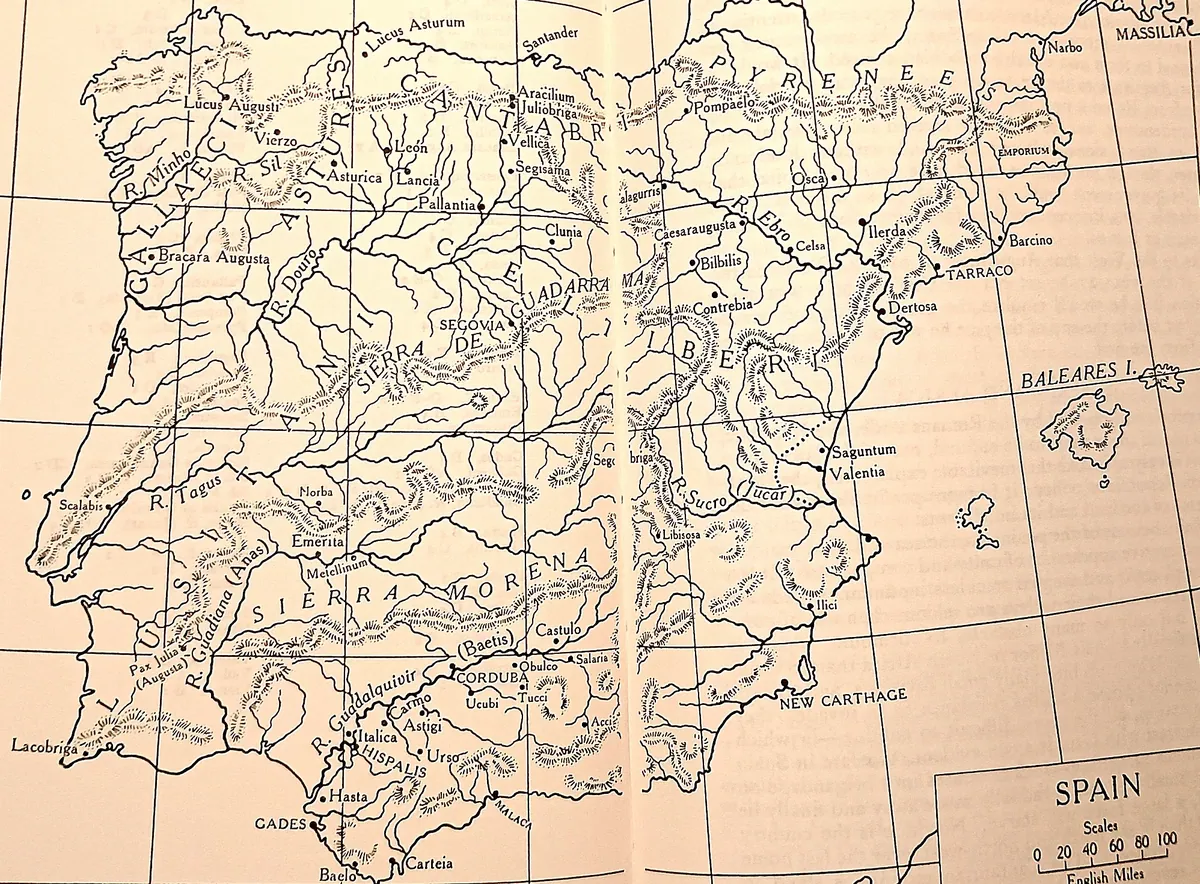
Plate · Republican SpainClick to enlarge
The country that made the war possible. Lusitania and the western meseta, where Sertorius recruited; the Ebro and the Sucro, where the set-piece battles were fought; Osca, his capital and school; and the eastern coast road from the Pyrenees to New Carthage, which is the only way a Roman army could be supplied. Eight years of war ran up and down this sheet.
The Cambridge Ancient History (1st ed., Cambridge University Press), map plate “Spain” — photographed from the fold-out sheet and cleaned.
In 80 B.C. the Lusitanians, pushed to revolt by the greed of Sullan governors, invited him to lead them. He crossed to Tingis with twenty-six hundred Roman exiles and seven hundred African horse. Marching to the Baetis near Italica, he shattered the governor Fufidius. Overnight, the outlaw was master of southern Spain.
Sertorius grasped what the Senate had refused to learn: an empire could not be held indefinitely against populations it merely pillaged. He drilled native Iberians into legions, armed them with the pilum and short sword, and curbed their tribal charges with Roman discipline. The warriors answered him with the devotio — the sacred Celtic oath binding men never to survive their general in defeat.
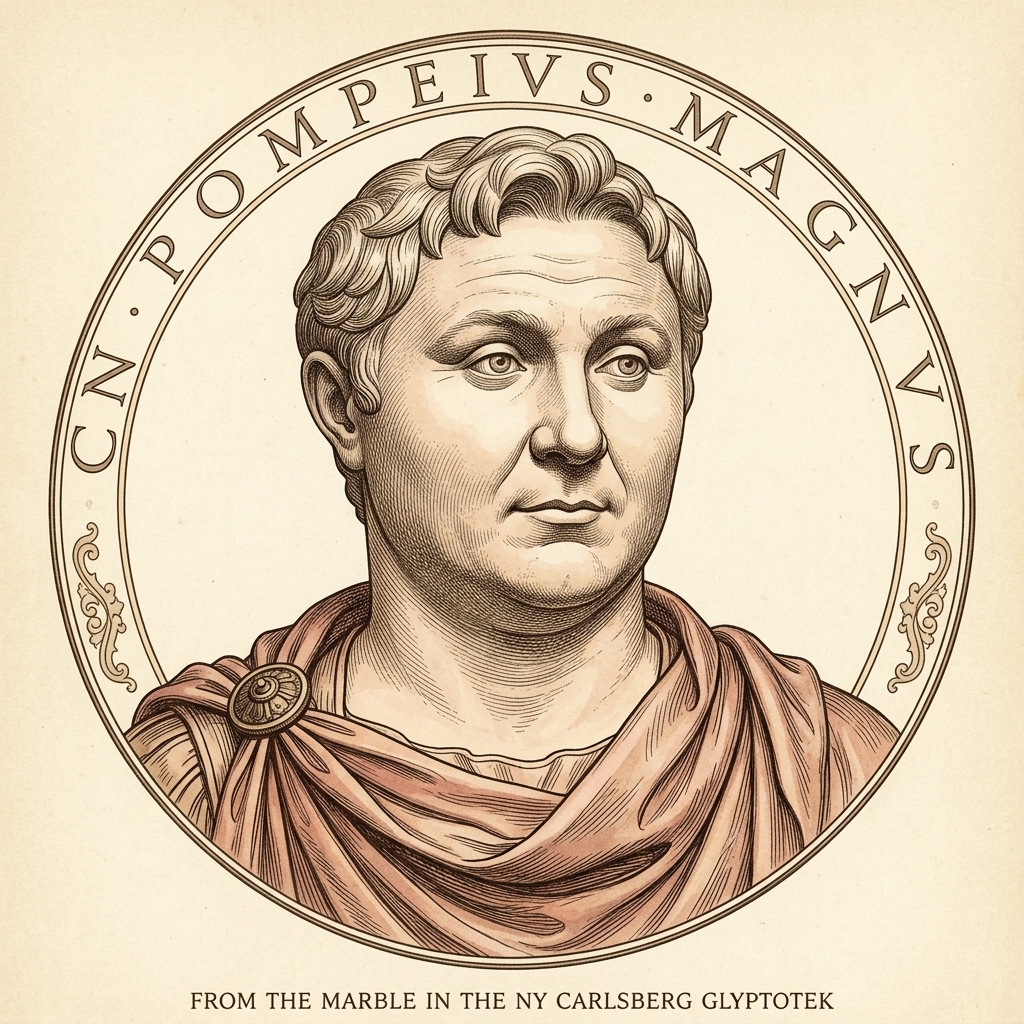
Cn. Pompeius MagnusSulla’s pupil · Sent to Spain at 29Ny Carlsberg Glyptotek 🔍
II79 – 77 B.C. · The Guerrilla Web
The White Fawn of DianaSuperstition and statecraft
The Senate sent against him its most deliberate commander, the proconsul Quintus Caecilius Metellus Pius, with four legions. Metellus was trained for pitched battles between heavy infantry lines; in the Spanish sierras he found no army to fight. Sertorius cut his convoys, poisoned wells, and vanished whenever the legions deployed. From his garrison at Metellinum, Metellus could neither feed his troops nor force an action.
To bind the tribes to him, Sertorius turned to an expedient recorded by Plutarch:
“when in time he had made it so tame and gentle that it would come when he called, and follow him wheresoever he went, and could endure the noise and tumult of the camp, knowing well that uncivilized people are naturally prone to superstition, by little and little he raised it into something preternatural, saying that it was given him by the goddess Diana, and that it revealed to him many secrets.”
Plutarch, Life of Sertorius — trans. J. Dryden, rev. A. H. Clough (public domain)
When intelligence warned of an enemy march, he produced the hind crowned with flowers, announcing that Diana had visited him. When the blow fell true, the tribesmen saw divine favour. In the south his lieutenants destroyed two consular armies sent to Metellus’ relief.
III76 B.C. · The Alternative Republic
The Academy at Osca and the Trap at LauroSulla’s pupil receives his lesson
With the collapse of Lepidus’ revolt in Italy, twenty thousand veteran legionaries under Marcus Perpenna Vento crossed to Spain and placed themselves under Sertorius. Sertorius now organized an alternative state at Osca in the northern Ebro valley. He appointed an exile Senate of three hundred Roman citizens and opened an academy where the sons of the Spanish nobility wore the Roman toga praetexta and studied Greek and Latin letters. To the chieftains it looked like high honour; to Sertorius it provided future magistrates and aristocratic hostages.
To crush this rival Rome, the Senate gave proconsular command to the twenty-nine-year-old Pompey, who had held no public office. Pompey crossed the Pyrenees in 76 B.C. and marched on the allied city of Lauro. Thinking he had trapped the besiegers, Pompey sent word to the citizens to watch from the walls. Sertorius sprang an ambush from a concealed ridge behind him:
“Sertorius, perceiving their intentions, smiled, and said, he would now teach Sylla's scholar, for so he called Pompey in derision, that it was the part of a general to look as well behind him as before him”
Plutarch, Life of Sertorius — trans. J. Dryden, rev. A. H. Clough (public domain)
Pompey sat motionless while Lauro burned. He retired northward to winter quarters, humiliated in his first encounter.
The Late Republic · The Sertorian War
The War of Sertorius: Rome’s Republic in Exile, 80–72 B.C.
Scroll to follow Quintus Sertorius as he crosses from Africa, unites the Spanish tribes, outgenerals Metellus and Pompey, and establishes an alternative Republic in the Iberian mountains.
80 B.C.
The Outlaw Returns from Africa
Proscribed by Sulla and hunted across North Africa, Quintus Sertorius lands in Hispania at the call of the Lusitanians with fewer than three thousand men. At the river Baetis near Italica he meets the Sullan governor Fufidius and shatters his army. The native Iberian and Lusitanian chieftains, long oppressed by Roman rapacity, hail Sertorius not as a foreign oppressor but as their champion, binding themselves to him by the sacred Celtic oath of devotio.
79–77 B.C.
The Guerrilla Web and the White Fawn
The Senate dispatches the proconsul Caecilius Metellus Pius with heavy legions. Accustomed to set-piece battles, Metellus finds himself paralyzed by Sertorius’ lightning strikes, cut supply lines, and scorched earth. Operating from Metellinum, Metellus can neither bring Sertorius to battle nor feed his own troops. Sertorius presents his soldiers with a milk-white fawn given him by a hunter, claiming it is an emissary of the goddess Diana that whispers secret counsels — cementing a fierce spiritual loyalty among the tribesmen.
76 B.C.
The Senate in Exile and the Humiliation of Pompey
Sertorius establishes a rival Roman capital at Osca (Huesca), appointing three hundred exiled senators and opening an academy where the sons of Spanish nobility study Latin, Greek, and Roman governance. When the twenty-nine-year-old Pompey the Great crosses the Pyrenees with thirty thousand men, Sertorius outmaneuvers him at Lauro. Seizing the dominating ridge, Sertorius forces Pompey to sit helpless as the city falls and burns before his eyes — mocking Pompey as “Sulla’s pupil.”
75 B.C.
The Clashes on the Sucro and at Saguntum
Pompey marches south along the coast, routing Sertorius’ lieutenant at Valentia. Sertorius hurries to meet him on the banks of the Sucro. In a savage dusk clash, Sertorius breaks Pompey’s wing, wounding Pompey in the thigh; Pompey escapes only when his horse’s golden harness distracts the pursuers. The next day, Metellus’ army appears on the horizon, compelling Sertorius to withdraw. At Saguntum, Sertorius inflicts six thousand casualties on Pompey, but Metellus crushes the allied wing, forcing the armies into winter quarters at Tarraco.
74–73 B.C.
King Mithridates and the Grinding Siege
Recognizing the Sertorian state as Rome’s true government, King Mithridates VI of Pontus sends envoys proposing an alliance, offering three thousand talents and forty warships in exchange for Roman recognition of his Asian conquests. Sertorius sternly refuses to cede any Roman province, yielding only Bithynia and Cappadocia. When Roman armies besiege Calagurris and Clunia, Sertorius breaks the siege lines. Yet years of blockade wear upon the rebel camp, and mutual suspicions fester between Roman exiles and Iberian chieftains.
72 B.C.
Betrayal at Osca and the Burning of the Letters
Consumed by jealousy, Marcus Perpenna and fellow Roman aristocrats assassinate Sertorius at a feast in Osca. The murder outrages the Spanish tribes, who dissolve in grief and fury. Stripped of Sertorius’ genius, Perpenna is easily trapped and crushed by Pompey. In captured trunks, Pompey discovers letters from consular senators in Rome inviting Sertorius to march on Italy. In an act of supreme statesmanship, Pompey burns every letter unread, executes Perpenna, and returns to Rome to claim the consulship of 70 B.C.
Sites: Pleiades. Land, lakes, and rivers: Natural Earth (public domain). Campaign vectors are schematic — reconstructed after Plutarch, Life of Sertorius, and Appian, The Civil Wars (Book I). Realm and tribal boundaries are represented by typography only.
IV75 – 73 B.C. · The Grinding Clashes
Sucro, Saguntum, and the Eastern EmbassyA Mediterranean war on two fronts
In 75 B.C. Pompey marched down the coast, took Valentia, and met Sertorius on the river Sucro at sunset. Sertorius broke Pompey’s wing and wounded the young general in the thigh; Pompey escaped only when his pursuers halted to plunder his horse’s gilded saddle. The arrival of Metellus’ campfires at dawn forced Sertorius to retire:
“If this old woman had not come up, I would have whipped that boy soundly and sent him to Rome.”
Plutarch, Life of Sertorius — trans. J. Dryden, rev. A. H. Clough (public domain)
Weeks later at Saguntum, another murderous battle cost Pompey six thousand men. Contemporary soldiers ranked Sertorius above every living Roman:
“there was no other man of that period more skilled in the art of war or more successful in it. For this reason, and on account of the rapidity of his movements, the Celtiberians gave him the name of Hannibal, whom they considered the boldest and most crafty general ever known in their country.”
Appian, The Civil Wars, Book I — trans. Horace White (Loeb Classical Library, 1913; public domain)
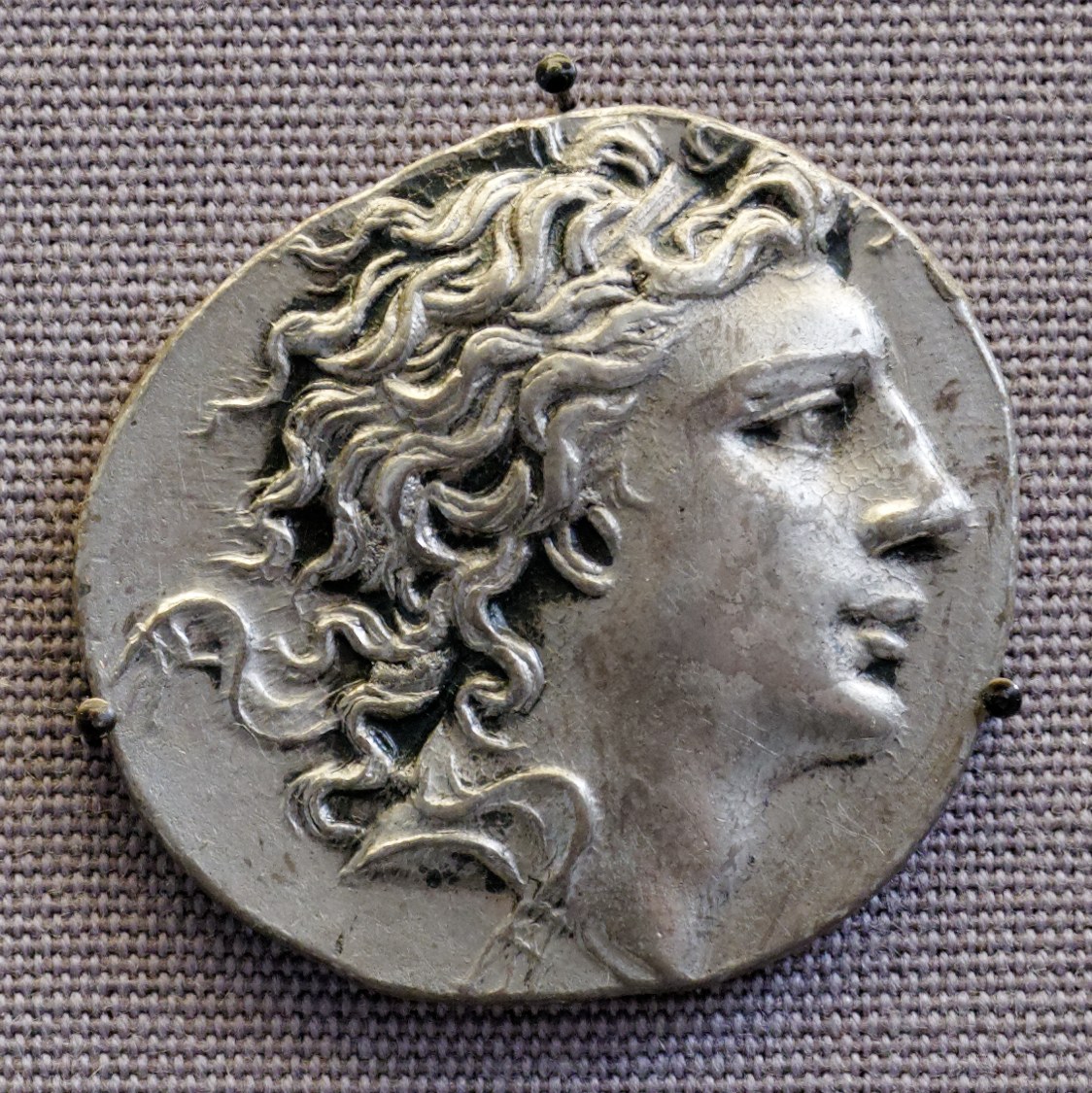
Archaeology · Silver Tetradrachm · British MuseumClick to enlarge
The Eastern Alliance. King Mithridates VI of Pontus offered Sertorius 3,000 talents and 40 warships in exchange for Asia Minor. Sertorius sent Roman officers under Marcus Marius but refused to cede the Roman province of Asia, proving that even in rebellion he considered himself the guardian of Roman territory.
British Museum, London; Department of Coins and Medals.
V72 B.C. · The Assassination
The Banquet at OscaTreasons in silver and ashes
The end came not from Roman legions, but from internal decay. As the blockade dragged into its seventh year, the Roman exiles grew bitter. They resented an Italian general who surrounded himself with Celtiberian spearmen, and they chafed under a long exile. Marcus Perpenna organized a conspiracy among ten officers.
In 72 B.C. Perpenna invited Sertorius to a celebratory banquet at Osca. Wine was poured freely; at a prearranged signal Perpenna dropped a goblet, and the conspirators stabbed Sertorius to death on his dining couch. The Spanish tribes deserted in horror. Without Sertorius’ genius, Perpenna was easily trapped and captured by Pompey:
“So ended the war in Spain with the life of Sertorius. I think that if he had lived longer the war would not have ended so soon or so easily.”
Appian, The Civil Wars, Book I — trans. Horace White (Loeb Classical Library, 1913; public domain)
Attempting to save his life, Perpenna produced letters from consular senators in Rome urging Sertorius to bring his army into Italy. Pompey’s response was decisive:
“For he put all Sertorius's writings and letters together and read not one of them, nor suffered anyone else to read them, but burnt them all, and caused Perpenna immediately to be put to death, lest by discovering their names, further troubles and revolutions might ensue.”
Plutarch, Life of Sertorius — trans. J. Dryden, rev. A. H. Clough (public domain)
VIThe Historical Verdict
Why the Sertorian War MatteredThe institutional ratchet of the Late Republic
The Three Legacies of Sertorius
1. Provincials as legionaries: Sertorius proved that non-Roman provincials could be drilled into legions capable of breaking consular armies. He showed that the Roman state was no longer bound to the stones of the Forum — an alternative Senate could govern from the Ebro, foreshadowing the civil wars of Caesar.
2. The breach in the Sullan constitution: To fight him, the Senate had to break Sulla’s strict rules. By giving proconsular command to Pompey — a private citizen who had never held regular office — the Senate conceded that its constitutional machinery could not survive without extraordinary generals.
3. Pompey’s Western clientage: By burning the senatorial letters, Pompey returned to Italy as a statesman rather than a prosecutor. The veterans who fought in Spain and the Spanish cities he reorganized remained his personal clients for forty years, giving him the leverage to demand the consulship of 70 B.C. at thirty-five years of age.