The Immortals of the Haemus
Thrace, Dacia, and a religion in which dying was a promotion — from Darius’ march to the head of Decebalus.
The Most Numerous Nation in the WorldAnd why it never became a power
When Darius marched north against the Scythians he passed through a country that no Greek had mapped and few had entered. Its coasts were familiar enough — Apollonia, Mesambria, Istros, Tomi and Callatis were Greek cities, trading posts on a foreign shore — but behind them lay the Haemus range, the Rhodope, the valley of the Hebrus, and beyond all of them the Ister, which we call the Danube. Herodotus, writing two generations later from that Greek rim, made an estimate of the people who lived inside it that has never stopped being quoted.
Now the Thracian race is the most numerous, except the Indians, in all the world: and if it should come to be ruled over by one man, or to agree together in one, it would be irresistible in fight and the strongest by far of all nations, in my opinion. Herodotus, History V.3 — trans. G. C. Macaulay (public domain)
Read carefully, that is not a compliment but an explanation. Herodotus is accounting for a fact that puzzled him: an enormous population that was never, in his lifetime or for four centuries afterwards, a great power. His answer is the one the map gives. The Thracians had many names and many tribes, and the ranges that made them hard to conquer also made them hard to unite. Megabazus subdued Thrace for Darius city by city and race by race; Rome, when its turn came, did the same, and found it easier than fighting one Thracian king would have been. The single exception — the one moment when a man did rule most of these people at once — came late, and came from the Danube rather than the Aegean. It is the last act of this episode.
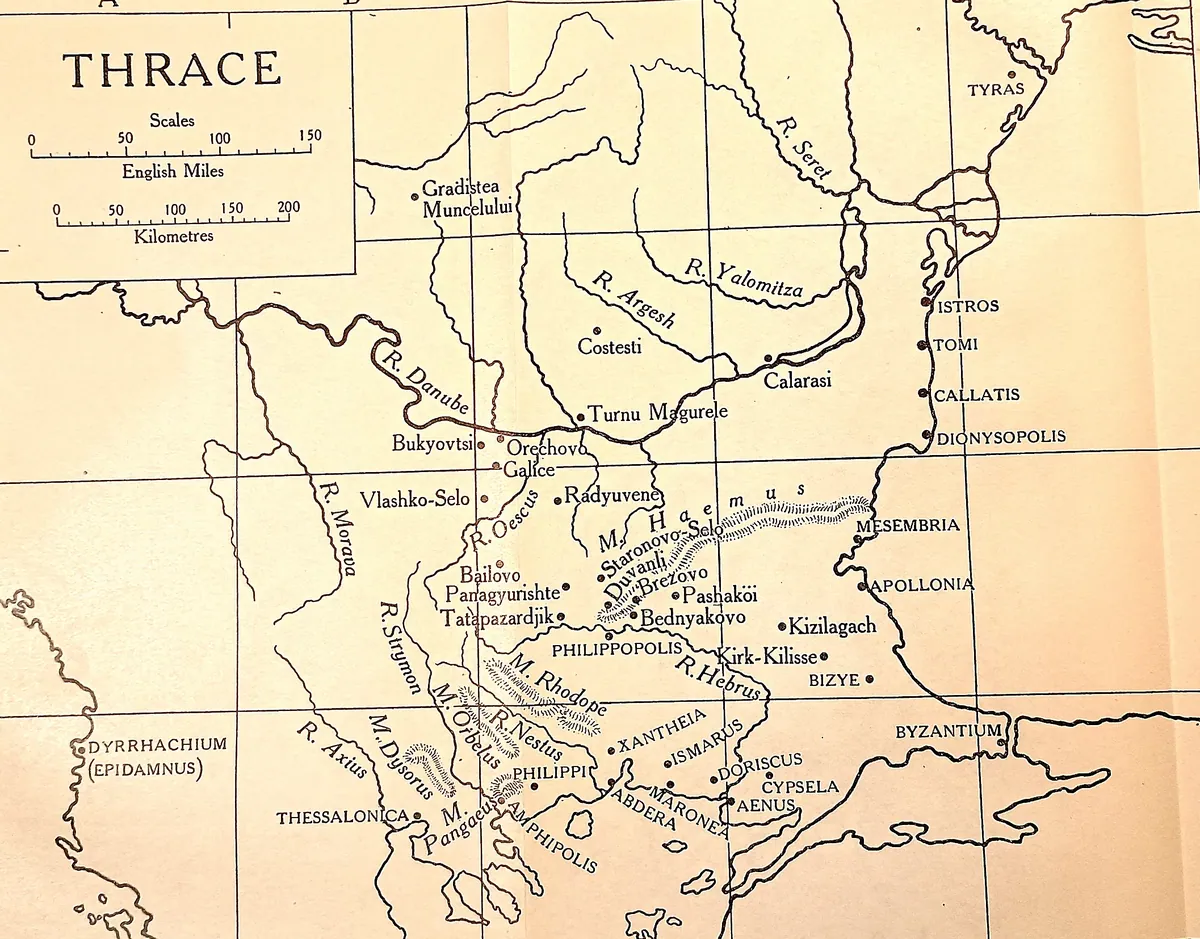 Click to enlarge
What a Thracian HonouredTattoos, idleness, and plunder
Herodotus’ account of Thracian custom is four paragraphs long and entirely without sentiment. They sell their children abroad. They watch their wives closely and their unmarried daughters not at all, and they buy the wives for large sums from the parents. And then two sentences that between them describe a whole social order:
To be pricked with figures is accounted a mark of noble rank, and not to be so marked is a sign of low birth. Not to work is counted most honourable, and to be a worker of the soil is above all things dishonourable: to live on war and plunder is the most honourable thing. Herodotus, History V.6 — trans. G. C. Macaulay (public domain)
The tattoo is a rank-marker, doing the work a Roman’s purple stripe did; what a Greek reader found shocking was not the needle but the inversion. In a Greek city the farmer was the citizen and the raider was a pirate. Here the ranking is reversed, and it is reversed as a matter of principle rather than of poverty. A man who lives on plunder needs neighbours to plunder, which is one more reason the Thracians did not unite: their honours were arranged against it.
Their gods were few. Herodotus says the people worship only Ares, Dionysos and Artemis — the Greek names he had for them, which is the first warning the reader should take from this chapter — and that the kings, apart from the rest, honour Hermes above all, swear by him alone, and claim descent from him. One cult he knew by report and located precisely:
the Satrians however never yet became obedient to any man, so far as we know, but they remain up to my time still free, alone of all the Thracians; for they dwell in lofty mountains, which are covered with forest of all kinds and with snow, and also they are very skilful in war. These are they who possess the Oracle of Dionysos; which Oracle is on their most lofty mountains. Herodotus, History VII.111 — trans. G. C. Macaulay (public domain)
The prophecy, he adds, is delivered by a priestess, as at Delphi, and the prophets of the shrine are the Bessi. Mark the source distance here, because it governs everything that follows. Herodotus is collecting from Greek coastal cities and from the Persian march route. He did not go up into the Rhodope, and he names no Thracian informant. What he gives us is what the Aegean shore believed about the mountains behind it.
Weeping at a Birth, Feasting at a GraveA people who mourned the wrong end of a life
All the Thracian tribes, Herodotus says, follow nearly the same customs — except three. The Getae, who believe themselves immortal; those who dwell above the Crestonians; and the Trausi, who do everything as the rest do, apart from what they do about being born and dying.
when a child has been born, the nearest of kin sit round it and make lamentation for all the evils of which he must fulfil the measure, now that he is born, enumerating the whole number of human ills; but when a man is dead, they cover him up in the earth with sport and rejoicing, saying at the same time from what great evils he has escaped and is now in perfect bliss. Herodotus, History V.4 — trans. G. C. Macaulay (public domain)
It is worth being clear about what is and is not attested. Herodotus does not say this of the Thracians in general; he names the Trausi as one of three exceptions, and a writer inventing a striking custom generalises it rather than confining it to a tribe most of his readers had never heard of. That is a point in favour of the report. What cannot be tested is whether he is describing a settled practice or a funeral rite that a traveller saw once and turned into a system. The Greeks already had the sentiment in their own poetry — that it is best not to be born, and next best to die young — which made it easy to hear a Thracian funeral and recognise a philosophy.
The second exception is harder to read charitably. Above the Crestonians, Herodotus reports, a man had many wives, and his death opened a contest among them:
each man has many wives, and when any man of them is dead, a great competition takes place among his wives, with much exertion on the part of their friends, about the question of which of them was most loved by their husband; and she who is preferred by the decision and so honoured, is first praised by both men and women, then her throat is cut over the tomb by her nearest of kin, and afterwards she is buried together with her husband; and the others are exceedingly grieved at it, for this is counted as the greatest reproach to them. Herodotus, History V.5 — trans. G. C. Macaulay (public domain)
The burial itself, for the rich, took three days: the body lying exposed, animals killed and a feast eaten, lamentation first and then the interment, by fire or by earth; a mound heaped over it; and then games, in which — Herodotus notes — the largest prizes went to single combat. Grief, feast, mound, duel. Across all three customs the same logic is visible, and it is a consistent one. If the dead have gone somewhere better, then the grave is a door rather than an end, and the things done at it — the wife, the contest, the mound — are investments in the journey rather than consolations for the loss. Only one Thracian people is recorded as stating that belief outright.
The Messenger Thrown onto the SpearsThe Getae and their god
Between the Haemus and the Danube, on Darius’ road to the river, lay the Getae. The Thracians of the coast surrendered to the Persians without fighting. The Getae did not, and were beaten for it — but Herodotus, who had little reason to flatter a people on the Persian side of the ledger, pauses to say who they were: “the Getai, who are the bravest and the most upright in their dealings of all the Thracians”. Then he explains where the bravery came from.
they hold that they do not die, but that he who is killed goes to Salmoxis, a divinity, whom some of them call Gebeleizis Herodotus, History IV.94 — trans. G. C. Macaulay (public domain)
A belief of that kind is usually left as a piece of colour. Herodotus instead describes the ritual by which the Getae acted on it, and the passage is the single most concrete thing we possess about religion on the lower Danube. At four-year intervals the people chose by lot one of their own number to carry their requests to the god in person.
certain of them who are appointed for this have three javelins, and others meanwhile take hold on both sides of him who is being sent to Salmoxis, both by his hands and his feet, and first they swing him up, then throw him into the air so as to fall upon the spear-points: and if when he is pierced through he is killed, they think that the god is favourable to them; but if he is not killed, they find fault with the messenger himself, calling him a worthless man, and then having found fault with him they send another: and they give him the charge beforehand, while he is yet alive. Herodotus, History IV.94 — trans. G. C. Macaulay (public domain)
Every clause of that is worth slowing down over. The messenger is not a criminal, a prisoner or a slave; he is drawn by lot from the community, which means any man present might be the one to go. He is briefed while still alive, and the briefing is public business — the requests the people have to make on this occasion. The three javelins are held by men appointed to the office. And the test of whether the god has received the embassy is whether the spears kill him: death is the proof of acceptance, and survival is not a reprieve but a verdict. The fault, in that event, is found in the man. He is called worthless, and another is sent.
That is a coherent theology and a formidable one. A people who read a fatal wound as evidence of divine favour have removed the ordinary incentive to stay alive, and every ancient writer who fought them noticed it. Herodotus adds one more observation about the same Getae, which shows that the relationship was not simply reverent:
These same Thracians also shoot arrows up towards the sky when thunder and lightning come, and use threats to the god, not believing that there exists any other god except their own. Herodotus, History IV.94 — trans. G. C. Macaulay (public domain)
Men who shoot at the storm are not fatalists. They are asserting, against a sky god who is not theirs, that they have one of their own and owe nothing to any other. Herodotus’ phrase for the Getic doctrine is usually rendered as a belief in immortality; what the ritual actually describes is narrower and stranger. It is a belief in a destination, and in the possibility of sending someone ahead to it with a message.
The God Who May Have Been a ManSalmoxis, Pythagoras, and a chamber under the ground
Herodotus then reports, at second hand, the explanation the Greeks of the Hellespont and the Black Sea preferred. Salmoxis, they said, had been a man: a slave at Samos in the household of Pythagoras, freed, enriched, and returned home to a people he found simple. He built a banqueting hall, feasted the leading men, and taught them that neither he nor they nor their descendants would die but would go to a place where they would live for ever and have all things good. Meanwhile he was digging a chamber under the ground. He vanished into it for three years while the Thracians mourned him as dead, and in the fourth year he reappeared, and what he had said became credible.
It is a good story, and Herodotus declines to buy it:
as to this matter and the chamber under ground, I neither disbelieve it nor do I very strongly believe, but I think that this Salmoxis lived many years before Pythagoras. Herodotus, History IV.96 — trans. G. C. Macaulay (public domain)
That sentence is the most valuable one in the passage, and the reason to trust the rest. He has just been given a tidy Greek origin for a foreign god, from informants with an obvious motive to supply one, and he says plainly that the chronology does not work and that he is not going to pretend to a certainty he lacks. The underground chamber is where the Greeks put the mystery they could not otherwise account for.
Four centuries later Strabo, drawing on Posidonius, has the story in a form that is no longer about a trick at all. Zamolxis, in his telling, served Pythagoras, learned astronomy from him and from the Egyptians, went home, and rose by successful prediction to be first the priest of the chief god and then a god himself, withdrawing to live in caverns and communicating with no one but the king. What matters is not the biography but what Strabo says it became:
This custom even continues to our time; for there is always found some one of this character who assists the king in his counsels, and is styled a god by the Getæ. Strabo, Geography VII.3.5 — trans. H. C. Hamilton & W. Falconer (public domain)
Not a legend, then, but a standing office: a permanent religious authority seated beside the throne, in continuous existence from Herodotus’ day to Strabo’s own. Strabo also preserves, from the same source, two ascetic orders in the same country — and one of them looks very like the discipline a priesthood of that kind would impose:
Posidonius relates that the Mysians religiously abstain from eating any thing that had life, and consequently, from cattle; but that they lived in a quiet way on honey, milk, and cheese; wherefore they are considered a religious people, and called Capnobatæ. … He adds, that there are amongst the Thracians some who live without wives, and who are known by the name of Ctistæ. These are considered sacred and worthy of honour, and live in great freedom. Strabo, Geography VII.3.3 — trans. H. C. Hamilton & W. Falconer (public domain)
Vegetarian ascetics and celibate holy men in the Danube hills, and a doctrine that the soul goes to a named god: it is easy to see why Greeks reached for Pythagoras. The likelier reading runs the other way. The Getae had their own god and their own priesthood, and Greek visitors, meeting a discipline that resembled one they knew, explained the foreign thing by the familiar one. Herodotus, who was offered that explanation first, is the writer who refused it.
The Priest Behind the ThroneBurebista, Decaeneus, and the uprooted vines
The exception Herodotus imagined — the Thracian people ruled by one man — arrived in the generation of Caesar, and it arrived north of the Danube. Burebista took command of a demoralised people, drilled them into sobriety and obedience, and inside a few years held a dominion that crossed the river at will, laid Thrace waste as far as Macedonia and Illyria, subdued the Celts living among the Thracians and destroyed the Boii outright. Caesar was preparing an expedition against him when both men were killed — Burebista in a rising of his own subjects, the empire breaking on his death into four or five states.
Strabo, who is interested in how such obedience is manufactured, names the instrument. Burebista used Decaeneus, a man who had travelled in Egypt, who read natural signs, who was taken for an oracle and very nearly for a god — the same office Strabo has already described as permanent among the Getae. Then he offers his proof:
As an instance of their implicit obedience, we may relate that they were persuaded to root up their vines and live without wine. Strabo, Geography VII.3.11 — trans. H. C. Hamilton & W. Falconer (public domain)
A king who can make a wine-growing people destroy their own vineyards commands something no Roman governor in the Balkans ever had. The honest caveat is that Strabo is arguing a case — religion as an instrument of rule — and the detail serves that case exactly; whether every vine in Dacia came out of the ground is not something he was in a position to know. But the shape of the claim is what matters, and it matches Herodotus at a distance of four centuries and with no shared source: the authority over these people is priestly, and it is exercised beside the throne rather than from it.
Strabo also settles a confusion that has followed this country ever since. Getae and Dacians, he says, are one people under two names, the Getae lying toward the Black Sea and the east, the Dacians toward Germany and the sources of the Danube. The religion of the messenger and the spears is therefore not a Getic curiosity filed away in Herodotus. It is the religion of the kingdom Rome would spend twenty-five years trying to destroy.
DecebalusThe last king of the immortals
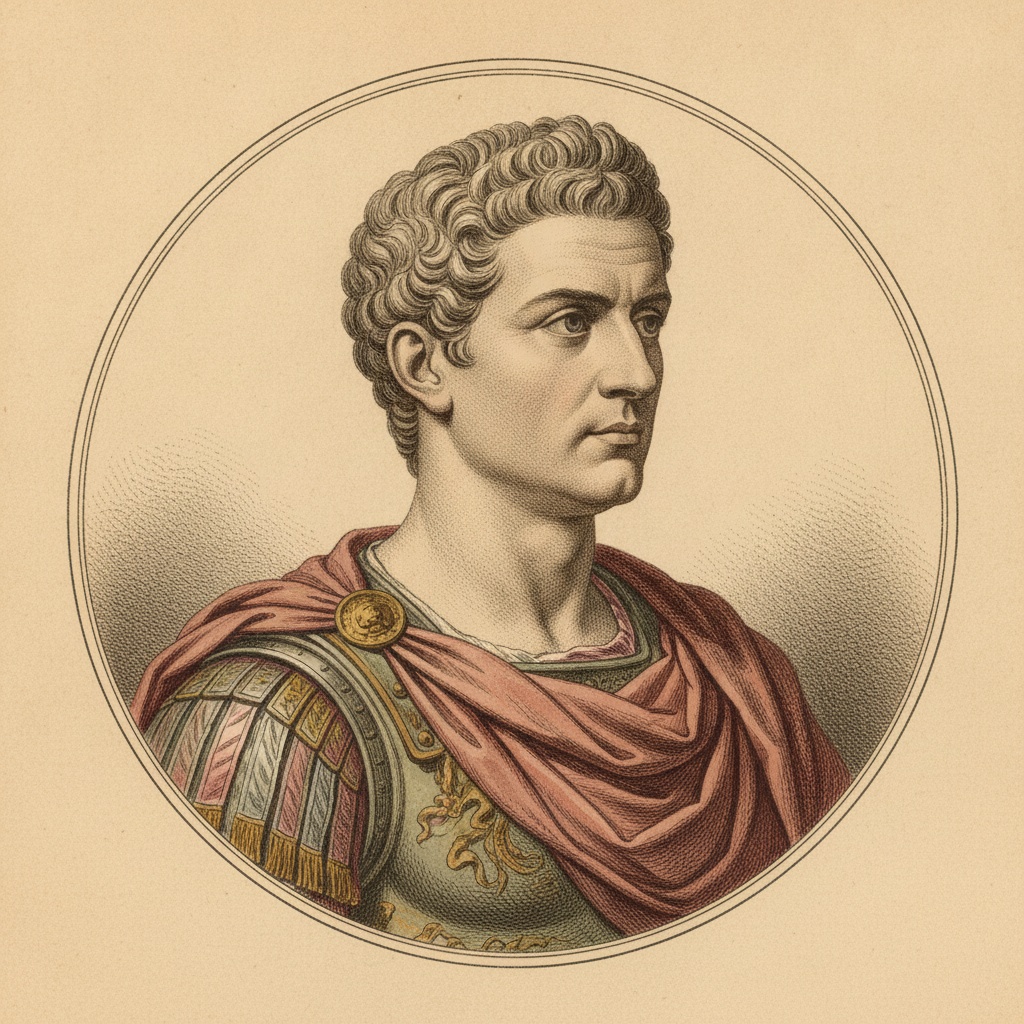
The wars that ended this story were not fought over gods. When Cassius Dio takes up the Dacian kingdom he describes a state, an army and a strategist, and the religion has gone out of the record entirely — which is itself worth noticing. In the 80s a Dacian invasion of Moesia destroyed the praetorian prefect Cornelius Fuscus and his army. Dio’s estimate of the king who did it is the highest he gives any barbarian:
This man was shrewd in his understanding of warfare and shrewd also in the waging of war; he judged well when to attack and chose the right moment to retreat; he was an expert in ambuscades and a master in pitched battles; and he knew not only how to follow up a victory well, but also how to manage well a defeat. Cassius Dio, Roman History LXVII.6 — trans. E. Cary (Loeb Classical Library; public domain)
Dio also records what Decebalus did after a Roman victory at Tapae, when he expected the legions to come on against his capital:
Decebalus, fearing that the Romans, now that they had conquered, would proceed against his royal residence, cut down the trees that were on the site and put armour on the trunks, in order that the Romans might take them for soldiers and so be frightened and withdraw; and this actually happened. Cassius Dio, Roman History LXVII.10 — trans. E. Cary (Loeb Classical Library; public domain)
Domitian settled the matter by treaty. He crowned Decebalus’ brother Diegis as though he were disposing of a conquered throne, celebrated something resembling a triumph out of the imperial furniture store, and undertook to pay the Dacian king an annual subsidy along with engineers and craftsmen of every trade. Rome had bought quiet on the Danube and financed a fortress system while doing it.
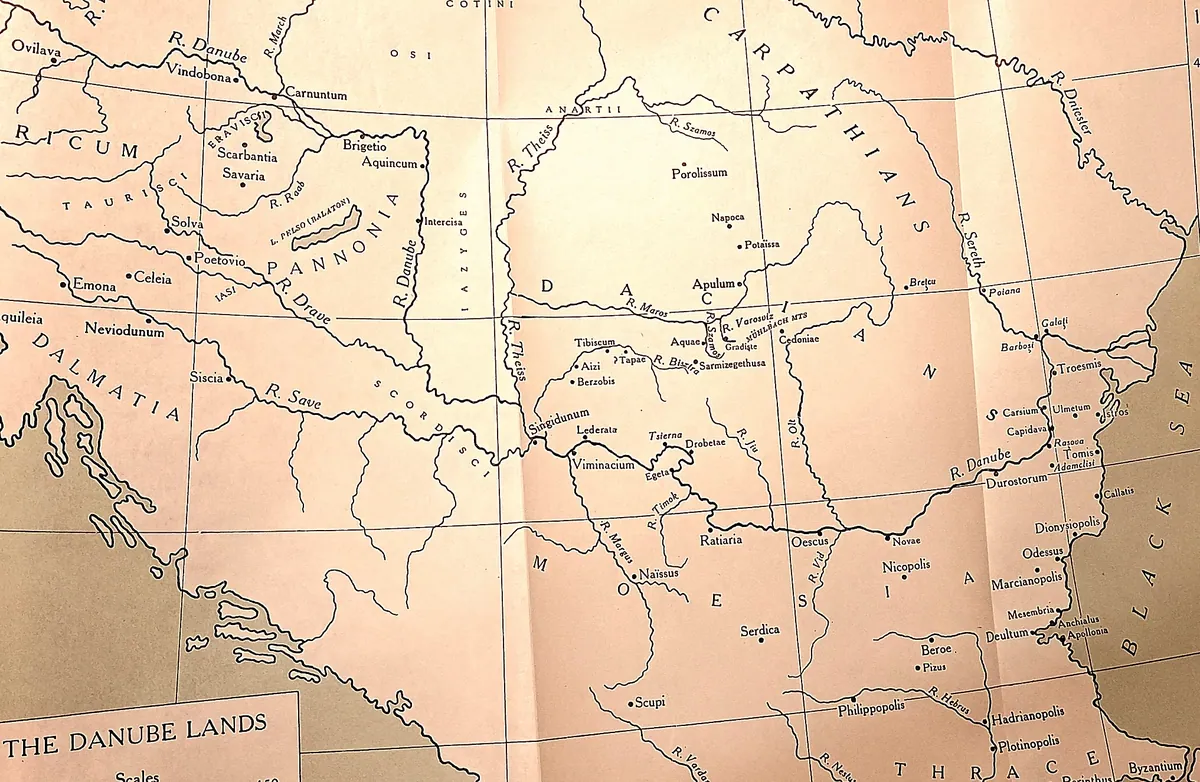 Click to enlarge
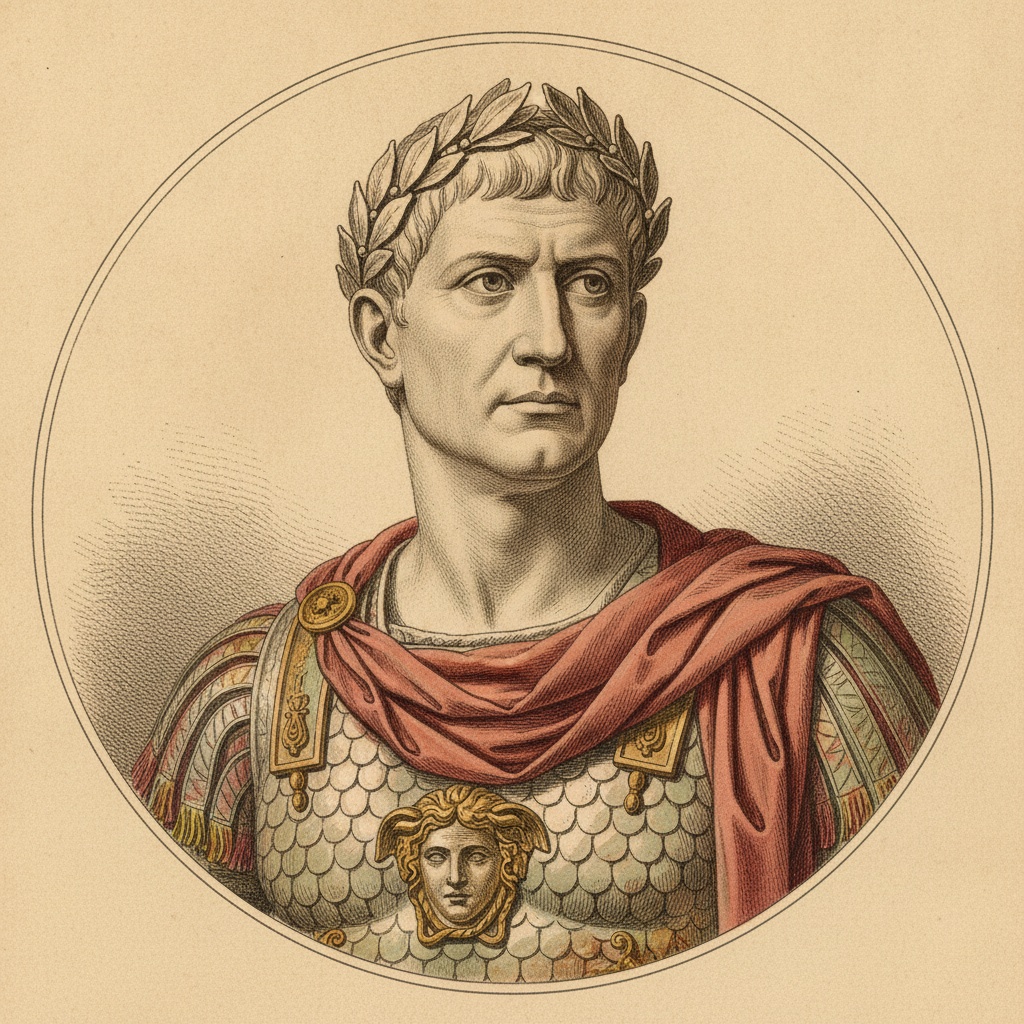
Trajan ended both the subsidy and the kingdom. Dio’s account of the two wars is full of the details that survive when an eyewitness tradition is good: the large mushroom brought to Trajan near Tapae with a message in Latin characters advising him to turn back and keep the peace; the emperor cutting up his own clothing for bandages when the dressings ran out; Decebalus’ envoys, the noblest of the cap-wearers, throwing down their arms and prostrating themselves; the plot to murder Trajan by deserters, broken when one of them talked under torture; and the Roman commander Longinus, taken by a trick and held as a hostage, who obtained poison and drank it at night rather than be made the price of a treaty. Then the end:
Decebalus, when his capital and all his territory had been occupied and he was himself in danger of being captured, committed suicide; and his head was brought to Rome. Cassius Dio, Roman History LXVIII.14 — trans. E. Cary (Loeb Classical Library; public domain)
The treasure went to Rome as well. Decebalus had turned the river Sargetia aside with prisoner labour, dug into the bed, buried his silver and gold there and let the water back over it; a captive told the Romans where to dig. Dacia became a province, Trajan founded cities in it, and the war was carved in a spiral up a column in Rome, where the Dacians are still visible — the only portraits of them anyone made.
Why the Gods of the Getae MatteredA doctrine, an office, and a silence
Three Verdicts
1. A doctrine that discounts death is a military fact, not a curiosity. Herodotus, who saw the Getae beaten by Darius, and Dio, who read the records of a war that cost Rome twenty-five years and two emperors’ reputations, had no source in common and no shared purpose; both rank these people at the top of their scale for hard fighting. The ritual of the spears is the clearest surviving statement of why. Where a fatal wound counts as evidence that the god has accepted the embassy, the ordinary calculation a general relies on — that an enemy line will break before it dies — stops working.
2. The priest beside the throne is the oldest Dacian institution we can trace. Herodotus’ lot-drawn messenger and appointed spearmen, Strabo’s standing god who advises the king, and Burebista’s Decaeneus are three sightings of one office across four and a half centuries. It is the only continuous Dacian institution the sources allow us to follow, and it is religious rather than royal — which is why the obedience Strabo describes was of a kind Rome could not purchase, and why Domitian’s subsidy bought a truce and not a client.
3. Every word of this is an outsider’s report, and the silence at the end is the proof. Not a line of Thracian or Dacian literature survives; there is no native account of Salmoxis, of the Trausi, or of what a Dacian thought he was doing when he threw a man at three spears. What we have is a Greek collecting on the coast, a geographer working from Posidonius, and a Roman senator reading dispatches. By Dio’s day the gods have vanished from the record altogether and the Dacians appear only as forts, ambushes and a treasure under a river — not because the belief had died, but because the men still writing about them had stopped asking. This episode is assembled from the questions three foreigners happened to ask, and it should be read as such.