Era III · Classical Greece

Alexander

A twenty-year-old inherits his father’s army and a plan to invade Persia, and in eleven years destroys the empire that had loomed over the Greeks for two centuries.

336–323 B.C.  ·  From Macedon to the Indus
The conquest of Persia and the struggle to govern it, after Arrian, Plutarch, and Diodorus.
✦   ❧   ✦
Scroll to begin ↓
I336–335 B.C.

The inheritance must be won

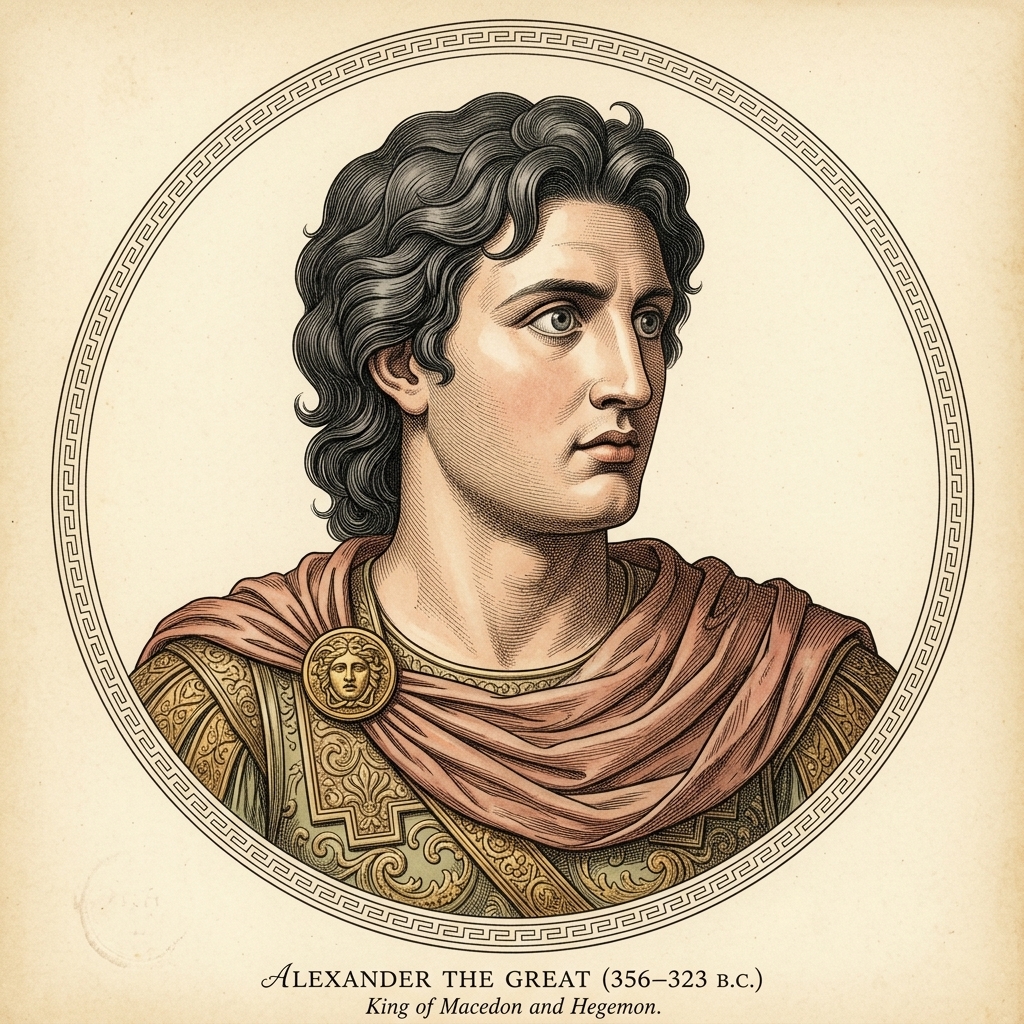
Restored portrait of Alexander III of Macedon
Alexander III of MacedonKing of Macedon, 356–323 B.C.
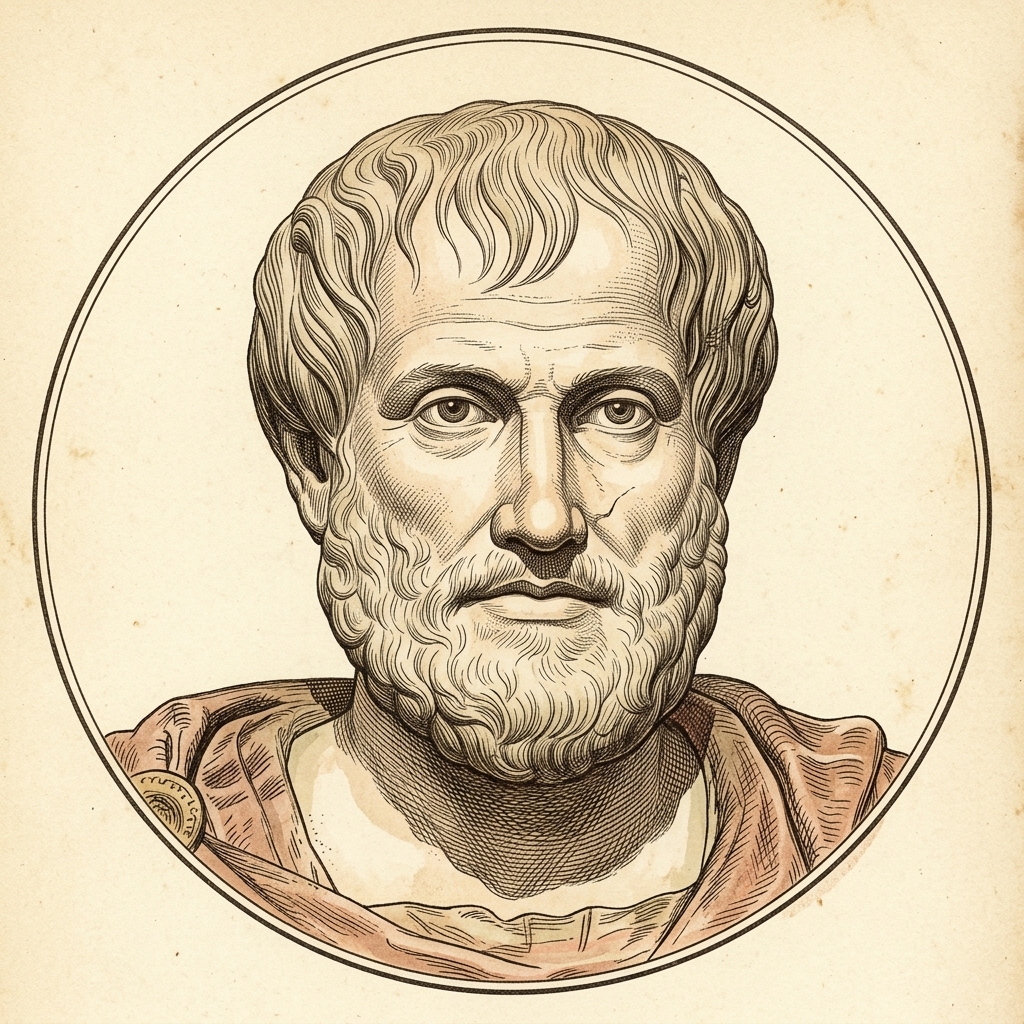
Restored portrait of Aristotle
AristotleAlexander’s tutor; philosopher, 384–322 B.C.
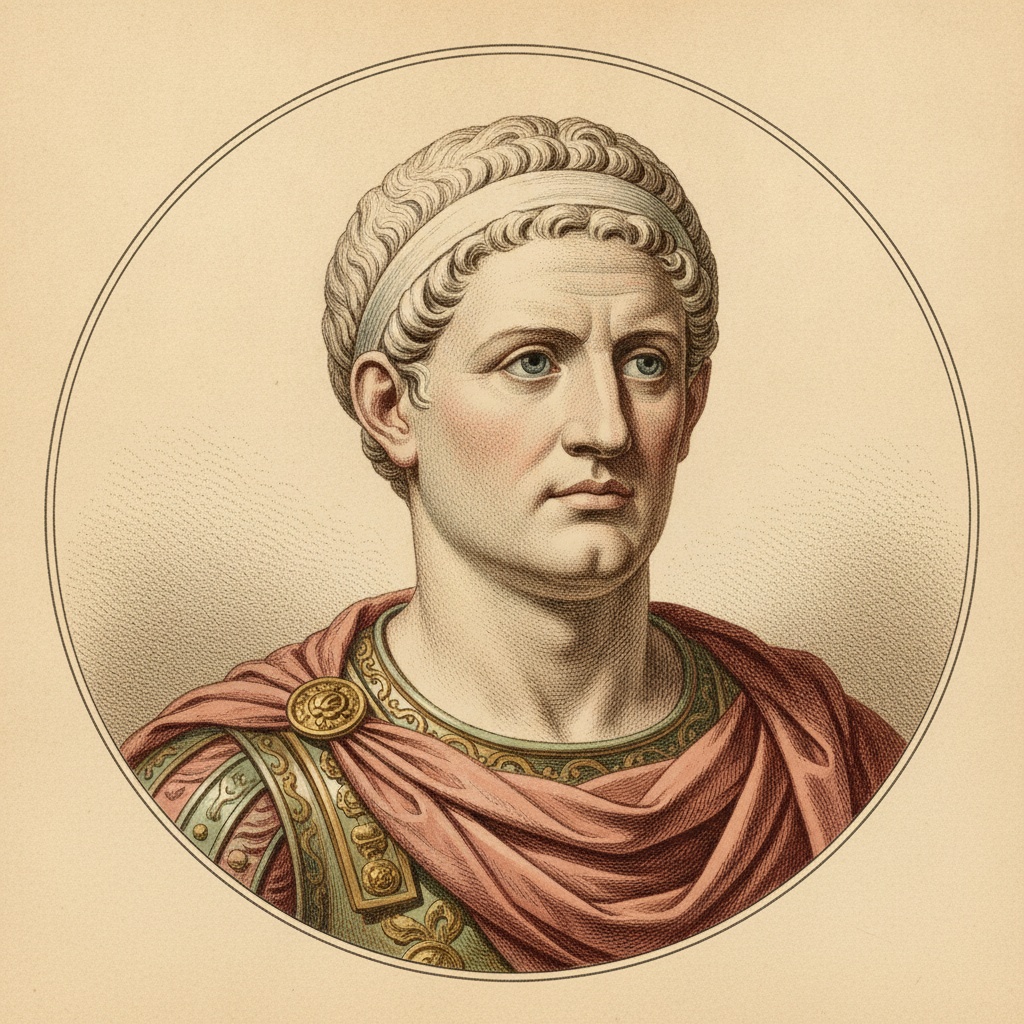
Restored portrait of Ptolemy I Soter
Ptolemy I SoterAlexander’s general, later king of Egypt, 367–282 B.C.
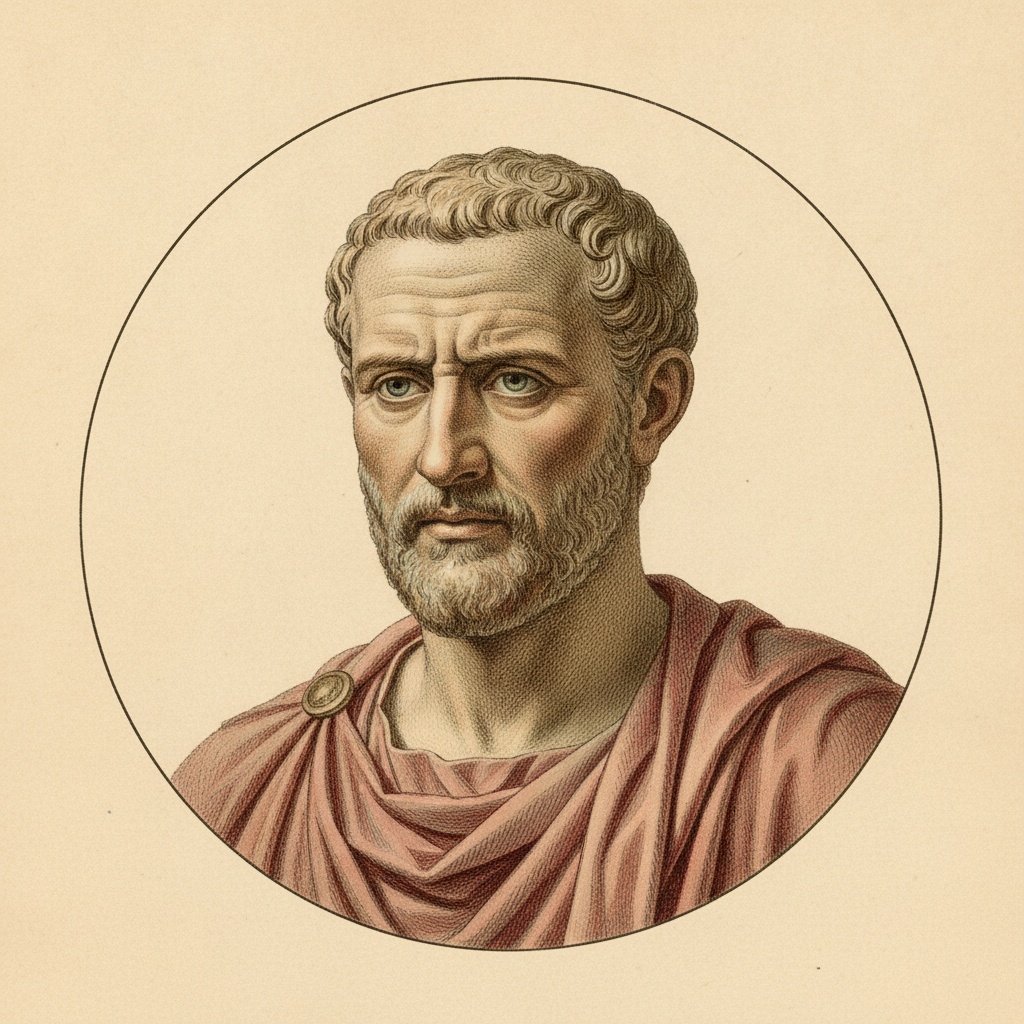
Restored portrait of Demosthenes
DemosthenesAthenian orator who opposed Macedon, 384–322 B.C.

When Philip II was murdered in 336 B.C., Alexander was twenty. He inherited a trained army and a projected invasion of Persia, but neither the Macedonian succession nor Greek obedience was secure. Rivals were removed, some by execution. Alexander marched south and obtained recognition of his father’s command, then turned to the northern and western frontiers. Before he could carry the army into Asia, he had to make it safe to leave Europe.

In 335 a report that he was dead encouraged Thebes to revolt. Alexander returned with a speed that destroyed the report before it could become a general rising. The city was stormed, its surviving inhabitants sold into slavery, and most of its buildings demolished. Arrian assigns the formal decision to Alexander’s Greek allies, among them old enemies of Thebes; Macedonian force made the decision possible. Athens submitted. The king who would proclaim the freedom of the Greeks in Asia had secured Greece by an example of destruction.

Alexander left Antipater to govern in Macedon and watch the Greek states. The arrangement mattered throughout the conquest. Armies in Asia still needed recruits from home, while Sparta remained outside the settlement. When its king Agis III later raised a coalition, Antipater defeated him at Megalopolis in 331. Alexander’s freedom to advance depended partly on a war won by another man behind him.

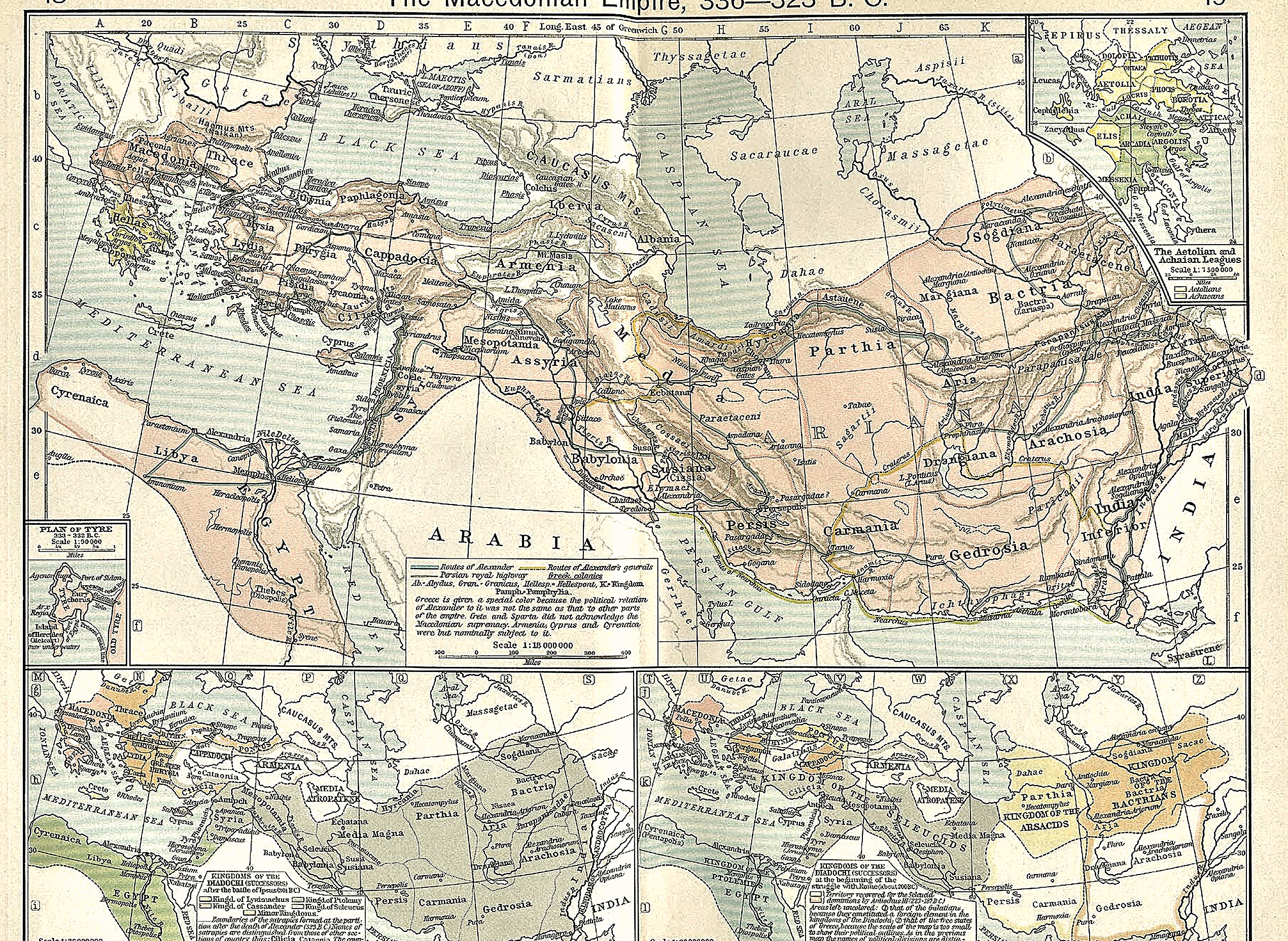
Shepherd plate · 336–323 B.C. Shepherd atlas map of Alexander's Macedonian empire and campaign routes from Greece to India Click to enlarge · zoom
The Macedonian Empire, 336–323 B.C. Shepherd traces Alexander's march from the Hellespont through Egypt, Persia, Bactria, and India. The lower insets show how his generals divided the conquests after his death. William R. Shepherd, Historical Atlas (1911).
II334–331 B.C.

Taking the coast before the empire

Alexander crossed the Hellespont in 334 B.C. with Macedonian infantry, Greek allies and mercenaries, and cavalry drawn from several peoples. The phalanx gave his army weight; the Companion cavalry, the king’s mounted striking force, gave it speed at the decisive point. Persian provincial governors, or satraps, confronted him at the Granicus. Their defeat opened western Asia Minor. Sardis surrendered; at Ephesus Alexander restored democratic government. The promise of liberation helped him displace Persian authority, though the king still decided what each city could do.

The Persian fleet remained a danger to his communications and to Greece. Alexander could not safely leave its harbours behind him. Miletus fell after a siege, and Halicarnassus resisted fiercely before its defenders withdrew into remaining strongholds and offshore positions. The invasion therefore followed the coast as well as the roads inland. Holding ports denied the enemy bases and secured the route by which reinforcements and supplies could reach the army.

At Issus in 333 Darius III brought the royal army against him. The restricted battlefield reduced the advantage of Persian numbers; Alexander’s attack broke through, and Darius fled. His mother, wife, and children fell into Macedonian hands. Alexander did not immediately pursue him into the empire’s heart. He continued south to settle the coast. Tyre refused him entry to its island city, and a siege of seven months ended in its capture in 332. Many inhabitants were killed or enslaved. Gaza was taken after another siege. Resistance could turn the language of liberation into exemplary punishment.

Egypt then passed into his hands without a major battle. He founded Alexandria on the Mediterranean coast and visited the oracle of Ammon at Siwa. The later accounts disagree about what happened at the shrine; the visit nevertheless strengthened the association of his kingship with divine descent. In 331 he returned through Syria and crossed towards Mesopotamia. At Gaugamela, east of the Tigris, Darius had room to deploy his forces. Alexander again broke the royal army. Babylon and Susa opened their gates, and the conqueror acquired the treasuries that could finance further war.

Classical Greece & Near East · The Hellenistic Expansion

Alexander’s Anabasis: The Conquest of Persia, 334–323 B.C.

Follow the campaigns from the Hellespont to the Indus and the return to Babylon.

334 B.C.

The Heir of Macedon & The Great King

Alexander succeeded Philip II in 336 B.C., aged twenty. Two years later he prepares to cross into Asia against Darius III. Diodorus counts about 32,000 infantry and 5,100 cavalry in the invasion force; the horsemen include Macedonians, Thessalians, and other contingents. Antipater remains behind to hold Macedon and watch Greece.

Spring–Summer 334 B.C.

The crossing and the Granicus

After crossing the Hellespont and visiting Troy, Alexander meets the Persian satraps at the Granicus. Arrian describes a contested river crossing and credits Cleitus with saving the king’s life. The Persian cavalry retreats; the Greek mercenaries serving Persia suffer heavy losses and capture. Sardis surrenders, opening the way into western Asia Minor.

333–332 B.C.

Issus and the siege of Tyre

At Gordion, later accounts place the disputed story of Alexander undoing or cutting the famous knot. At Issus he defeats Darius, then turns south to deny the Persian fleet its bases. Tyre resists for seven months. A causeway, siege engines, and ships finally bring the island city within reach; its capture is followed by killing and enslavement.

332–331 B.C.

Egypt and Gaugamela

Egypt submits. Alexander founds Alexandria and visits Ammon’s oracle at Siwa, where the surviving accounts disagree about the encounter. He then returns through Syria and crosses the Euphrates and Tigris. At Gaugamela his army defeats Darius again. The Persian king escapes, but the road to Babylon and the royal treasuries lies open.

331–330 B.C.

The capitals and the fallen king

Babylon and Susa surrender. Alexander forces the Persian Gates and occupies Persepolis, whose palaces burn in 330; ancient writers differ over the immediate cause. Darius flees east but is seized and fatally wounded by his own followers near Hecatompylus. Bessus claims kingship in Bactria. Alexander pursues him as the dead king’s successor and avenger.

329–327 B.C.

Resistance beyond the Hindu Kush

Bessus is captured, but resistance continues in Bactria and Sogdiana. Spitamenes attacks Macedonian forces; Alexander counters with mobile columns, garrisons, and reprisals. Arrian describes climbers taking the Sogdian Rock, whose precise location remains uncertain. Alexander’s marriage to Roxana joins him to a local noble family. He then turns towards the Indus.

326–323 B.C.

The army turns back

Alexander defeats Porus at the Hydaspes, but his soldiers refuse to advance beyond the Hyphasis. The return follows the Indus towards the sea. Nearchus takes the fleet west; Alexander leads part of the army through Gedrosia, suffering severe losses. Back at Babylon in 323, the king dies after a fever, leaving no settled succession.

334 B.C.
Alexander’s Anabasis: The Conquest of Persia, 334–323 B.C. The eleven-year expedition of Alexander the Great conquering the Persian Empire from the Hellespont to the Indus River. MACEDONIA GRAECIA ANATOLIA AEGYPTVS MESOPOTAMIA MEDIA PERSIS BACTRIA INDIA MARE AEGAEVM MARE INTERNVM PONTVS EVXINVS CASPIVM MARE SINVS PERSICVS OCEANVS INDICVS IMPERIVM PERSARVM IMPERIVM ALEXANDRI MAGNI PellaKingdom capital · Launch 334 GranicusFirst Persian defeat, 334 SardisLydian treasury yields, 334 GordionGordian Knot cut, 333 IssusDarius III routed, 333 Tyros7-month mole siege, 332 AlexandriaCity founded, 331 · Siwa oracle GaugamelaDecisive triumph, 331 BabylonSurrenders 331 · Dies 323 SusaTreasury taken, 331 PersepolisPalaces burned, 330 MarakandaSogdian Rock, 328 TaxilaAlliance, 326 HydaspesBattle vs Porus, 326 GedrosiaDesert return, 325
Macedonian base / founded cityAchaemenid royal capitalmajor battle / siegeAlexander’s marchNearchus’ Indus fleetGedrosian desert march

Routes are schematic — reconstructed after Arrian, Anabasis of Alexander, and Plutarch, Life of Alexander. Achaemenid satrapy and realm boundaries are represented as regional labels only.

III331–327 B.C.

The conqueror takes the king’s place

The royal centre at Persepolis was occupied and plundered. In 330 B.C. its palace complex burned. Arrian presents the burning as deliberate revenge for the Persian invasion of Greece; Plutarch also preserves the story of a drunken procession urged on by the courtesan Thais. The fire is certain; its immediate occasion remains disputed. What could be celebrated as vengeance also destroyed part of the inheritance Alexander was taking for himself.

Darius fled east and was seized by men of his own following. As Alexander closed in, they left him mortally wounded. Bessus, the satrap of Bactria, claimed the royal title. Alexander now pursued him as a usurper: the invader had become the avenger and successor of the dead Persian king. He retained the provinces and much of their machinery of government, placing trusted officers over troops and revenues and keeping some Persian governors who submitted.

Possession of capitals did not secure the eastern provinces. In Bactria and Sogdiana, beyond the Hindu Kush, resistance continued after Bessus was captured. Spitamenes attacked detachments and threatened garrisons; Alexander answered with divided columns, fortified settlements, and severe reprisals. Local alliances mattered as much as battles. His marriage to Roxana, daughter of a regional noble, in 327 joined the royal household to a family of the conquered country. It did not erase the violence by which the country had been subdued.

The conquest also divided the conquerors. Philotas was executed in 330 after a conspiracy accusation; his father Parmenion, one of Philip’s most experienced commanders, was killed on Alexander’s orders without a trial. At a drinking party in 328 Alexander killed Cleitus, the officer credited with saving his life at the Granicus. Arrian condemns the killing while describing the king’s remorse. When Alexander sought to extend Persian court obeisance to Greeks and Macedonians, opposition forced him to abandon the attempt. A gesture of rank at the Persian court could look to Greeks like an honour reserved for gods. Command over Asia was changing what the king expected from his oldest companions.

IV326–324 B.C.

The army sets a boundary

In 326 B.C. Alexander crossed the Indus and defeated Porus at the Hydaspes, the modern Jhelum, then restored him as a subordinate ruler. At the Hyphasis, farther east, the Macedonians refused to continue. They had marched and fought for years; victory no longer persuaded them that the next river should be crossed. Arrian gives speeches for both king and officers, but their wording cannot be treated as a record of what was said. The decision itself is clear. Alexander turned back.

The return was another campaign. The army fought its way down the river system towards the sea, and Alexander received a dangerous wound attacking a town of the Mallians. He sent Nearchus with a fleet along the coast towards the Persian Gulf, while leading part of the army through Gedrosia. The desert crossing in 325 brought hunger, thirst, and heavy losses among troops and followers. The surviving accounts do not permit a secure total. A commander who had repeatedly mastered an enemy’s movements had failed to provide adequately for the movement of his own people.

Back in the central provinces, Alexander punished governors and commanders accused of misconduct during his absence. Some charges concerned plunder and abuse, others disobedience. The punishments exposed the weakness of distant rule. Men who had received authority from the king could act as though he would never return; his return corrected them through personal intervention, not through a system that could reliably govern without him.

V324 B.C.

Who would share the conquest?

At Susa in 324 B.C. Alexander married daughters of Darius III and Artaxerxes III, while senior companions married women of the Persian aristocracy. Iranian soldiers trained in Macedonian methods joined his forces, and selected Persian nobles received places close to the king. These measures offered conquered elites a share in the new order. They also supplied Alexander with officers, soldiers, and family connections beyond the men who had crossed from Europe.

Older histories often read the marriages as a plan for the brotherhood of peoples. The evidence supports a narrower conclusion: Alexander was joining ruling families and widening the resources of his monarchy. Macedonians still held much of the decisive power, and conquest had not made subjects equal. At Opis, resentment over Persian advancement and the proposed discharge of veterans broke into mutiny. Alexander arrested the ringleaders and threatened to rely on Persian troops. Reconciliation followed, and the veterans received their discharge and rewards. The quarrel had revealed how closely Macedonian loyalty depended on retaining a privileged place beside the king.

Greek cities likewise discovered the reach of his authority. His order for the restoration of exiles in 324 threatened existing settlements and property holdings, including Athens’ control of Samos. Civic autonomy survived within limits that Alexander could alter. Across his conquests, old institutions remained useful; over them stood a ruler whose army could enforce exceptions.

VI323 B.C.

Babylon, and no settled successor

Alexander returned to Babylon in 323 B.C. while preparations were being made for an Arabian expedition. There he developed a fever and died in June, aged thirty-two. Arrian preserves accounts of his final illness as well as later poisoning stories, which he distrusts. The surviving evidence does not establish the disease. Nor does it justify accepting a famous deathbed answer as a reliable instruction for the succession.

Roxana was pregnant; Alexander’s half-brother Arrhidaeus survived, but was considered incapable of ruling unaided. No adult successor commanded the army and court as Alexander had done. The generals could proclaim kings and preserve the name of the empire, yet each held troops or territory from which to bargain. The struggle over who would govern for the royal family began before the conquests could acquire a settled government.

Alexander had destroyed the Achaemenid monarchy and carried Macedonian power from the Aegean to the Indus. His settlements, garrisons, and successors extended the use of Greek across a world whose older languages, temples, and communities endured. That was a lasting transformation. A single empire was not. The next generation would decide which parts of his inheritance could be held, and by whom.

Sources & method

Arrian, Anabasis of Alexander, translated by E. J. Chinnock (1884), is the principal narrative: I.1–10 for the accession and Thebes; I.11–II.14 for the invasion and Issus; II.15–III.7 for Tyre, Egypt, and Siwa; III.8–22 for Gaugamela, the capitals, and Darius; III.26–IV.22 for the eastern campaigns and court conflicts; V.8–29 and VI for India and the return; VII.4–12 for Susa and Opis; VII.24–27 for the death. Arrian wrote centuries later and relied especially on the lost accounts of Ptolemy and Aristobulus, both participants with reputations to defend.

Plutarch, Alexander 38, preserves the rival account of the fire at Persepolis; chapters 49–55 and 68–77 cover the court conflicts and final years. Diodorus, Library XVII.17, 62–63, 109, and XVIII.2–4, supplies the invasion figures, Agis’ war, the exiles decree, and succession. These accounts are compared with The Cambridge Ancient History, VI, The Fourth Century B.C., second edition, chapters 16–17. The interpretation of the marriages as dynastic consolidation rather than universal equality follows the distinction drawn there. Speeches, casualty totals, poisoning rumours, and reported last words are not treated as securely recoverable facts.