A twenty-year-old inherits his father’s army and a plan to invade Persia, and in eleven years destroys the empire that had loomed over the Greeks for two centuries.
336–323 B.C. · From Macedon to the Indus
After Arrian, Plutarch, and Diodorus. A map study — the campaign is told on the interactive map below; the fuller narrative essay is in preparation.
✦ ❧ ✦
Scroll to begin ↓
†336 B.C. · A young king turns east
Eleven years from the Aegean to the Indus
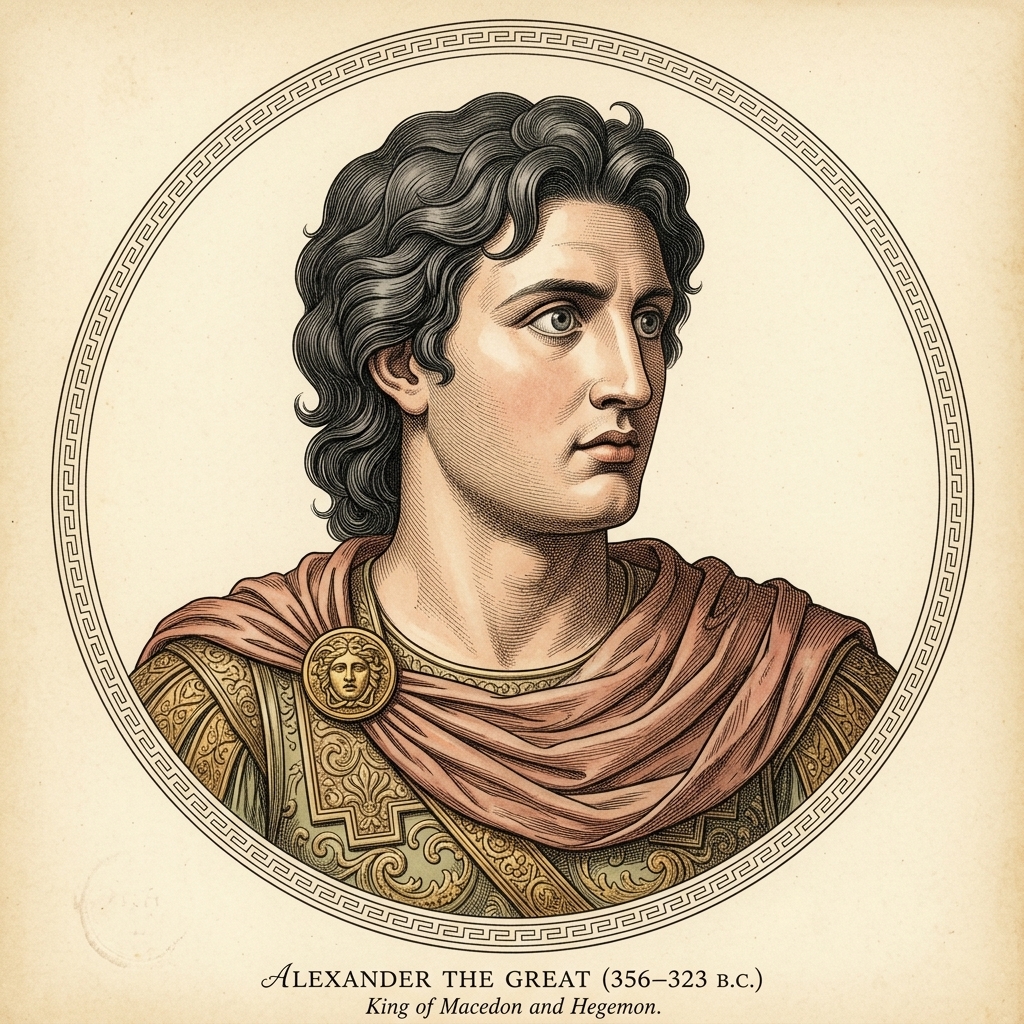
Alexander III of MacedonKing of Macedon, 356–323 B.C.
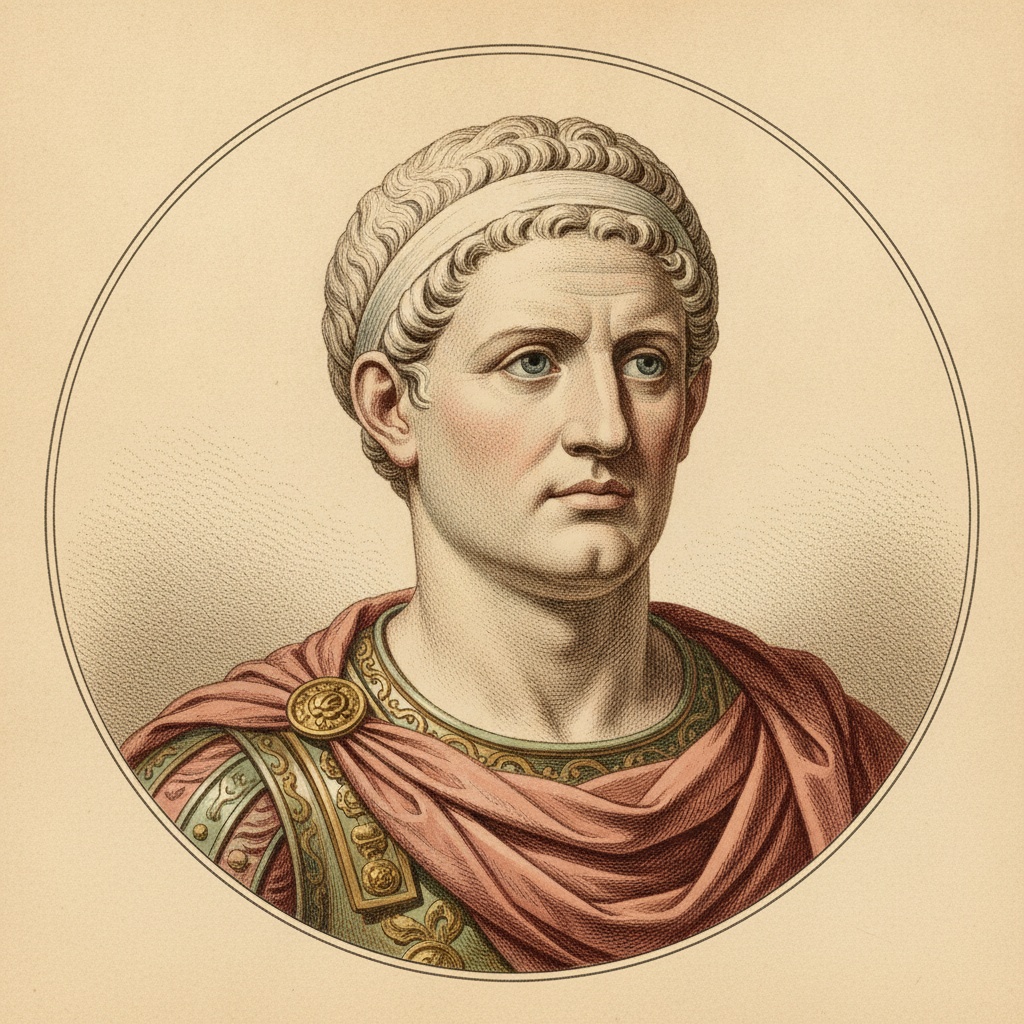
Ptolemy I SoterAlexander’s general, later king of Egypt, 367–282 B.C.
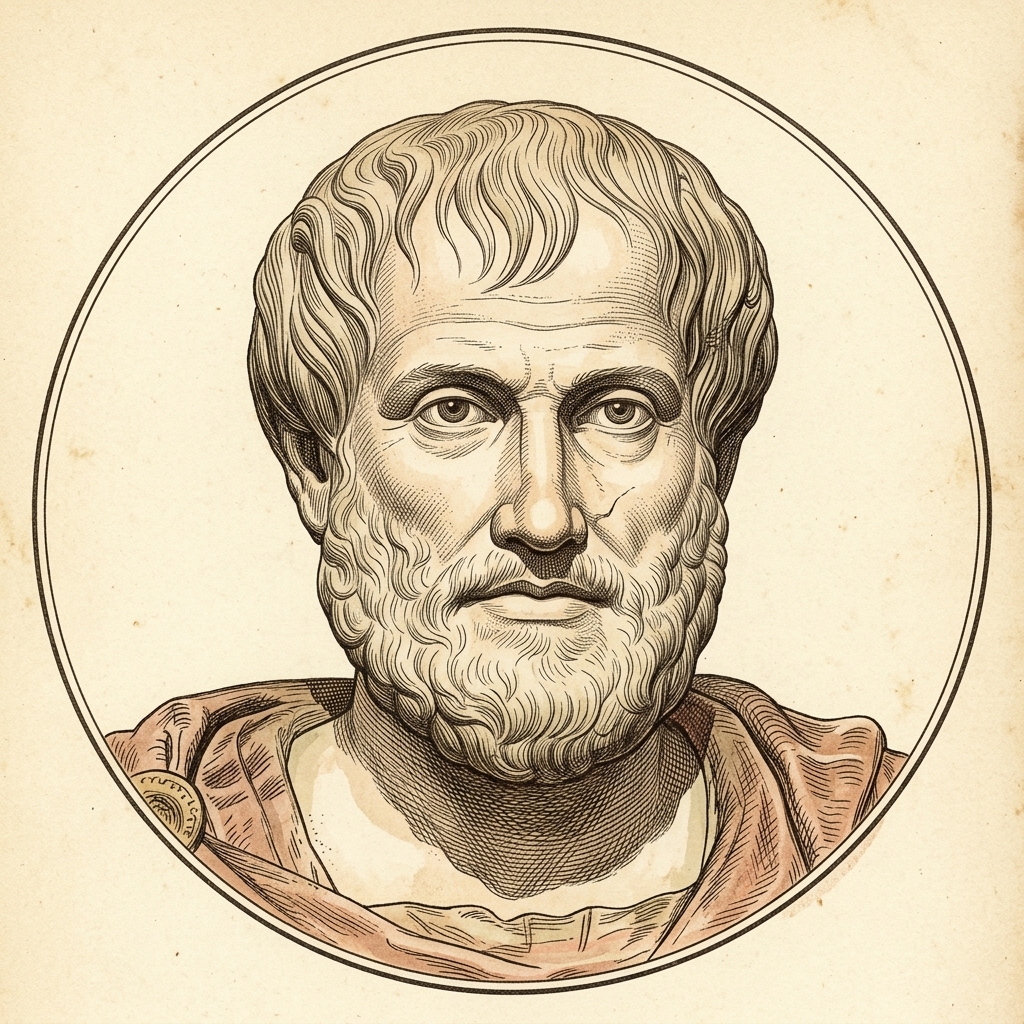
DemosthenesAthenian orator who opposed Macedon, 384–322 B.C.
When Philip II of Macedon was murdered in 336 B.C., his twenty-year-old son inherited the most formidable army in Greek history and his father’s unfinished design against Persia. Crossing into Asia in 334, Alexander beat the Persian forces at the Granicus, cut down the Great King Darius’s army at Issus, and after a seven-month siege took the island city of Tyre. At Gaugamela in 331 he broke Darius for good, took Babylon and Susa, and burned the palaces of Persepolis.
He pressed on past the death of Darius into Bactria and over the Hindu Kush, and beyond the Indus defeated the elephants of King Porus at the Hydaspes — until, on the banks of the Hyphasis, his exhausted army refused to go further east.
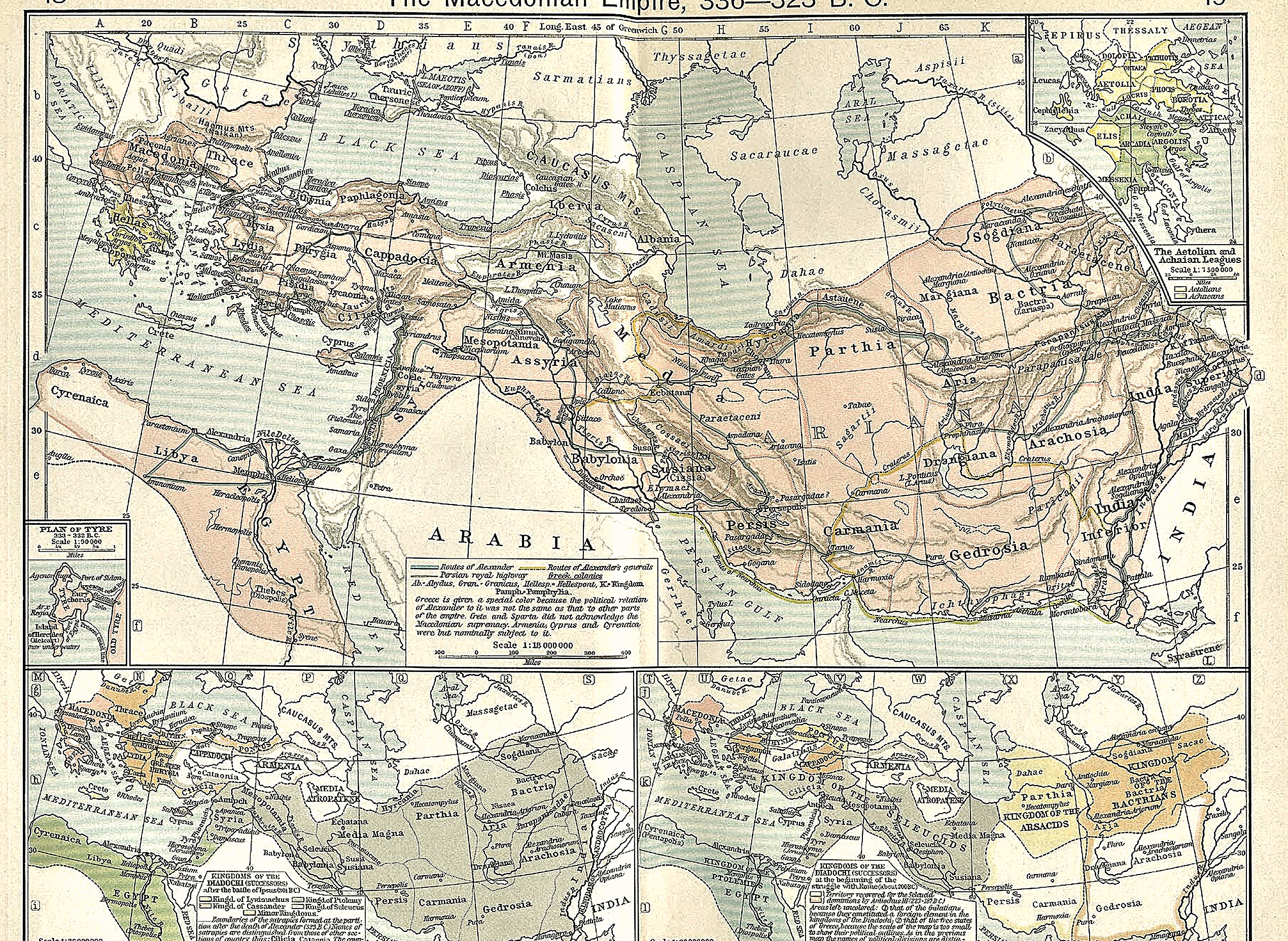
Shepherd plate · 336–323 B.C.Click to enlarge · zoom
The Macedonian Empire, 336–323 B.C. Shepherd traces Alexander's march from the Hellespont through Egypt, Persia, Bactria, and India. The lower insets show how his generals divided the conquests after his death.
William R. Shepherd, Historical Atlas (1911), public domain; restored from the University of Texas scan.
Classical Greece & Near East · The Hellenistic Expansion
Alexander’s Anabasis: The Conquest of Persia, 334–323 B.C.
Scroll to follow Alexander the Great as he marches across 20,000 miles, overthrows the Achaemenid Empire, and reaches India.
334 B.C.
The Heir of Macedon & The Great King
At age twenty, Alexander succeeds his assassinated father Philip II, securing Greece through the League of Corinth. Across the Aegean lies the colossal Achaemenid Empire ruled by Darius III — an empire spanning from Egypt and Thrace to the Indus River, commanding limitless wealth and immense multi-national armies. From Pella, Alexander mobilizes 32,000 Macedonian and Greek infantry and 5,100 Companion cavalry to embark on the most audacious invasion in ancient history.
Spring–Summer 334 B.C.
The Crossing & Battle of the Granicus
Crossing the Hellespont, Alexander visits Troy to make sacrifices at the tomb of Achilles. At the steep-banked Granicus River, Persian satraps assemble a massive cavalry line. Alexander leads the Companion cavalry straight across the rushing torrent into the teeth of the enemy, nearly dying in single combat before Cleitus saves his life. The Persian cavalry breaks, the Greek mercenary phalanx is annihilated, and the satrapal capital of Sardis opens its gates without a fight.
333–332 B.C.
The Gordian Knot, Issus & The Mole of Tyre
Marching inland, Alexander slices through the legendary knot at Gordion. Moving south through the Cilician Gates, he meets Darius III himself at Issus in a narrow plain between sea and mountains. Alexander charges the Persian center, forcing Darius to flee his royal chariot. Rather than pursuing Darius into Mesopotamia, Alexander marches down the Phoenician coast: when island Tyre refuses surrender, Alexander spends seven grueling months building a colossal half-mile stone mole through the sea, battering down its sea walls with shipboard catapults.
332–331 B.C.
The Lord of Asia: Alexandria & Gaugamela
Egypt welcomes Alexander as a liberator from Persian oppression; he is crowned pharaoh and founds the great port of Alexandria, afterwards making a perilous trek through the desert to the oracle of Ammon at Siwa. Turning east across the Euphrates and Tigris, Alexander confronts Darius's grand imperial host — 200 scythed chariots and 100,000 men — on the wide plain of Gaugamela. In a tactical masterpiece, Alexander draws the Persian wings outward, identifies a sudden breach in their center, and charges wedgewise with his Companion cavalry straight at Darius. The Great King breaks, and the Persian Empire is shattered forever.
331–330 B.C.
Babylon, Susa & The Ashes of Persepolis
Alexander enters golden Babylon in triumph, then marches south to Susa, capturing 50,000 silver talents from the royal treasuries. Forcing the snow-choked defiles of the Persian Gate against Ariobarzanes, Alexander reaches the dynastic ceremonial capital at Persepolis. There, in vengeance for Xerxes’ burning of Athens 150 years prior, the magnificent palaces of Darius and Xerxes are torched to the ground. Darius is pursued into Bactria, where he is murdered by his own satrap Bessus, leaving Alexander undisputed King of Asia.
329–327 B.C.
Guerrilla War in Sogdiana & The Hindu Kush
For three exhausting years, the Macedonian army fights a brutal counter-insurgency across the deserts and crags of Central Asia. At the sheer precipice of the Sogdian Rock near Marakanda (Samarkand), three hundred Macedonian mountaineers scale the cliff using tent pegs and flax cords, forcing the defenders to yield. Alexander marries the captive Sogdian princess Roxana to seal local peace, then marches his battle-hardened veterans over the freezing passes of the Hindu Kush into the unknown kingdoms of the Indus basin.
326–323 B.C.
The Battle of the Hydaspes & The Edge of the World
In the Punjab, Alexander allies with Taxila and confronts King Porus at the monsoon-swollen Hydaspes River. In his costliest victory, Alexander outmaneuvers Porus's 200 war elephants in blinding rain. But at the Hyphasis River, his exhausted troops mutiny, weeping and refusing to march another mile into India. Forced to turn back, Alexander sails down the Indus, then leads his army through the blistering furnace of the Gedrosian Desert, losing thousands to thirst. Returning to Babylon in 323 B.C., Alexander dies of a sudden fever at thirty-two, leaving an empire that reshaped world history.
334 B.C.
Macedonian base / founded cityAchaemenid royal capitalmajor battle / siegeAlexander’s marchNearchus’ Indus fleetGedrosian desert march
Sites: Pleiades. Land, lakes and rivers: Natural Earth (public domain). Routes are schematic — reconstructed after Arrian, Anabasis of Alexander, and Plutarch, Life of Alexander. Achaemenid satrapy and realm boundaries are represented as regional labels only.
‡What it changed
Aftermath
Alexander died at Babylon in 323 B.C., thirty-two years old, master of the largest empire the world had yet seen and with no settled heir. It did not survive him as one state: within a generation his generals had carved it into the Hellenistic kingdoms that open the next era.