The Heirs of Alexander
Alexander left no heir who could hold his conquests. Within a generation his generals had cut the empire into three Greek-speaking monarchies that would rule the eastern Mediterranean until Rome swallowed them one by one.
One empire, three dynasties
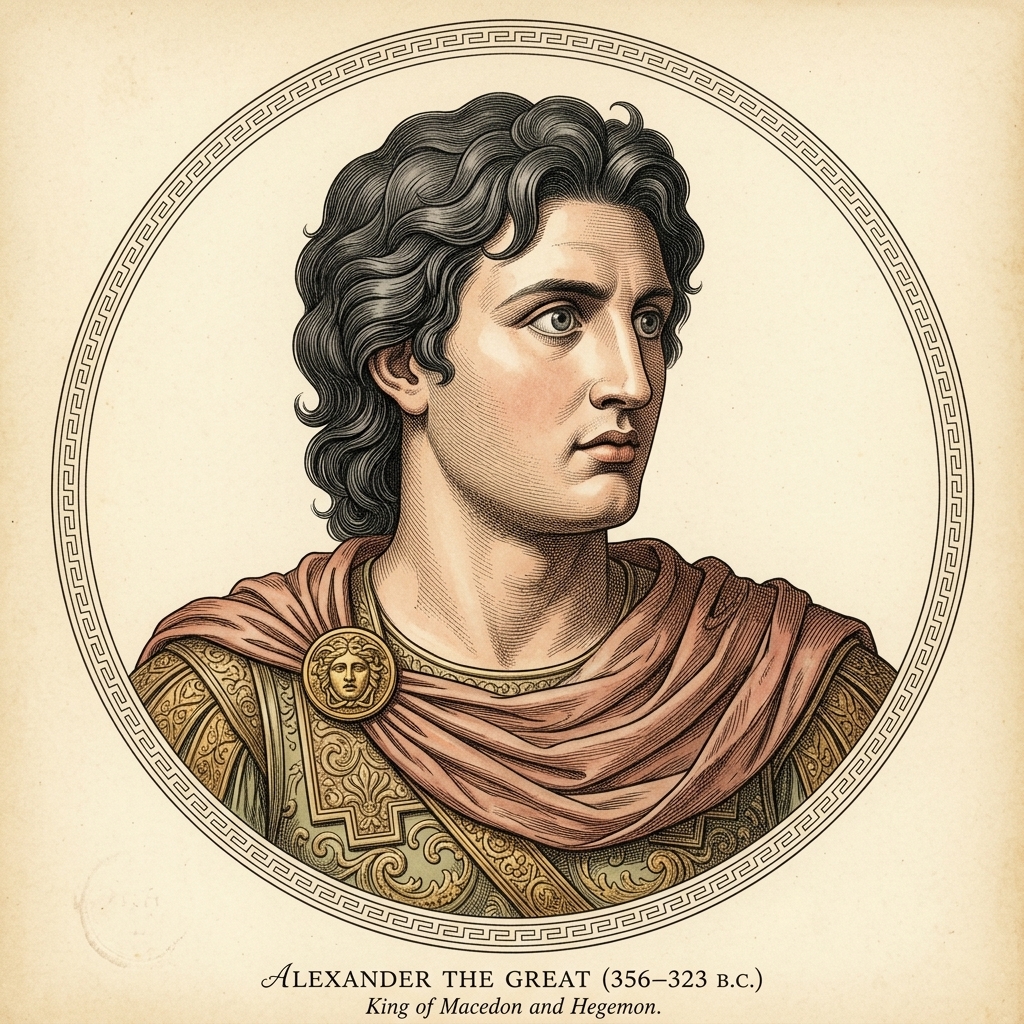
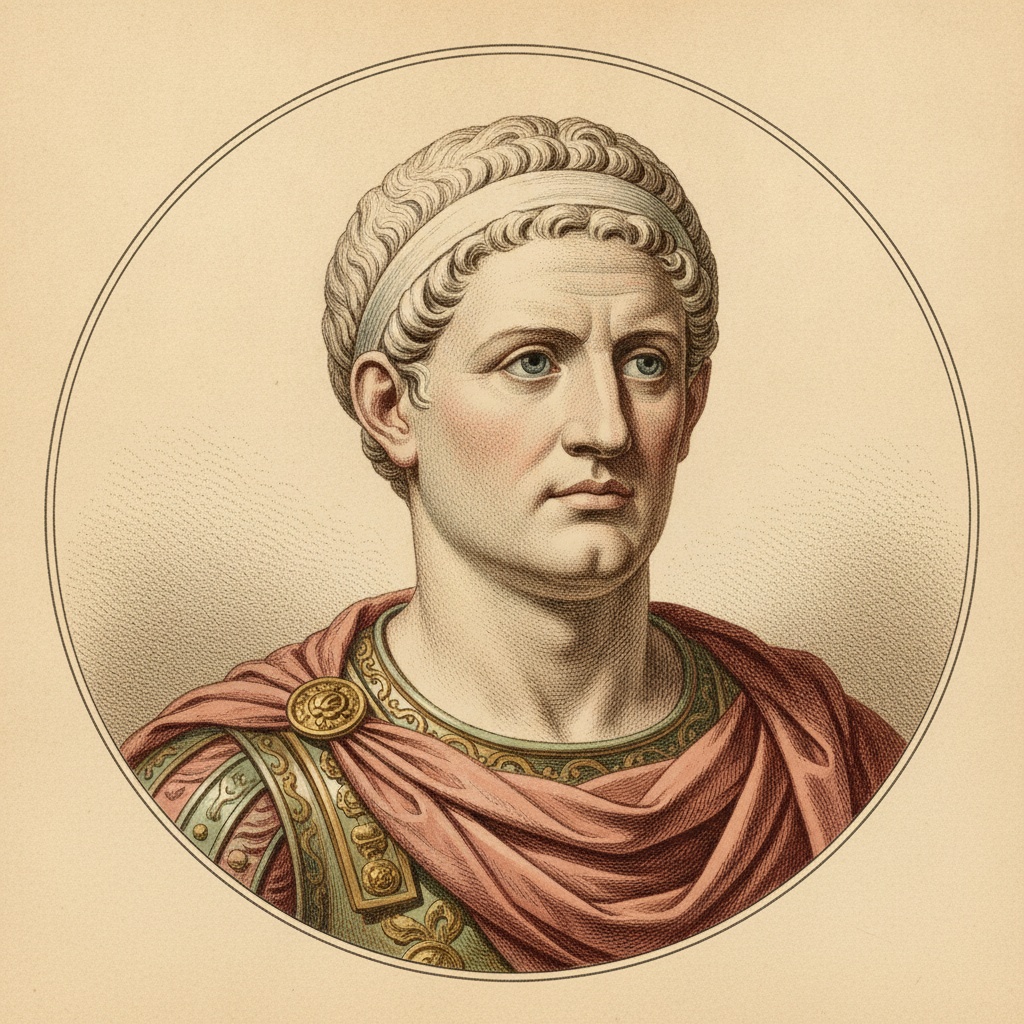
When Alexander died at Babylon in 323 B.C. his only sons were an unborn child and a
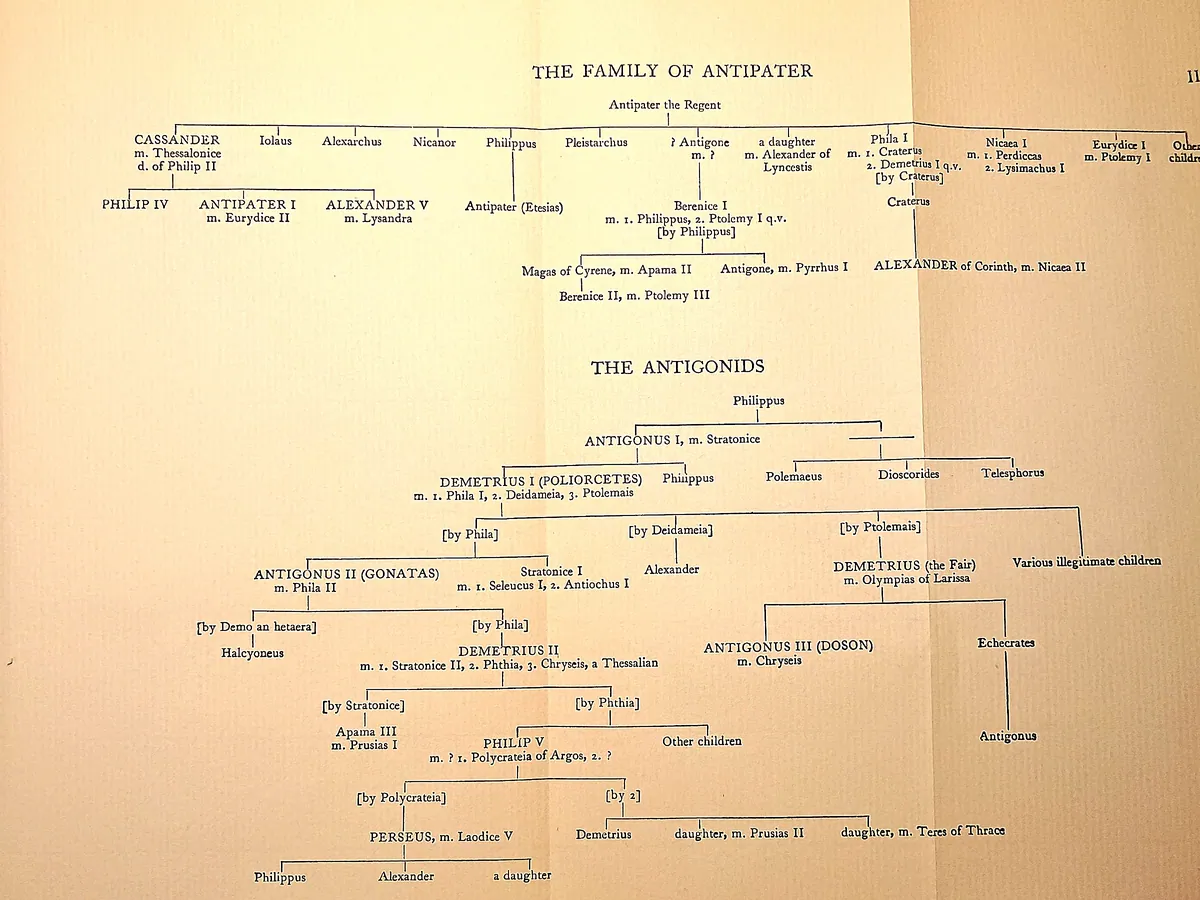 Click to enlarge
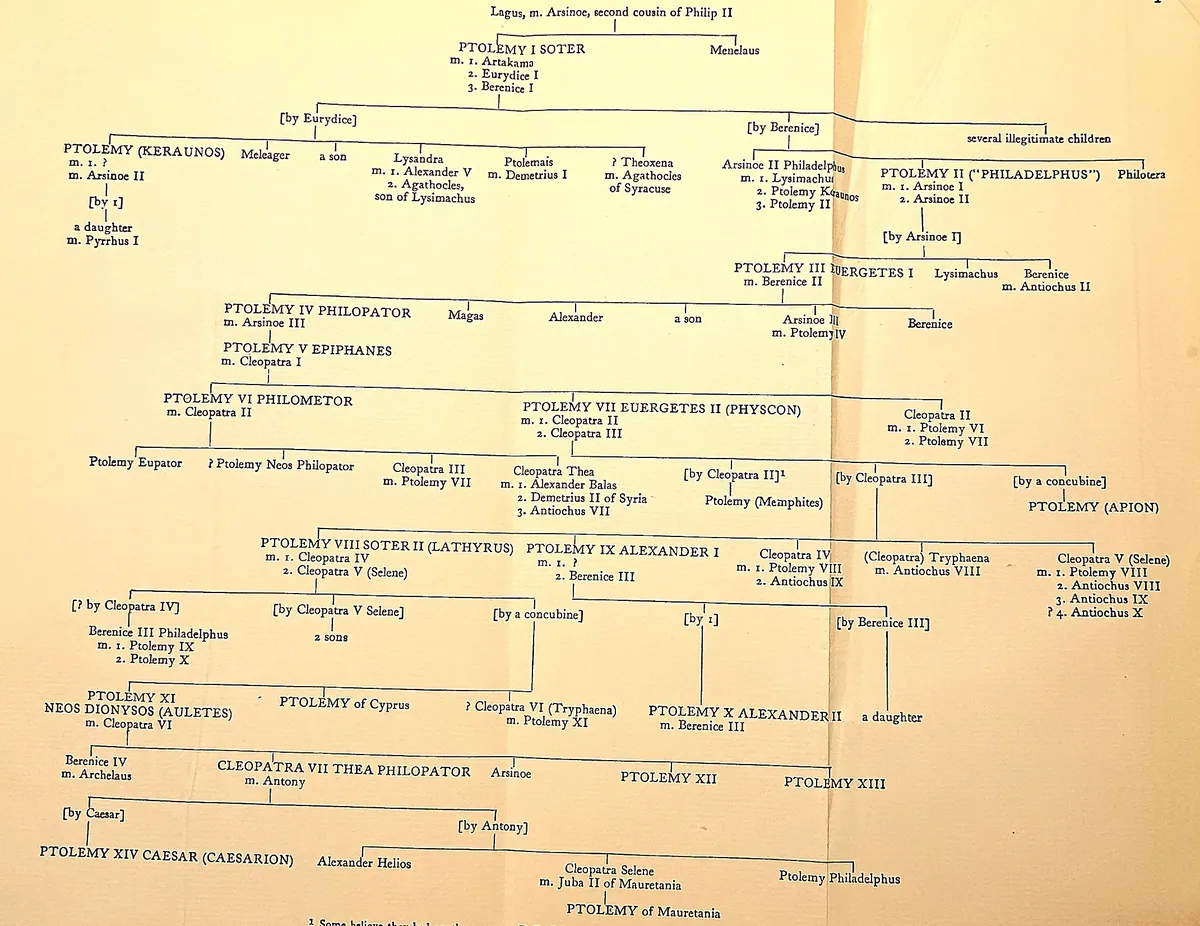
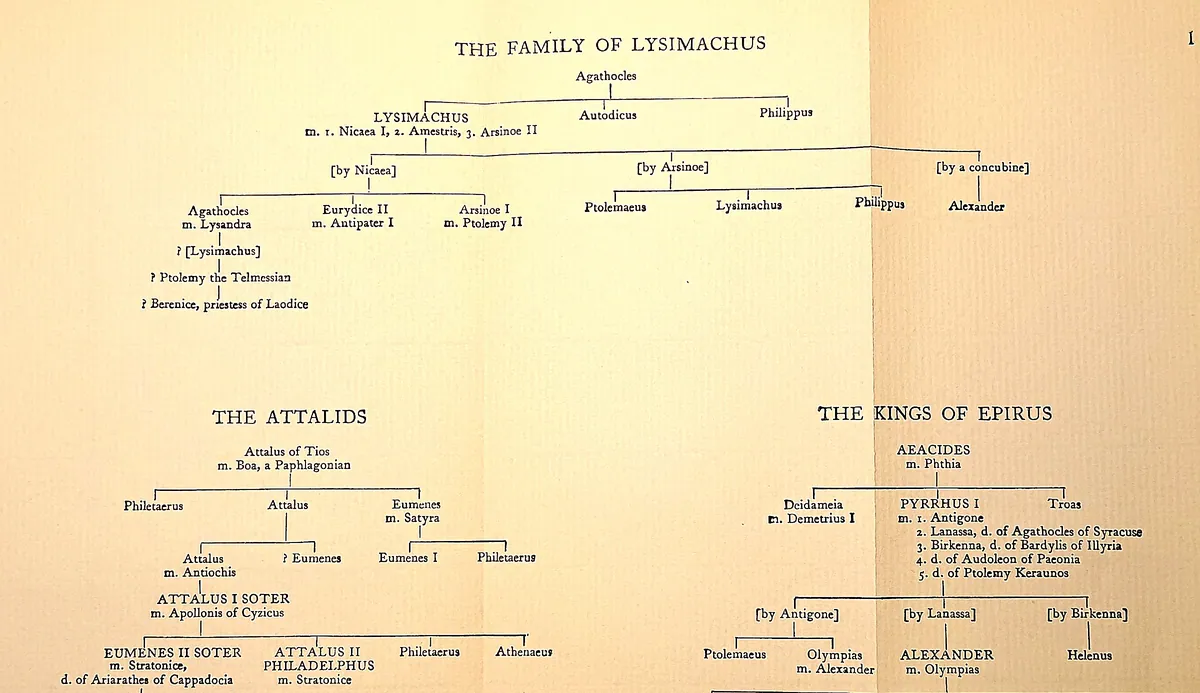
The tree below follows all three from Alexander's own family down to the last of the line — the Antigonids broken by Rome at Pydna, the Seleucid realm whittled away until Pompey annexed Syria, and the Ptolemies enduring longest of all, to Cleopatra VII, who staked Egypt on Caesar and Antony and lost. Dashed links mark the marriages that repeatedly bound the rival houses back together.
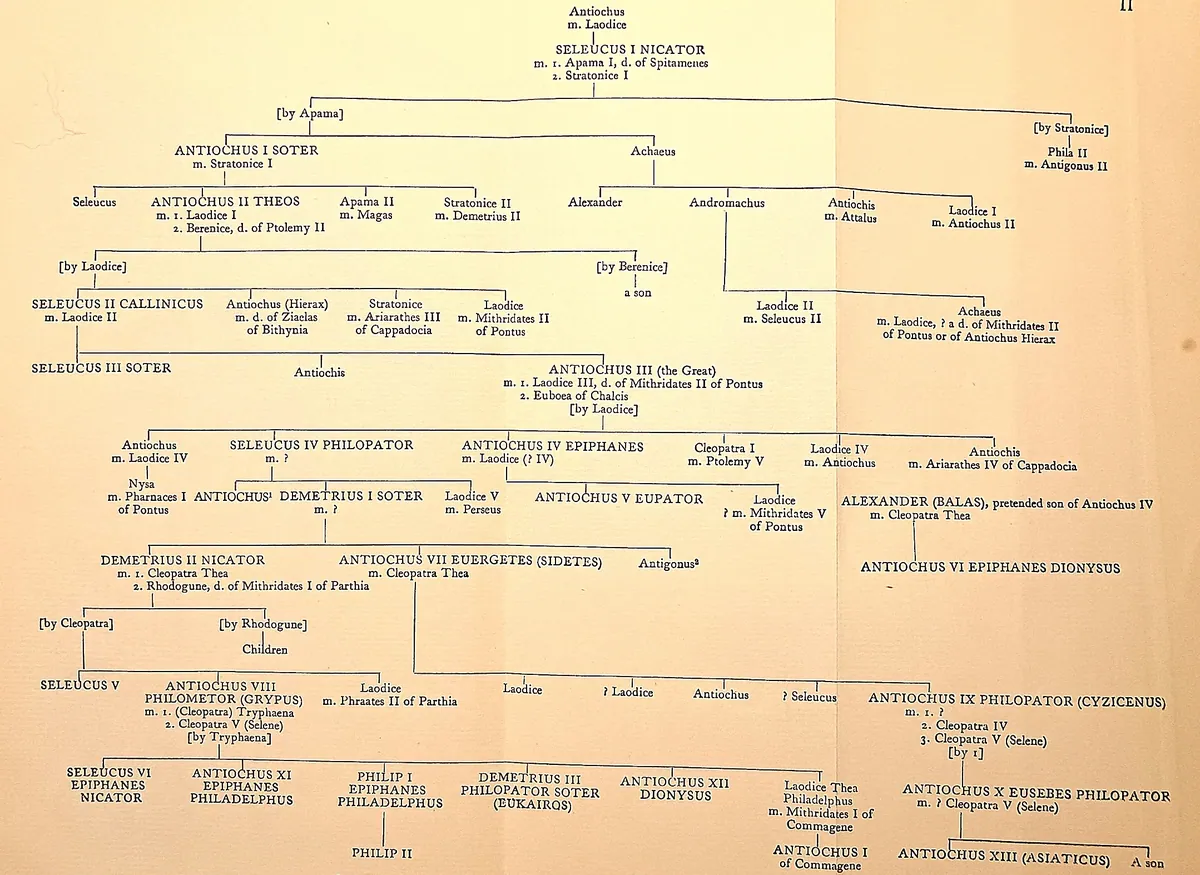 Click to enlarge
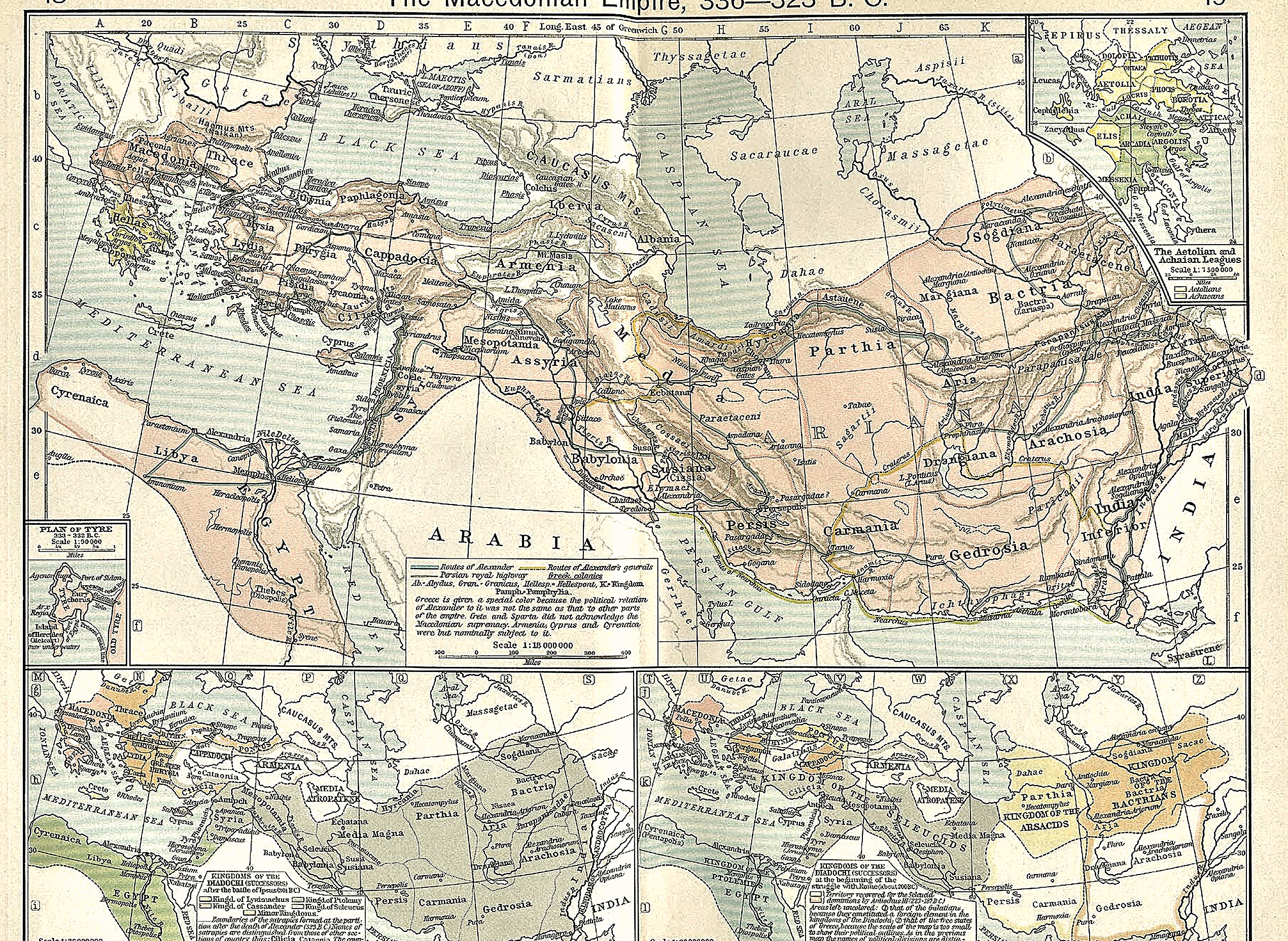
The world Alexander's generals divided
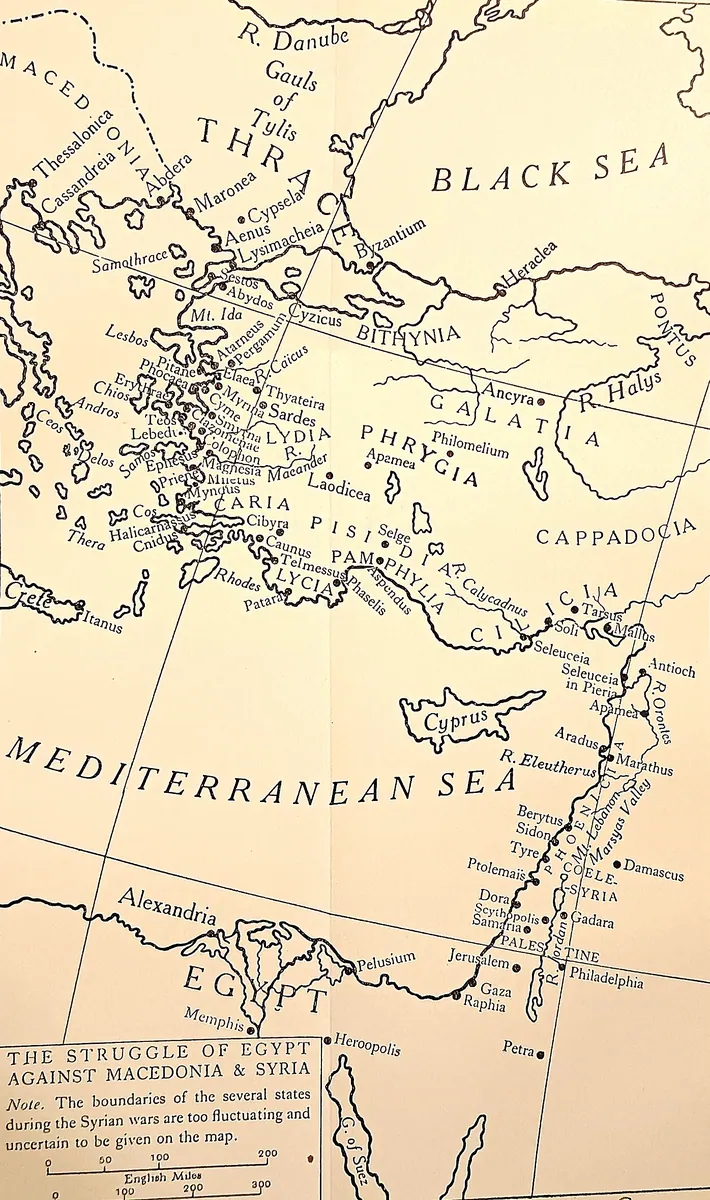
Once the wars of succession burned out, the map of the East had three great colours on it. Antigonid Macedon held the old homeland and a grip on Greece; the Seleucids ruled the largest realm of all, from the Aegean coast to the edge of India, governed from new Greek capitals at Antioch and Seleucia; and Ptolemaic Egypt, richest and most defensible, ran from Cyrene to Cyprus and the Levantine coast. Frontiers shifted with every campaign — these are spheres of control, not surveyed borders.
 Tap to enlarge · zoom
 Click to enlarge
Rome inherits the pieces
The Hellenistic centuries spread the Greek language, coinage, and city from the Nile to the Oxus, and
 Click to enlarge
 Click to enlarge
Alexander's generals had turned themselves into kings and his conquests into a Greek-speaking world — one that Rome would spend the next three centuries absorbing.