Driven by the Huns, whole peoples cross the frontier; over a century the Western empire does not so much fall as dissolve into kingdoms.
A.D. 376–476 · The Western provinces
After Ammianus, Jordanes, and the chroniclers. A map study — the campaign is told on the interactive map below; the fuller narrative essay is in preparation.
✦ ❧ ✦
Scroll to begin ↓
†A.D. 376 · The Danube gives way
Not a fall in a day, but a slow dissolution
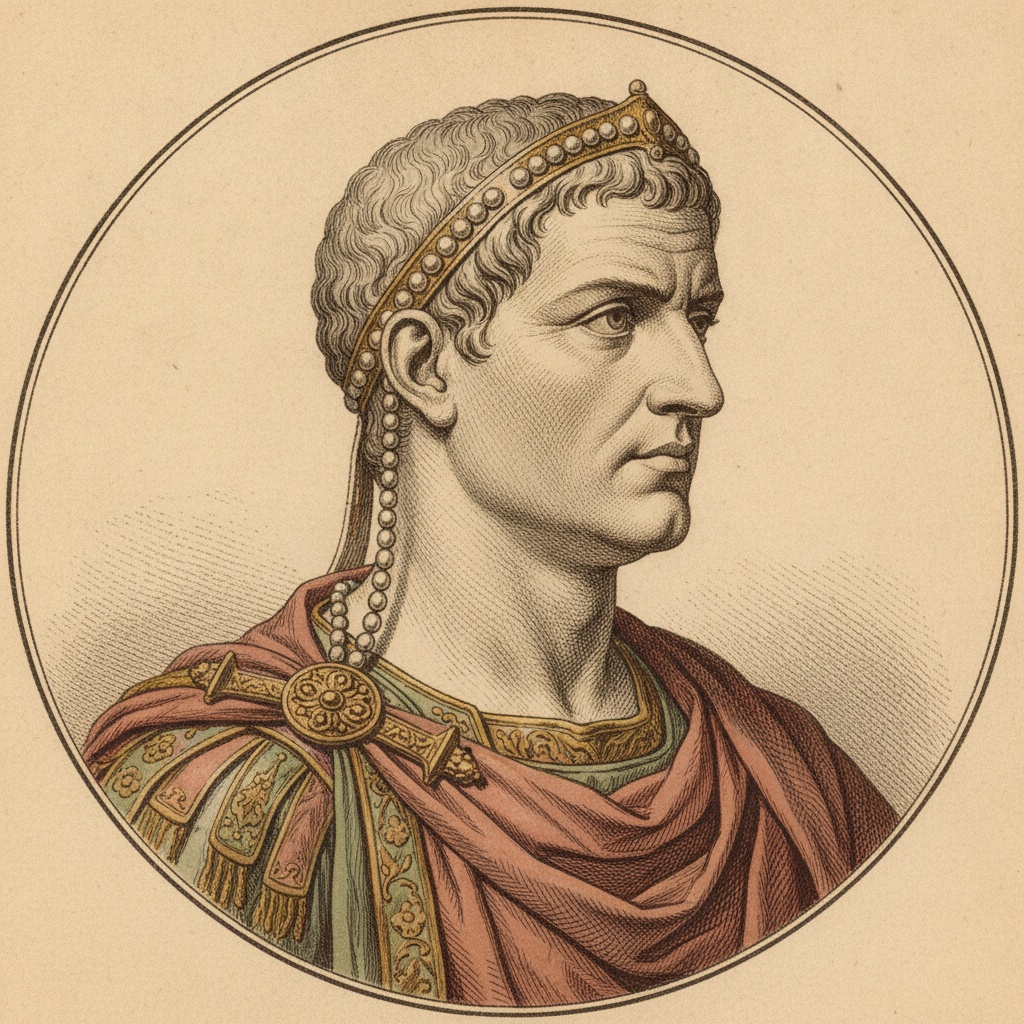
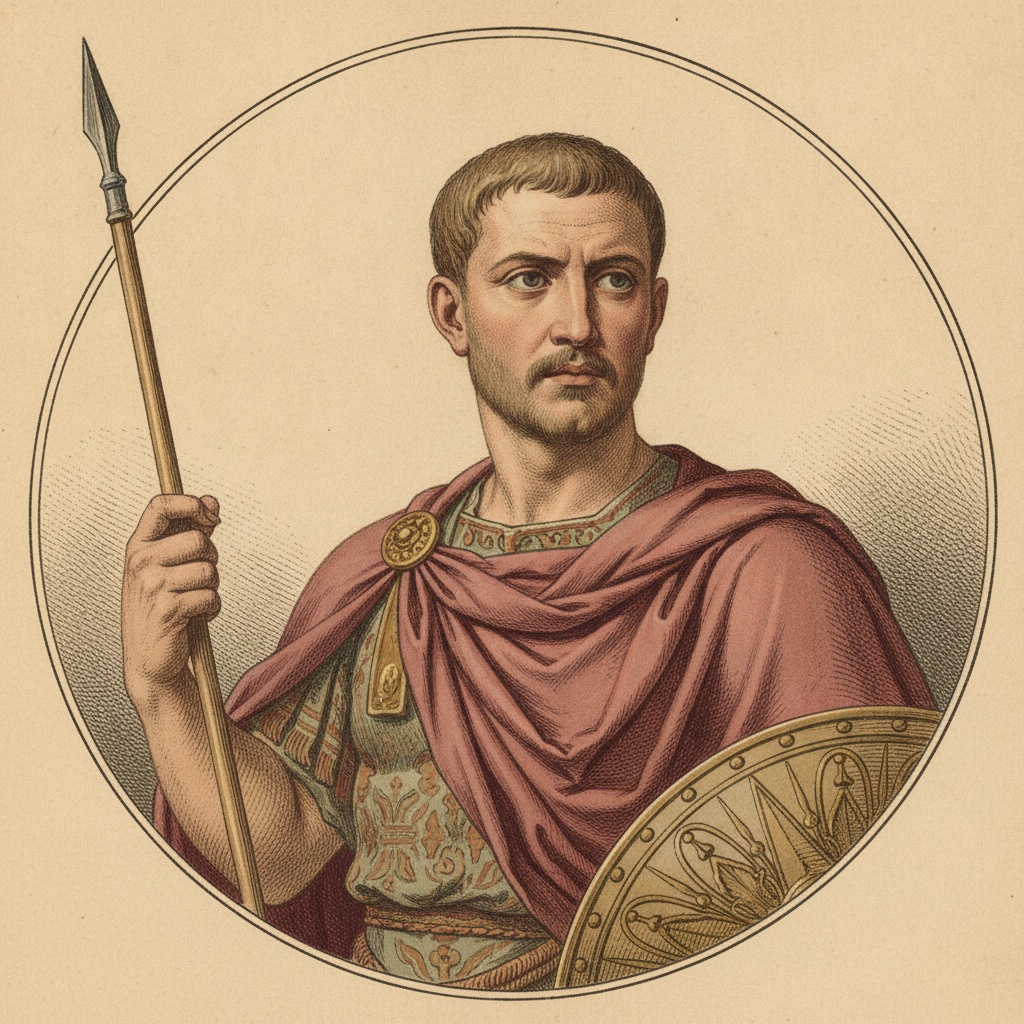
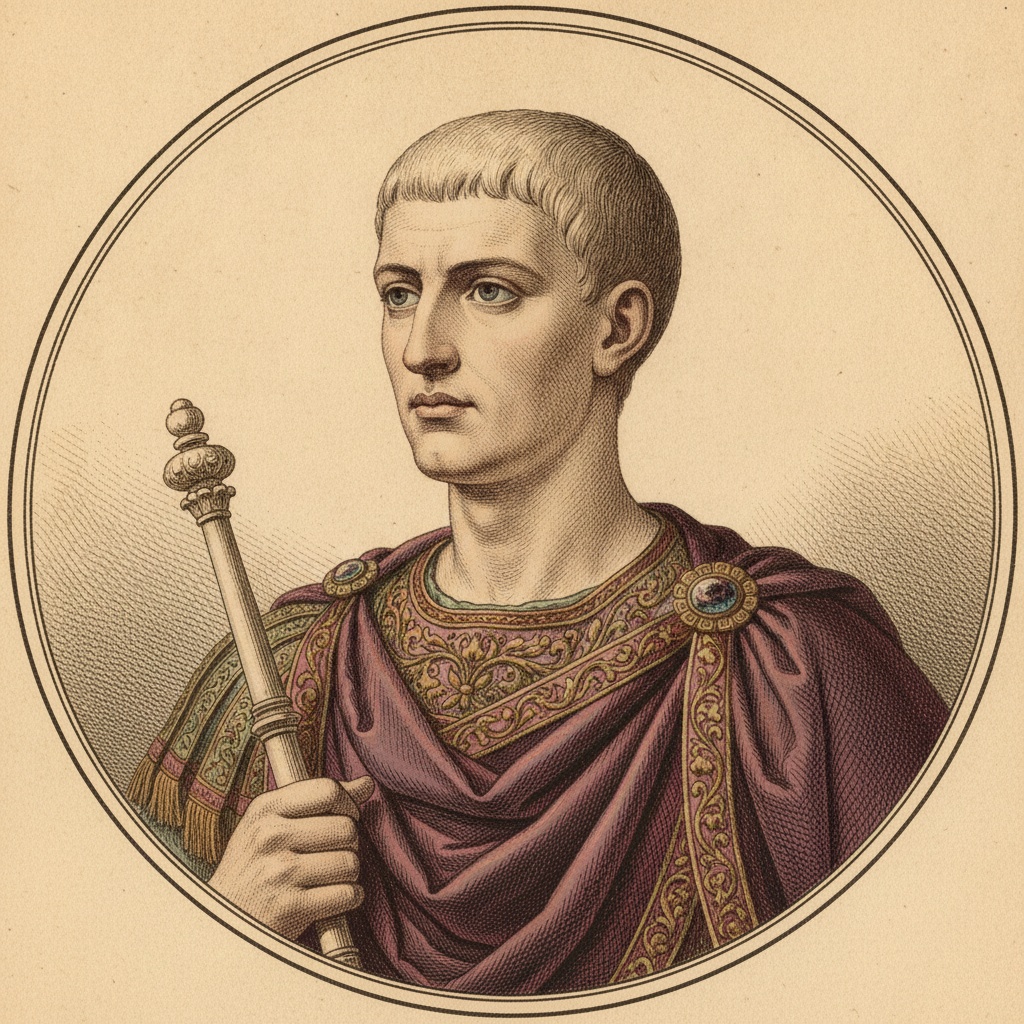
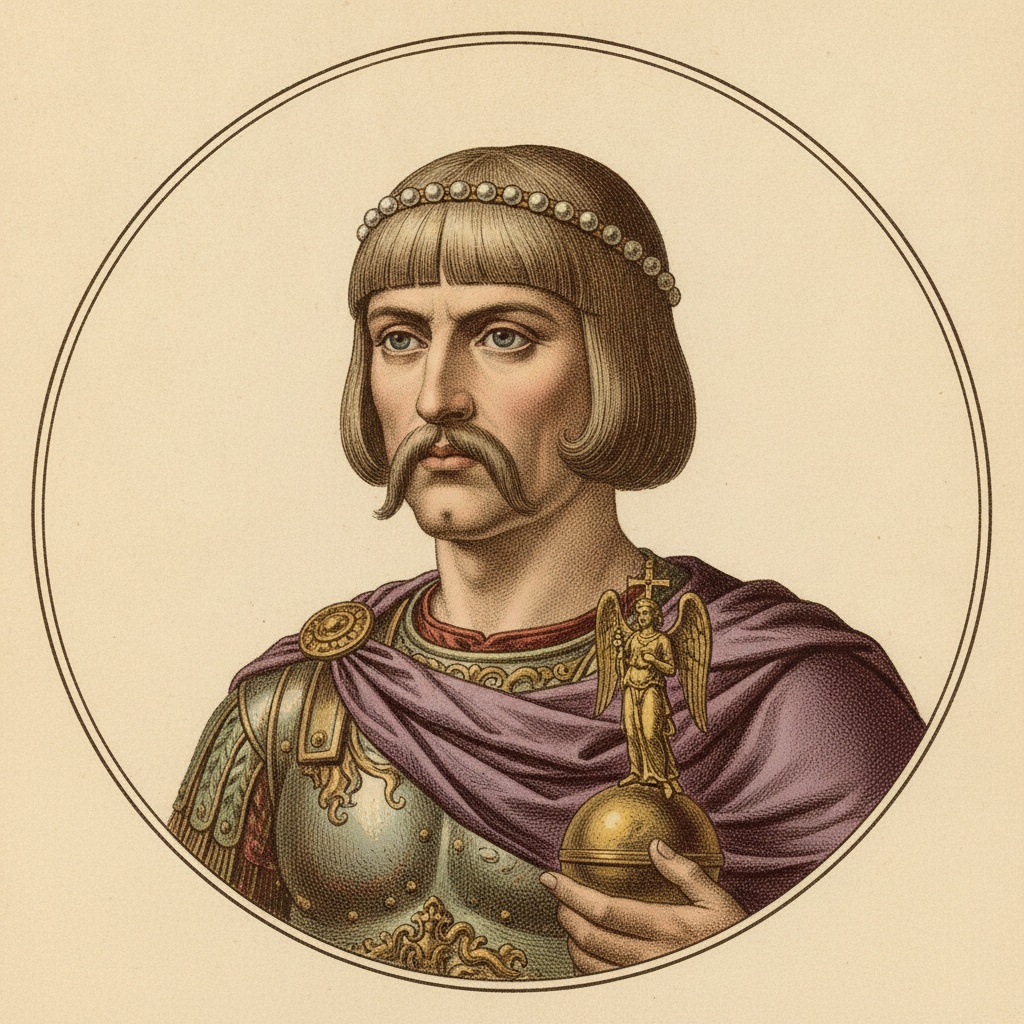
Theodosius ILast emperor of a united empire, r. 379–395 A.D.
StilichoVandal-born Roman generalissimo, c. 359–408 A.D.
AetiusRoman general who checked Attila, c. 391–454 A.D.
Theodoric the GreatOstrogothic king of Italy, r. 493–526 A.D.
In A.D. 376 a mass of Goths, driven west by the Huns, crossed the Danube into Roman territory; two years later, at Adrianople, they destroyed an Eastern Roman army and killed the emperor Valens. The century that followed was not a single fall but a slow dissolution. The Rhine froze and was crossed in 406; Rome was sacked in 410 and again in 455; and one by one the Western provinces became Visigothic, Vandal, Frankish, and Ostrogothic kingdoms, until in 476 the last Western emperor was quietly set aside.
The men who now defended Rome were often themselves barbarians in Roman service — Stilicho a Vandal, the field armies increasingly federate. Local recruitment of frontier troops was old, older than Hadrian; what had changed was that the Roman aristocracy no longer supplied the empire’s generals, and civil and military command had drifted apart.
Era V · The Later Roman Empire in the West
Migration, Invasion, and the Western Kingdoms, 376–526 A.D.
Scroll to follow the collapse of the frontiers, the sack of Rome, and the emergence of the barbarian kingdoms.
376–382 A.D.
The Breach of the Danube
Driven by the sudden arrival of the Huns on the Pontic steppe, the Visigoths cross the lower Danube into Roman Moesia. At Hadrianopolis (378), they annihilate the eastern field army; Emperor Valens is killed in the rout. By 382, Rome is forced to settle them within the frontier as an armed federate nation under their own chieftains.
401–410 A.D.
Alaric and the Sack of Rome
Under Alaric, the Visigoths march through Greece and the Balkans into northern Italy. Stilicho checks them at Pollentia (402), prompting Emperor Honorius to abandon Milan for the security of Ravenna’s coastal marshes. After Stilicho’s murder, Alaric marches on undefended Rome, breaching the Salarian Gate in August 410 — the first time in eight centuries the Eternal City has fallen to a foreign enemy.
406–409 A.D.
The Rhine Frontier Collapses
On New Year’s Eve 406, the frozen Rhine frontier gives way near Mogontiacum (Mainz). A vast confederation of Vandals, Suebi, and Alans pours across, plundering Augusta Treverorum (Trier) and sweeping through Gaul. By 409, having ravaged Burdigala (Bordeaux), they force the Pyrenees into Hispania. Roman military power north of the Alps never recovers.
418–439 A.D.
Toulouse and the Fall of Carthage
Rome cedes Aquitania to the Visigoths, establishing the Kingdom of Toulouse (418) — the first barbarian realm inside the empire. Meanwhile, Gaiseric leads 80,000 Vandals across the Strait of Gibraltar into Africa (429). They besiege Hippo Regius — where Augustine dies in 430 — and storm Carthage in 439, stripping Rome of its western fleet and its vital Mediterranean grain supply.
451–455 A.D.
The Catalaunian Plains and the Vandal Sack
Attila leads the Hunnic empire into Gaul. On the Catalaunian Plains near Châlons (451), Flavius Aetius, allied with Theodoric’s Visigoths, halts Attila in one of antiquity’s bloodiest battles. Attila turns on Italy in 452, razing Aquileia. Three years later, in 455, Gaiseric sails the Vandal fleet from Carthage directly up the Tiber, subjecting Rome to a thorough fourteen-day sack.
476–526 A.D.
The End of the West & Successor Realms
In 476 at Ravenna, the Germanic commander Odoacer deposes the teenage emperor Romulus Augustulus and returns the imperial ornaments to Constantinople: the Western line is extinguished. By 493, Theodoric the Great establishes the Ostrogothic Kingdom in Italy. In Gaul, Clovis unites the Franks and defeats the Visigoths at Vouillé (507), driving them south into Spain. By 526, the unified Roman West has become the mosaic of post-Roman successor kingdoms.
376 A.D.
imperial seat / capitalbarbarian center / entrymajor battlesacked cityVisigothsVandalsHuns
Sites: Pleiades. Land, lakes and rivers: Natural Earth (public domain). Routes and boundaries are schematic — no precise ancient itineraries survive; reconstructed from Ammianus Marcellinus, Olympiodorus, Jordanes, and Procopius. Barbarian realms are labels only, per house rules.
‡What it changed
Aftermath
The Eastern empire survived and would try to win the West back. The West itself became a patchwork of Germanic kingdoms ruling a population that still thought of itself as Roman — the world into which Justinian’s armies would march.
The empire, year by year
From Severus to Odoacer, A.D. 192–476
Civil wars and breakaway empires, a new Persia, a second capital in the East, and the western provinces lost to the kingdoms.
A.D. 193
The throne for sale
Commodus' successor Pertinax is murdered by the praetorians after 87 days, and Didius Julianus buys the throne from them. Three armies name their own emperors: Septimius Severus on the Danube, Pescennius Niger in Syria, Clodius Albinus in Britain. Severus reaches Rome first and buys off Albinus with the title of Caesar. Niger holds the East as far as the Bosporus.
A.D. 198
Severus alone
Niger is beaten at Cyzicus, Nicaea and finally Issus (194); Byzantium holds out against Severus into 195. Albinus proclaims himself emperor and dies after a great battle outside Lugdunum (197). Severus then turns on Parthia, sacks Ctesiphon, and makes northern Mesopotamia a province with its capital at Nisibis, garrisoned by two new legions.
A.D. 211
Severus in Caledonia
In 208 Severus takes his sons and a large army to Britain, repairs Hadrian's Wall and campaigns deep into Scotland against the Caledonians and Maeatae. He dies at Eburacum in February 211, advising his sons, as Dio reports it, to agree, to enrich the soldiers and to scorn everyone else. Caracalla and Geta make peace and go home.
A.D. 235
Citizens, and a new Persia
Caracalla murders Geta and in 212 makes almost every free inhabitant of the empire a Roman citizen. He annexes the kingdom of Edessa and is killed near Carrhae (217). In 224 Ardashir overthrows the last Parthian king and founds the Sasanian dynasty of Persia. In 235 Severus Alexander is murdered by his own troops near Mogontiacum.
A.D. 251
An emperor killed in battle
Emperors now rise and fall with their armies; some twenty are recognised in fifty years. Shapur I of Persia claims a victory over Gordian III (244) and takes a large payment from his successor Philip. In 250 the Goths under Cniva cross the Danube. The next summer they trap and kill Decius and his son at Abritus, the first emperor to fall to a foreign enemy.
A.D. 260
The empire in three
Shapur takes Antioch and destroys Dura; in 260 he captures the emperor Valerian near Edessa, and Valerian dies a prisoner. In the West the Rhine army proclaims Postumus, whose Gallic empire holds Gaul, Britain and for a time Spain. The lands between the Rhine and the Danube are given up, and Gallienus beats the Alamanni near Mediolanum.
A.D. 271
Palmyra's East
Odaenathus of Palmyra, loyal to Gallienus, drives the Persians back and rules the East for Rome until his murder (267). His widow Zenobia, governing for their son Vaballathus, takes Egypt (270) and pushes into Asia Minor. Spain has returned to the central emperor. The new emperor, Aurelian, beats the Juthungi in Italy and begins a wall round Rome.
A.D. 275
Restorer of the world
Aurelian marches east, beats Zenobia's army at Immae and Emesa (272) and takes Palmyra; when it rebels the next year he sacks it. In 274 Tetricus, the last Gallic emperor, surrenders at Châlons. Aurelian evacuates Dacia north of the Danube, giving its name to new provinces south of the river, and is murdered in Thrace in 275.
A.D. 293
Four emperors
Diocletian, emperor from 284, shares power with Maximian (286), and in 293 the two add Caesars, Constantius and Galerius. They govern from cities near the frontiers, such as Trier, Milan, Sirmium and Nicomedia. Italy is divided into provinces and taxed like the rest. In Britain the fleet commander Carausius has ruled as emperor since about 286; his murderer Allectus holds on until 296.
A.D. 330
Constantine's city
Constantius recovers Britain (296); Galerius beats the Persian king Narseh (298) and gains lands beyond the Tigris. After Diocletian abdicates (305) the tetrarchy breaks down. Constantine, hailed at Eburacum in 306, defeats Maxentius at the Milvian Bridge (312) and Licinius (324). In 330 he dedicates his new capital, Constantinople, on the site of Byzantium.
A.D. 363
Julian's retreat
Constantine's sons divide the empire and fight over it; Constantius II spends years holding the eastern frontier against Shapur II, who takes Amida (359). Julian invades Persia in 363 and reaches Ctesiphon, but dies of a wound in the retreat. To save the army, his successor Jovian surrenders Nisibis, Singara and the lands beyond the Tigris.
A.D. 378
Adrianople
In 376, driven west by the Huns, the Tervingi Goths ask to cross the Danube and Valens admits them. Starved and cheated by Roman officials, they revolt. On 9 August 378 they destroy Valens and much of the eastern army outside Adrianople; the emperor's body is never found. The Goths range through Thrace until Theodosius makes peace with them (382).
A.D. 395
Two courts
Theodosius settles the Goths inside the empire as allies under their own leaders (382). After beating the usurper Eugenius at the Frigidus (394) he is briefly the last emperor to rule both halves, and dies at Mediolanum in January 395. His sons divide the empire: Arcadius at Constantinople, Honorius, aged ten, in the West. The two courts soon go their own ways.
A.D. 410
Rome sacked
At the end of 406, by tradition on the last day of the year, Vandals, Alans and Suebi cross the Rhine; by 409 they are in Spain. The army of Britain makes Constantine III emperor and takes Gaul. Alaric's Goths, refused land and pay, besiege Rome three times and on 24 August 410 sack it. Honorius, safe in Ravenna, can send Britain no help.
A.D. 439
Carthage lost
The Visigoths are settled in Aquitaine as allies (418), with their capital at Tolosa. Under Gaiseric the Vandals cross from Spain to Africa (429), besiege Hippo, where Augustine dies in 430, and on 19 October 439 take Carthage, the West's richest city. In Spain the Suebi take Emerita. Aetius, the West's general, holds Gaul with Hunnish troops.
A.D. 455
Attila, and the second sack
Attila leads the Huns into Gaul in 451 and is checked by Aetius and the Visigoths on the Catalaunian Plains; the next year he destroys Aquileia and turns back from Italy. He dies in 453. Valentinian III murders Aetius (454) and is murdered in turn (455). Weeks later Gaiseric's fleet reaches Rome, and the Vandals plunder it for two weeks.
A.D. 476
The last emperor in the West
Nine emperors follow in twenty-one years, most made by generals. In 476 the soldiers in Italy, refused land, raise Odoacer as king. He deposes the boy Romulus, sends the imperial regalia to Constantinople, and rules Italy acknowledging the emperor there. Visigoths, Burgundians, Franks and Vandals share the western provinces; Julius Nepos, the last western emperor, holds only Dalmatia.
A.D. 193
Roman provinceItaly (citizens)Eastern empire (from 395)Client kingdomRival emperor / breakawayBeing conquered / partly heldOverrun or settled by invadersGiven upNo longer Romanchanged this step
Province outlines: Ancient World Mapping Center, “Roman Empire c. 60 BC”, “c. AD 117 extent” and “c. AD 200 extent and provinces” (ODbL; after the Barrington Atlas). Each territory is drawn at its c. 60 BC or c. AD 200 extent from the date it came under Roman rule, so earlier inland limits are drawn too large. Changes after A.D. 200 are drawn on the AD 200 provinces, so a province is coloured whole even where only part of it was lost, shared or settled; Mesopotamia after 363 kept a western strip. The fifth-century kingdoms are labels only: their borders are not drawn. Invasion arrows are schematic. Coastlines and rivers: Natural Earth. Sites: Pleiades.