A.D. 379–395Theodosius
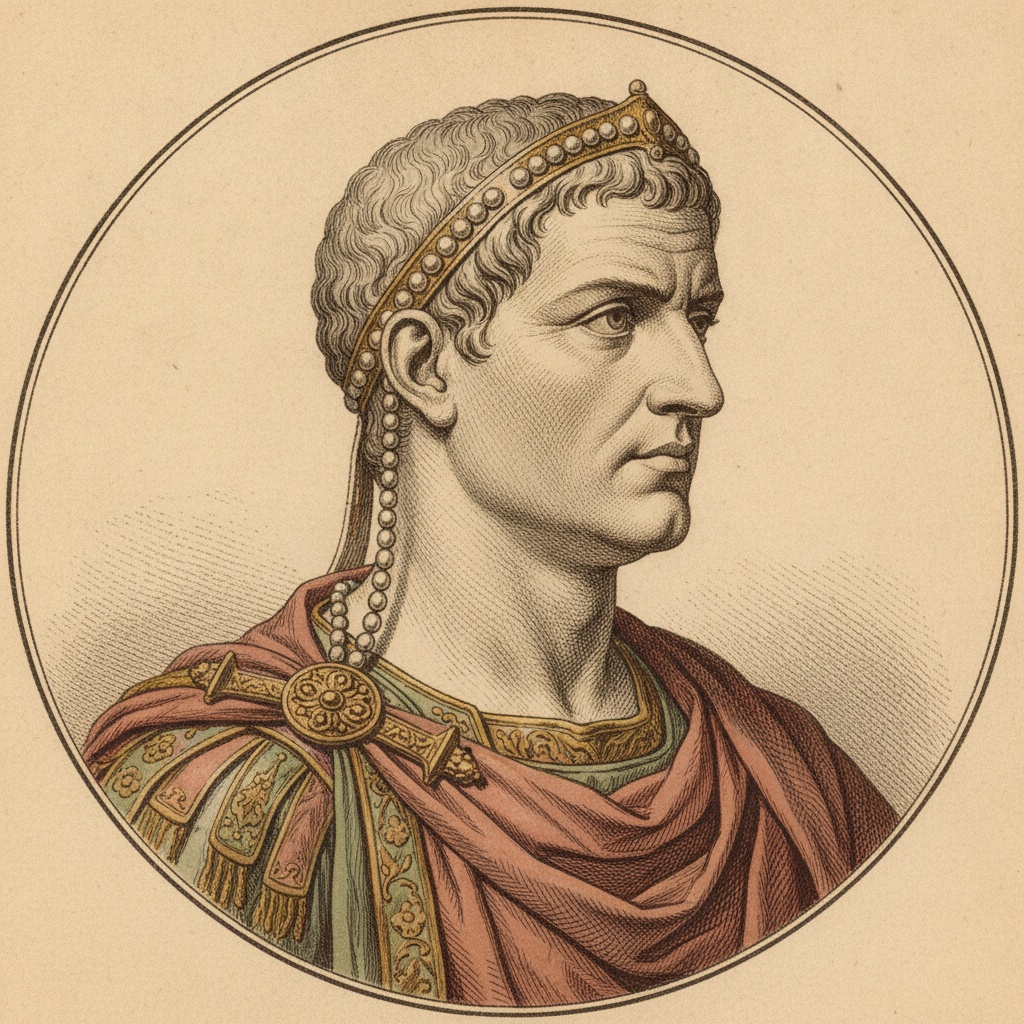
Theodosius, a Spanish landowner of thirty-two whose father had been executed three years before, spent four years learning that the Goths in Thrace could not be beaten with the men he had, and in October 382 made the treaty that Valens had refused: the Goths were settled on Roman land in Thrace as a people, under their own chiefs, exempt from tax, and obliged to serve in the Roman army under their own commanders when called. No barbarian nation had been admitted on such terms before, and every later settlement in the West copied it. He also settled the religion of the empire. In 380 he declared the faith of Nicaea, as held by the bishops of Rome and Alexandria, the only lawful one; in 381 a council at Constantinople confirmed it, and the Arian quarrel that had occupied three emperors ended, in the empire though not among the Goths, who had been converted to the losing side. Laws of 391 and 392 closed the temples and forbade sacrifice, private as well as public, and in Alexandria in 391 the bishop’s mob destroyed the Serapeum, the greatest temple in the Greek world. In 390 the garrison commander at Thessalonica was lynched, and Theodosius in a rage had the crowd in the hippodrome massacred, some thousands of them; Ambrose, bishop of Milan, shut him out of the church until he did public penance, and he did it. It was the first time an emperor had submitted to a priest, and the West remembered.
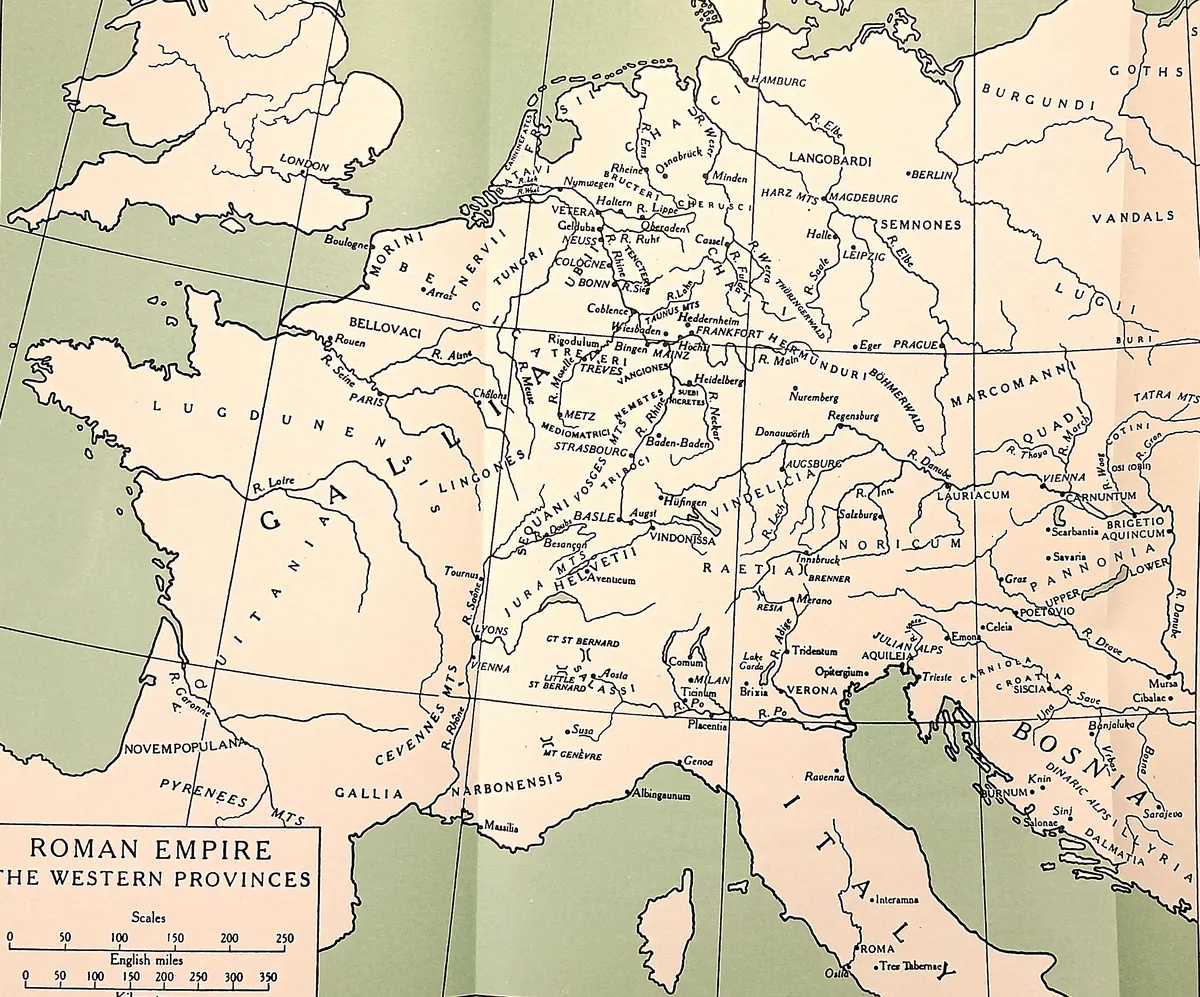
The West he twice had to rescue. In 383 the British army proclaimed Magnus Maximus, a Spaniard who had served under Theodosius’ father; Gratian’s troops deserted him and he was murdered at Lyon. Theodosius tolerated Maximus in Gaul for five years, and when Maximus invaded Italy in 387 and drove out the boy Valentinian II, marched west, beat him on the Save and had him beheaded at Aquileia. In 392 Valentinian was found hanged at Vienne, and his Frankish master of the soldiers Arbogast, who was probably responsible, made a professor of rhetoric named Eugenius emperor and let the Roman aristocracy restore the altar of Victory to the Senate house. Theodosius came west a second time, with a Gothic army under Alaric among others, and on 5 and 6 September 394 at the river Frigidus, in the pass above Trieste, won a two-day battle in which the Goths were put in front and lost ten thousand men, and in which a wind that blew the enemy’s javelins back on them was taken by both sides as a judgement. He died at Milan four months later, on 17 January 395, leaving the East to Arcadius, eighteen, and the West to Honorius, ten, and both, he was understood to have said, to the care of his master of the soldiers Stilicho, the son of a Vandal officer and the husband of his niece.
A.D. 395–410Stilicho and Alaric
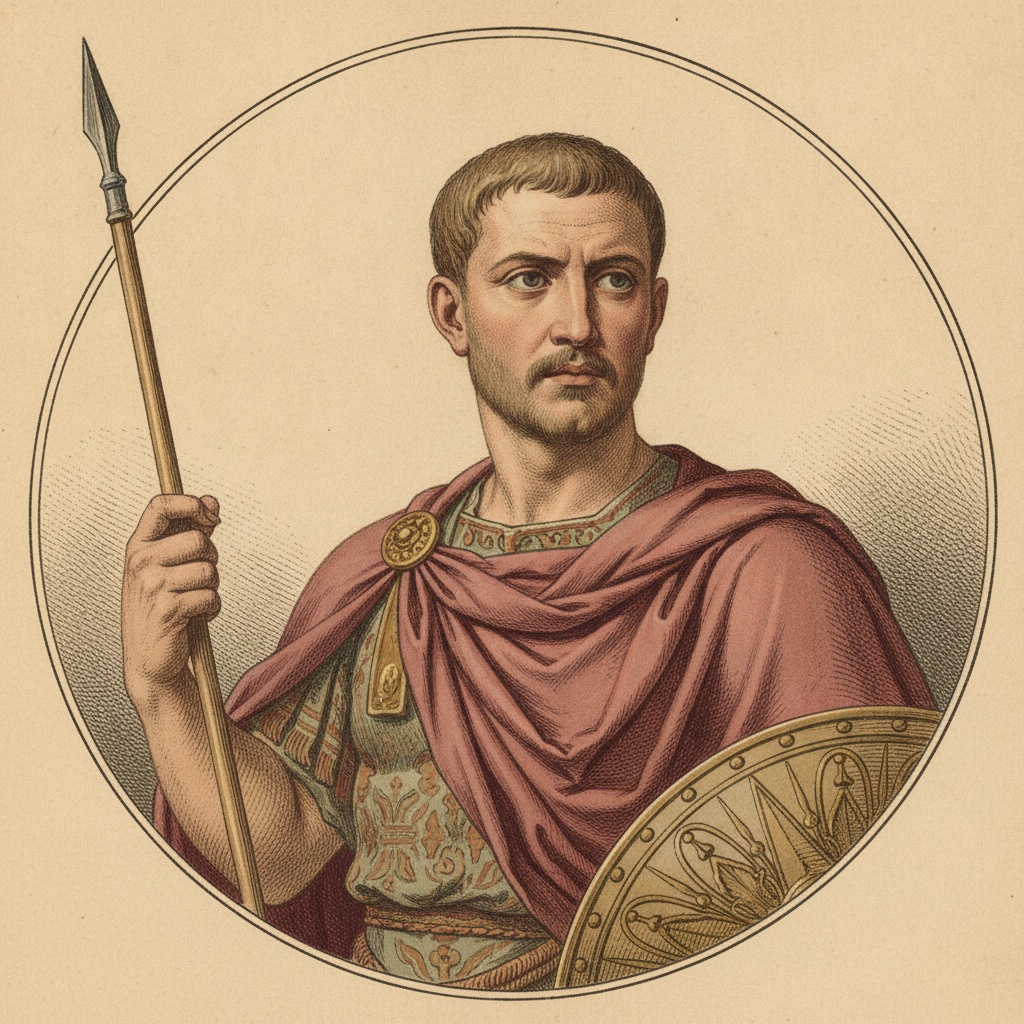
The division of 395 was the last. From then on there were two courts, two armies, two treasuries and two sets of ministers who suspected each other more than the enemy, and the Goths, who had lost a third of their men at the Frigidus for a dead emperor, chose a king. Alaric led them out of Thrace, plundered Greece to the walls of Sparta, and was twice cornered by Stilicho and twice allowed to go, which the Eastern court, which wanted Stilicho out of its half, took as treason and the Western court as prudence. In 397 the East appointed Alaric master of the soldiers in Illyricum, which gave him Roman arsenals to arm his people. He invaded Italy in 401, fought Stilicho to a draw at Pollentia on Easter Day 402 and at Verona the next year, and withdrew; the court moved from Milan to Ravenna in the marshes, where it stayed. In 405 another Gothic host under Radagaisus came over the Alps with a multitude the sources put at two hundred thousand, and Stilicho starved it in the hills above Florence and sold the survivors so cheaply that the slave market collapsed. Then, on the last day of 406, the Vandals, Alans and Sueves crossed the frozen Rhine near Mainz, and there was no army to stop them, because it was in Italy. They took three years to cross Gaul, burning as they went, and entered Spain in 409. The British army, seeing Gaul lost, proclaimed an emperor of its own, Constantine III, who took the last troops out of Britain to make good his claim; a letter of Honorius in 410 told the British cities to look to their own defence, and Rome never governed the island again.
Stilicho, who had negotiated with Alaric to use the Goths against the East and then against Constantine, was accused by the court of aiming at the throne for his son. On 22 August 408 Honorius had him arrested at Ravenna and beheaded, and the Roman troops in Italy fell on the wives and children of the barbarian soldiers in their garrison towns and killed them, whereupon thirty thousand of those soldiers went over to Alaric. He marched on Rome. He besieged it three times in two years, took a ransom of five thousand pounds of gold and thirty thousand of silver, tried to negotiate a settlement with a court that would neither fight nor treat, set up a puppet emperor and deposed him, and on 24 August 410 the Salarian Gate was opened from within and the Goths held the city for three days. They spared the churches and, being Christians, most of the people, but they emptied the palaces and took away Honorius’ sister Galla Placidia. It was the first time an enemy had been inside Rome in eight hundred years, and the shock travelled further than the damage. Jerome in Bethlehem wrote that the city that had taken the whole world was taken; Augustine in Africa began the City of God to answer pagans who said the old gods had protected Rome better. Alaric marched south to cross to Africa, lost his ships in a storm, and died of fever that winter; his men, Jordanes says, turned a river aside, buried him in its bed with the loot of Rome, and killed the prisoners who had done the digging.
A.D. 411–439The settlements
The next emperor in fact was a general, Constantius, who rebuilt a western army out of what was left and used the Goths to do Rome’s work. Alaric’s brother-in-law Athaulf took them into Gaul in 412, married Placidia at Narbonne in 414 in a Roman wedding at which he is said to have declared that he had once meant to replace Rome with Gothia and had learned that Goths could not obey laws, and was murdered in Spain. His successor Wallia fought the Vandals and Alans in Spain for Rome, destroyed two of their peoples, and was rewarded in 418 with lands in Aquitaine around Toulouse, where the Gothic kingdom of the West began. The Burgundians had already been settled on the middle Rhine, and the Franks were moving into the north of Gaul with no treaty at all. Constantius married Placidia, was made Augustus in 421 and died within the year; Honorius died in 423; and after a usurpation put down by an eastern army the West passed in 425 to Placidia’s six-year-old son, Valentinian III, with his mother as regent and three generals contending to be her Stilicho. The winner was Aetius, a Roman from the lower Danube who had been a hostage among the Huns as a boy and could always raise an army of them, and who ruled the West for a quarter of a century as master of the soldiers.
 Click to enlarge
The loss that could not be repaired came in Africa. In May 429 the Vandals under Gaiseric, a lame, secretive and long-lived king, crossed from Spain into Mauretania, eighty thousand of them by the count a contemporary bishop gives, and marched east along the coast. Augustine died in Hippo in the third month of their siege of it in 430. A treaty in 435 gave them Numidia; on 19 October 439 Gaiseric took Carthage by surprise, and with it the grain that fed Rome, the tax that paid its army and the fleet that had never been needed because the Mediterranean had been Roman. Within a few years his ships were raiding Sicily and Italy, and the western empire was for the first time poorer than its enemies. Aetius, meanwhile, held Gaul. He broke the Burgundians of Worms in 436 with a Hunnic army, in a slaughter of the king and his people that became the Nibelungenlied, settled the survivors in Savoy, kept the Goths of Toulouse inside their treaty, and put down the peasant risings that a Gallic chronicle records with alarm. In Britain, the same chronicle says, the Saxons had taken control by 441.
A.D. 440–455Attila
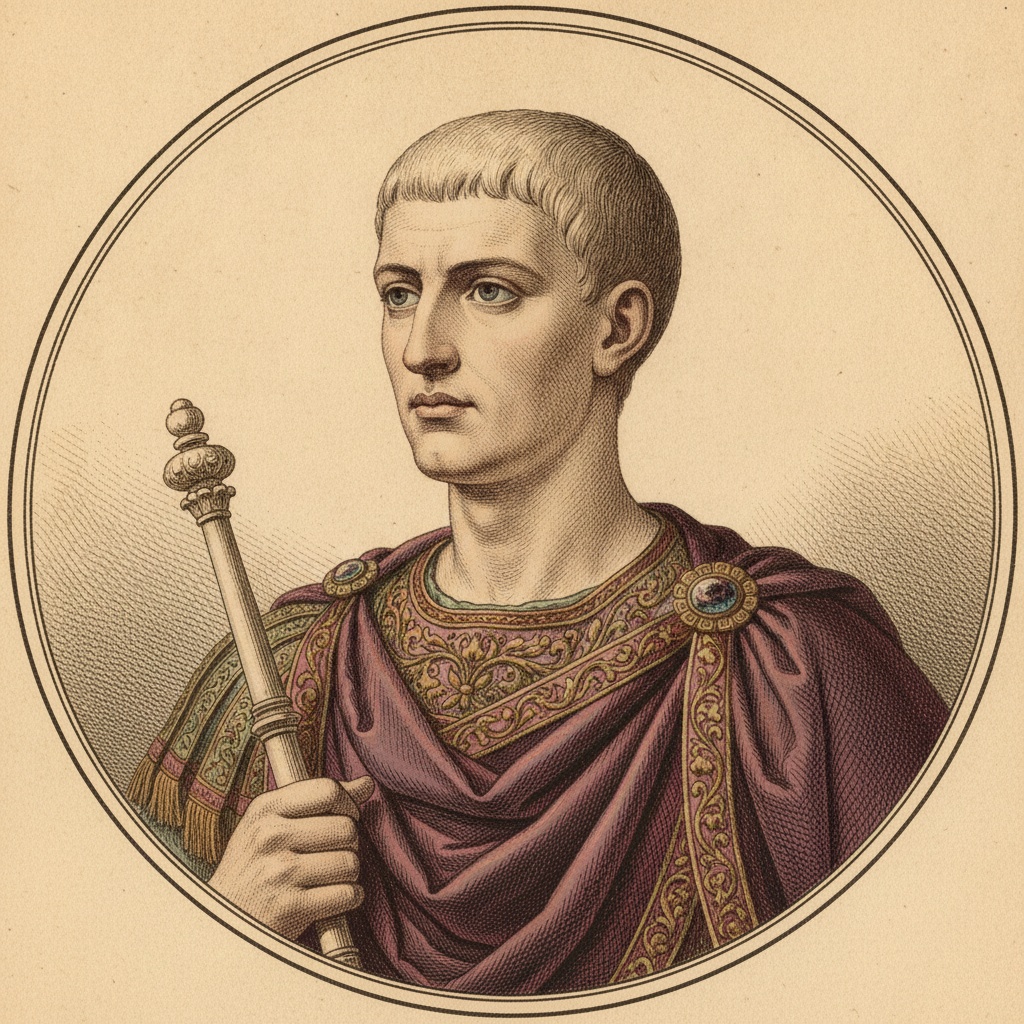
The Huns had been Aetius’ instrument. From 434 they had a king, Attila, who ruled with his brother Bleda until he killed him in 445, and who made of the Hunnic confederacy on the Hungarian plain, with its Gothic, Gepid and other subjects, the first power that could dictate to both empires. He dictated to the East first. A treaty in 435 doubled the gold Constantinople paid him; an invasion in 441 and 442 destroyed Viminacium, Naissus and Sirmium; another in 447 reached the walls of the capital, which an earthquake had just thrown down and which were rebuilt in two months, and left him with a tribute of two thousand one hundred pounds of gold a year and a strip of the Danube bank emptied of Romans. Priscus, who went with an embassy to his camp in 449, describes a wooden palace, a king who ate off wood while his guests ate off silver, a Greek merchant who had turned Hun and preferred it, and Attila listening with a straight face to the news that the ambassadors sitting before him had been sent to arrange his assassination. In 450 the new Eastern emperor Marcian stopped the tribute, and in the same year Valentinian’s sister Honoria, in trouble at court, sent Attila her ring, which he chose to read as a proposal, and demanded half the western empire as her dowry.
He invaded Gaul in the spring of 451 with the Huns and all their subject peoples, took Metz on 7 April, and was besieging Orléans in June when Aetius arrived with an army that was Roman only in name: Visigoths under their old king Theodoric, Burgundians, Franks, Alans, Armoricans, and what was left of the Gallic field army. The two hosts met on the Catalaunian Fields near Troyes, in a battle that lasted into the night and killed Theodoric, and Attila withdrew behind his wagons expecting to die; Aetius, who did not want the Goths to win outright, let him go. The next year he came into Italy, took Aquileia after a siege so long that the Huns were about to give up, and razed it so thoroughly that, tradition says, its people founded Venice in the lagoon instead; Milan and Pavia were sacked. On the Mincio he received an embassy led by Pope Leo, and turned back. Tradition credits the pope; Attila’s army had plague and famine, and an Eastern army was on the Danube behind him. In 453 he took a new wife and was found dead the next morning of a haemorrhage, and within a year his sons had lost a battle on the Nedao to their Gepid subjects and the Hunnic empire was gone as suddenly as it had come.
Aetius had no more Huns to raise, and Valentinian, thirty-five and idle, had no more use for him. On 21 September 454, in the palace at Rome, the emperor ran him through with his own sword while a chamberlain finished him; a courtier is reported to have told Valentinian that he had cut off his right hand with his left. Six months later, on 16 March 455, two of Aetius’ Hunnic bodyguards killed Valentinian on the Campus Martius while he watched the soldiers exercise, and no one moved to stop them. He was the last of the house of Theodosius in the West. The senator Petronius Maximus, who had arranged it, married the widow and reigned eleven weeks; when Gaiseric’s fleet was sighted he tried to flee and the mob stoned him. The Vandals took Rome on 2 June 455 and looted it methodically for fourteen days, at Leo’s request without burning or killing, and sailed home with the gilded roof of the Capitol, the treasures Titus had brought from Jerusalem, and the empress and her two daughters, one of whom married Gaiseric’s son.
A.D. 455–476Ricimer, and the end
The last twenty-one years of the Western empire had nine emperors and one master. Ricimer, a Sueve by his father and a Goth by his mother, commanded the army in Italy, which was now almost entirely barbarian federates, and could not be emperor because of his birth; so he made them. Avitus, a Gallic senator whom the Goths of Toulouse had proclaimed, he deposed in 456. Majorian, a Roman officer he had served beside, he made in 457, and Majorian turned out to be an emperor, the last one: he legislated against the tax collectors and the men who stripped the monuments of Rome for building stone, brought the Gallic nobility back into the government, marched an army through Gaul and Spain to recover Africa, and lost the fleet he had built, three hundred ships in the bay of Cartagena, to Vandal treachery before it sailed. Ricimer had him arrested on the way home and beheaded at Tortona in August 461. There followed a nonentity, an interregnum, and then, in 467, an emperor from the East, Anthemius, sent by Leo of Constantinople with an army and a plan: the largest naval expedition of the century, over a thousand ships and, the sources say, a hundred thousand men, paid for by the whole reserve of the Eastern treasury, sailed against Carthage in 468 under the emperor’s brother-in-law Basiliscus, anchored off Cape Bon to negotiate, and was destroyed one night by Gaiseric’s fireships on a favouring wind. The East never tried again in that century, and the West had nothing to try with.
What remained of the West went piece by piece. The Visigothic king Euric, who had murdered his brother in 466, took Spain, and in 475 the last Roman province in Gaul, the Auvergne, whose bishop, the poet Sidonius, had held Clermont through four sieges and was handed over by treaty in exchange for Provence. The Burgundians took the Rhône. In northern Gaul a Roman general, Aegidius, and after him his son Syagrius held a kingdom of their own at Soissons that answered to no emperor and lasted until the Franks took it in 486. Ricimer besieged Anthemius in Rome in 472, took the city, and had him killed in a church; he died himself six weeks later, and the Burgundian prince who inherited his office made and unmade two more emperors. In 474 the East sent Julius Nepos, who was recognised in Italy for a year, until his master of the soldiers, Orestes, a Roman from Pannonia who had once been Attila’s secretary, turned the army against him. Nepos fled to Dalmatia and Orestes, on 31 October 475, made his own son emperor, a boy in his early teens named Romulus, whom the soldiers nicknamed the little Augustus.
The army in Italy was by now Sciri, Heruli, Rugi and the remnants of Attila’s peoples, and in 476 it asked for what the federates in Gaul, Spain and Africa had: land, a third of the estates of Italy. Orestes refused. On 23 August the troops proclaimed one of their officers, Odoacer, a Scirian whose father had served Attila, as their king, sacked Pavia, where Orestes had taken refuge, hunted him to Placentia and killed him there on 28 August, and entered Ravenna on 4 September. Odoacer did not kill Romulus. He sent him to live on a pension of six thousand gold pieces a year in a villa on the Bay of Naples that had belonged to Lucullus, and he sent the imperial regalia to Constantinople with an embassy of the Senate, which told the emperor Zeno that the West no longer needed an emperor of its own, that one emperor sufficed for both parts, and that Odoacer, as patrician, would govern Italy in his name. Zeno, who had Nepos on his hands, answered ambiguously, and Odoacer ruled Italy for seventeen years as king, under Roman law, with a Roman senate and Roman officials, and no one in Italy thought that anything had ended. It was a chronicler in Constantinople, two generations later, who wrote the sentence that the Western empire of the Roman people had perished with this Augustulus, and it is from him that the date comes.
Why it mattered
The West did not fall to an invasion; it was dismantled. Every barbarian people that ended up ruling a province had been let in, settled or hired by a Roman government that could not pay a Roman army, and the generals who ran the empire from 395 to 476 were, with Aetius and Majorian the exceptions, better at ruling emperors than at fighting. The loss of Africa in 439 took away the money and the corn, the disaster of 468 took away the last chance of getting them back, and after that the emperor at Ravenna was a title that a barbarian commander could dispense with when the soldiers wanted land. What survived the emperor was almost everything else: the law, the cities, the estates, the Latin language, the Senate, the bishops, and the idea, which Odoacer and Theodoric and Clovis all held, that they ruled Romans and needed Rome’s permission to do it. Justinian would try to turn that idea back into an empire, and the next chapter is what it cost.