Judaea and the Roman World
The Roman Sword at the SanctuaryPompey’s Eastern Settlement and the Hasmonean Crisis
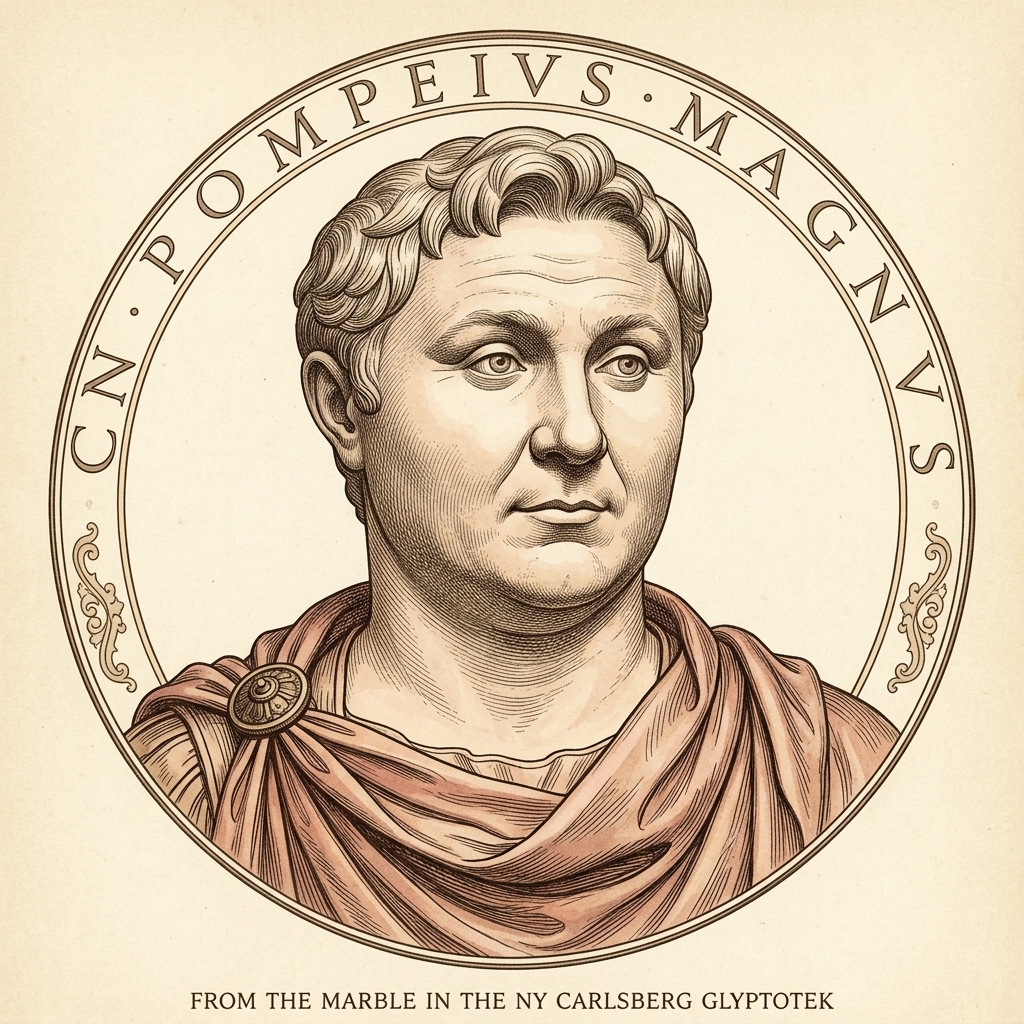
When Gnaeus Pompeius Magnus turned his legions south from Antioch in the spring of 63 B.C., he did not set out to conquer a religious mystery. He came to close an imperial frontier. The Seleucid monarchy had crumbled into dynastic ash; Tigranes of Armenia had laid down his tiara; and Syria had been forged into a direct Roman province under Marcus Aemilius Scaurus. Beyond the river Eleutherus lay the Hasmonean realm—a Jewish client monarchy torn apart by civil war between two royal brothers, Hyrcanus II and Aristobulus II, each bidding for Roman swords to slaughter the other.
 Click to enlarge
 Click to enlarge
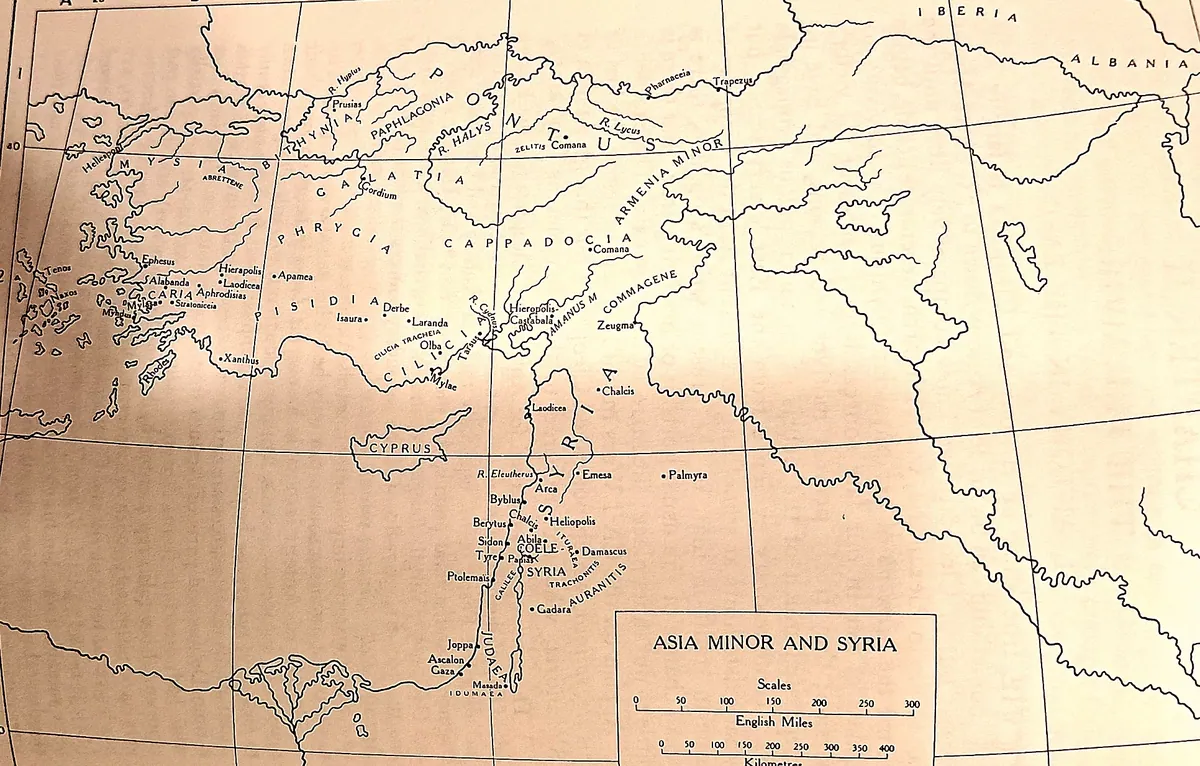
Pompey listened to both princes at Damascus, along with an embassy of Jewish elders who pleaded for the abolition of the monarchy altogether and the restoration of their ancient priestly constitution. Detecting Aristobulus' defiance, Pompey marched his legions through Pella and Jericho to the rocky defiles of Jerusalem. Aristobulus' faction entrenched themselves upon the fortified Temple Mount, severing the bridges across the Tyropoeon Valley and daring the Roman army to force the precipices.
For three grueling months in the summer of 63 B.C., Roman legionaries raised massive earthen siege ramps along the northern wall of the Temple precinct, hauling catapults and battering rams from Tyre. Observing that the defenders refrained from offensive battle on the Sabbath, Pompey’s engineers worked unimpeded on each seventh day to advance the engines and batter the massive ashlar ramparts. On a day of fasting in the autumn, the wall gave way. Sulla's son, Faustus Cornelius Sulla, led the assault over the rubble; twelve thousand defenders were slain at the altars, where priests continued their sacrificial liturgy until cut down by Spanish auxiliary swords.
“Of all the foreigners, Gnaeus Pompeius was the first who conquered the Jews and by right of victory penetrated their temple. Thence it became known that there was within no image of any god, but an empty sanctuary and vacant secrets.” Tacitus, Histories V.9
Pompey walked into the Holy of Holies—the windowless inner adytum entered only once a year by the High Priest on Yom Kippur. Expecting the golden idol, monstrous beast, or secret cult effigy whispered of in Greek anti-Jewish polemics, he encountered absolute aniconic silence: vacuum sedem et inania arcana. Showing calculating Roman restraint, he touched neither the golden menorah, nor the table of shewbread, nor the two thousand talents of temple treasure, ordering the priests to purify the sanctuary and resume daily sacrifices. Yet the political transformation was irreversible: Pompey stripped the Hasmoneans of their Hellenistic maritime ports (Joppa, Gaza, Ascalon, Straton's Tower) and detached the Greek cities of the Decapolis, annexing them directly to the province of Syria. Hyrcanus II was restored only as High Priest and ethnarch—stripped of the royal diadem, his inland territory reduced to a tribute-paying client enclave.
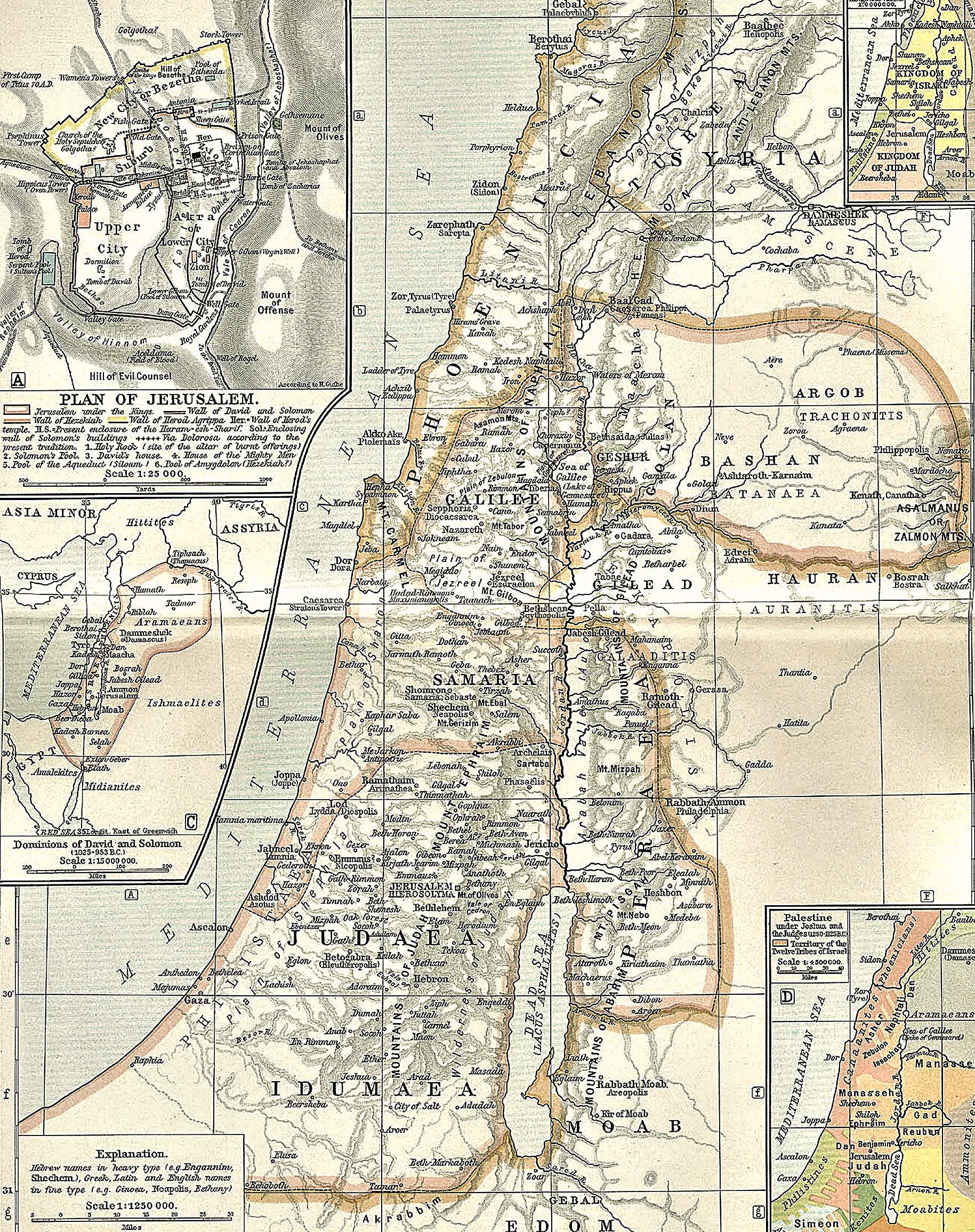
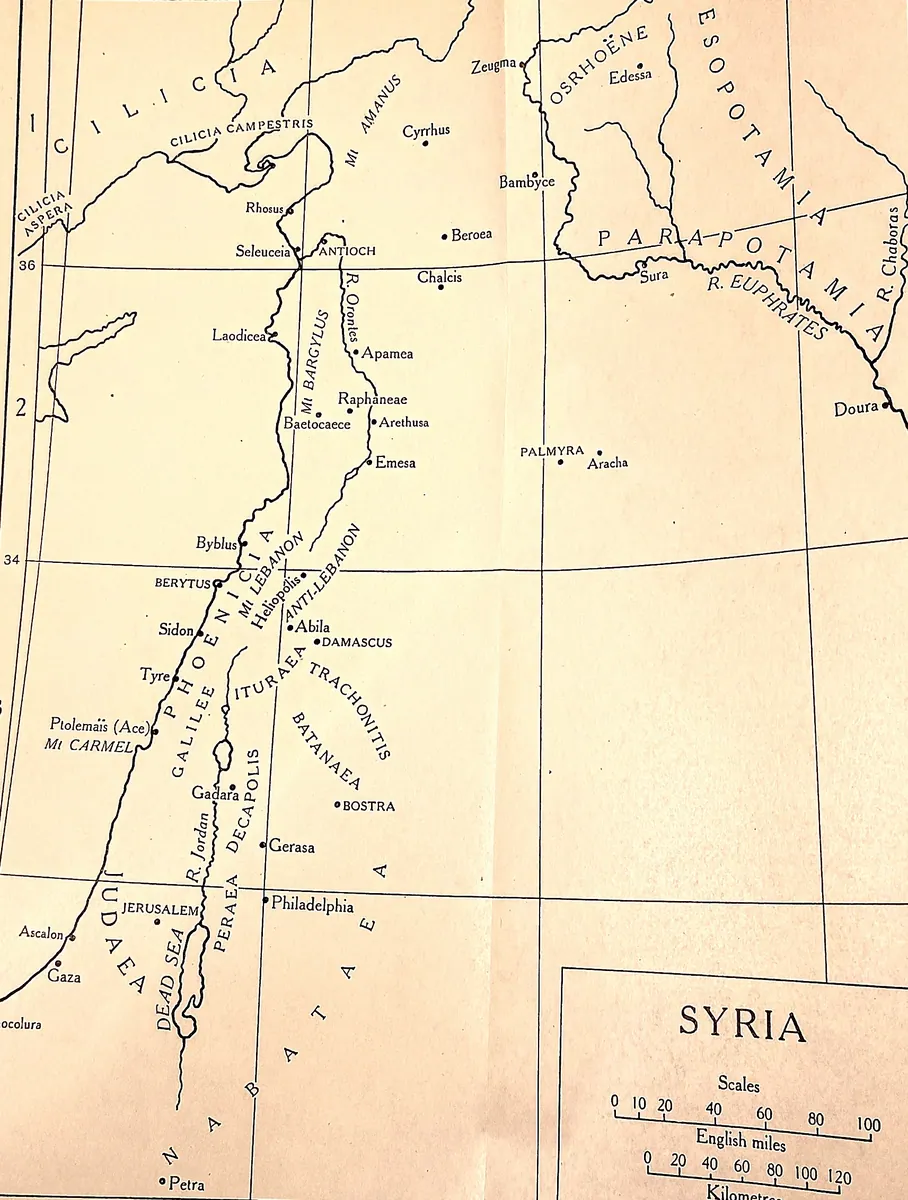
The Partition of Judaea & the Levant
From Pompey's 63 B.C. boundary lines through the Herodian kingdom to direct Roman equestrian annexation (A.D. 6–66).
Pompey Truncates the Hasmonean Realm
Pompey detaches the Hellenistic coastal cities (Gaza, Ascalon, Joppa, Straton's Tower) and the Decapolis league, annexing them to the newly established province of Syria. The Hasmonean state is reduced to an inland tributary ethnarchy under Hyrcanus II.
Herod the Great's Unified Client Kingdom
Backed by Mark Antony, Octavian, and the Roman Senate, the Idumaean Herod overthrows the last Hasmoneans, captures Jerusalem, and reigns for thirty-three years as Rex Socius et Amicus. Augustus rewards his loyalty with the coastal plain, Samaria, and the Golan.
Augustus Confirms the Herodian Partition
Upon Herod's death, Augustus divides the kingdom among his three surviving sons: Herod Archelaus receives Judaea, Samaria, and Idumaea as ethnarch; Herod Antipas receives Galilee and Peraea as tetrarch; and Herod Philip receives Batanaea, Trachonitis, and Gaulanitis.
Direct Roman Provincial Annexation
Appealed to by both Jewish and Samaritan aristocracies against Archelaus' cruelty, Augustus deposes Archelaus in A.D. 6 and banishes him to Gaul. Judaea becomes a Roman equestrian province governed from Caesarea Maritima by prefects and procurators.
The Roman Courtroom and the Jewish GoldCicero, Flaccus, and the Politics of the Aurelian Steps
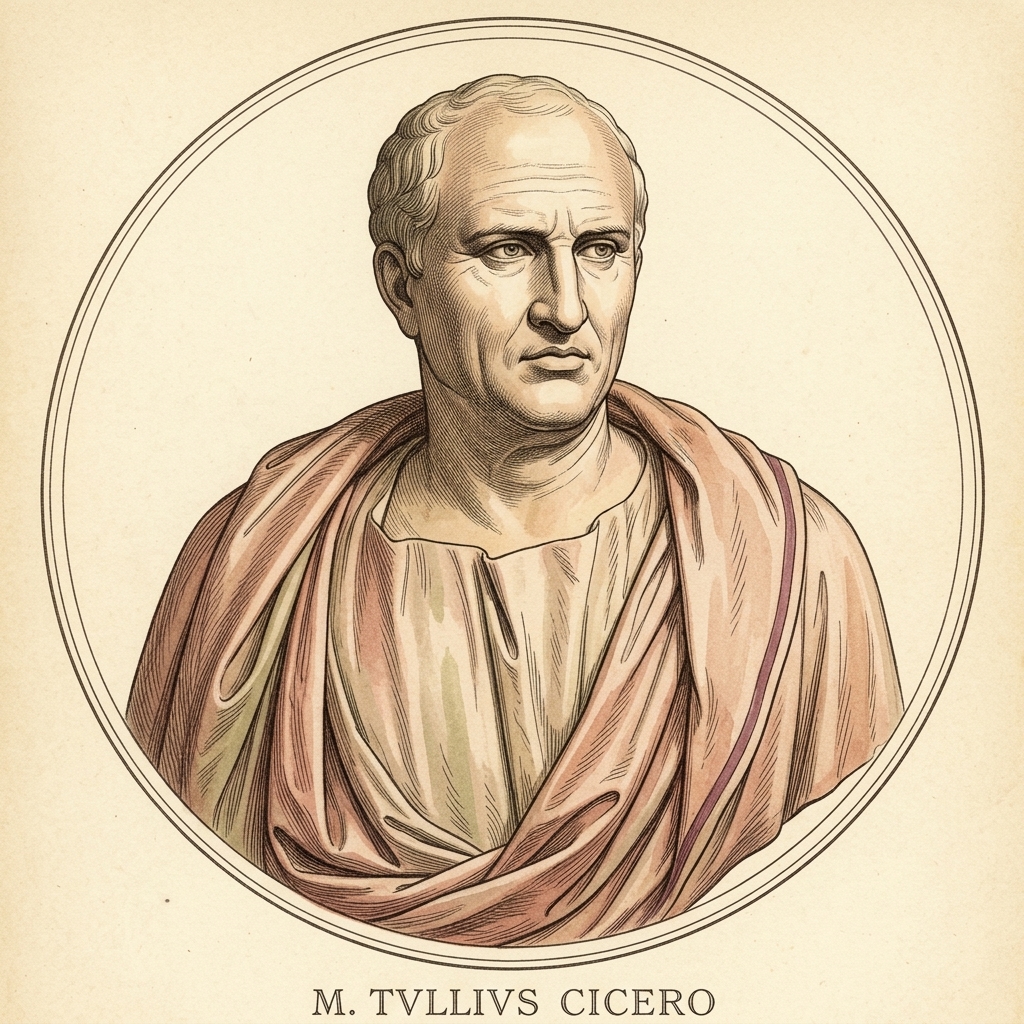
Four years after Pompey's legions stood inside the Jerusalem sanctuary, the reality of Jewish communal life collided directly with Roman senatorial law in the heart of the Forum. In 59 B.C., Lucius Valerius Flaccus, who had served as praetor during Cicero's consulship and subsequently governed the province of Asia as propraetor (62 B.C.), stood on trial for provincial extortion (repetundae). Among the charges leveled by the prosecutor Decianus and his ally Laelius was a financial seizure: Flaccus had banned the export of precious metals from Asia and impounded the gold contributions gathered by diaspora Jewish communities for the Temple at Jerusalem.
Cicero's defense in Pro Flacco XXVIII (§§ 66–69) survives as the earliest and most revealing Roman literary assessment of Jewish power, diaspora cohesion, and imperial policy. The trial was held in the Forum near the gradus Aurelii—the Aurelian Steps, the regular gathering ground for public assemblies and plebeian crowds. Cicero opened this portion of his speech by theatrically dropping his voice, pretending to fear the influence of the Jewish crowd that packed the perimeter of the tribunal:
“You know how numerous that crowd is, how great is its unanimity, and of what weight it is in the popular assemblies. I will speak in a low voice, just so as to let the judges hear me. For men are not wanting who would be glad to excite that people against me and against every eminent man; and I will not assist them and enable them to do so more easily.” Cicero, Pro Flacco XXVIII.66
Every adult Jewish male throughout the Mediterranean was obligated under Torah law to send an annual half-shekel temple tribute (the didrachmon) to Jerusalem. In wealthy provincial trading centers across Asia Minor, this aggregated into massive stores of bullion. Cicero systematically itemized the seizures made by Flaccus' officials: roughly one hundred pounds of gold seized at Apamea and weighed out in the forum at the praetor's feet; twenty pounds at Laodicea; one hundred pounds at Adramyttium; and smaller quantities at Pergamum.
Cicero argued that Flaccus had acted not out of corruption, but with supreme Roman senatorial firmness (gravitas). The Senate, Cicero stressed, had repeatedly passed solemn decrees prohibiting the export of precious metals from the empire, a policy reinforced during Cicero’s own consulship in 63 B.C. To halt the drain of Roman coinage to an eastern temple was an act of fiscal vigilance. Addressing the prosecutor’s claim that Pompey himself had spared the Jerusalem temple, Cicero retorted that Pompey had done so out of prudential modesty (pudor) to silence the slander of a suspicious nation, not because he harbored any religious awe for their rites.
“Each city, O Laelius, has its own peculiar religion; we have ours. While Jerusalem was flourishing and the Jews were in a peaceful state, still the religious ceremonies of that people were very much at variance with the splendour of this empire, the dignity of our name, and the institutions of our ancestors. And they are the more odious to us now, because that nation has shown by arms what were its feelings towards our supremacy. How dear it was to the immortal gods is proved by its having been defeated, by its revenues having been farmed out to our contractors, by its being reduced to a state of subjection.” Cicero, Pro Flacco XXVIII.69
Cicero’s concluding argument crystallized the foundational theological premise of the Roman state: in classical polytheism, the power of a people’s gods was directly verified by military outcome. The defeat of Judaea by Pompey, the imposition of Roman tribute (vectigal), and the sale of Jewish captives into slavery were taken as empirical proof that their deity lacked the power to resist the gods of Rome.
Historical Movements & The Mediterranean Diaspora
Ancient migrations, the Babylonian deportation axis, and the Mediterranean financial network that carried the Temple gold to Jerusalem.
Bronze Age Egyptian–Sinai Movements
Archaeological evidence and ancient Egyptian historiographical traditions (Manetho, Chaeremon, recorded in Tacitus V.3) document Bronze Age population movements across the northern Sinai coastal road into southern Canaan during periods of epidemic and imperial withdrawal.
Babylonian Exile & Persian Restoration
Nebuchadnezzar II sacks Jerusalem in 586 B.C., deporting the Judean elite east along the Fertile Crescent. Following the Persian conquest of Babylon in 539 B.C., Cyrus the Great issues his restoration edict, permitting thousands to return along the Euphrates arch to rebuild the Second Temple.
The Hellenistic Dispersal
Under Ptolemaic and Seleucid patronage, massive Jewish communities take root across the eastern Mediterranean. Alexandria becomes the intellectual and demographic capital of the diaspora, occupying two of the city's five wards, producing the Septuagint Greek translation of the scriptures.
The Mediterranean Temple Gold Route
Every year, hundreds of thousands of diaspora Jews in Rome, Greece, Cyrenaica, and Asia Minor collect the half-shekel temple tax. Gold shipments from Apamea, Laodicea, Adramyttium, and Pergamum travel under senatorial scrutiny to Jerusalem—the financial pipeline Flaccus impounded.
The Herodian Synthesis and Provincial FrictionFrom Client Kingship to Equestrian Procurators
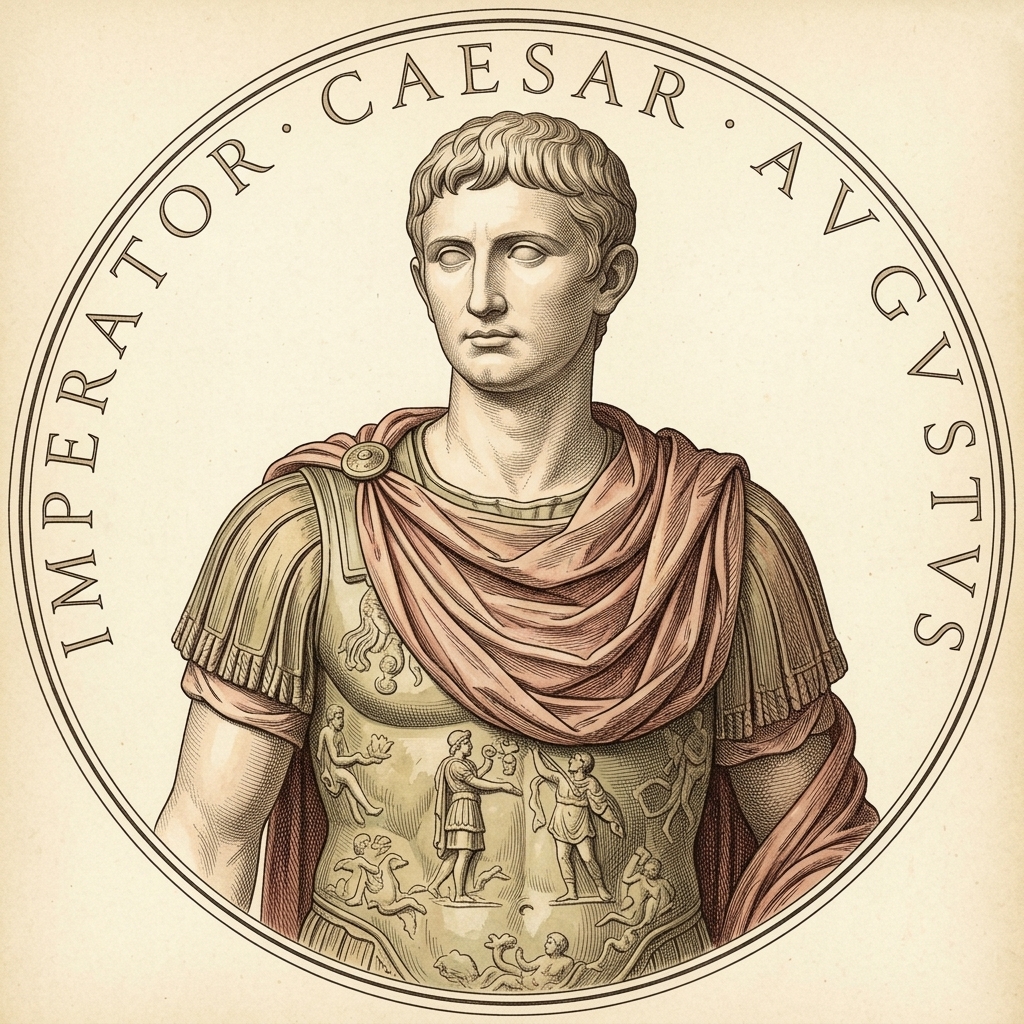
The fundamental mechanism of early Roman imperial governance was indirect rule through client monarchs. Client kings absorbed local religious hostility, patrolled desert frontiers against Arab tribes, collected taxes, and bore the policing costs of difficult populations without requiring Roman legionary garrisons. No client monarch understood this transaction better than Herod the Great.
 Click to enlarge
Appointed “King of the Jews” by the Roman Senate in 40 B.C. on the recommendation of Antony and Octavian, Herod conquered his realm with Roman siege engines in 37 B.C. An Idumaean by descent and a Hellenistic autocrat by training, Herod walked a perilous diplomatic tightrope between his Jewish subjects and his Roman patrons. At Jerusalem, he transformed the Second Temple into one of the architectural wonders of the ancient Mediterranean, doubling the size of the Temple Mount platform with cyclopean retaining walls that stand to this day. Simultaneously, to signal his unshakeable Romanitas, he founded the deep-water harbor of Caesarea Maritima, naming it after Augustus, complete with a colossal temple to Roma and Augustus visible far out at sea.
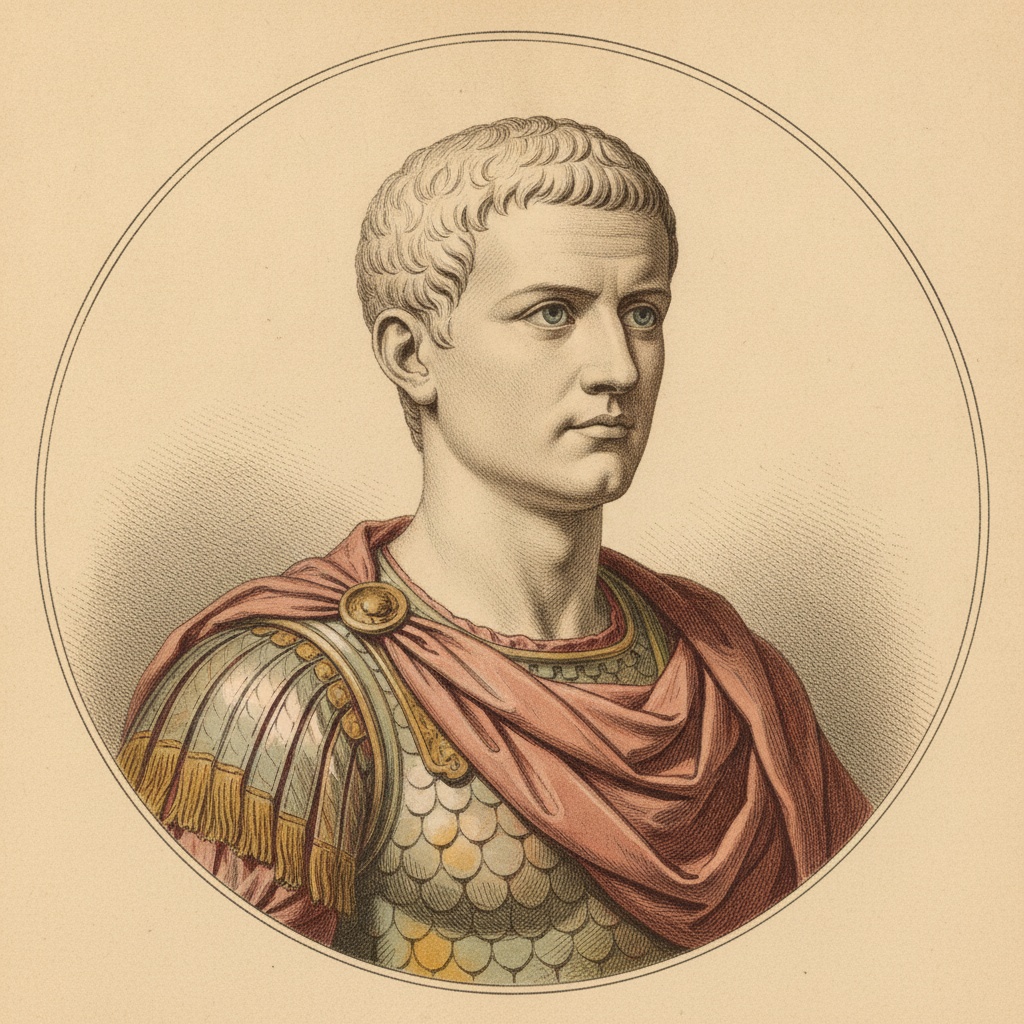
When Augustus deposed Herod's incompetent son Archelaus in A.D. 6, direct Roman provincial administration commenced. Judaea became a third-class imperial province annexed to Syria, governed by an equestrian prefect (later procurator) residing in coastal Caesarea Maritima, commanding auxiliary cohorts recruited largely from the Greek and Samaritan populations of Sebaste and Caesarea. The Roman governor visited Jerusalem primarily during the great pilgrimage festivals (Passover, Pentecost, Tabernacles) to maintain public order from the fortress of Antonia overlooking the Temple courts.
The administrative clash was structural, not incidental. The immediate imposition of a Roman property census in A.D. 6 under Publius Sulpicius Quirinius sparked armed resistance led by Judas the Galilean, who proclaimed that paying taxes to Caesar was an act of apostasy against God alone as king. Roman prefects, accustomed to pagan civic norms where local gods readily accepted the imperial image, repeatedly transgressed Jewish religious sensitivities. Pontius Pilate (prefect A.D. 26–36) smuggled legionary standards bearing imperial effigies into Jerusalem under cover of night, capitulating only after hundreds of Jewish protesters bared their necks at Caesarea, declaring they would rather die than permit the violation of the ancestral law.
The crisis reached a terrifying apex under Emperor Gaius (Caligula) in A.D. 40. Incensed by reports that Jews at Jamnia had torn down an imperial altar, Caligula issued a direct mandate to Publius Petronius, governor of Syria: march two legions into Jerusalem and erect a colossal gilded bronze statue of the emperor inside the Holy of Holies. Petronius, recognizing that executing the command would provoke total civil war and the devastation of the Levant, bravely delayed the sculpture's completion. Caligula's assassination in January 41 averted catastrophe, but the episode burned an indelible conviction into the Jewish collective consciousness: Roman rule was fundamentally incompatible with the survival of monotheism.
Roman Arms in the Levant: 63 B.C. – A.D. 135
Two centuries of military pacification: from Pompey's assault through the Galilean campaigns of Vespasian to Titus' siege of Jerusalem and the fall of Masada.
Pompey's March and Assault
Pompey advances with legions from Damascus down the Jordan Valley to Jericho, then scales the Judaean hills to invest Jerusalem. After a three-month siege, Roman battering rams breach the north wall of the Temple Mount on the Sabbath.
The Disaster of Beth Horon
Following the outbreak of revolt in Jerusalem, Cestius Gallus, consular legate of Syria, marches south with Legio XII Fulminata. Repulsed from the Temple walls, Gallus retreats through the narrow pass of Beth Horon, where Jewish insurgents annihilate his rearguard, capturing the legionary eagle.
Vespasian's Methodical Galilean Campaign
Nero appoints the seasoned veteran Flavius Vespasian to command the war. Assembling Legiones V Macedonica, X Fretensis, and XV Apollinaris at Ptolemais, Vespasian systematically crushes Jewish strongholds in Galilee, capturing Jotapata and Tarichaeae.
Titus' Siege and Destruction of Jerusalem
Titus invests Jerusalem with four legions. To starve the city, Romans build an unbroken five-mile stone circumvallation wall in three days. After bitter hand-to-hand fighting, the Antonia fortress is leveled and the Second Temple burns on the 10th of Ab.
From Masada to the Bar Kokhba War
Flavius Silva breaches the isolated desert cliff of Masada in A.D. 73/74 with Legio X. Sixty years later, Hadrian's attempt to build Aelia Capitolina sparks the Bar Kokhba War; Julius Severus destroys 50 fortresses, and Judaea is renamed Syria Palaestina.
The Great Revolt and the Flavian TriumphThe Destruction of Jerusalem and the Fiscus Iudaicus
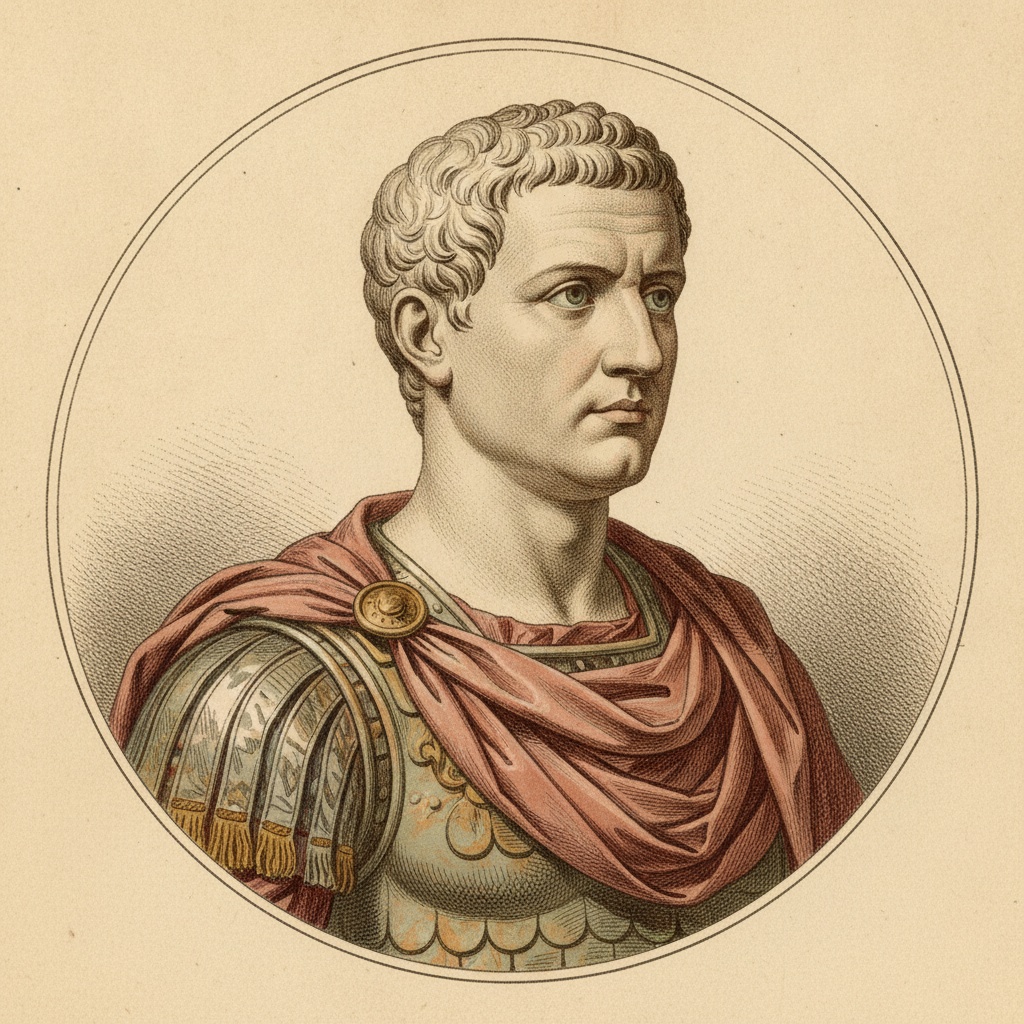
The explosion of open rebellion in May A.D. 66 began with provincial extortion and escalated into apocalyptic confrontation. Gessius Florus, the corrupt procurator, seized seventeen talents from the Temple treasury, mocking the impoverished citizenry who held out baskets to beg for him. In response, young priests led by Eleazar son of Ananias took a revolutionary step: they terminated the daily sacrifice of two lambs and a bull offered for the health of the Roman Emperor. In the vocabulary of Roman imperial law, refusing the imperial sacrifice was an open declaration of war.
The routing of Cestius Gallus’ Legio XII Fulminata in the mountain passes of Beth Horon shocked the Roman Senate. For the first time since the disaster of Varus in Germany, a Roman legion had fled before provincials, abandoning its catapults, siege baggage, and legionary eagle. Nero, bankrupt and terrified, turned to the only commander with unimpeachable military credentials and no aristocratic pedigree: Titus Flavius Vespasianus.
Vespasian's strategy was methodical, calculating, and patient. Landing at Ptolemais with three legions (V Macedonica, X Fretensis, XV Apollinaris) bolstered by auxiliary troops from client kings Agrippa II and Sohaemus, he avoided an immediate assault on the mountain fortifications of Jerusalem. Instead, he systematically rolled up Galilee throughout A.D. 67. Strongholds fell one by one: Jotapata held out for forty-seven days before its commander, the young aristocrat Joseph ben Mattathias (later Flavius Josephus), surrendered to the Romans; Gamla in the Golan was breached; and Tiberias submitted.
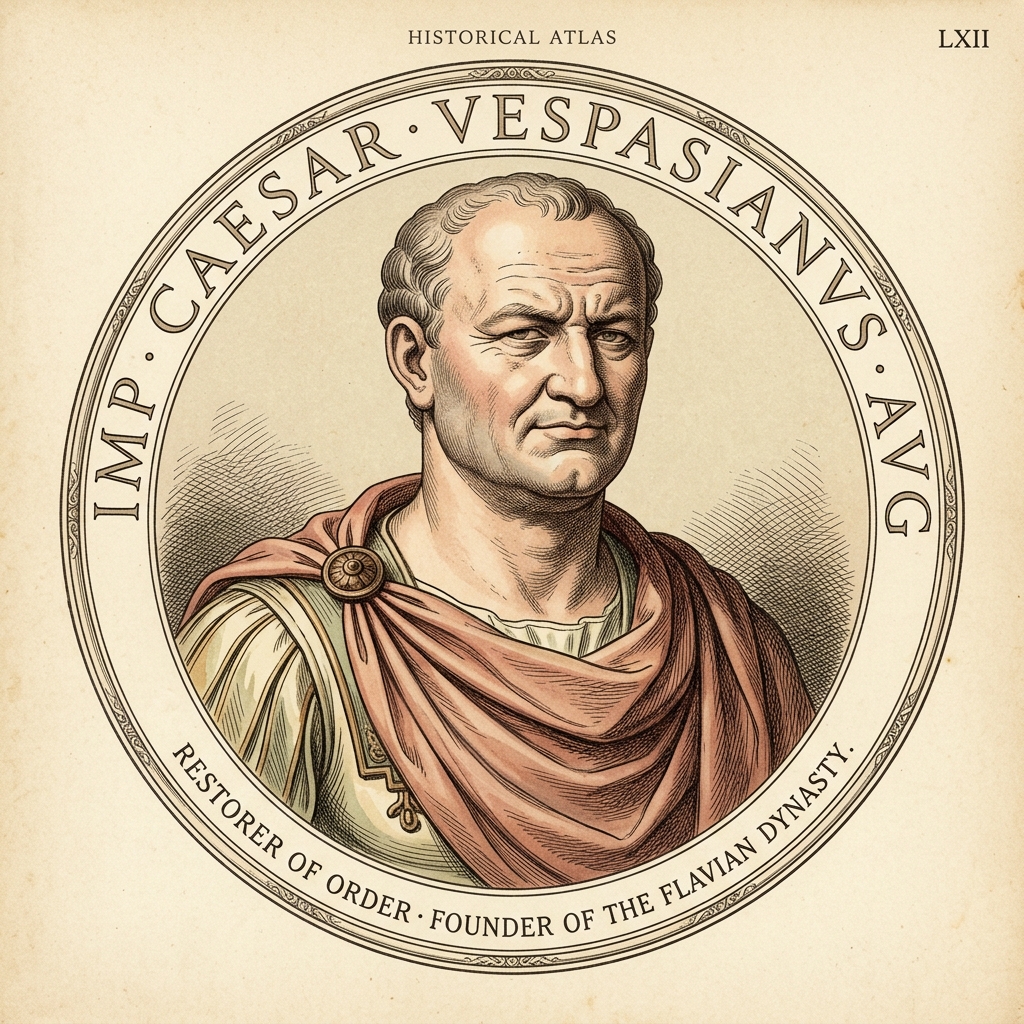
The outbreak of civil war in Rome following Nero's suicide in A.D. 68 suspended operations for eighteen months. As Galba, Otho, and Vitellius butchered each other in Italy, the eastern legions proclaimed Vespasian emperor in July 69. Returning to Rome to secure the purple, Vespasian entrusted the final subjugation of Judaea to his elder son, Titus Caesar.
Titus arrived before Jerusalem in the spring of A.D. 70 with an army of sixty thousand men. Within the walls, the tragedy had metastasized: three rival Jewish factions—led by Simon bar Giora, John of Gischala, and Eleazar ben Simon—waged bloody civil war against each other across the streets, burning granaries containing decades of stored wheat before the Roman siege lines had even closed around them.
Titus encircled the city with a five-mile circumvallation wall of stone and turf, constructed in three days, condemning more than six hundred thousand inhabitants to horrific famine. The outer Third Wall fell in May; the Second Wall was stormed; and in July, the fortress of Antonia was demolished to build ramps against the Temple precinct. On the 10th day of the Hebrew month of Ab (August 70), Roman soldiers hurled firebrands through the golden windows of the Temple. Despite conflicting traditions regarding whether Titus ordered the sanctuary spared or destroyed, the complex burned to its foundations. The city was systematically leveled, leaving only three towers of Herod's palace (Hippicus, Phasael, Mariamne) and the western wall to shelter the garrison camp of Legio X Fretensis.
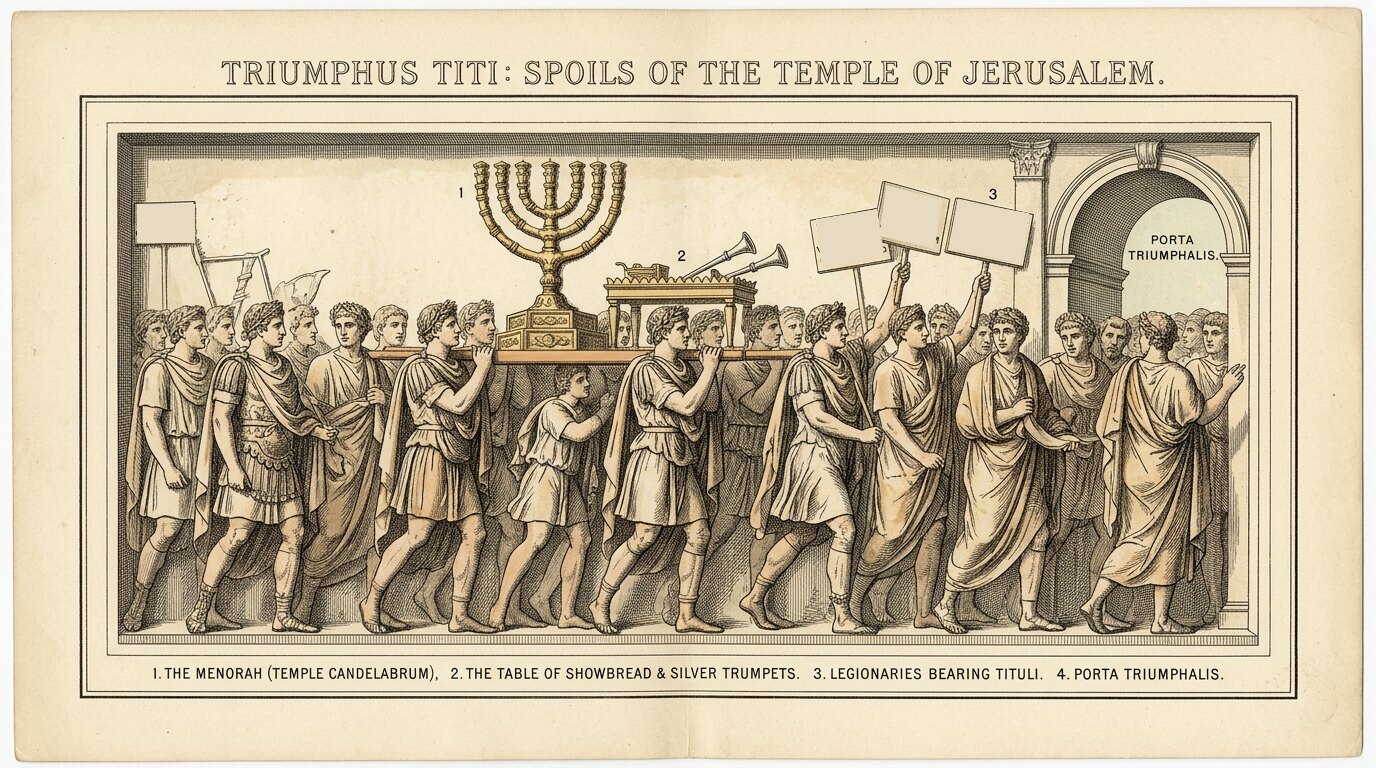
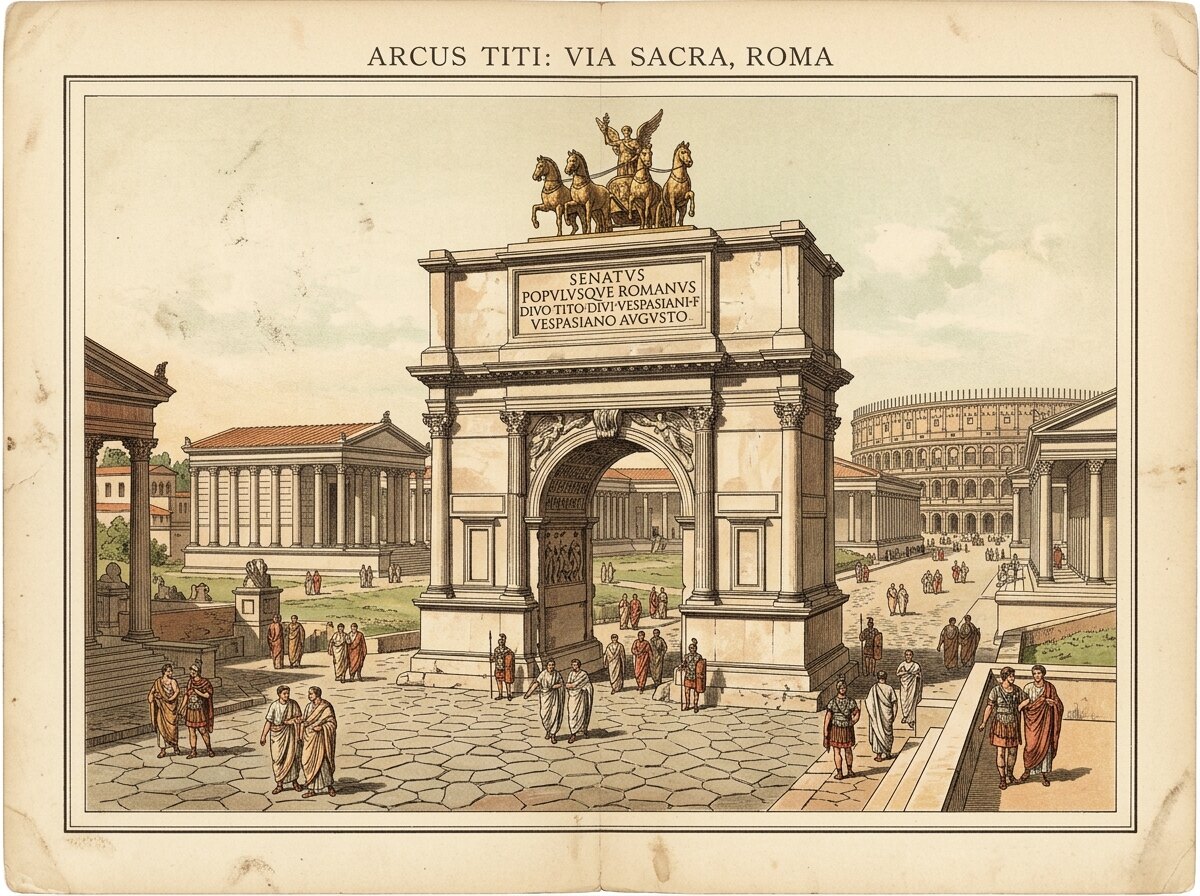
The ideological consequences of the victory were immense for the new Flavian dynasty. Lacking the patrician pedigree of the Julio-Claudians, Vespasian and Titus built their legitimacy upon the conquest of Judaea. In A.D. 71, Rome celebrated a magnificent joint triumph: the golden menorah, the table of shewbread, and the Torah scrolls were paraded along the Via Sacra before the Colosseum, immortalized in the relief sculptures of the Arch of Titus. Across the empire, millions of bronze and silver coins were struck declaring IVDAEA CAPTA. Furthermore, Vespasian diverted the ancient half-shekel temple tribute into the imperial treasury as the punitive Fiscus Iudaicus—compelling every Jew in the Roman empire to pay an annual tax directly to the restoration fund of the pagan Temple of Jupiter Capitolinus in Rome.
 Click to enlarge
 Click to enlarge
The Diaspora Revolts and the Bar Kokhba WarHadrian, Aelia Capitolina, and the Erasure of Judaea
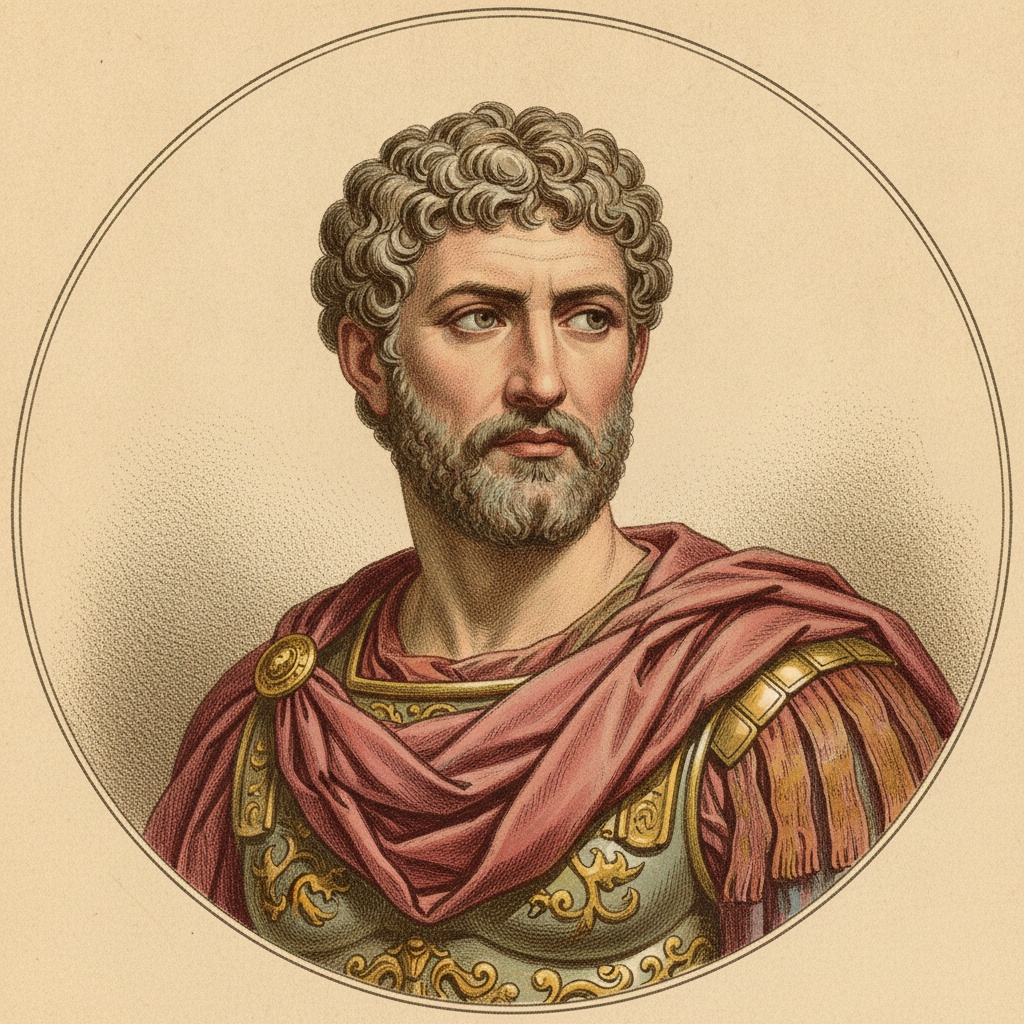
The destruction of the Second Temple in A.D. 70 did not extinguish the revolutionary embers of Judaea; it merely scattered them across the Mediterranean. While the rabbis under Yohanan ben Zakkai gathered at Yavneh to reconstruct Judaism without a sacrificial altar, militant messianic expectations simmered across the diaspora.
In A.D. 115, while Emperor Trajan was campaigning deep in Mesopotamia against the Parthians, catastrophic uprisings erupted simultaneously among the Jewish populations of Cyrenaica, Egypt, Cyprus, and Mesopotamia (the Kitos War). In Cyrenaica and Cyprus, Greek and Roman authors recorded horrific communal massacres, with entire cities sacked and hundreds of thousands slaughtered before Roman legions under Quintus Marcius Turbo brutally suppressed the insurrection, virtually depopulating the Jewish communities of Cyprus and Alexandria.
Fifteen years later, Emperor Hadrian triggered the final, most catastrophic clash. Hadrian, a passionate philhellene committed to cultural uniformity across the empire, issued an empire-wide ban on castration that Roman jurists applied equally to circumcision (circumcisio). Worse still, visiting the ruins of Jerusalem in A.D. 130, Hadrian decreed the founding of a pagan Roman colony upon its site: Colonia Aelia Capitolina, named after his family (Aelius) and Jupiter Capitolinus, with a pagan temple erected over the ruins of the Temple Mount.
In A.D. 132, the revolt erupted under the military leadership of Simon bar Kosiba, hailed by the foremost scholar Rabbi Akiva as the messianic “Son of the Star” (Bar Kokhba). Learning the bitter lessons of A.D. 70, the rebels avoided open-field battles against Roman legions. Instead, they constructed vast networks of underground subterranean bunkers, caves, and hidden tunnels across the Judaean hill country, striking Roman garrisons in sudden guerrilla ambushes.
The Roman military response was ferocious. Legio XXII Deiotariana was apparently wiped out in the opening clashes. Recognizing the scale of the emergency, Hadrian summoned his finest frontier general, Sextus Julius Severus, all the way from Britannia, along with legions and detachments from the Danube. Severus refused to fight pitched battles; instead, he initiated a methodical war of extermination, isolating rebel strongholds, cutting off water supplies, and starving subterranean hideouts one by one.
“Fifty of their most important outposts and nine hundred and eighty-five of their most famous villages were leveled to the ground. Five hundred and eighty thousand men were slain in the various raids and battles, and the number of such as perished by famine, disease and fire was past finding out. Thus nearly the whole of Judaea was made desolate.” Cassius Dio, Roman History 69.14
The war culminated in the summer of A.D. 135 at the siege of the mountain fortress of Betar, southwest of Jerusalem. Bar Kokhba was killed, and the surviving defenders slaughtered. Hadrian’s subsequent punitive measures were designed to erase Jewish identity from the geographic map of the Mediterranean. The name Provincia Iudaea was abolished; the province was merged with adjacent territories and officially renamed Provincia Syria Palaestina, reviving the ancient Philistine name to obliterate any Jewish association with the land. Jews were barred under penalty of death from entering within sight of Aelia Capitolina, except on the ninth day of Ab to mourn the ruins.
Cicero & Tacitus: The Unfiltered Roman VoiceComplete Public Domain Translations & Exact Latin Texts
To understand the Roman mind, one must read Roman authors without modern anachronism or apologetic censorship. For Roman aristocrats, religion was an essential instrument of civic order, ancestral custom (mos maiorum), and imperial loyalty. Monotheism—with its categorical refusal to honor the emperor’s genius or acknowledge the validity of other civic deities—was viewed not as elevated spirituality, but as antisocial treason (odium humani generis) and bizarre superstition (superstitio).
Marcus Tullius Cicero · Pro Flacco XXVIII (§§ 66–69)
[66] Equidem mihi iam satis superque dixisse videor de Asiatico genere testium; sed tamen vestrum est, iudices, omnia quae dici possunt in hominum levitatem, inconstantiam, cupiditatem, etiam si a me minus dicuntur, vestris animis et cogitatione comprendere. Sequitur auri illa invidia Iudaici. Hoc nimirum est illud quod non longe a gradibus Aureliis haec causa dicitur. Ob hoc crimen hic locus abs te, Laeli, atque illa turba quaesita est; scis quanta sit manus, quanta concordia, quantum valeat in contionibus. Sic submissa voce agam tantum ut iudices audiant; neque enim desunt qui istos in me atque in optimum quemque incitent; quos ego, quo id facilius faciant, non adiuvabo.
[67] Cum aurum Iudaeorum nomine quotannis ex Italia et ex omnibus nostris provinciis Hierosolymam exportari soleret, Flaccus sanxit edicto ne ex Asia exportari liceret. Quis est, iudices, qui hoc non vere laudare possit? Exportari aurum non oportere cum saepe antea senatus tum me consule gravissime iudicavit. Huic autem barbarae superstitioni resistere severitatis, multitudinem Iudaeorum flagrantem non numquam in contionibus pro re publica contemnere gravitatis summae fuit. At Cn. Pompeius captis Hierosolymis victor ex illo fano nihil attigit.
[68] In primis hoc, ut multa alia, sapienter; in tam suspiciosa ac maledica civitate locum sermoni obtrectatorum non reliquit. Non enim credo religionem et Iudaeorum et hostium impedimento praestantissimo imperatori, sed pudorem fuisse. Ubi igitur crimen est, quoniam quidem furtum nusquam reprehendis, edictum probas, iudicatum fateris, quaesitum et prolatum palam non negas, actum esse per viros primarios res ipsa declarat? Apameae manifesto comprehensum ante pedes praetoris in foro expensum est auri pondo c paulo minus per Sex. Caesium, equitem Romanum, castissimum hominem atque integerrimum, Laodiceae xx pondo paulo amplius per hunc L. Peducaeum, iudicem nostrum, Adramytii c per Cn. Domitium legatum, Pergami non multum.
[69] Auri ratio constat, aurum in aerario est; furtum non reprehenditur, invidia quaeritur; a iudicibus oratio avertitur, vox in coronam turbamque effunditur. Sua cuique civitati religio, Laeli, est, nostra nobis. Stantibus Hierosolymis pacatisque Iudaeis tamen istorum religio sacrorum a splendore huius imperi, gravitate nominis nostri, maiorum institutis abhorrebat; nunc vero hoc magis, quod illa gens quid de nostro imperio sentiret ostendit armis; quam cara dis immortalibus esset docuit, quod est victa, quod elocata, quod serva facta.
[66] The next thing is that charge about the Jewish gold. And this, forsooth, is the reason why this cause is pleaded near the steps of Aurelius. It is on account of this charge, O Laelius, that this place and that mob has been selected by you. You know how numerous that crowd is, how great is its unanimity, and of what weight it is in the popular assemblies. I will speak in a low voice, just so as to let the judges hear me. For men are not wanting who would be glad to excite that people against me and against every eminent man; and I will not assist them and enable them to do so more easily.
[67] As gold, under pretence of being given to the Jews, was accustomed every year to be exported out of Italy and all the provinces to Jerusalem, Flaccus issued an edict establishing a law that it should not be lawful for gold to be exported out of Asia. And who is there, O judges, who cannot honestly praise this measure? The senate had often decided, and when I was consul it came to a most solemn resolution that gold ought not to be exported. But to resist this barbarous superstition were an act of dignity, to despise the multitude of Jews, which at times was most unruly in the assemblies in defence of the interests of the republic, was an act of the greatest wisdom. "But Gnaeus Pompeius, after he had taken Jerusalem, though he was a conqueror, touched nothing which was in that temple."
[68] In the first place, he acted wisely, as he did in many other instances, in leaving no room for his detractors to say anything against him, in a city so prone to suspicion and to evil speaking. For I do not suppose that the religion of the Jews, our enemies, was any obstacle to that most illustrious general, but that he was hindered by his own modesty. Where then is the guilt? Since you nowhere impute any theft to us, since you approve of the edict, and confess that it was passed in due form, and do not deny that the gold was openly sought for and produced, the facts of the case themselves show that the business was executed by the instrumentality of men of the highest character. There was a hundredweight of gold, more or less, openly seized at Apamea, and weighed out in the forum at the feet of the praetor, by Sextus Caesius, a Roman knight, a most excellent and upright man; twenty pounds weight or a little more were seized at Laodicea, by Lucius Peducaeus, who is here in court, one of our judges; some was seized also at Adramyttium, by Gnaeus Domitius, the lieutenant, and a small quantity at Pergamus.
[69] The amount of the gold is known; the gold is in the treasury; no theft is imputed to him; but it is attempted to render him unpopular. The speaker turns away from the judges, and addresses himself to the surrounding multitude. Each city, O Laelius, has its own peculiar religion; we have ours. While Jerusalem was flourishing, and while the Jews were in a peaceful state, still the religious ceremonies and observances of that people were very much at variance with the splendour of this empire, and the dignity of our name, and the institutions of our ancestors. And they are the more odious to us now, because that nation has shown by arms what were its feelings towards our supremacy. How dear it was to the immortal gods is proved by its having been defeated, by its revenues having been farmed out to our contractors, by its being reduced to a state of subjection.
Cornelius Tacitus · Histories Book V, Chapters 1–13
[1] Eiusdem anni principio Caesar Titus, perdomandae Iudaeae delectus a patre et privatis utriusque rebus militia clarus, maiore tum vi famaque agebat, certantibus provinciarum et exercituum studiis. Atque ipse, ut super fortunam crederetur, decorum se promptumque in armis ostendebat, comitate et adloquiis officia provocans ac plerumque in opere, in agmine gregario militi mixtus, incorrupto ducis honore. Tres eum in Iudaea legiones, quinta et decima et quinta decima, vetus Vespasiani miles, excepere. Addidit e Syria duodecimam et adductos Alexandria duoetvicensimanos tertianosque; comitabantur viginti sociae cohortes, octo equitum alae, simul Agrippa Sohaemusque reges et auxilia regis Antiochi validaque et solito inter accolas odio infensa Iudaeis Arabum manus, multi quos urbe atque Italia sua quemque spes acciverat occupandi principem adhuc vacuum. His cum copiis finis hostium ingressus composito agmine, cuncta explorans paratusque decernere, haud procul Hierosolymis castra facit.
[1] [ edit ] Early in this year Titus Cæsar, who had been selected by his father to complete the subjugation of Judæa, and who had gained distinction as a soldier while both were still subjects, began to rise in power and reputation, as armies and provinces emulated each other in their attachment to him. The young man himself, anxious to be thought superior to his station, was ever displaying his gracefulness and his energy in war. By his courtesy and affability he called forth a willing obedience, and he often mixed with the common soldiers, while working or marching, without impairing his dignity as general. He found in Judæa three legions, the 5th, the 10th, and the 15th, all old troops of Vespasian's. To these he added the 12th from Syria, and some men belonging to the 18th and 3rd, whom he had withdrawn from Alexandria. This force was accompanied by twenty cohorts of allied troops and eight squadrons of cavalry, by the two kings Agrippa and Sohemus, by the auxiliary forces of king Antiochus, by a strong contingent of Arabs, who hated the Jews with the usual hatred of neighbours, and, lastly, by many persons brought from the capital and from Italy by private hopes of securing the yet unengaged affections of the Prince. With this force Titus entered the enemy's territory, preserving strict order on his march, reconnoitring every spot, and always ready to give battle. At last he encamped near Jerusalem.
[2] Sed quoniam famosae urbis supremum diem tradituri sumus, congruens videtur primordia eius aperire. Iudaeos Creta insula profugos novissima Libyae insedisse memorant, qua tempestate Saturnus vi Iovis pulsus cesserit regnis. Argumentum e nomine petitur: inclutum in Creta Idam montem, accolas Idaeos aucto in barbarum cognomento Iudaeos vocitari. Quidam regnante Iside exundantem per Aegyptum multitudinem ducibus Hierosolymo ac Iuda proximas in terras exoneratam; plerique Aethiopum prolem, quos rege Cepheo metus atque odium mutare sedis perpulerit. Sunt qui tradant Assyrios convenas, indigum agrorum populum, parte Aegypti potitos, mox proprias urbis Hebraeas- que terras et propiora Syriae coluisse. Clara alii Iudaeorum initia, Solymos, carminibus Homeri celebratam gentem, conditae urbi Hierosolyma nomen e suo fecisse.
[2] [ edit ] As I am about to relate the last days of a famous city, it seems appropriate to throw some light on its origin. Some say that the Jews were fugitives from the island of Crete, who settled on the nearest coast of Africa about the time when Saturn was driven from his throne by the power of Jupiter. Evidence of this is sought in the name. There is a famous mountain in Crete called Ida; the neighbouring tribe, the Idæi, came to be called Judæi by a barbarous lengthening of the national name. Others assert that in the reign of Isis the overflowing population of Egypt, led by Hierosolymus and Judas, discharged itself into the neighbouring countries. Many, again, say that they were a race of Ethiopian origin, who in the time of king Cepheus were driven by fear and hatred of their neighbours to seek a new dwelling-place. Others describe them as an Assyrian horde who, not having sufficient territory, took possession of part of Egypt, and founded cities of their own in what is called the Hebrew country, lying on the borders of Syria. Others, again, assign a very distinguished origin to the Jews, alleging that they were the Solymi, a nation celebrated in the poems of Homer, who called the city which they founded Hierosolyma after their own name.
[3] Plurimi auctores consentiunt orta per Aegyptum tabe quae corpora foedaret, regem Bocchorim adito Hammonis oraculo remedium petentem purgare regnum et id genus hominum ut invisum deis alias in terras avehere iussum. Sic conquisitum collectumque vulgus, postquam vastis locis relictum sit, ceteris per lacrimas torpentibus, Moysen unum exulum monuisse ne quam deorum hominumve opem expectarent utrisque deserti, sed sibimet duce caelesti crederent, primo cuius auxilio praesentis miserias pepulissent. Adsensere atque omnium ignari fortuitum iter incipiunt. Sed nihil aeque quam inopia aquae fatigabat, iamque haud procul exitio totis campis procubuerant, cum grex asinorum agrestium e pastu in rupem nemore opacam concessit. Secutus Moyses coniectura herbidi soli largas aquarum venas aperit. Id levamen; et continuum sex dierum iter emensi septimo pulsis cultoribus obtinuere terras, in quis urbs et templum dicata.
[3] [ edit ] Most writers, however, agree in stating that once a disease, which horribly disfigured the body, broke out over Egypt; that king Bocchoris, seeking a remedy, consulted the oracle of Hammon, and was bidden to cleanse his realm, and to convey into some foreign land this race detested by the gods. The people, who had been collected after diligent search, finding themselves left in a desert, sat for the most part in a stupor of grief, till one of the exiles, Moyses by name, warned them not to look for any relief from God or man, forsaken as they were of both, but to trust to themselves, taking for their heaven-sent leader that man who should first help them to be quit of their present misery. They agreed, and in utter ignorance began to advance at random. Nothing, however, distressed them so much as the scarcity of water, and they had sunk ready to perish in all directions over the plain, when a herd of wild asses was seen to retire from their pasture to a rock shaded by trees. Moyses followed them, and, guided by the appearance of a grassy spot, discovered an abundant spring of water. This furnished relief. After a continuous journey for six days, on the seventh they possessed themselves of a country, from which they expelled the inhabitants, and in which they founded a city and a temple.
[4] Moyses quo sibi in posterum gentem firmaret, novos ritus contrariosque ceteris mortalibus indidit. Profana illic omnia quae apud nos sacra, rursum concessa apud illos quae nobis incesta. Effigiem animalis, quo monstrante errorem sitimque depulerant, penetrali sacravere, caeso ariete velut in contumeliam Hammonis; bos quoque immolatur, quoniam Aegyptii Apin colunt. Sue abstinent memoria cladis, quod ipsos scabies quondam turpaverat, cui id animal obnoxium. Longam olim famem crebris adhuc ieiuniis fatentur, et raptarum frugum argumentum panis Iudaicus nullo fermento detinetur. Septimo die otium placuisse ferunt, quia is finem laborum tulerit; dein blandiente inertia septimum quoque annum ignaviae datum. Alii honorem eum Saturno haberi, seu principia religionis tradentibus Idaeis, quos cum Saturno pulsos et conditores gentis accepimus, seu quod de septem sideribus, quis mortales reguntur, altissimo orbe et praecipua potentia stella Saturni feratur, ac pleraque caelestium viam suam et cursus septenos per numeros commeare.
[4] [ edit ] Moyses, wishing to secure for the future his authority over the nation, gave them a novel form of worship, opposed to all that is practised by other men. Things sacred with us, with them have no sanctity, while they allow what with us is forbidden. In their holy place they have consecrated an image of the animal by whose guidance they found deliverance from their long and thirsty wanderings. They slay the ram, seemingly in derision of Hammon, and they sacrifice the ox, because the Egyptians worship it as Apis. They abstain from swine's flesh, in consideration of what they suffered when they were infected by the leprosy to which this animal is liable. By their frequent fasts they still bear witness to the long hunger of former days, and the Jewish bread, made without leaven, is retained as a memorial of their hurried seizure of corn. We are told that the rest of the seventh day was adopted, because this day brought with it a termination of their toils; after a while the charm of indolence beguiled them into giving up the seventh year also to inaction. But others say that it is an observance in honour of Saturn, either from the primitive elements of their faith having been transmitted from the Idæi, who are said to have shared the flight of that God, and to have founded the race, or from the circumstance that of the seven stars which rule the destinies of men Saturn moves in the highest orbit and with the mightiest power, and that many of the heavenly bodies complete their revolutions and courses in multiples of seven.
[5] Hi ritus quoquo modo inducti antiquitate defenduntur: cetera instituta, sinistra foeda, pravitate valuere. Nam pessimus quisque spretis religionibus patriis tributa et stipes illuc congerebant, unde auctae Iudaeorum res, et quia apud ipsos fides obstinata, misericordia in promptu, sed adversus omnis alios hostile odium. Separati epulis, discreti cubilibus, proiectissima ad libidinem gens, alienarum concubitu abstinent; inter se nihil inlicitum. Circumcidere genitalia instituerunt ut diversitate noscantur. Transgressi in morem eorum idem usurpant, nec quicquam prius imbuuntur quam contemnere deos, exuere patriam, parentes liberos fratres vilia habere. Augendae tamen multitudini consulitur; nam et necare quemquam ex agnatis nefas, animosque proelio aut suppliciis peremptorum aeternos putant: hinc generandi amor et moriendi contemptus. Corpora condere quam cremare e more Aegyptio, eademque cura et de infernis persuasio, caelestium contra. Aegyptii pleraque animalia effigiesque compositas venerantur, Iudaei mente sola unumque numen intellegunt: profanos qui deum imagines mortalibus materiis in species hominum effingant; summum illud et aeternum neque imitabile neque interiturum. Igitur nulla simulacra urbibus suis, nedum templis sistunt; non regibus haec adulatio, non Caesaribus honor. Sed quia sacerdotes eorum tibia tympanisque concinebant, hedera vinciebantur vitisque aurea templo reperta, Liberum patrem coli, domitorem Orientis, quidam arbitrati sunt, nequaquam congruentibus institutis. Quippe Liber festos laetosque ritus posuit, Iudaeorum mos absurdus sordidusque.
[5] [ edit ] This worship, however introduced, is upheld by its antiquity; all their other customs, which are at once perverse and disgusting, owe their strength to their very badness. The most degraded out of other races, scorning their national beliefs, brought to them their contributions and presents. This augmented the wealth of the Jews, as also did the fact, that among themselves they are inflexibly honest and ever ready to shew compassion, though they regard the rest of mankind with all the hatred of enemies. They sit apart at meals, they sleep apart, and though, as a nation, they are singularly prone to lust, they abstain from intercourse with foreign women; among themselves nothing is unlawful. Circumcision was adopted by them as a mark of difference from other men. Those who come over to their religion adopt the practice, and have this lesson first instilled into them, to despise all gods, to disown their country, and set at nought parents, children, and brethren. Still they provide for the increase of their numbers. It is a crime among them to kill any newly-born infant. They hold that the souls of all who perish in battle or by the hands of the executioner are immortal. Hence a passion for propagating their race and a contempt for death. They are wont to bury rather than to burn their dead, following in this the Egyptian custom; they bestow the same care on the dead, and they hold the same belief about the lower world. Quite different is their faith about things divine. The Egyptians worship many animals and images of monstrous form; the Jews have purely mental conceptions of Deity, as one in essence. They call those profane who make representations of God in human shape out of perishable materials. They believe that Being to be supreme and eternal, neither capable of representation, nor of decay. They therefore do not allow any images to stand in their cities, much less in their temples. This flattery is not paid to their kings, nor this honour to our Emperors. From the fact, however, that their priests used to chant to the music of flutes and cymbals, and to wear garlands of ivy, and that a golden vine was found in the temple, some have thought that they worshipped Father Liber, the conqueror of the East, though their institutions do not by any means harmonize with the theory; for Liber established a festive and cheerful worship, while the Jewish religion is tasteless and mean.
[6] Terra finesque qua ad Orientem vergunt Arabia terminantur, a meridie Aegyptus obiacet, ab occasu Phoenices et mare, septentrionem e latere Syriae longe prospectant. Corpora hominum salubria et ferentia laborum. Rari imbres, uber solum: [exuberant] fruges nostrum ad morem praeterque eas balsamum et palmae. Palmetis proceritas et decor, balsamum modica arbor: ut quisque ramus intumuit, si Vim ferri adhibeas, pavent venae; fragmine lapidis aut testa aperiuntur; umor in usu medentium est. Praecipuum montium Libanum erigit, mirum dictu, tantos inter ardores opacum fidumque nivibus; idem amnem Iordanen alit funditque. Nec Iordanes pelago accipitur, sed unum atque alterum lacum integer perfluit, tertio retinetur. Lacus immenso ambitu, specie maris, sapore corruptior, gravitate odoris accolis pestifer, neque vento impellitur neque piscis aut suetas aquis volucris patitur. Inertes undae superiacta ut solido ferunt; periti imperitique nandi perinde attolluntur. Certo anni bitumen egerit, cuius legendi usum, ut ceteras artis, experientia docuit. Ater suapte natura liquor et sparso aceto concretus innatat; hunc manu captum, quibus ea cura, in summa navis trahunt: inde nullo iuvante influit oneratque, donec abscindas. Nec abscindere aere ferrove possis: fugit cruorem vestemque infectam sanguine, quo feminae per mensis exolvuntur. Sic veteres auctores, sed gnari locorum tradunt undantis bitumine moles pelli manuque trahi ad litus, mox, ubi vapore terrae, vi solis inaruerint, securibus cuneisque ut trabes aut saxa discindi.
[6] [ edit ] Eastward the country is bounded by Arabia; to the south lies Egypt; on the west are Phœnicia and the Mediterranean. Northward it commands an extensive prospect over Syria. The inhabitants are healthy and able to bear fatigue. Rain is uncommon, but the soil is fertile. Its products resemble our own. They have, besides, the balsam-tree and the palm. The palm-groves are tall and graceful. The balsam is a shrub; each branch, as it fills with sap, may be pierced with a fragment of stone or pottery. If steel is employed, the veins shrink up. The sap is used by physicians. Libanus is the principal mountain, and has, strange to say, amidst these burning heats, a summit shaded with trees and never deserted by its snows. The same range supplies and sends forth the stream of the Jordan. This river does not discharge itself into the sea, but flows entire through two lakes, and is lost in the third. This is a lake of vast circumference; it resembles the sea, but is more nauseous in taste; it breeds pestilence among those who live near by its noisome odour; it cannot be moved by the wind, and it affords no home either to fish or water-birds. These strange waters support what is thrown upon them, as on a solid surface, and all persons, whether they can swim or no, are equally buoyed up by the waves. At a certain season of the year the lake throws up bitumen, and the method of collecting it has been taught by that experience which teaches all other arts. It is naturally a fluid of dark colour; when vinegar is sprinkled upon it, it coagulates and floats upon the surface. Those whose business it is take it with the hand, and draw it on to the deck of the boat; it then continues of itself to flow in and lade the vessel till the stream is cut off. Nor can this be done by any instrument of brass or iron. It shrinks from blood or any cloth stained by the menstrua of women. Such is the account of old authors; but those who know the country say that the bitumen moves in heaving masses on the water, that it is drawn by hand to the shore, and that there, when dried by the evaporation of the earth and the power of the sun, it is cut into pieces with axes and wedges just as timber or stone would be.
[7] Haud procul inde campi quos ferunt olim uberes magnisque urbibus habitatos fulminum iactu arsisse; et manere vestigia, terramque ipsam, specie torridam, vim frugiferam perdidisse. Nam cuncta sponte edita aut manu sata, sive herba tenus aut flore seu solitam in speciem adolevere, atra et inania velut in cinerem vanescunt. Ego sicut inclitas quondam urbis igne caelesti flagrasse concesserim, ita halitu lacus infici terram, corrumpi superfusum spiritum, eoque fetus segetum et autumni putrescere reor, solo caeloque iuxta gravi. Et Belius amnis Iudaico mari inlabitur, circa cuius os lectae harenae admixto nitro in vitrum excoquuntur. Modicum id litus et egerentibus inexhaustum.
[7] [ edit ] Not far from this lake lies a plain, once fertile, they say, and the site of great cities, but afterwards struck by lightning and consumed. Of this event, they declare, traces still remain, for the soil, which is scorched in appearance, has lost its productive power. Everything that grows spontaneously, as well as what is planted by hand, either when the leaf or flower have been developed, or after maturing in the usual form, becomes black and rotten, and crumbles into a kind of dust. I am ready to allow, on the one hand, that cities, once famous, may have been consumed by fire from heaven, while, on the other, I imagine that the earth is infected by the exhalations of the lake, that the surrounding air is tainted, and that thus the growth of harvest and the [p. 662] fruits of autumn decay under the equally noxious influences of soil and climate. The river Belus also flows into the Jewish sea. About its mouth is a kind of sand which is collected, mixed with nitre, and fused into glass. This shore is of limited extent, but furnishes an inexhaustible supply to the exporter.
[8] Magna pars Iudaeae vicis dispergitur, habent et oppida; Hierosolyma genti caput. Illic immensae opulentiae templum, et primis munimentis urbs, dein regia, templum intimis clausum. Ad fores tantum Iudaeo aditus, limine praeter sacerdotes arcebantur. Dum Assyrios penes Medosque et Persas Oriens fuit, despectissima pars servientium: postquam Macedones praepolluere, rex Antiochus demere superstitionem et mores Graecorum dare adnisus, quo minus taeterrimam gentem in melius mutaret, Parthorum bello prohibitus est; nam ea tempestate Arsaces desciverat. Tum Iudaei Macedonibus invalidis, Parthis nondum adultis—et Romani procul erant—, sibi ipsi reges imposuere; qui mobilitate vulgi expulsi, resumpta per arma dominatione fugas civium, urbium eversiones, fratrum coniugum parentum neces aliaque solita regibus ausi superstitionem fovebant, quia honor sacerdotii firmamentum potentiae adsumebatur.
[8] [ edit ] A great part of Judæa consists of scattered villages. They have also towns. Jerusalem is the capital. There stood a temple of immense wealth. First came the city with its fortifications, then the royal palace, then, within the innermost defences, the temple itself. Only the Jew might approach the gates; all but priests were forbidden to pass the threshold. While the East was under the sway of the Assyrians, the Medes, and the Persians, Jews were the most contemptible of the subject tribes. When the Macedonians became supreme, King Antiochus strove to destroy the national superstition, and to introduce Greek civilization, but was prevented by his war with the Parthians from at all improving this vilest of nations; for at this time the revolt of Arsaces had taken place. The Macedonian power was now weak, while the Parthian had not yet reached its full strength, and, as the Romans were still far off, the Jews chose kings for themselves. Expelled by the fickle populace, and regaining their throne by force of arms, these princes, while they ventured on the wholesale banishment of their subjects, on the destruction of cities, on the murder of brothers, wives, and parents, and the other usual atrocities of despots, fostered the national superstition by appropriating the dignity of the priesthood as the support of their political power.
[9] Romanorum primus Cn. Pompeius Iudaeos domuit templumque iure victoriae ingressus est: inde vulgatum nulla intus deum effigie vacuam sedem et inania arcana. Muri Hierosolymorum diruti, delubrum mansit. Mox civili inter nos bello, postquam in dicionem M. Antonii provinciae cesserant, rex Parthorum Pacorus Iudaea potitus interfectusque a P. Ventidio, et Parthi trans Euphraten redacti: Iudaeos C. Sosius subegit. Regnum ab Antonio Herodi datum victor Augustus auxit. Post mortem Herodis, nihil expectato Caesare, Simo quidam regium nomen invaserat. Is a Quintilio Varo obtinente Syriam punitus, et gentem coercitam liberi Herodis tripertito rexere. Sub Tiberio quies. Dein iussi a C. Caesare effigiem eius in templo locare arma potius sumpsere, quem motum Caesaris mors diremit. Claudius, defunctis regibus aut ad modicum redactis, Iudaeam provinciam equitibus Romanis aut libertis permisit, e quibus Antonius Felix per omnem saevitiam ac libidinem ius regium servili ingenio exercuit, Drusilla Cleopatrae et Antonii nepte in matrimonium accepta, ut eiusdem Antonii Felix progener, Claudius nepos esset.
[9] [ edit ] Cneius Pompeius was the first of our countrymen to subdue the Jews. Availing himself of the right of conquest, he entered the temple. Thus it became commonly known that the place stood empty with no similitude of gods within, and that the shrine had nothing to reveal. The walls of Jerusalem were destroyed, the temple was left standing. After these provinces had fallen, in the course of our civil wars, into the hands of Marcus Antonius, Pacorus, king of the Parthians, seized Judæa. He was slain by Publius Ventidius, and the Parthians were driven back over the Euphrates. Caius Sosius reduced the Jews to subjection. The royal power, which had been bestowed by Antony on Herod, was augmented by the victorious Augustus. On Herod's death, one Simon, without waiting for the approbation of the Emperor, usurped the title of king. He was punished by Quintilius Varus then governor of Syria, and the nation, with its liberties curtailed, was divided into three provinces under the sons of Herod. Under Tiberius all was quiet. But when the Jews were ordered by Caligula to set up his statue in the temple, they preferred the alternative of war. The death of the Emperor put an end to the disturbance. The kings were either dead, or reduced to insignificance, when Claudius entrusted the province of Judæa to the Roman Knights or to his own freedmen, one of whom, Antonius Felix, indulging in every kind of barbarity and lust, exercised the power of a king in the spirit of a slave. He had married Drusilla, the granddaughter of Antony and Cleopatra, and so was the grandson-in-law, as Claudius was the grandson, of Antony.
[10] Duravit tamen patientia Iudaeis usque ad Gessium Florum procuratorem: sub eo bellum ortum. Et comprimere coeptantem Cestium Gallum Syriae legatum varia proelia ac saepius adversa excepere. Qui ubi fato aut taedio occidit, missu Neronis Vespasianus fortuna famaque et egregiis ministris intra duas aestates cuncta camporum omnisque praeter Hierosolyma urbis victore exercitu tenebat. Proximus annus civili bello intentus quantum ad Iudaeos per otium transiit. Pace per Italiam parta et externae curae rediere: augebat iras quod soli Iudaei non cessissent; simul manere apud exercitus Titum ad omnis principatus novi eventus casusve utile videbatur.
[10] [ edit ] Yet the endurance of the Jews lasted till Gessiua Florus was procurator. In his time the war broke out. Cestius Gallus, legate of Syria, who attempted to crush it, had to fight several battles, generally with ill-success. Cestius dying, either in the course of nature, or from vexation, Vespasian was sent by Nero, and by help of his good fortune, his high reputation, and his excellent subordinates, succeeded within the space of two summers in occupying with his victorious army the whole of the level country and all the cities, except Jerusalem. The following year had been wholly taken up with civil strife, and had passed, as far as the Jews were concerned, in inaction. Peace having been established in Italy, foreign affairs were once more remembered. Our indignation was heightened by the circumstance that the Jews alone had not submitted. At the same time it was held to be more expedient, in reference to the possible results and contingencies of the new reign, that Titus should remain with the army. Accordingly he pitched his camp, as I have related, before the walls of Jerusalem, and displayed his legions in order of battle.
[11] Igitur castris, uti diximus, ante moenia Hierosolymorum positis instructas legiones ostentavit: Iudaei sub ipsos muros struxere aciem, rebus secundis longius ausuri et, si pellerentur, parato perfugio. Missus in eos eques cum expeditis cohortibus ambigue certavit; mox cessere hostes et sequentibus diebus crebra pro portis proelia serebant, donec adsiduis damnis intra moenia pellerentur. Romani ad obpugnandum versi; neque enim dignum videbatur famem hostium opperiri, poscebantque pericula, pars virtute, multi ferocia et cupidine praemiorum. Ipsi Tito Roma et opes voluptatesque ante oculos; ac ni statim Hierosolyma conciderent, morari videbantur. Sed urbem arduam situ opera molesque firmaverant, quis vel plana satis munirentur. Nam duos collis in immensum editos claudebant muri per artem obliqui aut introrsus sinuati, ut latera obpugnantium ad ictus patescerent. Extrema rupis abrupta, et turres, ubi mons iuvisset, in sexagenos pedes, inter devexa in centenos vicenosque attollebantur, mira specie ac procul intuentibus pares. Alia intus moenia regiae circumiecta, conspicuoque fastigio turris Antonia, in honorem M. Antonii ab Herode appellata.
[11] [ edit ] The Jews formed their line close under their walls whence, if successful, they might venture to advance, and where, if repulsed, they had a refuge at hand. The cavalry with some light infantry was sent to attack them, and fought without any decisive result. Shortly afterwards the enemy retreated. During the following days they fought a series of engagements in front of the gates, till they were driven within the walls by continual defeats. The Romans then began to prepare for an assault. It seemed beneath them to await the result of famine. The army demanded the more perilous alternative, some prompted by courage, many by sheer ferocity and greed of gain. Titus himself had Rome with all its wealth and pleasures before his eyes. Jerusalem must fall at once, or it would delay his enjoyment of them. But the commanding situation of the city had been strengthened by enormous works which would have been a thorough defence even for level ground. Two hills of great height were fenced in by walls which had been skilfully obliqued or bent inwards, in such a manner that the flank of an assailant was exposed to missiles. The rock terminated in a precipice; the towers were raised to a height of sixty feet, where the hill lent its aid to the fortifications, where the ground fell, to a height of one hundred and twenty. They had a marvellous appearance, and to a distant spectator seemed to be of uniform elevation. Within were other walls surrounding the palace, and, rising to a conspicuous height, the tower Antonia, so called by Herod, in honour of Marcus Antonius.
[12] Templum in modum arcis propriique muri, labore et opere ante alios; ipsae porticus, quis templum ambibatur, egregium propugnaculum. Fons perennis aquae, cavati sub terra montes et piscinae cisternaeque servandis imbribus. Providerant conditores ex diversitate morum crebra bella: inde cuncta quamvis adversus longum obsidium; et a Pompeio expugnatis metus atque usus pleraque monstravere. Atque per avaritiam Claudianorum temporum empto iure muniendi struxere muros in pace tamquam ad bellum, magna conluvie et ceterarum urbium clade aucti; nam pervicacissimus quisque illuc perfugerat eoque seditiosius agebant. Tres duces, totidem exercitus: extrema et latissima moenium Simo, mediam urbem Ioannes [quem et Bargioram vocabant], templum Eleazarus firmaverat. Multitudine et armis Ioannes ac Simo, Eleazarus loco pollebat: sed proelia dolus incendia inter ipsos, et magna vis frumenti ambusta. Mox Ioannes, missis per speciem sacrificandi qui Eleazarum manumque eius obtruncarent, templo potitur. Ita in duas factiones civitas discessit, donec propinquantibus Romanis bellum externum concordiam pareret.
[12] [ edit ] The temple resembled a citadel, and had its own walls, which were more laboriously constructed than the others. Even the colonnades with which it was surrounded formed an admirable outwork. It contained an inexhaustible spring; there were subterranean excavations in the hill, and tanks and cisterns for holding rain water. The founders of the state had foreseen that frequent wars would result from the singularity of its customs, and so had made every provision against the most protracted siege. After the capture of their city by Pompey, experience and apprehension taught them much. Availing themselves of the sordid policy of the Claudian era to purchase the right of fortification, they raised in time of peace such walls as were suited for war. Their numbers were increased by a vast rabble collected from the overthrow of the other cities. All the most obstinate rebels had escaped into the place, and perpetual seditions were the consequence. There were three generals, and as many armies. Simon held the outer and larger circuit of walls. John, also called Bargioras, occupied the middle city. Eleazar had fortified the temple. John and Simon were strong in numbers and equipment, Eleazar in position. There were continual skirmishes, surprises, and incendiary fires, and a vast quantity of corn was burnt. Before long John sent some emissaries, who, under pretence of sacrificing, slaughtered Eleazar and his partisans, and gained possession of the temple. The city was thus divided between two factions, till, as the Romans approached, war with the foreigner brought about a reconciliation.
[13] Evenerant prodigia, quae neque hostiis neque votis piare fas habet gens superstitioni obnoxia, religionibus adversa. Visae per caelum concurrere acies, rutilantia arma et subito nubium igne conlucere templum. Apertae repente delubri fores et audita maior humana vox excedere deos; simul ingens motus excedentium. Quae pauci in metum trahebant: pluribus persuasio inerat antiquis sacerdotum litteris contineri eo ipso tempore fore ut valesceret Oriens profectique Iudaea rerum potirentur. Quae ambages Vespasianum ac Titum praedixerat, sed vulgus more humanae cupidinis sibi tantam fatorum magnitudinem interpretati ne adversis quidem ad vera mutabantur. Multitudinem obsessorum omnis aetatis, virile ac muliebre secus, sexcenta milia fuisse accepimus: arma cunctis, qui ferre possent, et plures quam pro numero audebant. Obstinatio viris feminisque par; ac si transferre sedis cogerentur, maior vitae metus quam mortis. Hanc adversus urbem gentemque Caesar Titus, quando impetus et subita belli locus abnueret, aggeribus vineisque certare statuit: dividuntur legionibus munia et quies proeliorum fuit, donec cuncta expugnandis urbibus reperta apud veteres aut novis ingeniis struerentur.
[13] [ edit ] Prodigies had occurred, which this nation, prone to superstition, but hating all religious rites, did not deem it lawful to expiate by offering and sacrifice. There had been seen hosts joining battle in the skies, the fiery gleam of arms, the temple illuminated by a sudden radiance from the clouds. The doors of the inner shrine were suddenly thrown open, and a voice of more than mortal tone was heard to cry that the Gods were departing. At the same instant there was a mighty stir as of departure. Some few put a fearful meaning on these events, but in most there was a firm persuasion, that in the ancient records of their priests was contained a prediction of how at this very time the East was to grow powerful, and rulers, coming from Judæa, were to acquire universal empire. These mysterious prophecies had pointed to Vespasian and Titus, but the common people, with the usual blindness of ambition, had interpreted these mighty destinies of themselves, and could not be brought even by disasters to believe the truth. I have heard that the total number of the besieged, of every age and both sexes, amounted to six hundred thousand. All who were able bore arms, and a number, more than proportionate to the population, had the courage to do so. Men and women showed equal resolution, and life seemed more terrible than death, if they were to be forced to leave their country. Such was this city and nation; and Titus Cæsar, seeing that the posi- [p. 666] tion forbad an assault or any of the more rapid operations of war, determined to proceed by earthworks and covered approaches. The legions had their respective duties assigned to them, and there was a cessation from fighting, till all the inventions, used in ancient warfare, or devised by modern ingenuity for the reduction of cities, were constructed.
Other Ancient Roman & Greek Perspectives
[Cassius Dio, 68.32.1]
«Οἱ δὲ δὴ Ἰουδαῖοι οἱ κατὰ τὴν Κυρηναίαν Ἀνδρέαν τινὰ σφῶν προστησάμενοι τούς τε Ῥωμαίους καὶ τοὺς Ἕλληνας ἐφόνευον, καὶ τὰς σάρκας αὐτῶν κατησθίον, καὶ τοῖς ἐντέροις αὐτῶν ἐζώννυντο, καὶ τὸ αἷμα αὐτῶν περιεχρίοντο...»
[Seneca, De Superstitione, ap. Aug. De Civ. Dei 6.11]
"Cum interim usque eo sceleratissimae gentis consuetudo convaluit ut per omnes iam terras recepta sit; victi victoribus leges dederunt."
[Juvenal, Satire 14.96–106]
Quidam sortiti metuentem sabbata patrem
nil praeter nubes et caeli numen adorant,
nec distare putant humana carne suillam,
qua pater abstinuit, mox et praeputia ponunt;
Romanas autem soliti contemnere leges
Iudaicum ediscunt et servant ac metuunt ius,
tradidit arcano quodcumque volumine Moyses:
non monstrare vias eadem nisi sacra colenti,
quaesitum ad fontem solos deducere verpos.
Sed pater in causa, cui septima quaeque fuit lux
ignava et partem vitae non attigit ullam.
[Cassius Dio, 68.32.1]
"Meanwhile the Jews in the region of Cyrene had put a certain Andreas at their head, and were destroying both the Romans and the Greeks. They would eat the flesh of their victims, make belts for themselves of their entrails, anoint themselves with their blood and wear their skins for clothing..."
[Seneca on the Sabbath]
"Meanwhile, the customs of this most accursed race have prevailed to such an extent that they are now received in all lands; the conquered have given laws to the victors."
[Juvenal on Converts]
"Some who have had a father who reveres the Sabbath, worship nothing but the clouds, and the divinity of the heavens, and see no difference between eating swine's flesh, from which their father abstained, and that of man; and in time they take to circumcision. Having been wont to flout the laws of Rome, they learn and practice and revere the Jewish law, and all that Moses handed down in his secret tome: not to point out the way to any not worshipping the same rites, and to conduct none but the circumcised to the desired spring. For all which the father was to blame, who gave up every seventh day to idleness, keeping it apart from all the concerns of life."
Friedrich Nietzsche · Zur Genealogie der Moral (I, 10)
„Der Sklavenaufstand in der Moral beginnt damit, dass das Ressentiment selbst schöpferisch wird und Werthe gebiert: das Ressentiment solcher Wesen, denen die eigentliche Reaktion, die der That versagt ist, die sich nur durch eine imaginäre Rache schadlos halten. Während alle vornehme Moral aus einem triumphirenden Ja-sagen zu sich selber herauswächst, sagt die Sklaven-Moral von vornherein Nein zu einem ‚Ausserhalb‘, zu einem ‚Anders‘, zu einem ‚Nicht-selbst‘: und dies Nein ist ihre schöpferische That.“
"The slave revolt in morality begins when ressentiment itself becomes creative and gives birth to values: the ressentiment of natures that are denied the true reaction, that of deeds, and compensate themselves with an imaginary revenge. While every noble morality develops from a triumphant affirmation of itself, slave morality from the outset says No to what is 'outside,' what is 'different,' what is 'not itself'; and this No is its creative deed."
Note: Nietzsche argued that the ancient Jewish priesthood, stripped of political power, ingeniously inverted the aristocratic Greco-Roman values (where "good" meant strength, nobility, and power) into a new framework where "good" meant the poor and suffering—a framework that subsequently conquered Rome through Christianity.
19th & 20th-Century Historiography & The "Jewish Question"
[Jules Michelet, French Historian, 1798–1874]
« Au Moyen Âge, celui qui sait où est l'or, le véritable alchimiste, le vrai sorcier, c'est le Juif ; ou le demi-juif, le Lombard. Le Juif, l'homme immonde, l'homme qui ne peut cracher qu'on ne le frappe, c'est à lui qu'il faut s'adresser... »
[Ernest Renan, Histoire du peuple d'Israël]
« C'est par le christianisme que le judaïsme a réellement conquis le monde. Le christianisme est le chef-d’œuvre du judaïsme, sa gloire, le résumé de son évolution. »
[Heinrich von Treitschke, Unsere Aussichten, 1879]
„Bis in die höchsten Kreise der gebildeten Männer hinein, unter Männern, die jeden Gedanken kirchlicher Unduldsamkeit oder nationalen Hochmuths mit Abscheu von sich weisen würden, ertönt heute wie aus einem Munde der Ruf: die Juden sind unser Unglück!“
[Nicolae Iorga, Romanian Historian, Iudaica, 1937]
„La noi, pe lângă străinii răzleţi, care au venit de la sine, se întâlnesc şi alţi străini, veniţi în mare număr, veniţi ca naţiune... Evreii aveau datoria de a ieși din ghetto. Au făcut-o? Nu. Trăiesc și mai departe între ei.“
[Jules Michelet on Jews and Lombards]
"In the Middle Ages, he who knows where the gold is, the true alchemist, the true sorcerer, is the Jew; or the demi-Jew, the Lombard. The Jew, the foul man, the man who only coughs up [his gold] when he is beaten—he is the one you must turn to..."
(Note: Michelet illustrates how the religious prohibition on usury forced the Jewish minority, and later Christian 'Lombard' bankers, into a marginalized yet indispensable financial role, exacting a kind of vengeance on a society that violently despised them.)
[Ernest Renan]
"It is through Christianity that Judaism has really conquered the world. Christianity is the masterpiece of Judaism, its glory, the summary of its evolution."
[Heinrich von Treitschke, The "Berlin Antisemitism Dispute"]
"Even into the highest circles of educated men, among men who would reject with horror any thought of religious intolerance or national arrogance, there resounds today as if from one mouth the cry: the Jews are our misfortune!"
(Note: Treitschke's influential essay argued that German Jews were an unassimilable "nation within the nation," giving academic respectability to political antisemitism.)
[Nicolae Iorga]
"Here, besides isolated foreigners who came on their own, one encounters other foreigners, come in great numbers, come as a nation... The Jews had the duty to step out of the ghetto. Did they do it? No. They continue to live among themselves."
(Note: Iorga, a foundational figure in Romanian historiography, framed the Jewish minority not merely as a religious group but as an unassimilated, "invading nation" whose cultural separatism posed a threat to the national state.)