Roman citizens
They formed the legions. In the Republic this meant a property-qualified levy with exceptions in crisis; in the late Republic poor volunteers became normal; under the emperors a citizen enlisted for a long fixed term.
The Roman army was never one army. A citizen levy that expected men to return to their farms became a permanent frontier profession, then a divided system of border garrisons and mobile field forces.
When a Roman consul prepared for war in the second century B.C., he did not enter a barracks and take command of a permanent national army. He announced a levy. Citizens of military age assembled; military tribunes sorted them among four legions; allied Italian communities received orders for the men they must send. The army existed because the state had called citizens away from ordinary life for a campaign.
Four centuries later, an emperor disposed of frontier garrisons, palace guards, cavalry, and mobile field armies from Britain to Egypt. Recruits included volunteers, soldiers' sons, men furnished by landowners, provincials, and warriors from outside the Empire. The old words—legion, cohort, tribune—survived, but their meaning changed.
This is why no single diagram of “the Roman legion” will do. The hastatus of the Punic Wars, Caesar's cohort legionary, the auxiliary horseman on the Rhine, and the late Roman cavalryman under a master of soldiers all served Rome. They did not belong to the same institution.1
At first the legion was a levy of male citizens assessed by property. Yet Rome's wars were always fought by a wider military society: Latin and Italian allies, sailors, specialists, and foreign contingents stood beside the citizen infantry.
The earliest army is the least secure. Roman writers described kings dividing citizens into property classes and arming them according to wealth, but they wrote centuries after the supposed settlement. It is reasonable to see an early heavy infantry whose richest members could afford horse and armour; it is not safe to print the later “Servian constitution” as a surviving order of battle. By the time Polybius observed Rome in the second century B.C., the levy is much clearer.
Citizens liable for land service were selected by military tribunes. The poorest, below the census qualification, normally served at sea. A cavalryman owed up to ten campaigns and an infantryman sixteen before the age of forty-six, or twenty in emergency. These were campaign obligations, not sixteen uninterrupted years. Men returned home when discharged after a war or season; repeated distant commands, however, could keep them away for years.
Property mattered because the soldier once supplied much of his own kit. It also connected the army to Roman politics. The same census that placed a man in a voting unit measured whether he could bear the cost of arms. Expansion weakened the arrangement: Spain, Macedonia, and Asia demanded longer service than a nearby Italian war. A small farmer could meet the legal qualification and still find that repeated absence ruined the farm that qualified him.
They formed the legions. In the Republic this meant a property-qualified levy with exceptions in crisis; in the late Republic poor volunteers became normal; under the emperors a citizen enlisted for a long fixed term.
Before the Social War, allied communities supplied infantry comparable in number to the Romans and far more cavalry. They fought under Roman direction but in their own contingents, without Roman citizenship.
Under the Empire, non-citizens served in infantry cohorts, cavalry alae, mixed units, archer cohorts, and other formations. Honourable discharge after about twenty-five years commonly brought citizenship and lawful Roman marriage.
Women were not enrolled as soldiers, though families and traders lived around camps. Enslaved people were normally barred, but Rome armed enslaved volunteers after Cannae and later freed them for faithful service; civil emergencies produced other exceptions.
The Social War of 91–89 B.C. dissolved the old division between Roman legionaries and Italian allied contingents by extending citizenship through Italy. Augustus drew a new line: citizens in the legions, non-citizen subjects in the auxiliaries. Caracalla's grant of citizenship to nearly all free imperial inhabitants in A.D. 212 then emptied that distinction of much of its legal force. Recruitment continued, but citizenship could no longer serve as the universal prize at its end.
The legion moved from an age-graded manipular formation to cohorts, then from a great permanent regiment to smaller late Roman units bearing the old name.
Select a period. Blocks show organizational relationships, not an exact battlefield plan; ancient unit strengths were paper establishments and rarely the number actually present.
Polybius gives 4,200 infantry in normal conditions: 1,200 velites, 1,200 hastati, 1,200 principes, and 600 triarii, with 300 citizen cavalry.
By Caesar's wars the cohort was the normal field unit. A legion normally contained ten, but campaign strength varied severely through casualties, detachments, and incomplete recruitment.
A legion was now a named, numbered institution with a fortress, archive, property, standards, and corporate memory. An enlarged first cohort appears under the Empire.
Late units called legions were often much smaller than their imperial predecessors. Cavalry and infantry operated in separate formations; mobile forces stood behind frontier commands.
The four names in Polybius describe age, experience, equipment, and battlefield function more than rigid modern regiments. The youngest and poorest became velites, light troops with small shields and throwing spears. The hastati, younger heavy infantry, formed the first main line. The principes, men in their prime, formed the second. The older triarii, only 600 strong, waited in the third with thrusting spears. Roman memory made committing the triarii a proverb for reaching the final reserve.
Each heavy line contained ten maniples. The famous staggered appearance—later called a “checkerboard”—gave units room to manoeuvre, but no ancient text gives one universal diagram of how gaps opened and closed in every battle. The virtue of the system was not a magical pattern. It was the ability of smaller bodies, led by centurions, to move, relieve, and support one another on ground where a single unbroken phalanx was awkward.
School diagrams often show Marius abolishing these four classes in 107 B.C., inventing the cohort, issuing identical equipment, and giving every legion an eagle. The evidence does not preserve such a package. Cohorts were used before Marius; age classes and equipment had already changed; the eagle became pre-eminent over time. His recruitment of propertyless volunteers was real, but the cohort army was a long transformation.2
Roman command joined politics to soldiering. At the top stood magistrates and senators; at the working centre stood centurions whose careers belonged to the army.
In the Republic, the commander was normally a consul or praetor holding imperium, the legal power to command and punish. Two consuls might each receive two legions and allied wings. A difficult or distant war outlasted the magistrate's year, so Rome prolonged his power. A proconsul was not a battlefield grade above “general.” He was a man authorized to act in place of a consul, usually in an assigned province with its army. Caesar in Gaul was a proconsular governor; his legions were instruments of a public command that became his personal political base.
Military tribunes were originally the senior officers within a legion. Polybius counted six, drawn from men with prior service, and describes them supervising enlistment, camp duties, discipline, and orders. Some were elected by the people. Under the late Republic, a commander's legati—senatorial deputies chosen for trust, connection, or experience—became more prominent and could command one or several legions. Caesar's legate Titus Labienus repeatedly handled forces large enough to decide a campaign.
| Title | Where it belongs | What it meant |
|---|---|---|
| Consul / proconsul | Republican army and province | A consul possessed imperium by election; a proconsul exercised continued or delegated consular power after the ordinary year or in a province. |
| Legatus | Late Republic | A senatorial deputy of the commander, used for a legion, detachment, district, negotiation, or other delegated task. |
| Legatus Augusti pro praetore | Imperial province | The emperor's senatorial governor in an imperial province, often commanding all legions and auxiliaries within it. |
| Legatus legionis | Principate legion | A senator, normally after the praetorship, appointed to command one legion. Gallienus' age shifted such commands toward equestrian professionals. |
| Military tribunes | Republic and Principate | Six per imperial legion: one broad-stripe young senator and five narrow-stripe equestrians. They were staff and command officers, not tribunes of the plebs. |
| Camp prefect | Principate legion | A senior career officer, commonly a former chief centurion, responsible for fortress, stores, training, works, and command when seniors were absent. |
| Centurion | Legion and other formations | The durable professional officer. Centurions enforced discipline, trained men, kept a formation working, and held ranked posts culminating in the primus pilus. |
| Prefect / decurion | Auxiliaries | Prefects or tribunes commanded auxiliary units; decurions commanded cavalry troops. The titles and seniority varied with a unit's size and status. |
| Duke / count / master | Late Empire | A dux commanded a frontier region, a comes a field force or high district, and a magister militum one of the great imperial armies. |
The imperial hierarchy made social rank visible. A young broad-stripe senatorial tribune could outrank veterans whose military knowledge exceeded his. Yet the camp prefect and chief centurion represented another authority: long experience. Below them, the optio deputized for a centurion, the signifer carried a standard and handled money, the tesserarius managed watchwords, and musicians transmitted orders. Clerks, engineers, artillerymen, armourers, and medics made a legion more than a block of swordsmen.
Augustus divided provinces between himself and the Senate. The quiet senatorial provinces went to proconsuls; the emperor retained most provinces containing legions and governed them through his legates. Africa was the great early exception, and Egypt another kind of exception: its legions answered to an equestrian prefect because Augustus would not entrust the province and its grain to a senator. Under the Principate, command still wore Republican titles while appointment led upward to the emperor.
The legionary infantry became Rome's emblem. Rome won because it could combine that infantry with allied horse, provincial specialists, engineers, fleets, and a supply system capable of moving all of them.
The Republican legion's citizen cavalry numbered only about 300. It was divided into ten turmae, or troops. Italian allies normally supplied far more horse, and Rome also hired or demanded cavalry from peoples whose military traditions suited the task: Numidians, Iberians, Gauls, Thracians, and others. Hannibal exposed the danger of weak cavalry at Trebia and Cannae; Scipio's alliance with Masinissa's Numidian horse helped reverse it at Zama.
By Caesar's day the legion was essentially heavy citizen infantry. The small mounted element attached to it did not provide the army's principal battle cavalry. Caesar drew horsemen from Gaul, Germany, Spain, and allied rulers. Augustus made this mixed practice permanent through the auxiliaries. An infantry cohors, a cavalry ala, or a mixed cohors equitata had its own name, officers, records, and identity. Many units preserved an ethnic label long after recruitment had become local and mixed.
Citizen heavy infantry organized in cohorts, capable of battle, siege work, road building, fortification, policing, and construction. Its eagle and number gave it a durable corporate identity.
Non-citizen cohorts supplied heavy or lighter infantry and skills the legions did not monopolize. Their equipment was not one simple “inferior” uniform.
Republican citizen and allied horse gave way to auxiliary alae, mixed cohorts, imperial guards, mounted archers, and armoured lancers. Late field armies placed still greater operational weight on independent cavalry.
Archers from Syria and elsewhere, Balearic and other slingers, artillery crews, scouts, engineers, bridge-builders, medical staff, and fleets extended the striking and staying power of the army.
Roman commanders asked which combination suited terrain and enemy. Legionary infantry held ground and built fortified camps. Cavalry screened, scouted, pursued, and decided battles when massed at the right point; missile troops disrupted formations and supported sieges. Rome's strength was not that every soldier fought alike, but that unlike bodies worked inside one command and supply system.
Republican armies followed wars. Imperial legions acquired addresses. Their permanent forts reveal where emperors expected danger—and where soldiers became neighbours, customers, fathers, and local power.
Republican legions were raised for campaigns and disbanded, not permanently numbered on a national frontier. Long wars changed practice. Spain required armies year after year after 218 B.C.; Macedonia, Africa, Asia, and Gaul turned “province” into both an assignment and a territory. Winter quarters and veteran colonies made armies less seasonal.
Augustus gave the permanent army a geography. Most legions left Italy and settled near rivers, roads, and contested borders. They stood along the Rhine and Danube; in Syria and Egypt facing eastern war and guarding grain; in North Africa; and, after Claudius' conquest, in Britain. Fleets at Misenum and Ravenna watched the western and eastern coasts of Italy. Praetorian cohorts guarded the prince and Rome, though Augustus first dispersed most near the city rather than placing them all in one capital fortress.3
Upper and Lower Germany held the heaviest concentration after the Julio-Claudian wars.
about 8 legionsPannonia and Moesia guarded the central European river corridor and routes into the Balkans.
about 6The incomplete conquest required permanent legionary fortresses and many auxiliary forts.
3Legions faced Parthia, secured a wealthy eastern zone, and contained the aftermath of revolt.
about 4Eastern routes, the Armenian approach, Alexandria, and the Nile grain supply required garrisons.
about 4One legion in Spain and one in North Africa supported provincial security and frontier war.
about 2This is a dated distribution, not a timeless list. Legions moved, vanished, split into detachments, or acquired new permanent bases. The Rhine concentration shifted toward the Danube as conquest beyond the Rhine was abandoned and Dacia became a Roman province. Septimius Severus placed II Parthica at Albanum near Rome, giving the emperor a legionary reserve in Italy. The third-century crises then made a purely linear frontier response too slow: raiders could cross one sector while rival emperors pulled its army into civil war.
A fortress also altered its neighbourhood. Soldiers bought food, pottery, leather, animals, transport, and sex. Civil settlements—canabae around legionary bases and vici around auxiliary forts—grew beside walls officially built for unmarried men. Veterans settled nearby. Sons learned Latin and sometimes enlisted. By the second century, a legion named for an old recruitment area could be replenished largely from the province where it stood.
Hadrian strengthened this stationary world. Walls, palisades, roads, watchtowers, and smaller forts organized movement through frontier zones. He toured, inspected, and drilled formations, and his surviving address at Lambaesis praises exact manoeuvre by legionaries and auxiliaries. Yet he did not invent local recruitment or turn an entirely mobile army into a garrison by decree. Both processes had begun earlier. His reign consolidated a frontier system built to control passage and display readiness, not to seal every mile against every crossing.4
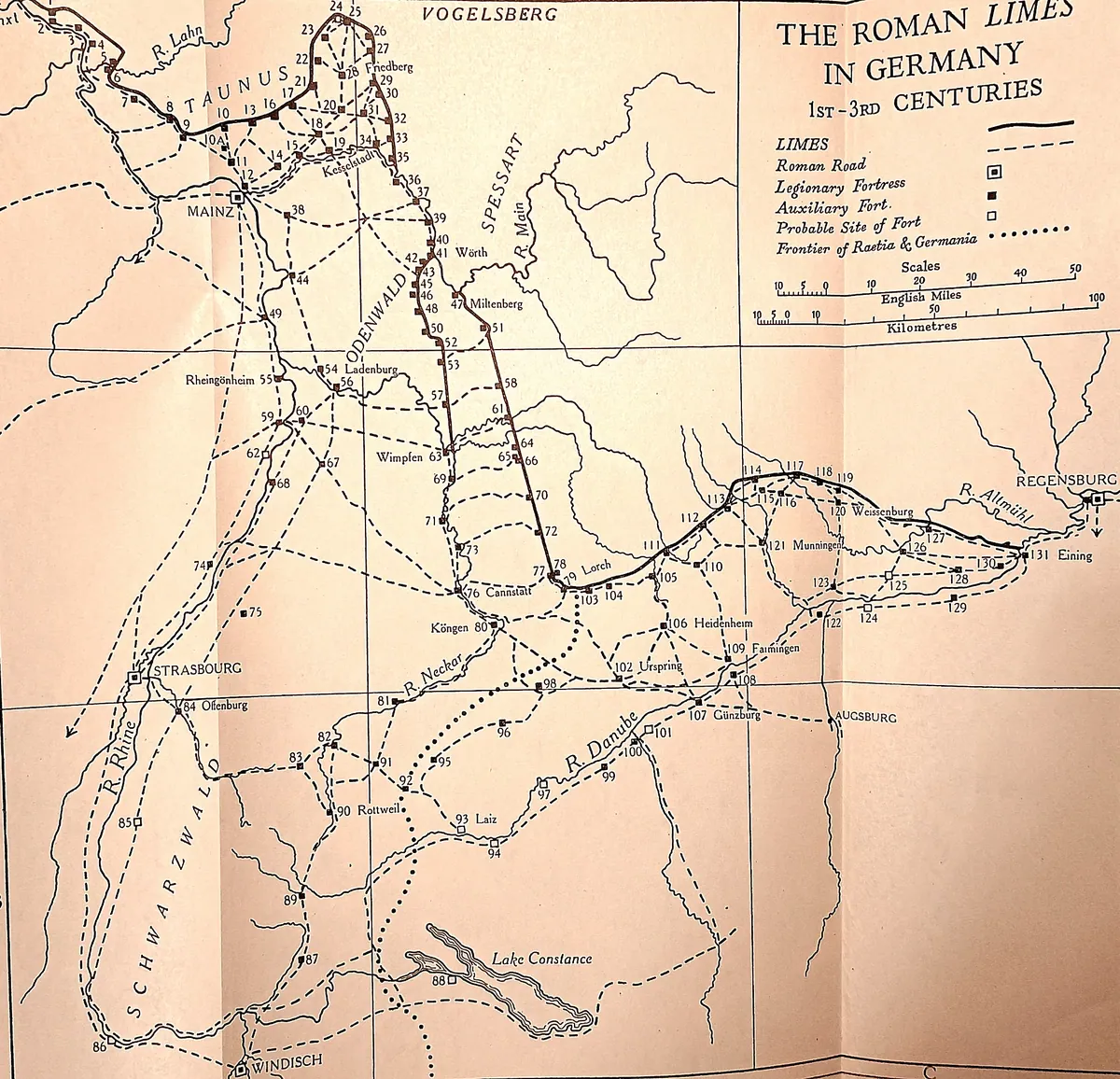 Click to enlarge
In the late Empire, the geography became layered. Frontier troops held forts, river crossings, and patrol districts under dukes. Field armies served emperors, courts, and regional commanders behind them. They were mobile in constitutional purpose, not perpetually marching: many acquired customary bases near capitals and strategic cities. The state had traded one line of large legions for depth—warning and resistance at the edge, stronger concentrations moving behind it.
A Republican obligation counted campaigns. An imperial enlistment consumed the main span of an adult life.
Polybius' sixteen infantry campaigns and ten cavalry campaigns were maximum civic obligations in normal conditions. The Second Punic War broke every normal rhythm: survivors remained under arms, disgraced legions were kept away from Italy, and emergency armies drew on youths, the poor, freed slaves, and allies. Later overseas wars produced the same pressure in slower form. By the first century B.C., generals recruited volunteers and recalled veterans for wars that did not fit an annual levy.
Augustus first fixed legionary service at sixteen years and then made twenty the standard, followed in some arrangements by five years in a veteran reserve under a separate standard. Praetorians served a shorter term, eventually sixteen years. Auxiliary service was commonly twenty-five years; sailors often served twenty-six. These were targets, not promises always honoured. At the mutinies of A.D. 14, Tacitus describes men complaining that old and injured soldiers remained after thirty or forty campaigns. A paper term mattered only if the treasury and emperor could discharge the man.5
Republican citizen-soldiers could be married; the problem was absence, not a general rule that every Roman under arms must be single. The marriage ban belonged to the standing imperial service. Under Augustus, soldiers on active duty could not contract a fully recognized Roman marriage. The government wanted men whose military obligation took precedence over a household and avoided legal claims created by families moving with units.
The law did not abolish family life. Soldiers formed long unions with women near the forts and had children. Their partners lived outside the formal barracks in the surrounding settlements. The state alternately ignored and repaired the legal consequences. An imperial letter of Hadrian issued in A.D. 119 allowed children of these unrecognized unions to claim inheritance from a soldier who died in service. Military diplomas gave auxiliary veterans citizenship and the right of legal marriage with a present or future wife.
The certificate made a legal transformation portable. The British Museum's diploma of A.D. 103 names Reburrus, a Spanish decurion in a Pannonian cavalry regiment, and records citizenship and marriage rights after service. It is evidence for one man and for an empire-wide administrative bargain.6
Herodian reports that Septimius Severus allowed soldiers to live with their wives after the civil wars that brought him power. This is often called the end of the marriage ban, around A.D. 197. The precise legal effect remains disputed: cohabitation, inheritance, and a marriage valid in every respect are not identical. The safe conclusion is that Severus openly strengthened soldiers' domestic and social position, while the families long visible around forts received greater recognition.
The soldier's income was never one clean wage. Cash pay sat beside food, clothing, deductions, booty, donatives, savings, pensions, land, and the chance of citizenship.
Roman tradition dated regular infantry pay to the long siege of Veii in the early fourth century B.C. By Polybius' day a legionary received two obols a day in his Greek reckoning, a centurion twice that, and a citizen cavalryman a drachma. The quaestor deducted fixed charges for grain, clothing, and replacement weapons from the Roman soldier's pay. “Paid” did not mean that the gross amount reached his purse.
Victorious war added booty and distributions. A commander could promise prizes, sell captives and plunder, or enrich a favoured unit. In the late Republic, veterans increasingly expected land or money on discharge. Because Senate and assemblies often delayed settlement, a soldier's economic future became bound to the general able to force a grant through. Loyalty to Marius, Sulla, Pompey, Caesar, Antony, or Octavian was not bought by salary alone; it grew from danger shared and rewards controlled.
| Period | Conventional gross legionary rate | What the figure leaves out |
|---|---|---|
| Polybius, c. 150 B.C. | 2 obols a day | A Greek conversion of Roman pay; food, clothing, and arms were deducted. Campaign length governed the yearly total. |
| Caesar / Augustus | about 225 denarii a year | Caesar doubled the older rate. Augustus fixed salary, term, and discharge reward; soldiers were paid in instalments with deductions. |
| Domitian | about 300 denarii a year | A one-third increase in A.D. 84; gifts, savings, deductions, and rank differentials still mattered. |
| Septimius Severus | roughly 400–450 denarii | Ancient sources attest a substantial rise, but the precise reconstructed rate is less secure than the fact of the increase. |
| Caracalla | perhaps about 600–675 denarii | Another large increase under heavy military spending; the conventional total depends on reconstructing fragmentary notices. |
| Third–fourth centuries | Not honestly comparable | Debasement, inflation, gold payments, rations, clothing, fodder, tax-in-kind, and donatives make a nominal denarius table misleading. |
These are conventional scholarly reconstructions of ordinary legionary gross pay, not surviving imperial pay slips. Auxiliary rates, cavalry costs, officers' multiples, regional prices, and deductions varied; ancient evidence does not support false precision.7
Augustus made the army a permanent charge on monarchy. He created the aerarium militare, the military treasury, in A.D. 6 and supported it through new taxes after making a large personal contribution. A legionary completing service could expect a substantial cash discharge grant, conventionally 3,000 denarii under Augustus, in place of the politically explosive seizure of Italian land. A financial institution now stood behind the emperor's promise.
Pay expressed hierarchy. Centurions earned multiples of an ordinary soldier's rate; the chief centurion could enter equestrian wealth. Praetorians enjoyed higher pay and larger discharge rewards. Cavalrymen and mounted units incurred horses and fodder. Auxiliary pay is harder to reconstruct than legionary pay and should not be reduced to one universal fraction.
Donatives remained dangerous. An emperor gave money on accession, anniversary, victory, or crisis; a rival offered more. In A.D. 193 the Praetorian Guard murdered Pertinax and accepted Didius Julianus after competing promises. Septimius Severus replaced them, raised military pay, and founded his dynasty on the Danubian armies that had carried him to Rome. What secured loyalty in one reign raised the price of loyalty in the next.
During the third century, a denarius ceased to measure what it had under Augustus. The annona militaris supplied food and fodder, and compensation mixed coin with kind. Diocletian joined assessment and supply in a more regular tax system. Constantine's stable gold solidus served high payments, but ordinary soldiers still depended on rations, clothing, requisitions, and gifts.
There was no uniform worn from the Samnite Wars to Adrianople. Roman equipment changed with metallurgy, enemies, supply, rank, and fashion; several armour types existed side by side.
Polybius gives the middle Republican heavy infantry a large curved shield, a Spanish-style sword, two heavy throwing spears, helmet, greave, and body defence. Wealthier men wore mail; others used a square breastplate. The triarii carried thrusting spears instead of pila. Velites carried a small round shield and light javelins. Archaeology complicates every neat illustration: equipment was repaired, inherited, purchased, issued, captured, and adapted.
The early imperial image—a rectangular shield, short sword, pilum, and segmented iron cuirass—is real but narrow. Mail remained widespread. Scale protected soldiers and horses. Helmets evolved through multiple regional forms. Soldiers could buy new or second-hand kit from armouries or craftsmen, while deductions and accounts linked equipment to their pay. Officers displayed status through finer materials and ornament; standard-bearers and musicians wore equipment suited to their duties.
By the third and fourth centuries the typical visual language changed. Oval and round shields became common; the long spatha replaced the gladius; thrusting spears and lighter throwing weapons gained prominence; mail and scale continued while segmented armour disappeared. This was not a simple descent from heavy armour to naked weakness. Late armies faced fast-moving frontier and civil wars, fielded more independent cavalry, and distributed equipment across many smaller units. Surviving art can stylize; surviving finds are local. The honest Roman soldier is a range, not a costume.8
Rome changed its army because war, frontiers, finance, and political danger changed. The clearest reforms settled pressures already visible.
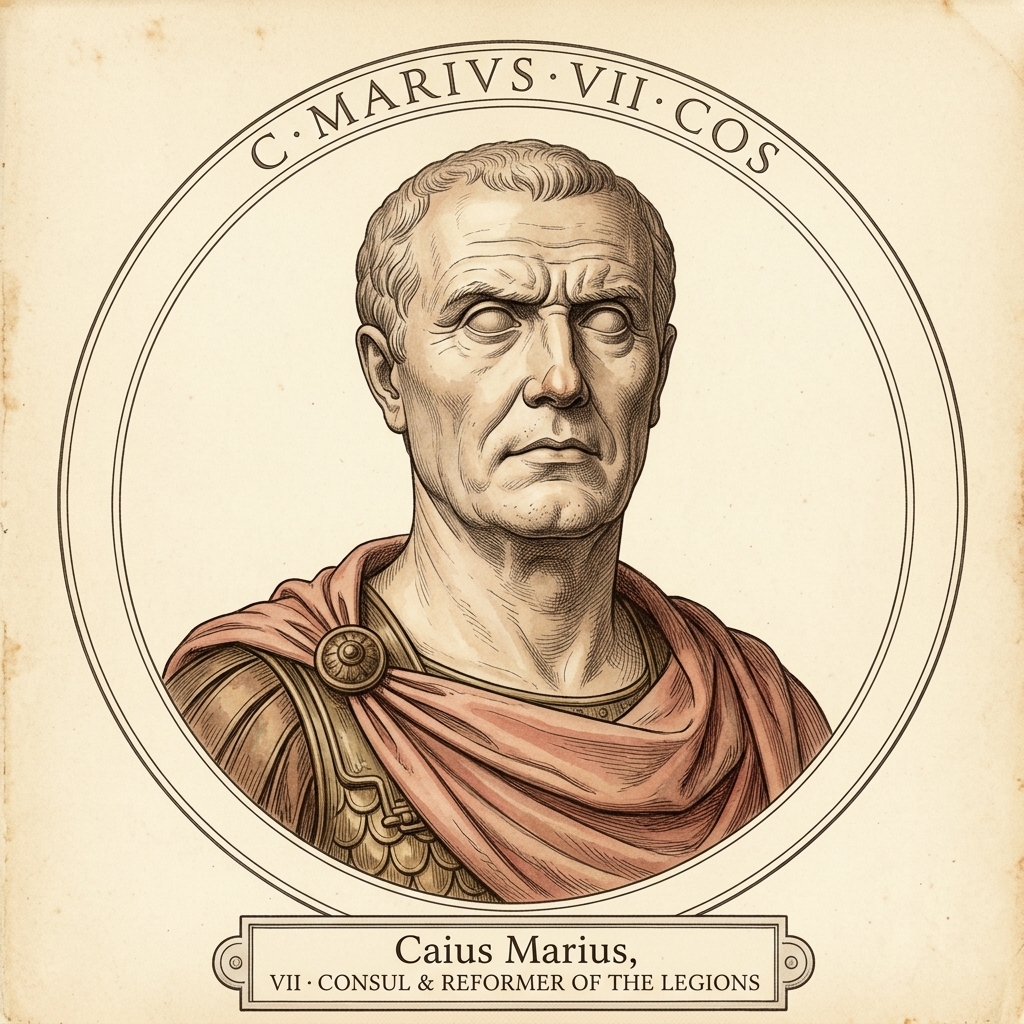
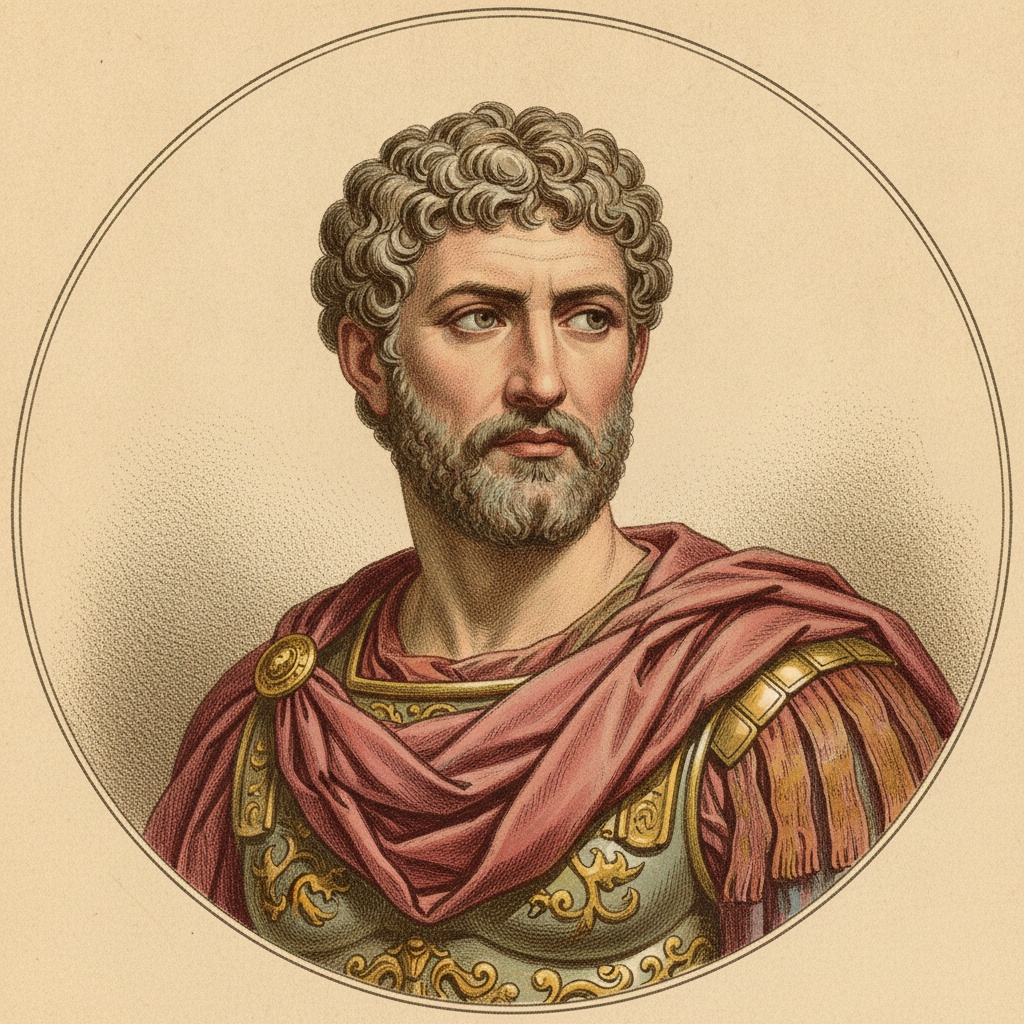
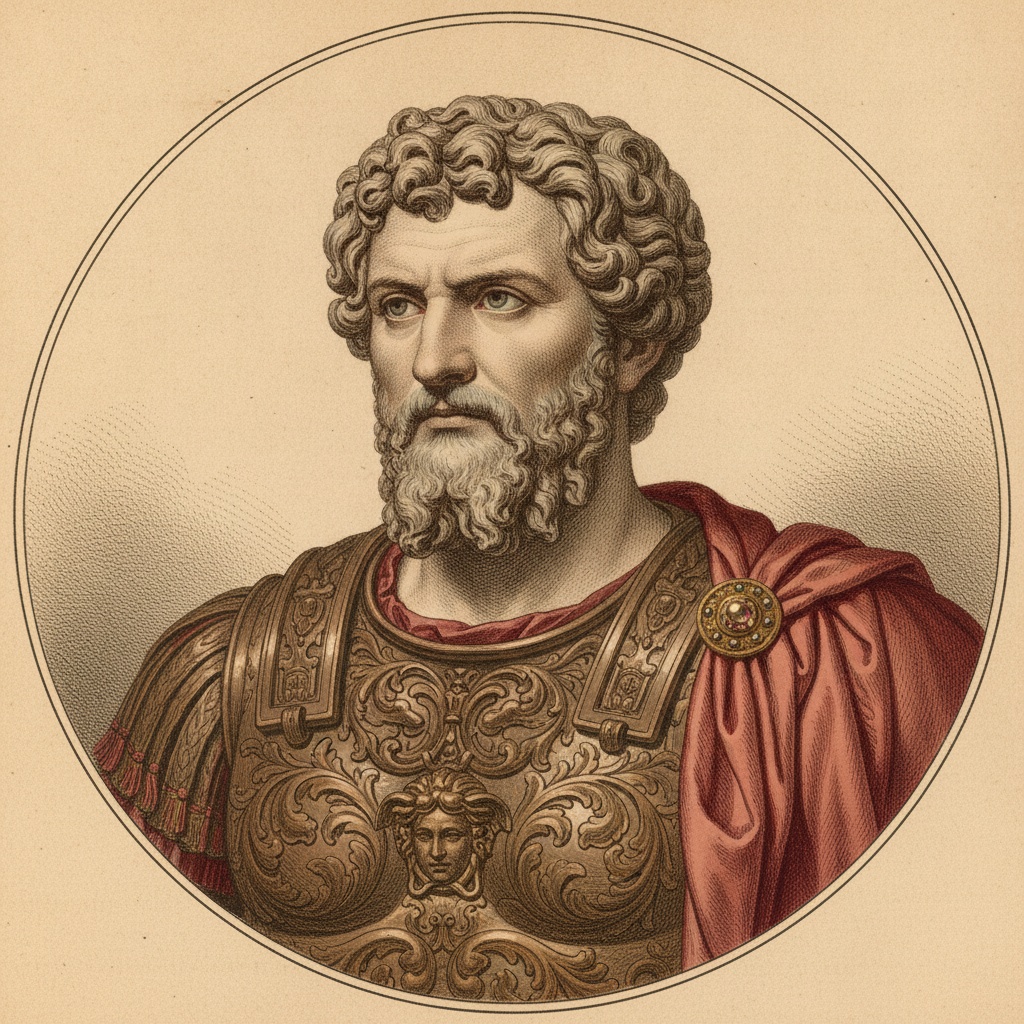
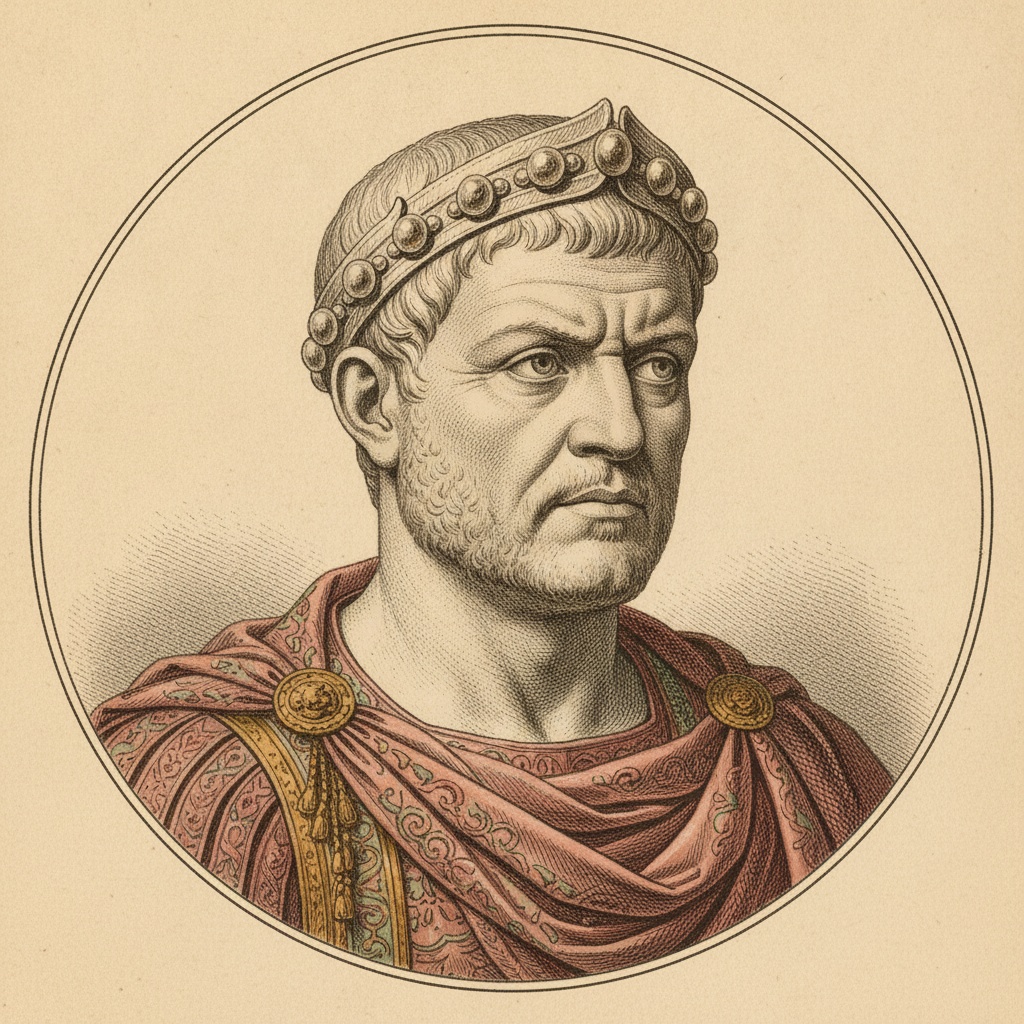
A property-based citizen levy fought near Italy under annually elected magistrates. The richest supplied cavalry and heavier equipment; Latin allies were already indispensable. Later Roman narratives impose too much order on this poorly documented age.
The manipular legion of Polybius combined velites, hastati, principes, and triarii. Four citizen legions and Italian allied wings formed the normal consular levy. Pay existed, but service was still counted in campaigns and equipment remained tied partly to property.
Overseas wars lengthened service; poor volunteers and recalled veterans filled armies; the cohort became the principal tactical body. Commanders secured booty and land for followers. The Social War made Italians citizens, and civil war made armies arbiters of politics.
Augustus reduced the civil-war masses to a permanent army of roughly thirty legions, auxiliaries of comparable scale, fleets, guards, and urban forces. Fixed terms, pay, frontier stations, and a military treasury placed the soldiers in a direct bargain with the emperor.
From Vespasian through the Antonines, the army's strength lay in permanent institutions: experienced centurions, named units, roads, forts, supply, provincial recruitment, and auxiliary citizenship. Hadrian emphasized readiness and controlled frontiers after Trajan's expansion.
Foreign invasion coincided with repeated civil war. Frontier legions proclaimed emperors and marched away; detachments stayed separated; plague and currency collapse strained recruitment and pay. Gallienus favoured experienced equestrian commanders over senatorial legates and developed mobile cavalry. Aurelian showed that this soldier-emperor system could also produce exceptional recovery.
The Tetrarchy placed emperors nearer several fronts, multiplied provinces and military commands, expanded recruitment, strengthened fortifications, and tied supply to a more systematic tax assessment. Military authority was increasingly separated from civil governorship. The army grew in numbers of units, but many new legions were smaller than the old establishments.
Constantine developed the mobile field armies and privileged palace troops, abolished the old Praetorian Guard after A.D. 312, and organized command through counts and masters of soldiers. Frontier troops remained essential. By the later fourth century, Roman, provincial, and foreign identities crossed inside the same army.
The third and later centuries brought civil war, lost provinces, unstable money, and recruitment coercion. They did not produce an army that simply forgot Roman discipline. Diocletian, Constantine, Julian, and Theodosius could still assemble formidable forces; officers of non-Roman birth could be highly effective Roman commanders. The western crisis came from repeated political and fiscal shocks as much as from a change of sword or surname.
The reforms also changed the path to power. In the Republic, a senator was expected to combine civil office and command. In the Principate, senatorial legates still governed armies, but emperors feared any governor who controlled too many. By the third century, professional soldiers and equestrian officers rose while senators lost operational command. The later Empire gained military specialization but separated the army's highest expertise from the old civic aristocracy.
That separation solved one problem and created another. A general could master war without belonging to the class that governed cities and wrote laws. A court could promote talent from Illyricum, Thrace, Gaul, or beyond the frontier. It could also depend on commanders whose armed followings determined emperors. Rome's last army was not less Roman because its soldiers came from more places. It was Roman in a different way: through oath, command, pay, law, and service rather than the census class of a farmer enrolled on the Capitol.9
The Republic armed citizens for wars. The Empire built a society around men who remained soldiers for most of their adult lives. In the end, Rome's army was no longer a mirror of the citizen body. It was the institution that decided who could still make the Roman state obey.
This chapter uses ancient texts, inscriptions and military diplomas, museum objects, and public-domain historians published before 1950. Early Republican organization is a reconstruction; ancient salary notices leave several imperial rates uncertain; and “Marius,” “Hadrian,” and “Diocletian” name long changes as well as individual decisions. No direct quotation appears in the chapter.