The Year in Common
How Rome kept its time and its company — the calendar Caesar fixed, the seven days when the house turned over, a burial club’s rule for a quiet dinner, the charioteer who won 1,462 races, what things cost, and the road a letter took.
The Year ItselfKalends, Nones, Ides, and the letters beside them
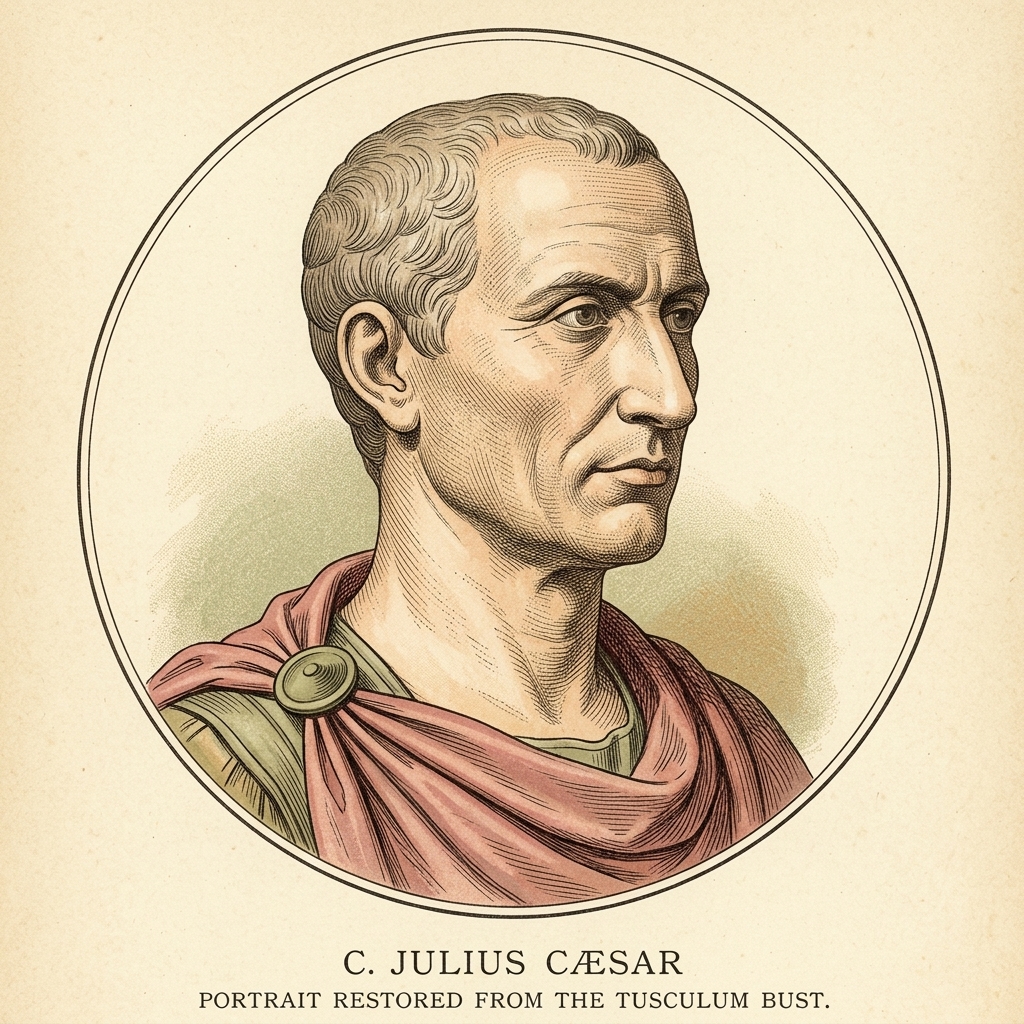
For most of the Republic the Roman year did not match the sun, and the men who could have corrected it had reasons not to. The civil year ran 355 days; an extra month was inserted when the college of pontiffs chose to insert it, and the pontiffs were politicians. A magistrate whose term one wanted lengthened got an intercalation; an enemy’s did not. By the time Caesar came to deal with it as pontifex maximus, the drift had reached the point where the farming festivals had left their seasons altogether.
Suetonius, writing a century and a half later from the imperial archives, blames the pontiffs by name for the confusion and then states the result in one sentence that anybody who has ever kept a harvest would feel:
To such a height had this abuse proceeded, that neither the festivals designed for the harvest fell in summer, nor those for the vintage in autumn. Suetonius, Julius 40 — trans. Alexander Thomson (public domain)
The remedy was arithmetic and one very long year. Caesar fixed the year at 365 days with a day added every fourth, and to drag the calendar back into register he inserted two months between November and December, so that the year of the reform ran to fifteen months. It is the only year in European history of which that can be said, and it is the reason the Julian year still underlies the one on the wall of this room.
What he did not change was the shape of the month, and the shape is worth a paragraph because it governs how a Roman spoke about time. Three days in each month were named: the Kalends, the first; the Nones, the fifth or seventh; the Ides, the thirteenth or fifteenth. Every other day was counted backwards from the next named day, inclusively, so that 17 December — the great day of this essay — is the sixteenth day before the Kalends of January. A Roman did not say “the twenty-third”; he said how far he still was from the next landmark. Time was measured in what was coming, not in what had passed.
Beside every day in the published calendar stood a letter, and the letters are the most revealing thing about the whole document. F (fastus) meant the courts could sit. C (comitialis) meant the assembly could meet and business could be done. N (nefastus) meant neither: the day belonged to the dead, to purification, or to the powers of the earth, and starting anything new on it was asking for trouble. NP marked the great festivals; EN marked the odd days that were forbidden in the morning and evening and open in the middle, between the killing of the victim and the laying of the entrails on the altar. The historian W. Warde Fowler, who spent a career on these letters, counted what they left:
The total number of days thus available for secular business, i.e. days marked F and C, was in the Julian calendar 239 out of 365. W. Warde Fowler, The Roman Festivals of the Period of the Republic (1899), ch. I
Two-thirds of the year for work and law; a third reserved, in one way or another, for something that was not work. And for a long time even that knowledge was private property. The rules were held by the pontiffs as part of the craft of governing, and the citizen who wanted to know whether he could sue on a given day had to ask a patrician. Fowler puts the end of that in a single clause — “Not till B.C. 304 was the calendar published, with its permissive and prohibitive regulations” — and the publication is the beginning of everything else in this essay. From that year the Roman year was a common possession. It was cut on stone and painted on plaster in market towns all over Italy; fragments survive from Antium and Praeneste and a dozen other places, the months in columns, the letters down the side, the festivals in larger characters. A man in a small town could stand in front of a wall and read what day it was in exactly the sense his consul meant.
One more rhythm ran under the months. Every eighth day — the ninth by Roman inclusive counting, hence nundinae — was market day, when the country came into town to sell and to hear what had been decided; the letters A to H run down the margin of the surviving calendars to mark the cycle. A Roman lived inside two grids at once: a nine-day commercial week that brought him among his neighbours, and a religious year that told him when the company would be large.
 Click to enlarge
The Days the House Turned OverOne day, then three, then seven
The festival began with a sacrifice at the temple of Saturn beside the Forum, and with an act of undressing. Senators and knights attended the rite in the toga, then took it off for the dinner that followed — the one public occasion at which the Roman governing class deliberately stopped looking like the Roman governing class. When the feast broke up the crowd went out shouting the two words that gave the whole thing its name.
Fowler, assembling the attested features of the day, gives the sequence plainly: the public sacrifice at the temple of Saturn by the Forum on 17 December, the public feast that followed it, and the cry with which the feasters broke up — Io Saturnalia. The senators and knights wore the toga for the sacrifice and laid it aside for the dinner.
How long it lasted was a question the Romans themselves could not agree on, and the disagreement is instructive: it shows a festival growing under public pressure while the authorities tried to hold the line. Macrobius, writing a dialogue set during the festival itself, lays out the whole quarrel. The oldest authorities knew one day, the sixteenth before the Kalends of January. Caesar’s two added December days shifted the reckoning and left the public celebrating on different dates. Augustus then legislated — not to make the holiday longer, but to tell the courts when they had to stop — and settled on three. The public simply went on past him, because the Sigillaria, the days of the little figures, had attached themselves to the end.
Sed Sigillariorum adiecta celebritas in septem dies discursum publicum et laetitiam religionis extendit.
But the added festivity of the Sigillaria stretched the running about of the whole town, and the gladness of the rite, over seven days.Macrobius, Saturnalia I.10.24 — Latin text from the Jan edition (1852); our rendering
Seven days, and their shape is well attested. The mornings began with an early bath and a sucking pig sacrificed at home; then calls on friends, games, and presents — wax candles, cerei, which Fowler connects with the returning sun after the solstice, and the sigillaria, little clay or paste images hawked all over Rome beforehand. Men wore the pilleus, the freedman’s felt cap, in the street. Gambling, illegal for most of the year, was licensed. Martial — whose Xenia and Apophoreta are two books of nothing but verse gift-labels, so he knew what everyone was sending everyone — wrote the definitive complaint about the economy of it:
The Saturnalia are quite at an end, and you have sent me, Galla, neither the little nor the lesser gifts, which you used to send. Martial, Epigrams V.84 — Bohn’s Classical Library prose version (1865)
What the festival is remembered for, though, is the reversal. For those days the household turned over: the slaves were served at table by the people who owned them. The earliest surviving reference is a fragment of the tragedian Accius, quoted by Macrobius, and it is worth reading because of what it takes for granted — that this was a custom imported from Greece and already old when a Roman poet of the second century B.C. described it.
Quisque suos, nostrique itidem: et mos traditus illinc
Each man his own; and ours do likewise — the custom came to us from there, that the servants should feast in the same place as their masters.Accius, quoted by Macrobius, Saturnalia I.7.37 — Latin from the Jan edition (1852); our rendering
Iste, ut cum dominis famuli epulentur ibidem.
It is easy to be cynical about this, and one of Macrobius’ own guests saves us the trouble. Evangelus, the boor of the dialogue, breaks in to say he can bear it no longer: his host has dressed up in religion the mere fact that slaves eat with their masters — as though the gods cared about slaves, or any sensible man tolerated so disgraceful a company at his table. The answer Macrobius puts in Praetextatus’ mouth is lifted almost word for word from Seneca:
Colant ergo te potius servi tui, mihi crede, quam timeant.
Let your slaves revere you, then, rather than fear you — believe me.Macrobius, Saturnalia I.11.12, after Seneca, Epistles 47 — Latin from the Jan edition (1852); our rendering
The reversal was not unique to December, and the other half of it is the detail that makes the practice intelligible. On the Kalends of March, at the old start of the year, the arrangement ran the other way: the matrons of the house served dinner to the slaves. Macrobius gives both customs in one sentence, with the reason for each — and the reasons are commercial and human rather than pious.
et servis coenas adponebant matronae, ut domini Saturnalibus: illae, ut principio anni ad promptum obsequium honore servos invitarent, hi, quia gratiam perfecti operis exolverent.
And the matrons set dinners before the slaves, as the masters did at the Saturnalia: the women, so that at the year’s beginning they might invite the slaves to willing service by the honour done them; the men, because they were discharging the thanks owed for work completed.Macrobius, Saturnalia I.12.7 — Latin from the Jan edition (1852); our rendering
A wage at the end of the year and an advance at the beginning, both paid in the only currency a slave could not be robbed of. That is not emancipation and this essay will not pretend it was: the institution was exactly as brutal on 18 December as on the 16th. But it was practised annually in every house in Italy, and it marked the language. The same speaker notes that the ancestors, wanting to strip the master of resentment and the slave of insult, called the one pater familias and the others familiares — members of the household.
The master’s side of the week has survived too, in the most engaging possible form. Pliny the Younger, describing his seaside villa at Laurentum, explains that in one garden room he can fancy himself a hundred miles from his own villa, and that he likes it best of all in December —
when, by the licence of that festive season, every other part of my house resounds with my servants’ mirth: thus I neither interrupt their amusement nor they my studies. Pliny the Younger, Letters II.17 — trans. William Melmoth, rev. Bosanquet (public domain)
Under the Republic the festivals had also been the days on which a Roman was legally permitted to spend money on dinner. Aulus Gellius preserves the scale from the sumptuary legislation of the second century B.C., and the numbers make the point better than any description of the mood:
the law of Fannius was passed, which allowed the expenditure of one hundred asses a day at the Roman and the plebeian games, at the Saturnalia, and on certain other days; of thirty asses on ten additional days each month; but on all other days of only ten. Aulus Gellius, Attic Nights II.24.3 — trans. J. C. Rolfe (Loeb Classical Library, 1927)
Ten asses on an ordinary day; a hundred at the Saturnalia. The Roman state did not merely permit the feast, it defined the year as a set of days on which a citizen was allowed to be ten times more generous than usual.
Saturn’s was the loudest festival but not the only one of its kind. On the Vestalia in June the millers and the bakers, whose trade Vesta protected, hung garlands on their mills and on the donkeys that turned them; the wall-paintings from the meat and fish market at Pompeii show it being done. August Mau, who excavated and described the town, noted what the custom amounted to: the much-belaboured asses were “once a year were thus admitted to a share in the festal celebrations of their masters”. A Roman holiday, at its best, was a day on which the things that worked for you stopped, were decorated, and were fed.
Banquet in Peace and Good CheerThe rules of a burial club, cut on a wall
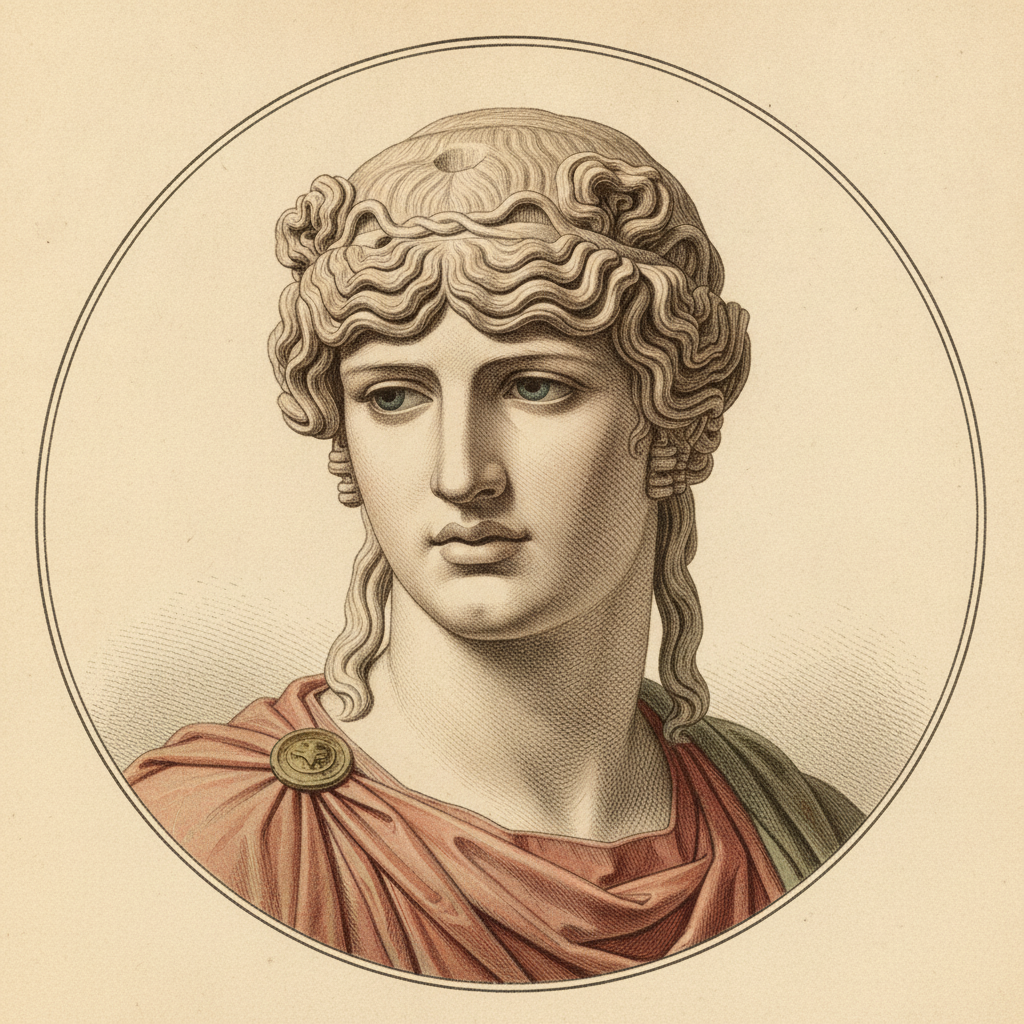
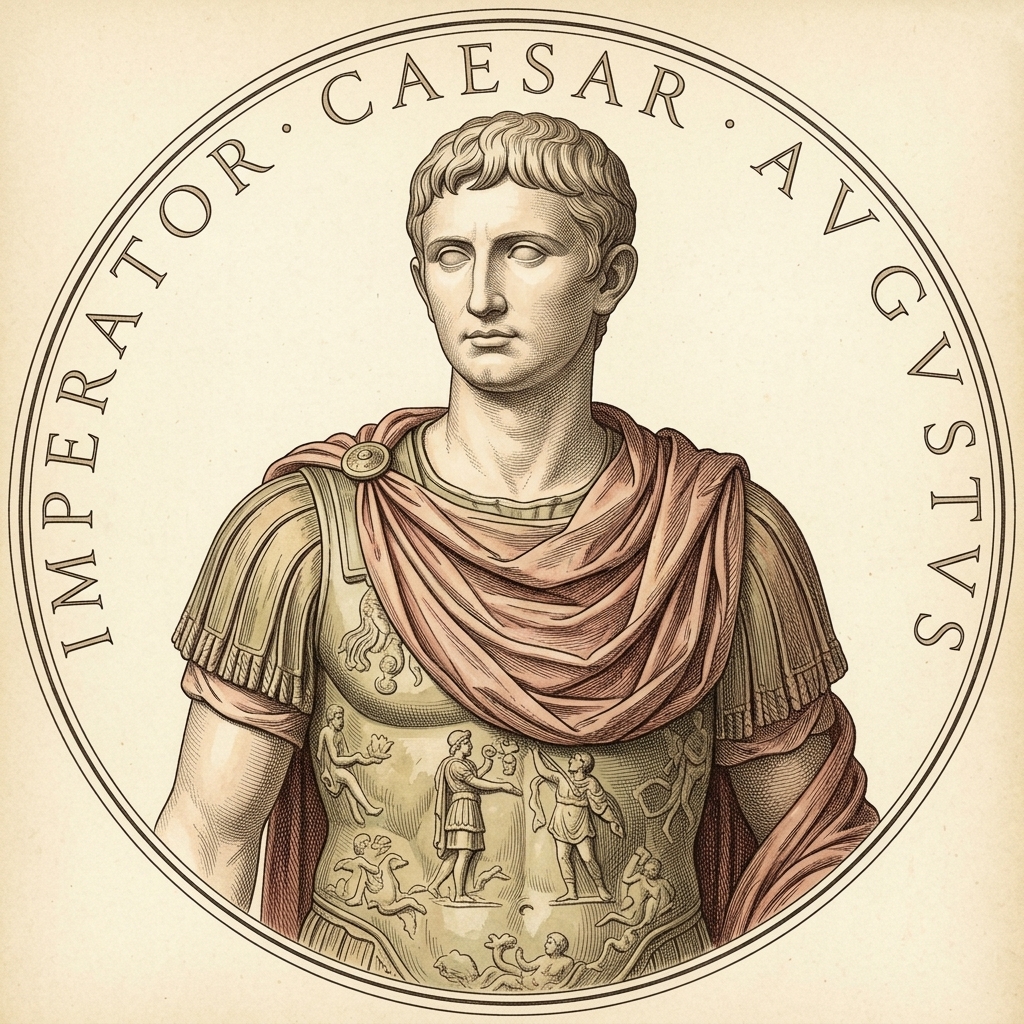
On 28 May A.D. 136, in the temple of Antinous at Lanuvium in the Alban hills, the patron of the town promised a society of ordinary men the interest on fifteen thousand sesterces — four hundred sesterces to be spent on the birthday of Diana in August and four hundred on the birthday of Antinous in November — and instructed that the society’s own rules be cut on the inner face of the temple porch. They were, and they survive. Of all the documents this site has quoted, none tells you more about how Romans actually lived with one another than this one, and it was written by nobody famous at all.
The first thing the stone does is quote its licence. Associations were restricted under the Empire, and the society sets the enabling decree of the Senate at the head of its charter like a trading permit in a shop window: those who wish to make monthly contributions for funerals may combine, but may not meet under the society’s name except once a month, to collect the money out of which the dead are buried. Everything else in the document — the dinners, the wine, the fines, the honours — is legally an accessory to burial.
Then it addresses the reader directly, in a sentence which is the most human thing on the stone:
Tu qui novos in hoc collegio intrare voles, prius legem perlege et sic intra, ne postmodum queraris aut heredi tuo controversiam relinquas.
You who mean to come into this society as a new member: read the rules through first, and enter on those terms, so that you do not complain afterwards, or leave your heir a lawsuit.Lex collegii cultorum Dianae et Antinoi, lines 17–19 — ILS 7212 = CIL XIV 2112, Lanuvium (Civita Lavinia), found 1816; Latin from Dessau, with OCR readings corrected (see the sources drawer); our rendering
The terms are exact, and they are the terms of people with very little money who have thought hard about it. Entry cost a hundred sesterces and an amphora of good wine; dues were five asses a month; fall six months behind and your claim lapsed, even if your will had provided for it. On a paid-up member’s death the chest paid out three hundred sesterces, fifty of them distributed at the pyre among those who came, and the procession went on foot. If he died more than twenty miles off and word reached them, three men were chosen to go and bury him, with twenty sesterces each for the road and a fourfold fine if their accounts proved dishonest; if word could not reach them, whoever buried him could claim the cost back on the oath of seven Roman citizens.
Two clauses show what the society was for. A slave was a member like anyone else; and if his master refused to hand over the body, the club held a funeral for an image of him instead — funus imaginarium, a burial with no one in the coffin, so that the rite was not owed and unperformed. And if a member became free, he owed the club an amphora of good wine. The clause is a small masterpiece of social engineering: a man’s best day was also the day he stood a round.
Dinners were six a year, on the birthdays of Diana and Antinous and of four members of the patron’s family. Four members served in rotation, by the order of the membership list, and the stone specifies exactly what they had to put on the table: an amphora of good wine each, a two-as loaf for every member on the roll, four sardines apiece, the place setting, and hot water with someone to serve it. A master of the dinner who failed to provide paid thirty sesterces into the chest and still had to take his turn later. The fines schedule for the dinners themselves is the part every reader remembers — four sesterces for moving from your place to another to cause a disturbance, twelve for abusing a fellow member or making an uproar, twenty for speaking insolently to the president over dinner — and the clause that explains all of them is this:
Item placuit, si quis quid queri aut referre volet, in conventu referat, ut quieti et hilares diebus sollemnibus epulemur.
Further agreed: that if anyone wishes to complain of anything, or to raise any business, he shall raise it at the business meeting — so that on the festival days we may dine quiet and cheerful.Lex collegii cultorum Dianae et Antinoi, col. II lines 23–24 — ILS 7212 = CIL XIV 2112, Lanuvium, A.D. 136; Latin from Dessau, with OCR readings corrected; our rendering
Ut quieti et hilares diebus sollemnibus epulemur. A rule of order invented by men who had learned, presumably the hard way, that the surest method of ruining a dinner is to bring the accounts to it. The whole charter is written in that key: an office honestly discharged earned a share and a half of everything thereafter, and the stone states the reason in five words — ut et reliqui recte faciendo idem sperent, so that the rest too, by doing right, may hope for the same. Recognition is being used deliberately as a currency, because the society had almost no other.
Societies of this kind existed by the thousand, formed around a trade, a temple, a neighbourhood or a barracks, their members freedmen, slaves, small craftsmen and labourers. They were not guilds in the medieval sense nor unions in the modern one: they set no wages, fixed no standards and bargained with nobody. What they supplied was company on named days and the certainty of a decent funeral — for a man without land or family in the town, the two things money could not otherwise buy.
They were also watched, and it would be dishonest to leave that out. When Pliny, governing Bithynia, proposed a fire brigade of a hundred and fifty men for Nicomedia after a serious fire, Trajan refused him, and the refusal is the clearest statement we have of what the government thought these associations really were:
But it is to be remembered that societies of this sort have greatly disturbed the peace of the province in general, and of those cities in particular. Whatever name we give them, and for whatever purposes they may be founded, they will not fail to form themselves into factious assemblies, however short their meetings may be. Trajan to Pliny, Letters X.34 — trans. William Melmoth, rev. Bosanquet (public domain)
Rome permitted the burial club and forbade the fire brigade, and the two decisions are the same decision. A body that met to bury its members was tolerable because its business was fixed and finite; a body that met to put out fires would have had a standing organisation, an alarm, and a reason to assemble at any hour. The Empire understood perfectly well what the collegia were: the only form in which people without power legally gathered. It licensed them at the one point where the state had nothing to lose and the member had everything to gain.
Four ColoursGaius Appuleius Diocles, and the arithmetic of a life in the Circus
Chariot racing at Rome was organised permanently and professionally into four companies known by their colours: Whites, Reds, Greens and Blues. A factio was a business. It owned the horses and stables, employed the trainers, grooms, harness-makers, veterinarians and doctors, contracted with the magistrate giving the games, and fielded one, two or three chariots to a race as the programme required. Every Roman supported a colour; so did every emperor, usually loudly; and the colours outlived Rome, crossing to Constantinople and hardening there into something closer to political parties. A charioteer was the one figure in Roman life who could be born a slave and die richer than a senator.
We know this because his stable-mates and his admirers put up a monument at Rome in A.D. 146 and had the whole of his record cut into it. Gaius Appuleius Diocles was a Lusitanian Spaniard, and had died at forty-two years, seven months and twenty-three days. He drove first for the Whites, won his first race for them under the consuls of A.D. 124, moved to the Greens in 128 and to the Reds in 131. The inscription then does what no ancient literary source ever does for an athlete: it counts everything.
| Twenty-four years of driving | Number |
|---|---|
| Starts | 4,257 |
| Victories | 1,462 |
| Of those, races won straight after the opening procession | 110 |
| Victories in single-entry races — the star events, biggest purses | 1,064 |
| Purses of 30,000 sesterces | 32 |
| Purses of 40,000 sesterces | 28 |
| Purses of 50,000 sesterces | 29 |
| Purses of 60,000 sesterces | 3 |
| Second places | 861 |
| Third places | 576 |
| Fourth place, prize-winning | 1 |
| Unplaced | 1,351 |
| Led from the start and held it | 815 |
| Came from behind to win | 67 |
| Won on the final dash | 502 |
| Horses he made hundred-race winners | 9 |
| Horses he made two-hundred-race winners | 1 |
| Total winnings | 35,863,120 sesterces |
Figures from CIL VI 10,048 (= Dessau, ILS 5,287), Rome, A.D. 146. About three fifths of the inscription is not tabulated here: it goes on, under the heading His Records, to name the drivers and horses whose marks he broke.
Read the losses first, because they are what make the figure believable: he failed to place in 1,351 of his 4,257 starts, very nearly one race in three. This is not a legend; it is an accountant’s document, and it was cut by people who expected readers to check it against other charioteers’ monuments — which, in the final section, it explicitly does. Then read the total. Augustus had set the property qualification for a Roman senator at four hundred thousand sesterces and later raised it to a million; Cassius Dio, recording the second figure, adds that afterwards nobody could be found who wanted the rank. Diocles won thirty-five times the census of a senator, driving horses, having begun as a boy in the white stable.
The stable-mates who paid for the stone are the detail to hold on to. They call him, in the last section, the outstanding charioteer of them all, the man who surpassed the drivers of every stable who had ever taken part in the games of the circus — and they are of his own trade, and several of them are Reds whose own names appear in the list of records he beat. This is a professional community commemorating its best man with statistics, in public, at its own expense. The Roman circus produced that and the four colours at the same time, and the two things are connected: where there are standing companies there are careers, and where there are careers there are men who compare them.
Nothing in Roman social history is more often quoted and less often read in context than Juvenal’s line about this world. His sentence opens by saying that now nobody buys the people’s votes any more, and that the public has long since put its cares down. Then it goes on:
the people that once bestowed commands, consulships, legions and all else, now meddles no more and longs eagerly for just two things—Bread and Games! Juvenal, Satires X.78–81 — trans. G. G. Ramsay (Loeb Classical Library, 1918)
The half-line is nearly always used to mean that the Roman people were a mob who wanted nothing but food and amusement. That is the opposite of what the sentence says. Juvenal’s subject is the loss of something: the people that once handed out imperium, the rods, the legions and everything else has been shut out of politics, and has turned to the only two goods still on offer. It is a complaint about a constitution, made by a satirist who could remember what the assembly had been for. Read that way it belongs beside the Lanuvium charter rather than against it. When the vote went, the associations, the colours and the club dinner were what people had left to belong to — and they took them seriously in proportion.
The government understood this perfectly. Fronto, tutor to Marcus Aurelius, wrote that it was the height of political wisdom for an emperor not to neglect even the performers of the stage, the circus and the arena, because the Roman people are held fast by two things above all, the corn supply and the shows; neglect of serious business does more harm, he adds, but neglect of amusements causes more unpopularity. The remark is cynical and it is also an admission: the shows were the one institution that kept the whole population of the city in one place, on the same day, in a good temper.
What Things CostA bakery wall at Pompeii, and an edict posted across the Empire
Two price lists survive from the Roman world in a form that can be read straight off. One is a day’s accounts, scratched on the plaster of a bakery in the first region at Pompeii by a man who needed to remember what he had paid. The other is the longest surviving Roman inscription, cut on stone in Greek and Latin and set up in town after town, fixing what everything in the Empire might lawfully be sold for.
The bakery wall first. It is unremarkable and that is the point: this is the household arithmetic of a working shop, in asses, before A.D. 79.
| Item | Asses |
|---|---|
| Oil, a pound | 4 |
| Straw | 5 |
| Hay | 16 |
| A day’s wages | 5 |
| Bran | 6 |
| One wreath for the neck | 3 |
| Oil | 6 |
Read by August Mau and translated by F. W. Kelsey, Pompeii: Its Life and Art (1899): “Oil, a pound, 4 asses; straw, 5 asses; hay, 16 asses; a day’s wages, 5 asses; bran, 6 asses; one wreath for the neck, 3 asses; oil, 6 asses.” The value of the as varied; Mau reckoned it at about three cents in the money of 1899.
A day’s labour and a pound of oil are within an as of each other. And in the middle of the list, between the bran and the second lot of oil, is a garland to wear round the neck at dinner, for three asses — rather more than half a day’s wages. Mau found the same trade painted in the market building: the gardener bringing roses to town on a goat, the dealer behind a marble table hung with garlands, a customer asking the price and a workman holding up two fingers. Flowers for the evening were a standing item in a Pompeian budget, bought from a shop, by people who worked with their hands.
The second list is a different kind of document altogether. In A.D. 301 Diocletian published an edict fixing maximum prices throughout the Empire, on pain of death. It was a response to prices that had been rising for three generations, and the cause of the rise was the coinage: successive emperors had met their costs by putting less and less silver into the denarius, and the market had priced the metal rather than the portrait. The edict does not admit this. It blames profiteers, threatens a capital penalty, and states that the regulation has been made not for single towns or provinces but for the whole world. It failed, and Lactantius — a hostile Christian witness, and the only one who describes the result — says it produced bloodshed and empty shops, and was eventually allowed to lapse. What it left behind is a catalogue of everything a Roman could buy, priced.
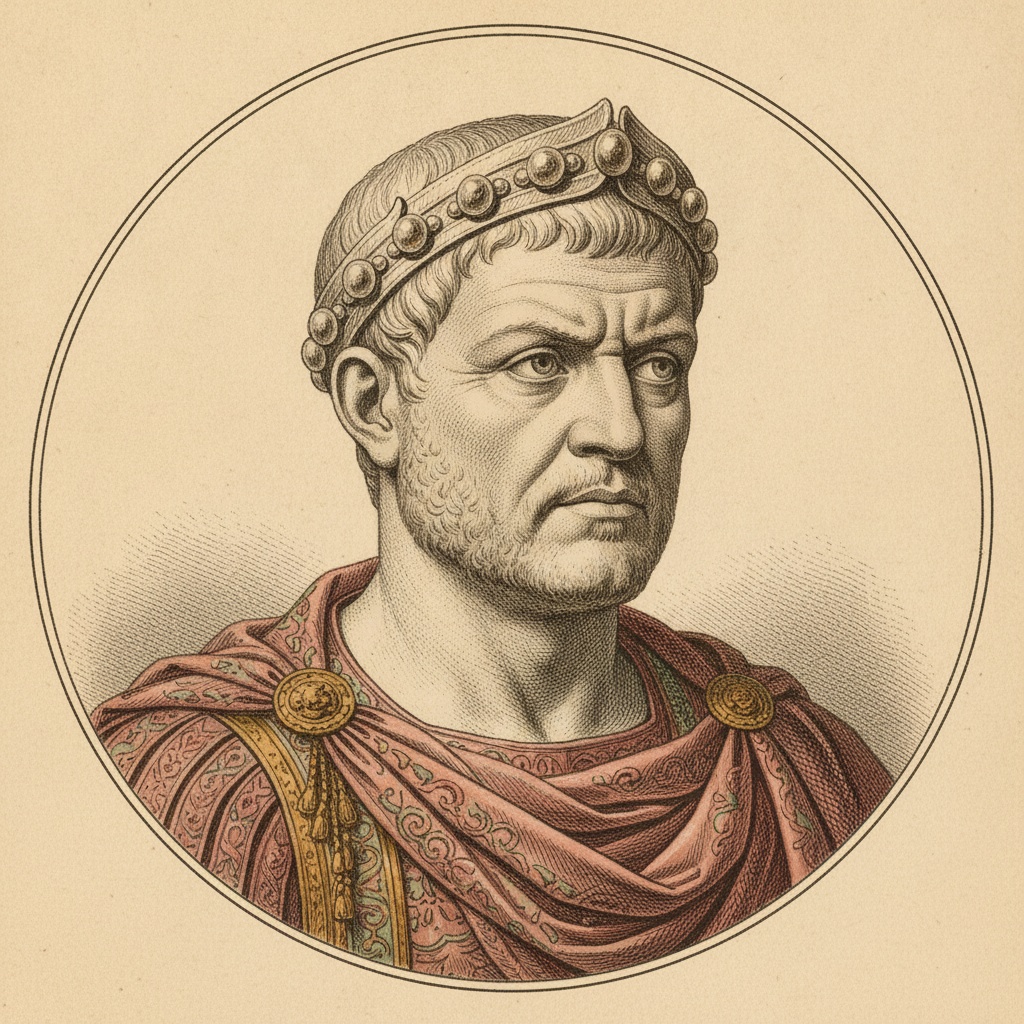
| Goods | Measure | Denarii |
|---|---|---|
| Wheat | 1 army modius | 100 |
| Barley | 1 army modius | 60 |
| Rice, cleaned | 1 army modius | 200 |
| Ordinary wine | 1 Italian sextarius | 8 |
| Falernian | 1 Italian sextarius | 30 |
| Beer, Gallic or Pannonian | 1 Italian sextarius | 4 |
| Honey, best | 1 Italian sextarius | 40 |
| Pork | 1 Italian pound | 12 |
| Beef | 1 Italian pound | 8 |
| Ham, Menapic or Cerritane, best | 1 Italian pound | 20 |
| Sea fish, rough-scaled | 1 Italian pound | 24 |
| Salt fish | 1 Italian pound | 6 |
| Oysters | 100 | 100 |
| Fattened pheasant | each | 250 |
| Chickens | a brace | 60 |
| Dormice | 10 | 40 |
| White silk | 1 pound | 12,000 |
| Raw silk, dyed purple | 1 pound | 150,000 |
| Trade | Rate | Denarii |
|---|---|---|
| Shepherd, with keep | daily | 20 |
| Farm labourer, with keep | daily | 25 |
| Muleteer or camel driver, with keep | daily | 25 |
| Sewer cleaner, full day, with keep | daily | 25 |
| Carpenter, with keep | daily | 50 |
| Baker, with keep | daily | 50 |
| Shipwright, seagoing ship, with keep | daily | 60 |
| Wall painter, with keep | daily | 75 |
| Picture painter, with keep | daily | 150 |
| Barber | per man | 2 |
| Veterinary, bleeding and cleaning the head | per animal | 20 |
| Scribe, best hand | 100 lines | 25 |
| Notary, petition or legal document | 100 lines | 10 |
| Elementary teacher | per boy, monthly | 50 |
| Teacher of arithmetic | per boy, monthly | 75 |
| Teacher of shorthand | per boy, monthly | 75 |
| Teacher of architecture | per boy, monthly | 100 |
| Teacher of Greek or Latin letters, and of geometry | per pupil, monthly | 200 |
| Teacher of rhetoric | per pupil, monthly | 250 |
| Advocate, for filing a complaint | per case | 250 |
| Advocate, for pleading | per case | 1,000 |
| Shoes, patrician | pair | 150 |
| Shoes, senatorial | pair | 100 |
| Shoes, equestrian | pair | 70 |
| Soldiers’ boots, without hobnails | pair | 100 |
| Fare for a passenger | per mile | 2 |
| Freight, a 1,200-pound wagon load | per mile | 20 |
Both Edict tables follow the schedule of Edictum Diocletiani de pretiis rerum venalium (A.D. 301) as set out in Lewis and Reinhold, Roman Civilization II §129, which prints selections from the surviving stones. Rows whose figures are damaged in the copy used here have been left out rather than guessed; the omissions are listed in the sources drawer.
Two things in the second table are worth stopping on. The first is that the schedule prices a wall painter at seventy-five denarii a day and a painter of pictures at a hundred and fifty. The Roman state, fixing maximum wages for an empire in crisis, took the trouble to distinguish between a man who paints a wall and a man who paints a scene, and valued the second at exactly twice the first.
The second is the tariff for teachers, which is the most socially revealing list of numbers to survive from antiquity. A boy’s first master, who taught him his letters, was capped at fifty denarii a month per boy — two days of a carpenter’s wage. His arithmetic master and his shorthand master were worth half as much again. The grammaticus, who took him through Greek and Latin literature, and the teacher of geometry were worth four times the first master; the teacher of rhetoric, five. And an advocate’s fee for a single plea in court was a thousand — twenty months of that first master’s work on one boy. The whole Roman educational ladder is priced in that column, and it slopes steeply upward towards the man who can stand up and speak.
These are ceilings and not market prices, they belong to one bad year, and the denarius of 301 is not the coin Diocles was paid in. But the relative values are the state’s own considered estimate of what its people were worth to each other, and they are consistent with everything else in this essay. A day’s food, a garland, a barber, a letter written out fair by a scribe, a month of a boy’s schooling: these are the recurring expenses of a society that spent its money on being in company.
The Distance Between FriendsWhat they wrote on, who carried it, and how often
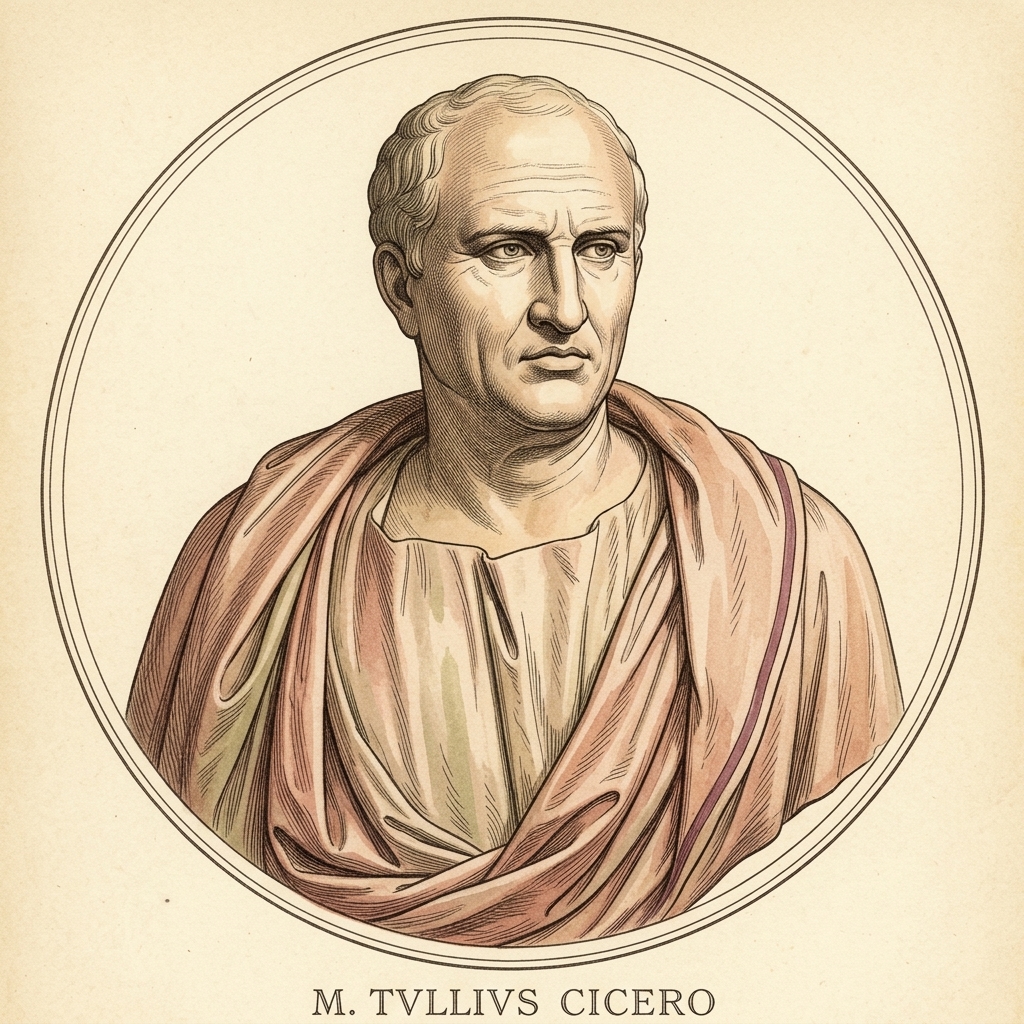
Everything in this essay so far depended on being in the same place. What follows is the Roman answer to not being. The material came from Egypt: the papyrus reed, split and laid and pressed into sheets. Pliny the Elder, who had the Roman habit of wanting to know how a thing was actually made, describes the process in the thirteenth book of his Natural History, and his account is still the only ancient one we have.
All these various kinds of paper are made upon a table, moistened with Nile water; a liquid which, when in a muddy state, has the peculiar qualities of glue. Pliny the Elder, Natural History XIII.23 — trans. Bostock & Riley (1855)
The plant was split with a needle into leaves as broad as could be got. They were laid lengthwise on the wet table, the ragged ends cut off, and a second layer laid across them — the same way, in fact, that hurdles are made, as Pliny puts it. Then they were pressed, dried in the sun, and pasted together, the best sheets first and the poorer ones after. “There are never more than twenty of these sheets to a roll.”
The grades had names, and the names are a small comic history of flattery. The best sheet, from the centre of the plant, was anciently hieratica, reserved for the sacred books; under the Empire it was renamed Augusta and the second quality Liviana after the emperor’s wife, which pushed hieratica down to third place. Below them came amphitheatrica; then the grade made by the workshop of Fannius at Rome, who bought in amphitheatrica, worked it over and sold it under his own name at a premium; then the Saitic, from cuttings; the Teniotic, from the outer layers, sold by weight rather than quality; and last emporetica, shop-paper, too coarse to write on and used for wrapping. The best was thirteen fingers wide, emporetica six. Paper was graded, branded, improved and marketed like any other commodity.
For everyday use there was something cheaper: a pair of wooden leaves hollowed and filled with blackened wax, written on with a pointed stilus and smoothed flat with its flat end for the next message. Notes, accounts, school exercises, first drafts and short letters went on wax. Papyrus was for the fair copy and the thing you meant to keep.
Then it had to travel, and here the Roman world has a gap that is easy to miss. Augustus built a state courier service, the cursus publicus, with posting stations and remounts along the trunk roads — and it carried government business only. There was no public post for private letters, ever. What there was instead was a network of tabellarii, messengers, mostly slaves, belonging to the great households and above all to the tax-farming companies, whose provincial correspondence never stopped. Fowler makes the point that matters:
it is interesting incidentally to notice that these, who are constantly mentioned in Cicero’s letters, also acted as letter-carriers for private persons to whom their employers were known. W. Warde Fowler, Social Life at Rome in the Age of Cicero (1909), ch. III
Which means that a Roman’s ability to write to his friends depended on whom he knew. There was no service to buy. There were men going your way, and you had to hear of them in time. This is the fact behind the oldest surviving letter in the whole Ciceronian correspondence, written in 68 B.C. to Titus Pomponius Atticus, who had been living in Athens and Epirus and had evidently complained that Cicero did not write:
As to the frequency of my letters you have no ground for your complaint. The fact is our good sister Pomponia never informed me of there being a courier ready to take a letter. Cicero, ad Atticum I.5 — trans. E. S. Shuckburgh (public domain)
How often did he write? Often enough that the collection is the largest body of private correspondence to survive from the ancient world: more than nine hundred letters in all. Fowler, who built a whole book out of them, was blunt about what they are worth — in them, he wrote, “we have the richest treasure-house of social life that has survived from any period of classical antiquity.” The first volume of Shuckburgh’s edition contains 186 letters covering the sixteen years from 68 to 52 B.C.; of those, ninety-three — exactly half — are to Atticus. Atticus was not a politician, held no office and wanted none. He was the friend, and he got half the mail.
The letters themselves record the conditions they were written under. In September 54 B.C. Cicero was writing to his brother Quintus, who was on campaign in Gaul with Caesar:
Just as I was folding up this epistle letter-carriers arrived from you and Cæsar (20th September) after a journey of twenty days. Cicero, ad Quintum fratrem III.1 — trans. E. S. Shuckburgh (public domain)
Twenty days from Gaul. And because the carriers going the other way were delayed, that same letter stayed open on his desk for days while he added to it whenever something occurred to him — he says so himself, apologising for its shapelessness. Part of it he dictated to his secretary Tiro over dinner, while Quintus’ son, there because his mother was dining out, read his father’s letter at the table. The host dictating, the secretary writing, the nephew reading the post from the front between courses: it is as good a picture of Roman domestic life as anything in Latin.
Letters were also insecure, and Cicero was careful about it in a way that reads entirely modern:
into a letter like this, which I send you in an ordinary way, I usually put nothing that, if it fell into certain hands, might be a source of annoyance. Cicero, ad Quintum fratrem III.1 — trans. E. S. Shuckburgh (public domain)
He then names the three men he was saving the confidential material for. Anything that mattered went by a bearer you trusted, and everything else went in a form you would not mind a stranger reading — a distinction made necessary by the fact that the postman was somebody else’s slave.
The delays could be far worse than twenty days. Cicero’s son Marcus, sent to study at Athens, wrote home to Tiro:
I had been anxiously expecting letter-carriers day after day, when at last they arrived forty-six days after they left you. M. Cicero the younger, ad Familiares XVI.21 — as given by W. Warde Fowler, Social Life at Rome in the Age of Cicero (1909), after Shuckburgh
Six and a half weeks each way, and a son who had let his letters lapse and was glad to be forgiven for it. It is worth remembering when reading any Roman letter that the writer usually did not know where the recipient was, whether the last letter had arrived, or when the next reply could reach him.
None of this was the preserve of the educated rich. On a wall at Pompeii somebody scratched a greeting, and it survives because the town did:
Hirtia Psacas C. Hostilio Conopi coniugi suo manuductori et clementi monitori et Diodot[a]e sorori et Fortunato fratri et Celeri suis salutem semper ubique plurimam, et Primigeniae suae salutem
Hirtia Psacas at all times and in all places sends heartiest greeting to Gaius Hostilius Conops, her husband and guide and gentle adviser, and to her sister Diodota, her brother Fortunatus and her Celer; and she sends a greeting to her Primigenia, too.Wall inscription, Pompeii — Latin and rendering from August Mau, Pompeii: Its Life and Art, trans. F. W. Kelsey (1899)
Both names are Greek: Psacas means a dewdrop and Conops a gnat. Two people of servile origin, one of them missing the other, using the full epistolary formula — greeting, husband, sister, brother, and then, in a second thought after the formula had closed, one more name. Nobody was meant to read it but the wall.
To Be Carried Out WellThree hundred sesterces, or the whole Roman people
Every institution in this essay ends at the same place. The club existed to bury its members; the calendar reserved days for the dead; the festivals of March and December were bracketed by the Parentalia, when families ate at the graves of their own. A Roman funeral was not a private disposal. It was a procession through the streets, in daylight, with an audience.
Polybius, a Greek hostage who spent seventeen years watching the Roman aristocracy from inside one of its houses, wrote the classic description, and he wrote it inside a discussion of why Rome produced men willing to die for it. The body was carried to the Rostra in the Forum and propped upright where the crowd could see it; a son or a kinsman climbed the platform and spoke about what the dead man had done. Afterwards the family placed his likeness — a wax mask, modelled with what Polybius calls extraordinary fidelity of shape and colour — in the most conspicuous place in the house, in a little wooden shrine. And then:
And when any illustrious member of the family dies, they carry these masks to the funeral, putting them on men whom they thought as like the originals as possible in height and other personal peculiarities. Polybius, Histories VI.53 — trans. E. S. Shuckburgh (public domain)
Hired men wearing the faces of the dead man’s ancestors, dressed for the office each had held — purple-striped toga for a consul or praetor, whole purple for a censor, gold embroidery for a man who had triumphed — riding in chariots behind the rods and axes of their offices, and taking ivory chairs at the Rostra in order of rank. The speaker praised the man in the coffin, then turned and praised each seated ancestor in turn, beginning with the oldest. Polybius, not easily impressed by Romans, could not keep the admiration out of it:
For can we conceive any one to be unmoved at the sight of all the likenesses collected together of the men who have earned glory, all as it were living and breathing? Polybius, Histories VI.53 — trans. E. S. Shuckburgh (public domain)
Two centuries later the same ceremony was performed at its largest possible scale. Augustus died at Nola on 19 August A.D. 14, thirty-five days short of seventy-six. Because of the season the body travelled by night, carried in relays by the magistrates of the municipal towns and colonies and lying by day in the basilica or chief temple of whatever town it had reached; at Bovillae the knights of Rome took it up and brought it into the city. Then the procession formed, and Cassius Dio describes what walked in it.
There was a couch made of ivory and gold and adorned with coverings of purple and gold. In it his body was hidden, in a coffin down below; but a wax image of him in triumphal garb was visible. Cassius Dio, Roman History LVI.34 — trans. E. Cary (Loeb Classical Library; public domain)
Three images of Augustus went through the streets: the wax one on the couch, a second of gold carried out from the Senate house, and a third riding on a triumphal chariot. Behind them came the masks Polybius had described — the images of his ancestors and of his dead relatives, with one deliberate exception. Julius Caesar’s mask was left out, because he had been made a god and gods do not walk in funerals. After the family came the great Romans of the past, beginning with Romulus, and among them an image of Pompey, Augustus’ old enemy’s old enemy, carried by the state he had fought. And behind all of them walked the nations he had acquired, each one represented by a figure made to show some local characteristic.
The whole Roman past and the whole Roman present, in one street, on one afternoon, in front of a man’s coffin. Drusus spoke from one platform and Tiberius from the other. Then the couch went out through the triumphal gate to the Campus Martius, and Dio finishes the scene:
When the body had been placed on the pyre in the Campus Martius, all the priests marched round it first; and then the knights, not only those belonging to the equestrian order but the others as well, and the infantry from the garrison ran round it; and they cast upon it all the triumphal decorations that any of them had ever received from him for any deed of valour. Next the centurions took torches, conformably to a decree of the senate, and lighted the pyre from beneath. So it was consumed, and an eagle released from it flew aloft, appearing to bear his spirit to heaven. Cassius Dio, Roman History LVI.42 — trans. E. Cary (Loeb Classical Library; public domain)
The eagle was released on purpose, by somebody, at the right moment. So, evidently, was the witness. Suetonius reports the next stage of the process without comment:
A man of pretorian rank affirmed upon oath, that he saw his spirit ascend from the funeral pile to heaven. Suetonius, Augustus 100 — trans. Alexander Thomson (public domain)
Dio gives us the man’s name and the price. He was Numerius Atticus, a senator and ex-praetor, and Livia paid him a million sesterces — the census of a senator — for swearing that he had seen Augustus going up, after the manner of the story told about Proculus and Romulus. The deification of an emperor was a legal act of the Senate supported by a purchased affidavit, and two of the three sources we have for it say so plainly. The Romans were not naive about their own ceremonies. They were serious about them, which is a different thing.
Then Livia stayed on the spot for five days with the leading knights, gathered the bones, and put them in the Mausoleum between the Flaminian Way and the Tiber. Mourning was worn by the men for a few days and by the women, by decree, for a year.
Set that beside the other funeral in this essay. At Lanuvium a paid-up member got three hundred sesterces, fifty of them handed out at the pyre to the people who turned up, and a procession that went on foot. If he died more than twenty miles away, three men were chosen to make the journey and see it done. If his master would not give up his body, they buried an image of him rather than let the day pass unmarked. Between that and the eagle over the Campus Martius there is an immense difference of scale and no difference at all of instinct. In both cases the point is that the dead man is carried out in company, that somebody speaks, that an image stands in for what cannot be shown, and that the community which buries him is thereby reminded what it is.
Why the Roman Year MatteredA published grid, a small society, and an honest caveat
Three Verdicts
1. The published calendar is the first Roman public utility, and everything social in this essay is downstream of it. Before 304 B.C. the rules about which days were open for law and assembly were priestly property, and a citizen who wanted to act had to ask a patrician when he was allowed to. After publication, and decisively after Caesar fixed the year to the sun in 45 B.C., every town in Italy could cut the same grid on a wall and read the same answer. A festival that everyone keeps on the same day, a market that meets every ninth, a club whose six dinners fall on fixed birthdays, a letter dated in a system the recipient shares — none of these works without a calendar that is common property. Rome’s sociability rests on an administrative act.
2. The characteristic Roman social institution is the small society, not the great spectacle. The Colosseum is the building everyone knows; the charter from Lanuvium is the document that shows how Romans actually lived together, and it was written by men who paid five asses a month. It fixes dues a labourer could meet, six dinners a year, a fine for spoiling one, a guaranteed burial, a share and a half for an honest president, and a rule that business is not discussed at table. The Saturnalia reversal belongs to the same family: a licensed, temporary, theatrical equality that altered nobody’s legal condition and was nevertheless performed every December in every house in Italy, with a matching custom every March that ran the other way. Neither the club nor the festival was charity from above. Both were arrangements people made with each other, and the state’s role — as Trajan’s refusal of the Nicomedian fire brigade shows — was to permit the narrowest version it could.
3. This evidence is systematically pleasant, and the reason is that pleasant things get written down. Almost everything quoted here was produced by someone with the means to cut a stone, buy papyrus, or keep a secretary: a town patron endowing a club, a stable commemorating its champion, a senator describing his villa, an emperor’s funeral recorded by another senator. The Pompeian graffiti are the partial exception and they are the warmest material in the essay — which should make us suspicious of how representative they are, since they survive only because one town was buried in a single afternoon. Nothing in this piece describes the people who paid dues they could not afford, or who were not in a club at all, and the same society that guaranteed a slave member a funeral also allowed his owner to refuse the body. The argument of this essay is that Romans were unusually good at organising company. It is not that Roman life was kind.
Sources & method
Corpus. Every quotation on this page was located with grep in sources/roman-year/raw/, read in context, copied verbatim, and verified with tools/check_quotes.py. Public-domain texts used: Suetonius (Thomson), Polybius (Shuckburgh), Cicero’s Letters vol. I (Shuckburgh), Cassius Dio (Cary, Loeb, via LacusCurtius), Aulus Gellius (Rolfe, Loeb 1927, via LacusCurtius), Pliny the Younger (Melmoth/Bosanquet), Pliny the Elder (Bostock & Riley 1855), Martial (Bohn 1865), Juvenal (Ramsay, Loeb 1918), Macrobius’ Saturnalia in Latin (Jan’s edition of 1852, via LacusCurtius; all renderings of Macrobius and of Accius on this page are our own), August Mau’s Pompeii (trans. Kelsey 1899), and W. Warde Fowler’s Roman Festivals (1899) and Social Life at Rome in the Age of Cicero (1909).
The two stones. The Latin of ILS 7212 (= CIL XIV 2112, the charter of the society of Diana and Antinous at Lanuvium, 28 May A.D. 136, found in 1816) is taken from Dessau’s Inscriptiones Latinae Selectae II.2. The available scan of Dessau is uncorrected OCR in which his editorial brackets and footnote digits are mixed into the Latin, so the three passages used here were repaired and the repairs recorded line by line in sources/roman-year/raw/ils-7212-latin-checked.txt. Those corrections have not been checked against the printed page and are flagged for the second-model fact-check required by the project’s workflow. The Pompeian greeting of Hirtia Psacas is given in Mau’s Latin with Kelsey’s rendering.
Figures not quoted but tabulated. The record of Diocles is CIL VI 10,048 (= Dessau, ILS 5,287), Rome, A.D. 146; the figures are read from the text printed in Lewis and Reinhold, Roman Civilization II §98, which translates the first two fifths of the inscription. Dessau’s Latin of the same stone is in the corpus but survives in the scan only as heavily damaged OCR, so no Latin of it is quoted here. The Edict on Maximum Prices (A.D. 301) is tabulated from the selections in Lewis and Reinhold II §129. Rows omitted because the figures are damaged in the copy used: several wines including the Tiburtine, the grades of oil below first quality, spelt and millet, the beccafico and sparrows, butter and venison at points where the unit is unclear, women’s boots, the timber and the wool schedules, and the check-room attendant’s fee. Nothing has been supplied by conjecture. Both tables are the maxima the edict allowed, not prices anyone is known to have paid.
House corrections applied. The third-century monetary crisis is described here as inflation caused by debasement of the coinage, which is what the edict of 301 was answering; this follows the accuracy note carried in the project plan and corrects the older and commoner statement that Diocletian was fighting deflation. The senatorial census figures (400,000 sesterces, raised to one million) are Dio’s, at LIV.17 and LV.13.
Where this page argues rather than reports. Four claims are the essay’s own. First, that the publication of the calendar in 304 B.C. is the enabling condition for the rest of Roman associational life — the ancient sources record the publication and the festivals, but do not connect them. Second, the reading of Juvenal Satires X.78–81 as a complaint about political dispossession rather than a description of a greedy mob; the Latin supports this (the people once gave imperium fasces legiones omnia), but the line is habitually used the other way. Third, that Trajan’s refusal of a fire brigade at Nicomedia and the state’s licensing of burial clubs are one policy rather than two. Fourth, the pairing of the Lanuvium funeral with the funeral of Augustus as a single instinct at two prices — no ancient writer makes that comparison, and Polybius’ account of the imagines is being used to bridge them.
Length and tier — a declared overrun. This is a Tier-3 deep theme by the project’s own measure, not a Tier-2 episode, although it hangs off Chapter XXII the way an episode does and is reached the same way; it carries the Tier-3 furniture — parts, tables, three verdicts and this drawer — deliberately. It also runs to about 7,050 words of author’s prose, against a Tier-3 ceiling of 5,000. The reason is the brief: seven subjects were commissioned together — the calendar, the festivals, the societies, the circus, the price lists, writing materials and the post, and the imperial funeral — and each is carried to the point where its evidence can be shown rather than asserted. The alternative was to drop one of them. That decision is recorded here rather than hidden, and the piece could be split into two at the end of Part IV if the ceiling is later enforced.
Not used. Lucian’s Saturnalia, Seneca’s Epistle 47 in its own text (it is quoted here only where Macrobius reproduces it), Petronius on the freedman’s dinner, and the later Byzantine evidence for the circus factions. Fronto’s remark on the corn supply and the shows (Principia Historiae 17) is paraphrased rather than quoted, because no public-domain English version of it is in the corpus.