IThe Near East and the Bronze Age
c. 3500–1200 B.C.Cities, writing, kings and law appear between the Tigris and the Euphrates two and a half thousand years before Rome. Only the milestones are given here; the site's story proper begins in the Aegean.
Uruk becomes the first city
In southern Mesopotamia the settlement of Uruk grows to a size no earlier place had reached, with monumental temples and a ruling priesthood. See Peoples and Tongues for who lived where.
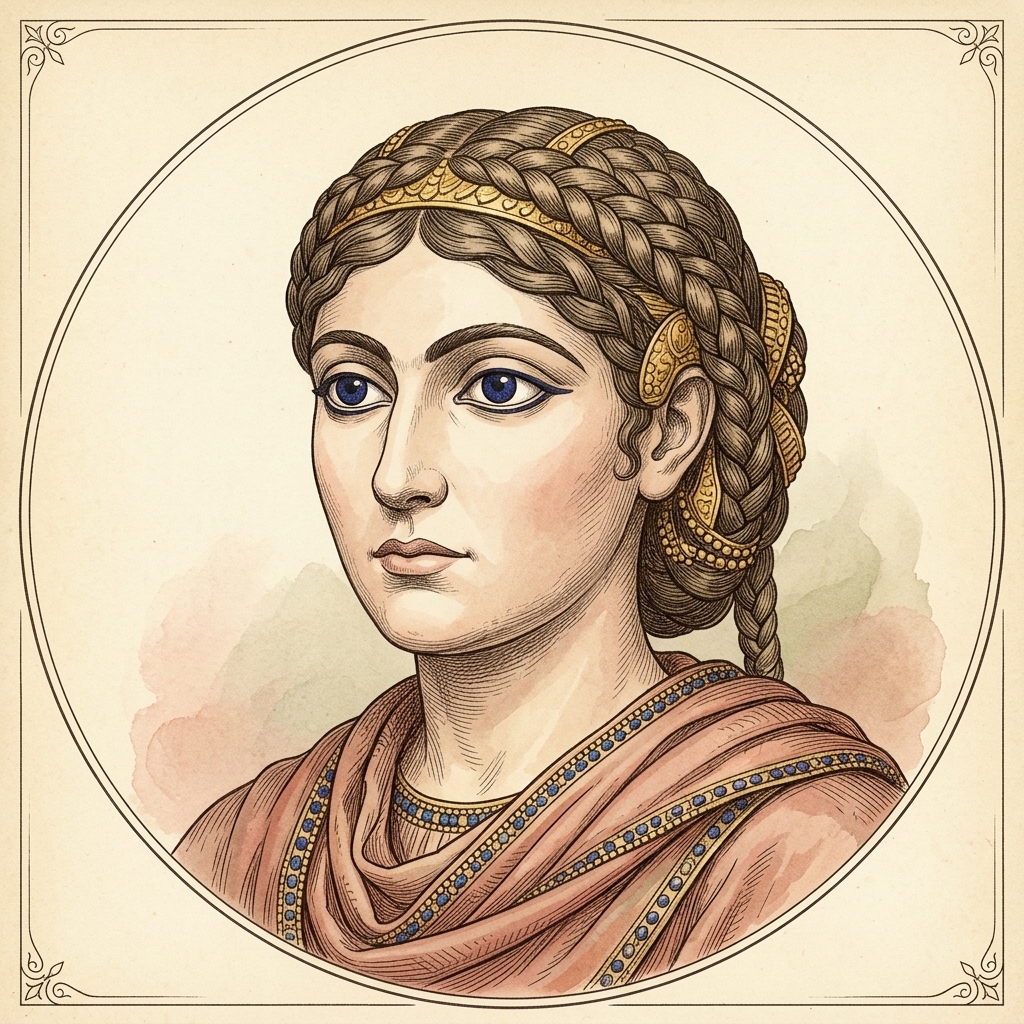 Lady of Uruk
Writing
Clay tablets at Uruk carry the earliest known script, pictographic accounts of grain, beer and livestock. Within centuries it becomes cuneiform, the writing of the Near East for three thousand years.
Sargon of Akkad
Sargon unites the Sumerian city-states with the Semitic-speaking north under one crown, the first empire in the historical record. The date follows the conventional middle chronology.
The Third Dynasty of Ur
A Sumerian revival under Ur-Nammu and Shulgi. The law code attributed to Ur-Nammu is the oldest surviving; the ziggurat of Ur dates from this reign.
Hammurabi of Babylon
Babylon takes the leadership of Mesopotamia. Hammurabi's stele of laws, nearly three hundred rulings under an image of the king before the sun-god, survives in the Louvre.
Minoan Crete and the rise of Mycenae
The palace civilisation of Crete reaches its height, then passes into the hands of the Greek-speaking Mycenaeans of the mainland. Chapter I.
Kadesh
Ramesses II of Egypt and the Hittite king Muwatalli fight the largest chariot battle of the age in Syria. Both claimed victory; the treaty that followed is the earliest surviving peace treaty. Chapter II.
The Bronze Age collapse
Within two generations the Hittite empire vanishes, the Mycenaean palaces burn, Ugarit is destroyed and Egypt fights off the Sea Peoples. Writing is lost in Greece for four centuries. Chapter III.
IIIron Age Greeks and the Persian empire
1200–500 B.C.Out of the dark age come the Greek city-state, the alphabet, the colonies, and a Persian empire large enough to reach them all.
Iron, Phoenicians and the alphabet
Iron tools spread through the eastern Mediterranean. The Phoenician cities of Tyre and Sidon carry a twenty-two-letter alphabet along the trade routes; the Greeks will adapt it within two centuries.
The Assyrian empire
From Nineveh and Nimrud the Assyrian kings rule from the Nile to Iran by siege, deportation and terror. Nineveh falls to the Medes and Babylonians in 612 B.C.
The first Olympiad
The traditional date of the first Olympic games, from which later Greeks counted their years. Homer's poems take shape in roughly this century. Chapter IV.
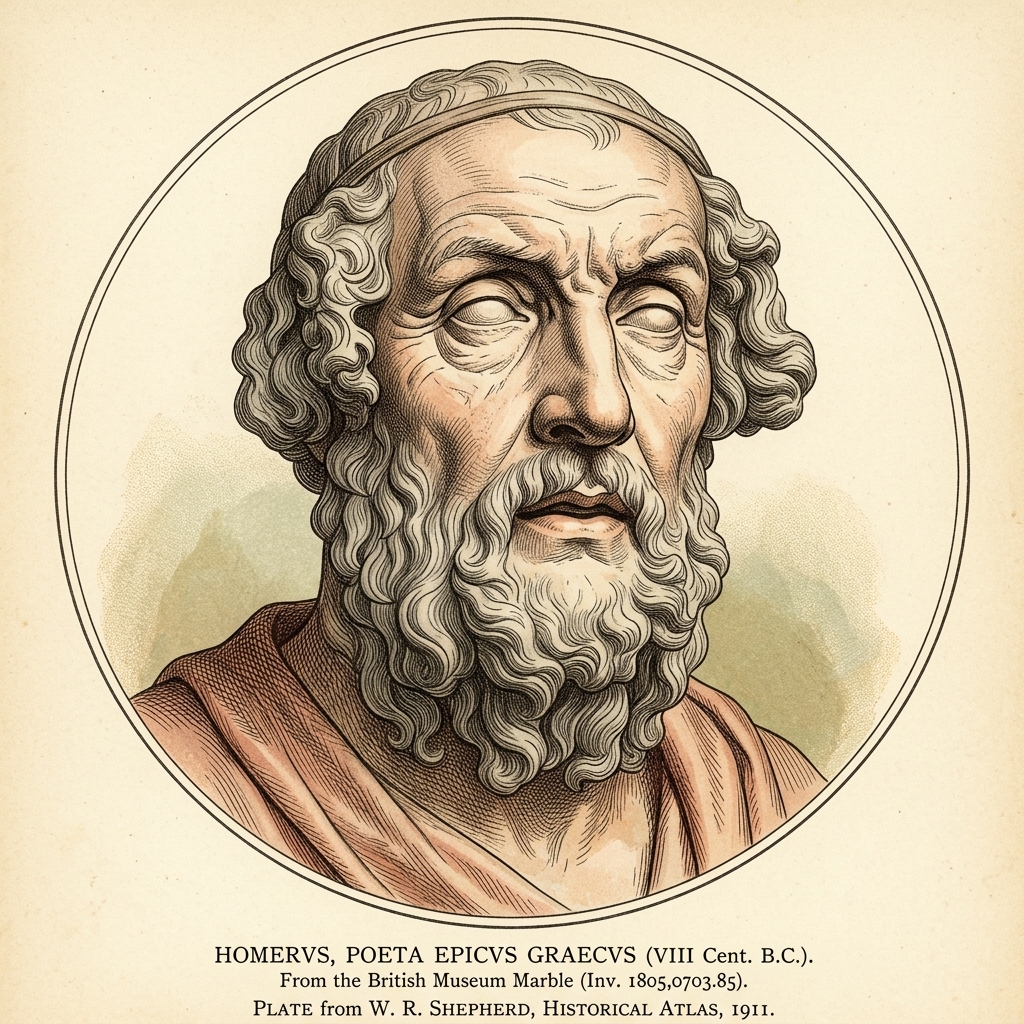 Homer
HomerRome founded, by tradition
Varro's date for Romulus. Archaeology shows huts on the Palatine from the tenth century and a paved Forum by the seventh; the seven kings of the tradition cannot be verified, but the city is real.
Greek colonisation
Greek cities plant daughters from Marseilles to the Crimea: Cumae, Syracuse, Byzantium, Cyrene. Sicily and southern Italy become "Great Greece." Map: the Greeks across the sea.
Solon at Athens
Solon cancels debts, ends debt-slavery and grades political rights by wealth rather than birth. Tyranny under Peisistratus follows; Athens is not yet a democracy. Chapter V.
Jerusalem destroyed
Nebuchadnezzar II of Babylon razes the Temple and deports the Judaean elite. The exile shapes the Hebrew scriptures. Map: the diaspora.
Cyrus founds the Persian empire
Cyrus the Great overthrows the Medes, takes Lydia and its Greek subject cities in 546, and enters Babylon in 539. His successors add Egypt and the Indus: the largest state the world had seen. Chapter VI.
The Roman Republic
The tradition dates the expulsion of the last king, Tarquin the Proud, and the first pair of consuls to this year. Power now rotates annually among the patrician families. Rome under law.
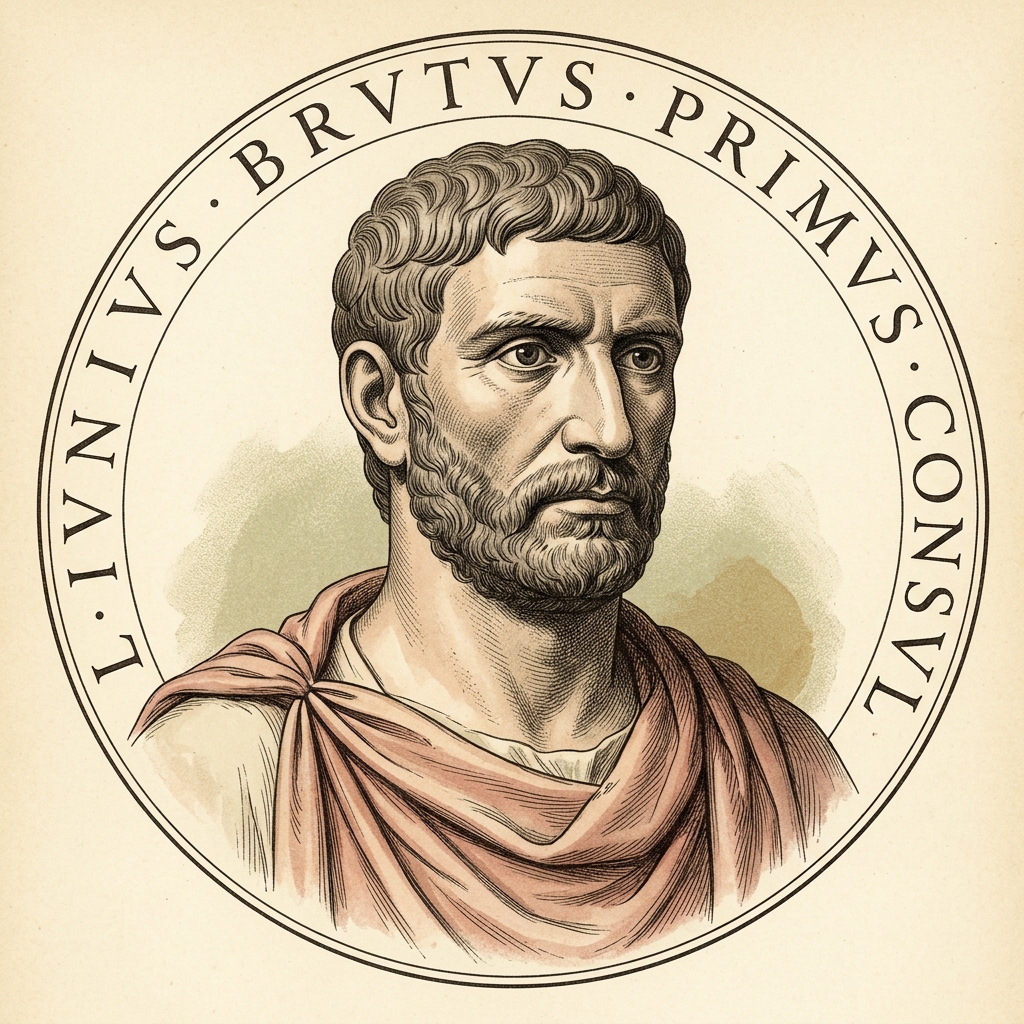 L. Junius Brutus
Cleisthenes at Athens
Cleisthenes rebuilds Athenian politics on ten new tribes drawn across the whole territory, and a council of five hundred chosen by lot. This is the usual starting point of Athenian democracy.
IIIClassical Greece and the early Republic
500–338 B.C.Greece defeats Persia and then tears itself apart. Rome, still a small city on the Tiber, writes down its law, is sacked by the Gauls, and begins the long conquest of Italy.
The Ionian revolt
The Greek cities of Asia rise against Darius with help from Athens and Eretria. Miletus is destroyed in 494; the Persian king turns to punish the mainland.
Marathon
The Athenians, with the Plataeans beside them, beat the Persian landing force on the plain of Marathon. Ten years of respite follow. Chapter VII.
First secession of the plebs
The tradition records the commons withdrawing from the city and winning their own officers, the tribunes, whose persons were sacrosanct. The struggle of the orders has begun.
Thermopylae, Salamis, Plataea
Xerxes invades with the largest army Greece had seen. Leonidas dies at the pass, Themistocles wins at sea in the straits of Salamis, and the Spartan-led army finishes the war at Plataea.
 Themistocles
The Delian League
Athens takes the leadership of the maritime alliance against Persia. Within a generation the league's treasury is at Athens and the allies are subjects.
The Twelve Tables
A board of ten publishes Rome's law on bronze tablets in the Forum, so that patrician magistrates can no longer keep it in their heads. Cicero's generation still learned them by heart. Rome under law.
The Parthenon
Under Pericles, Athens spends the league's money on the Acropolis. Sophocles, Herodotus and Socrates are at work in the same city. Chapter VIII.
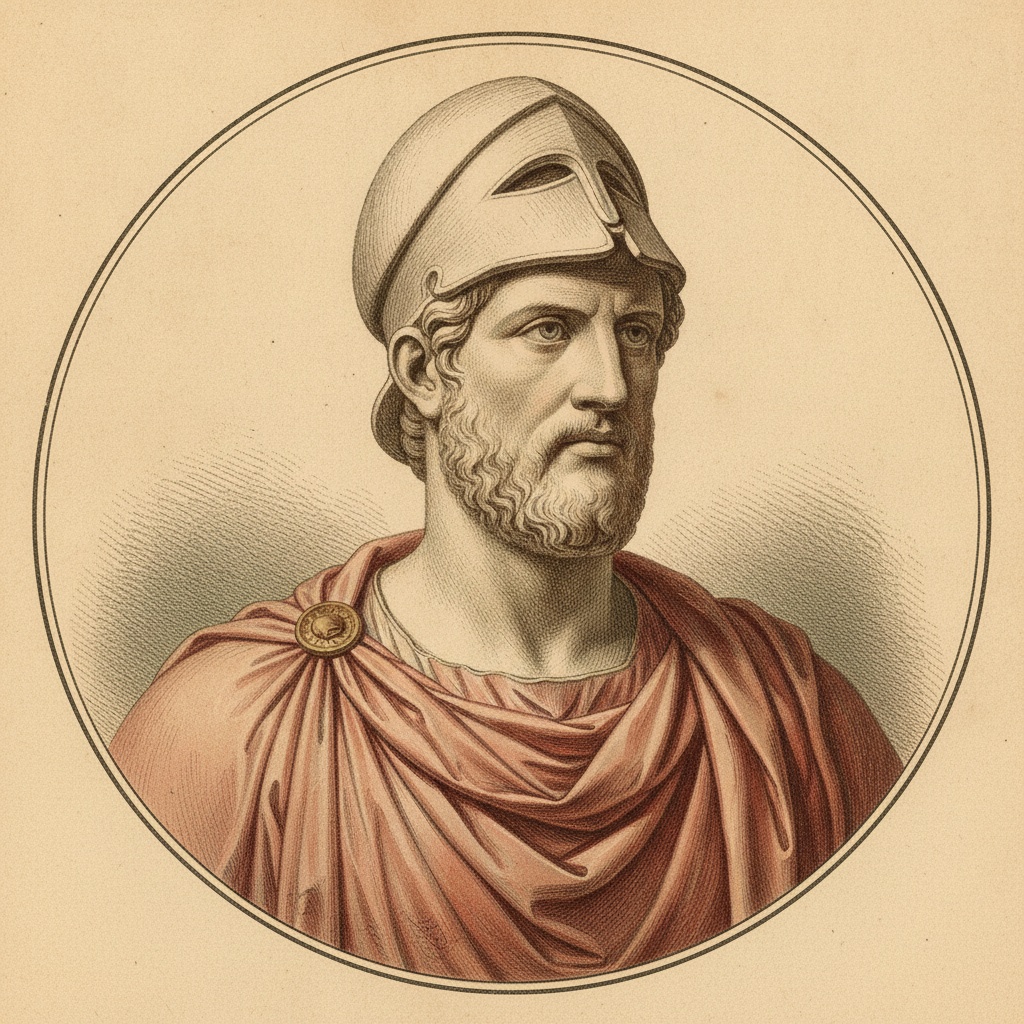 Pericles
The Peloponnesian War
Athens against Sparta for twenty-seven years, with plague, the Sicilian disaster of 413, and Persian gold for the Spartan fleet. Athens surrenders in 404 and pulls down her walls. Map.
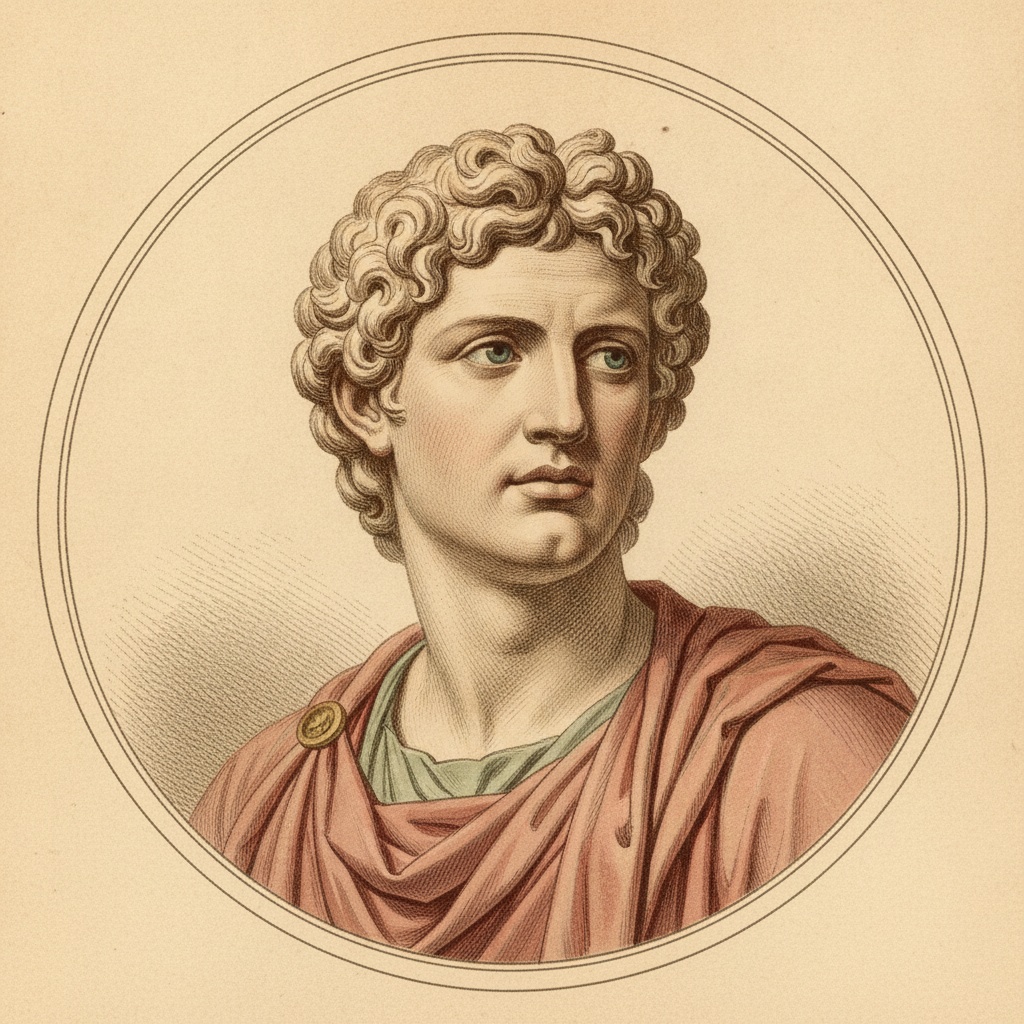 Alcibiades
The Ten Thousand
Greek mercenaries hired by Cyrus the Younger win at Cunaxa, lose their employer, and march home from Babylonia to the Black Sea under Xenophon. Chapter IX.
Socrates executed
Condemned by an Athenian jury for impiety and corrupting the young. His pupil Plato writes the dialogues; Plato's pupil Aristotle will teach Alexander.
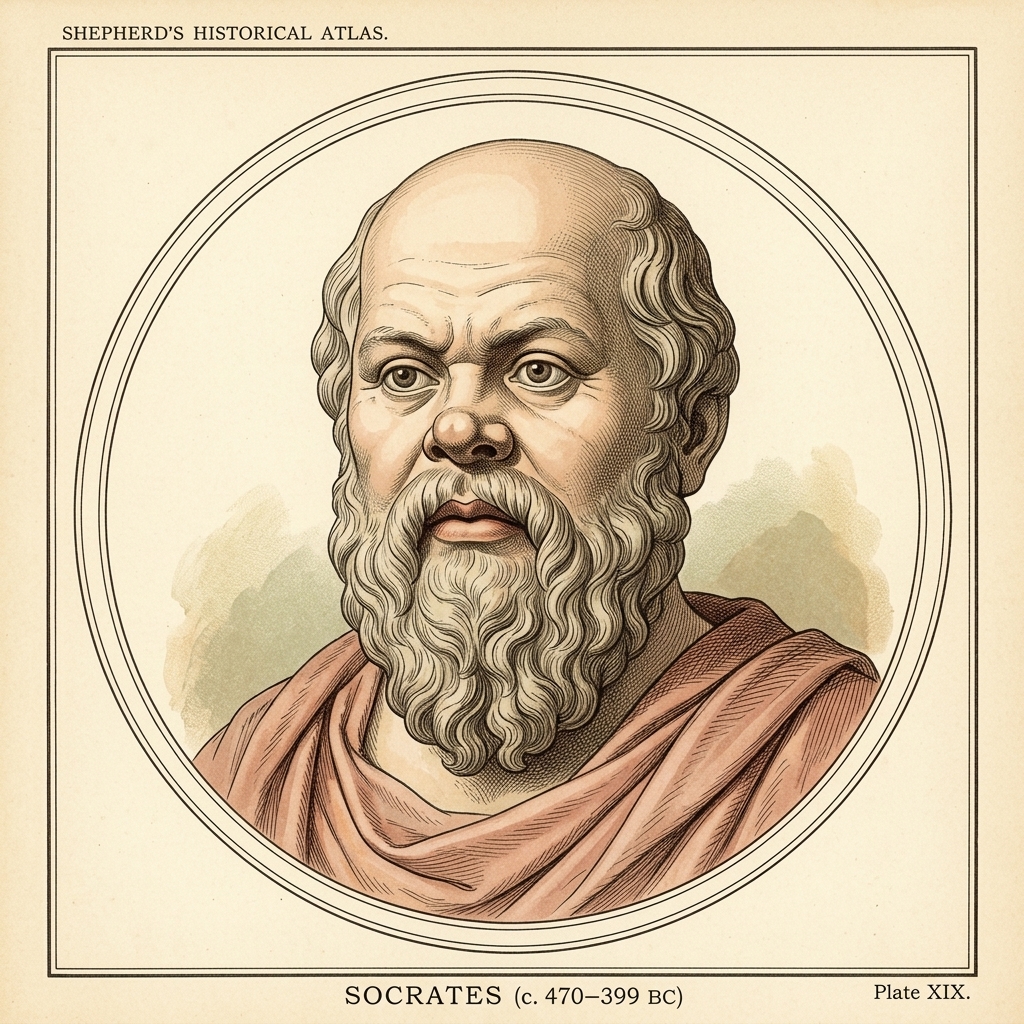 Socrates
Veii taken
After a siege the tradition stretched to ten years, Camillus captures the Etruscan city across the Tiber. Rome's territory nearly doubles.
The Gauls sack Rome
A Gallic war band under Brennus destroys a Roman army at the Allia and burns the city; only the Capitol holds. Greek sources put the sack in 387. The trauma lasts for centuries. Rome masters Italy.
The Licinian-Sextian laws
After a decade of obstruction, plebeians win access to the consulship and a limit on holdings of public land. A new nobility of patrician and plebeian families takes shape.
The Samnite wars
Three wars against the hill peoples of the central Apennines, including the humiliation at the Caudine Forks in 321. By 290 Rome dominates central Italy. Map: Rome takes Italy.
The Latin League dissolved
Rome defeats her Latin allies and settles them one by one: some with full citizenship, some with citizenship without the vote, some as allies bound by treaty. The formula built the empire. Theme: the allies.
Chaeronea
Philip II of Macedon, with the eighteen-year-old Alexander commanding his cavalry, defeats Athens and Thebes. The independent Greek city-state is finished as a great power.
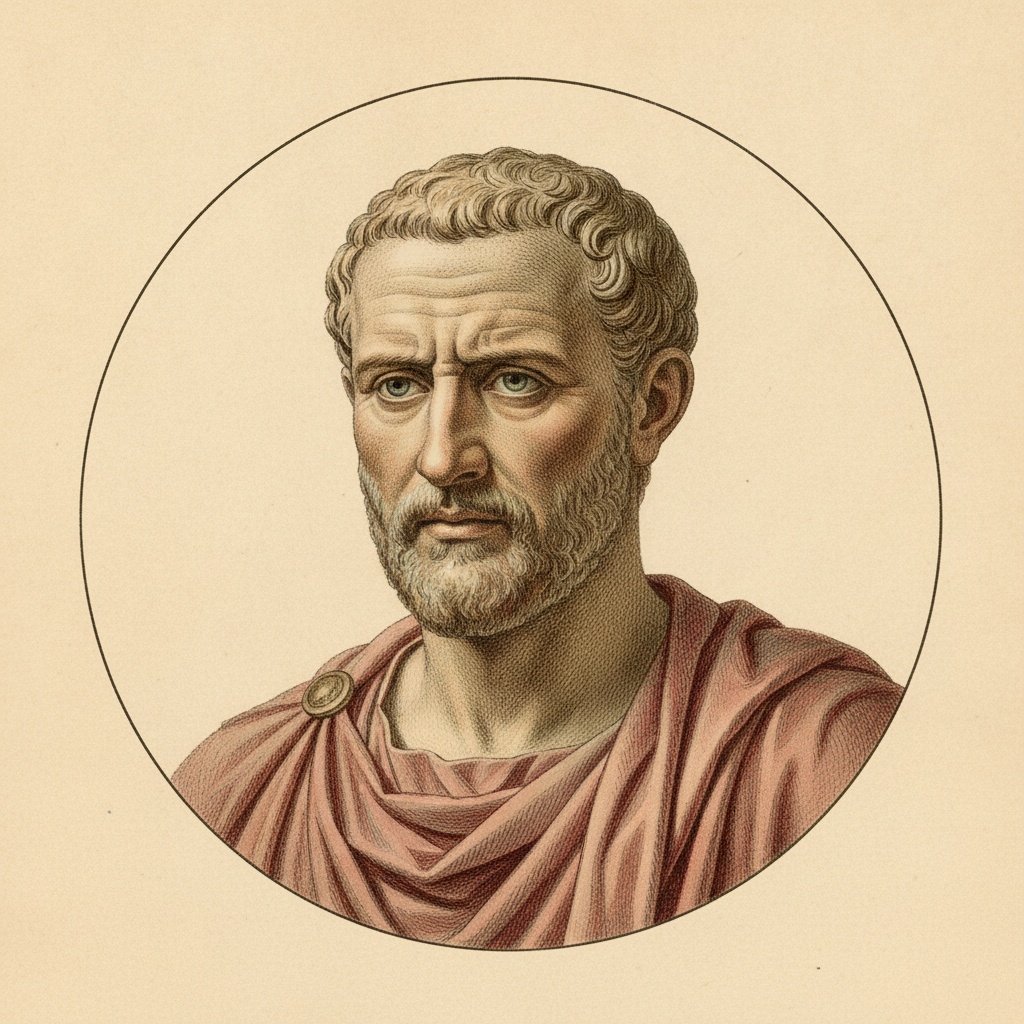 Demosthenes
IVAlexander and the rise of Rome
336–146 B.C.Alexander conquers Persia and dies; his generals divide the East. In the same decades Rome takes Italy, then Sicily, then Carthage, then the kingdoms of Alexander's heirs.
The Appian Way
The censor Appius Claudius Caecus builds Rome's first great road, to Capua, and its first aqueduct. Roads will hold Italy together as much as armies.
Agathocles invades Africa
The tyrant of Syracuse, besieged by Carthage, sails to Africa and carries the war to Carthage's own fields, a stratagem Scipio will copy a century later. Episode.
Ipsus: the successors divide the East
Antigonus the One-Eyed falls in battle. Ptolemy keeps Egypt, Seleucus takes Syria and the East, and Macedon goes its own way: the three kingdoms Rome will meet. Chapter XI.
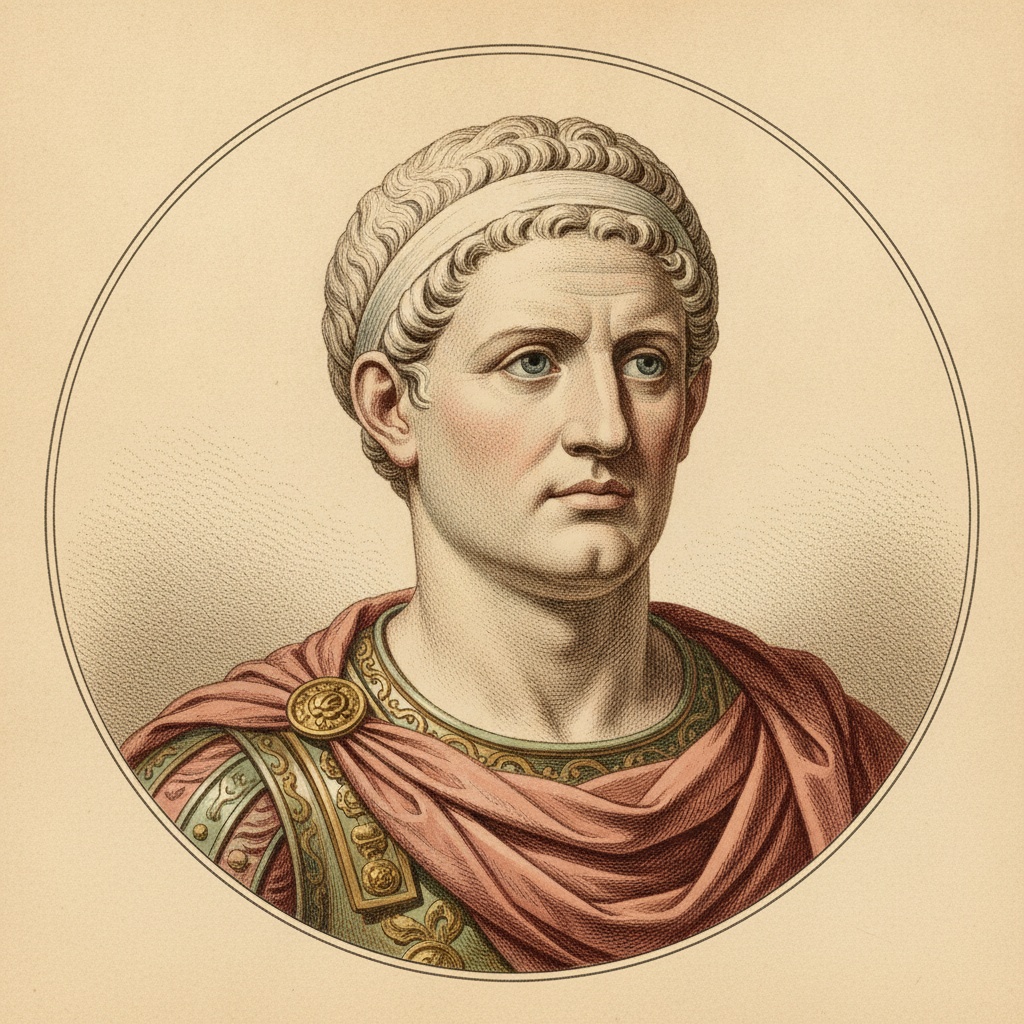 Ptolemy I
The Hortensian law
After the last secession of the plebs, resolutions of the plebeian assembly bind the whole people. The struggle of the orders is formally over. Theme: law and society.
Pyrrhus in Italy
The king of Epirus, hired by Tarentum, beats the legions twice at a cost he cannot afford, tries Sicily, and is checked at Beneventum. Rome now controls Italy to the straits.
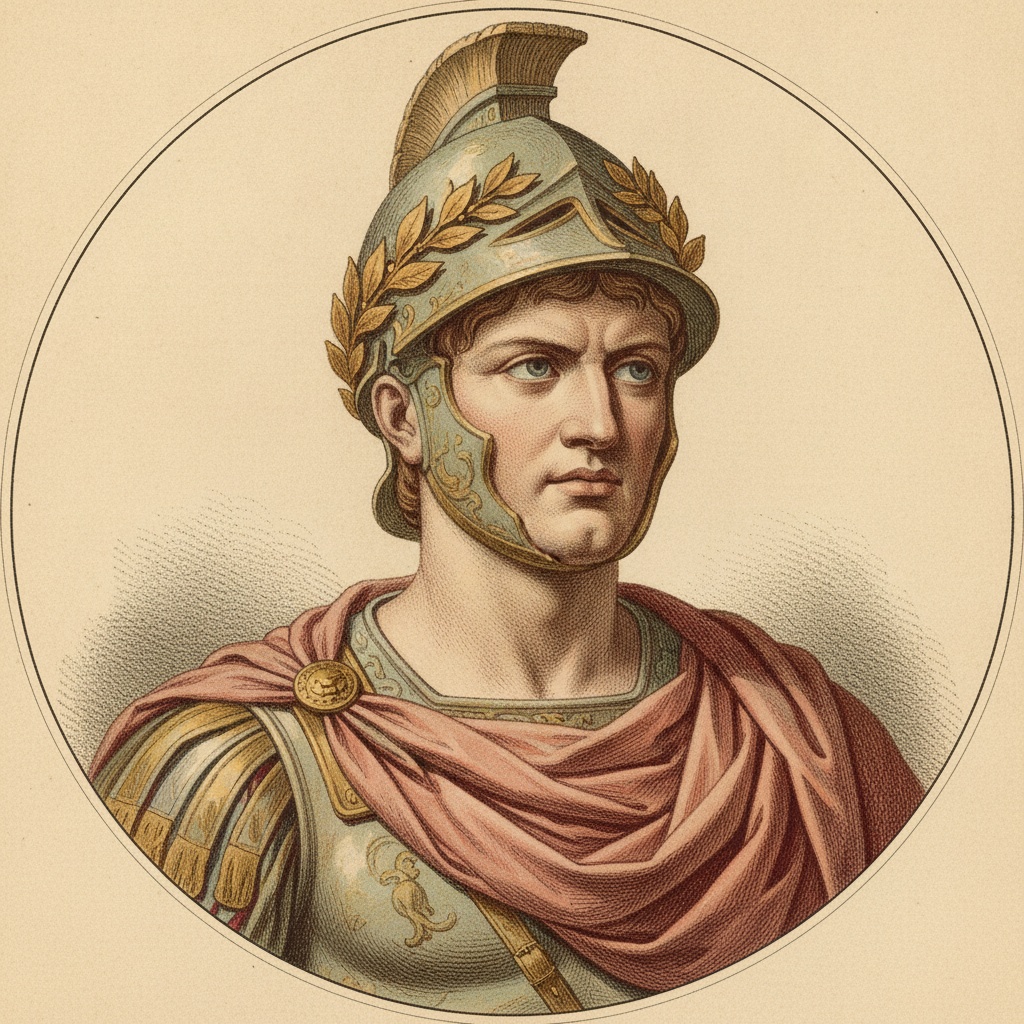 Pyrrhus
The First Punic War
Rome builds a navy from nothing to fight Carthage for Sicily. After the victory off the Aegates Islands in 241, Sicily becomes the first province. Rome and Carthage.
Cynoscephalae
Flamininus breaks the Macedonian phalanx in 197, and at the Isthmian games of 196 proclaims the Greeks free. Rome has entered the Greek world. The Republic conquers the East.
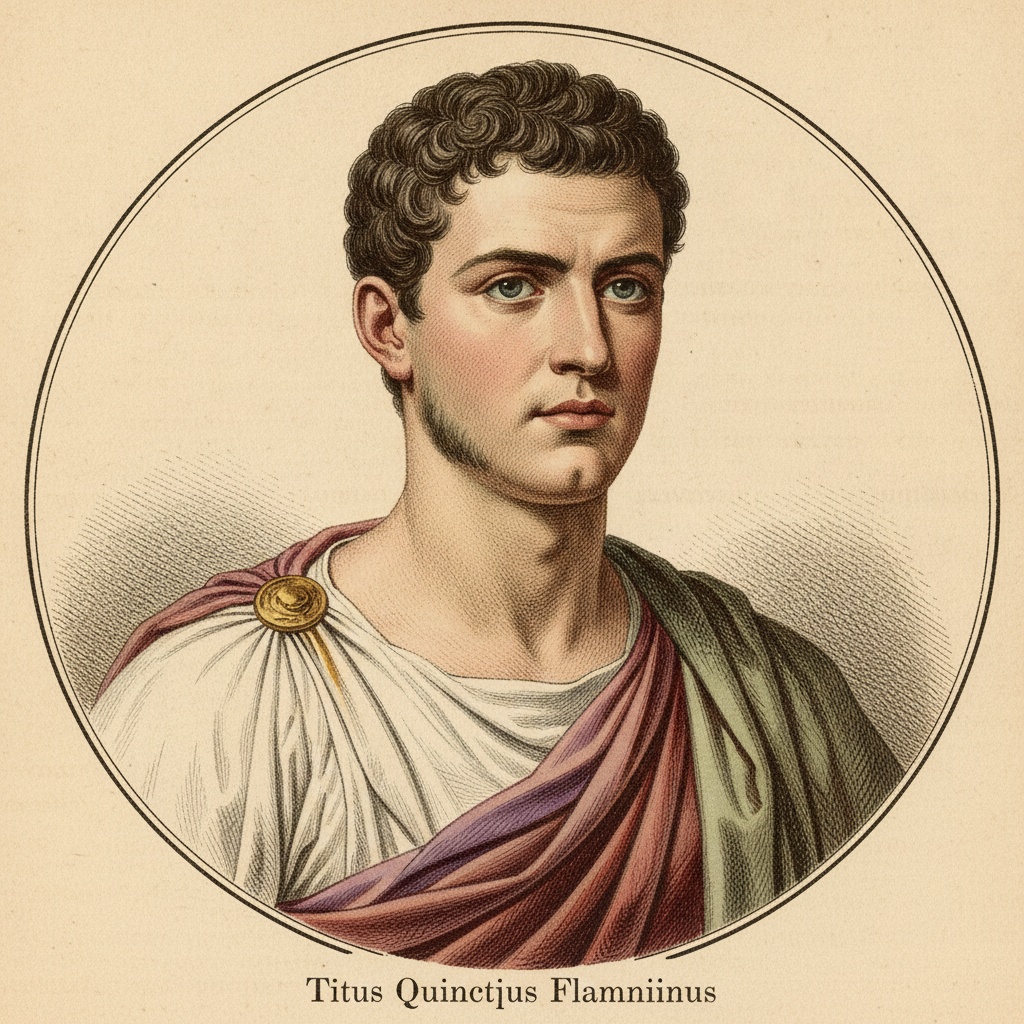 Flamininus
Magnesia and the peace of Apamea
Antiochus III, the greatest of the Seleucids, is beaten in Asia Minor and pushed behind the Taurus mountains. Rome's friends Pergamum and Rhodes are rewarded with his lands.
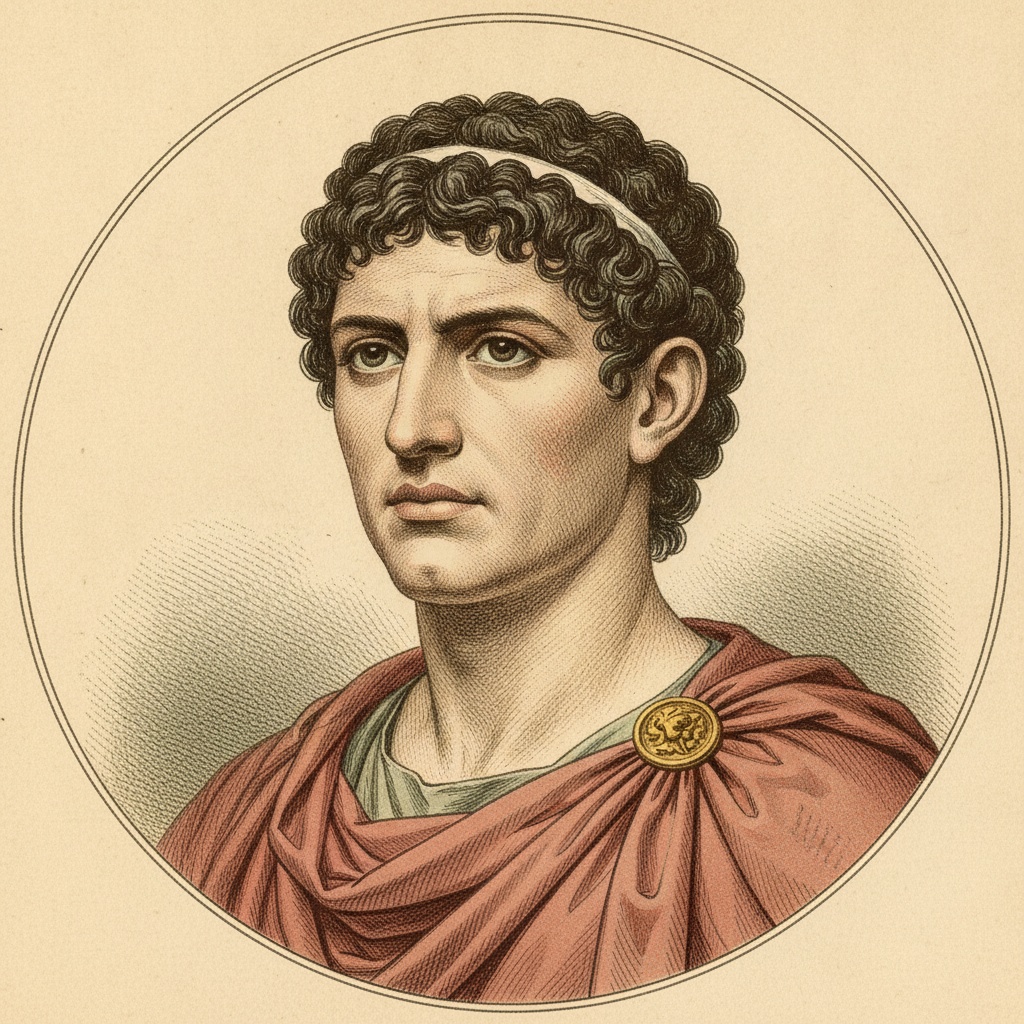 Antiochus III
Pydna
Aemilius Paullus defeats Perseus; the Macedonian monarchy of Philip and Alexander is abolished. Polybius comes to Rome as a hostage and writes the history of how it happened.
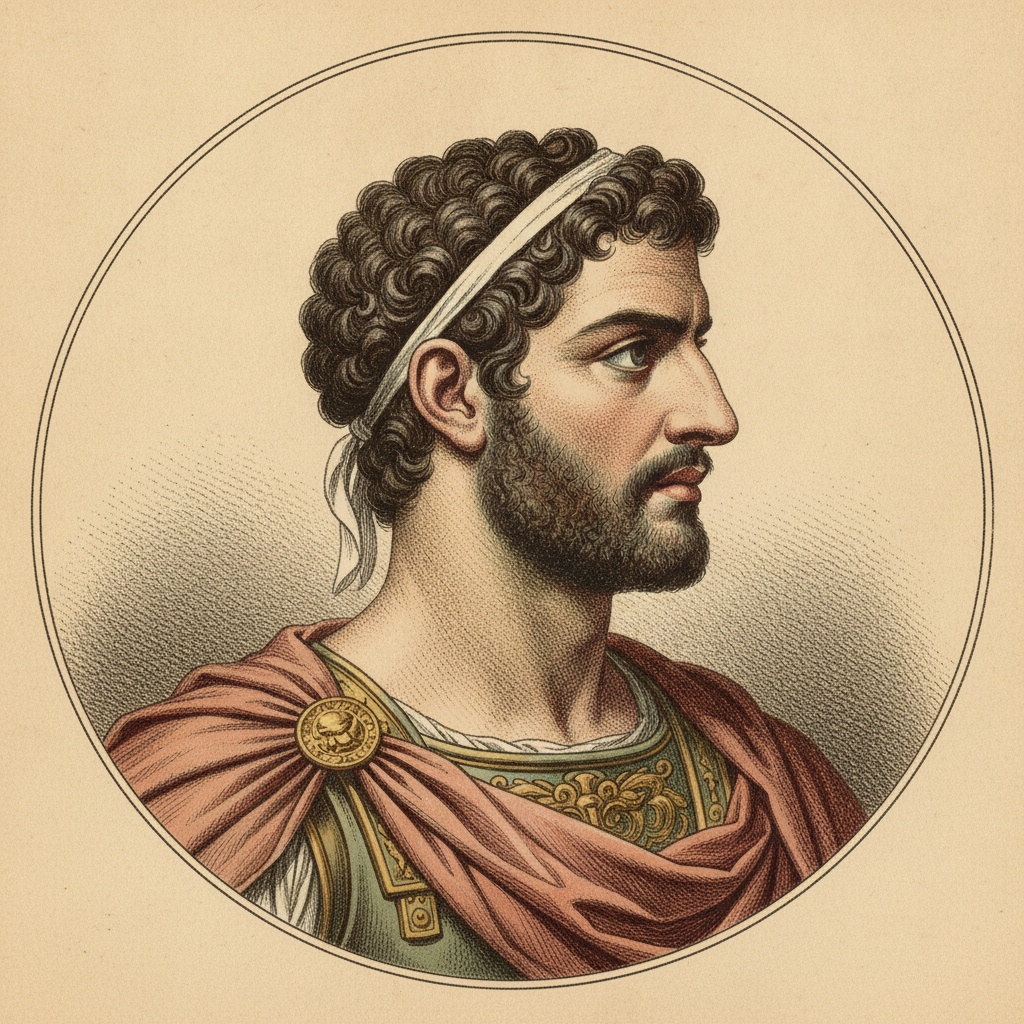 Perseus
Carthage and Corinth destroyed
Scipio Aemilianus razes Carthage after a three-year siege; Mummius sacks Corinth the same year. Africa and Macedonia become provinces. Rome has no rival left in the Mediterranean.
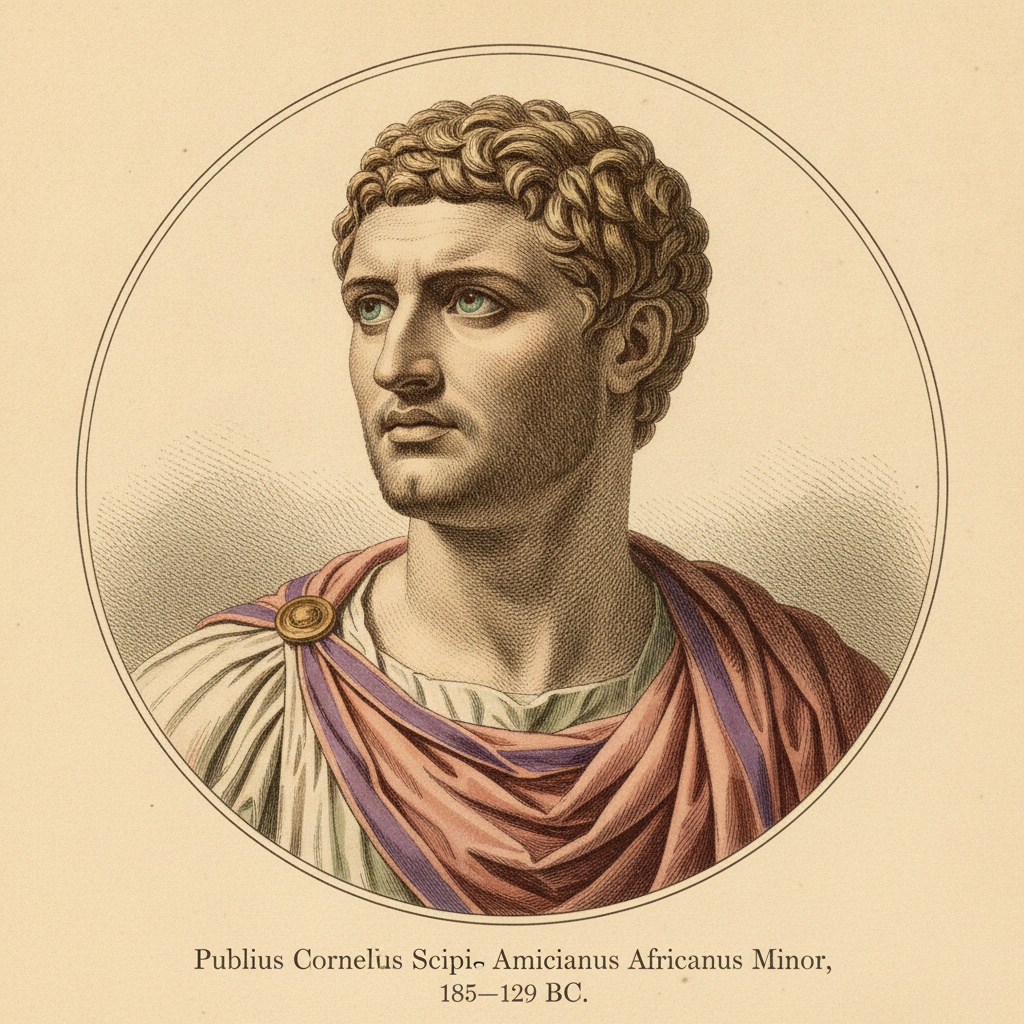 Scipio Aemilianus
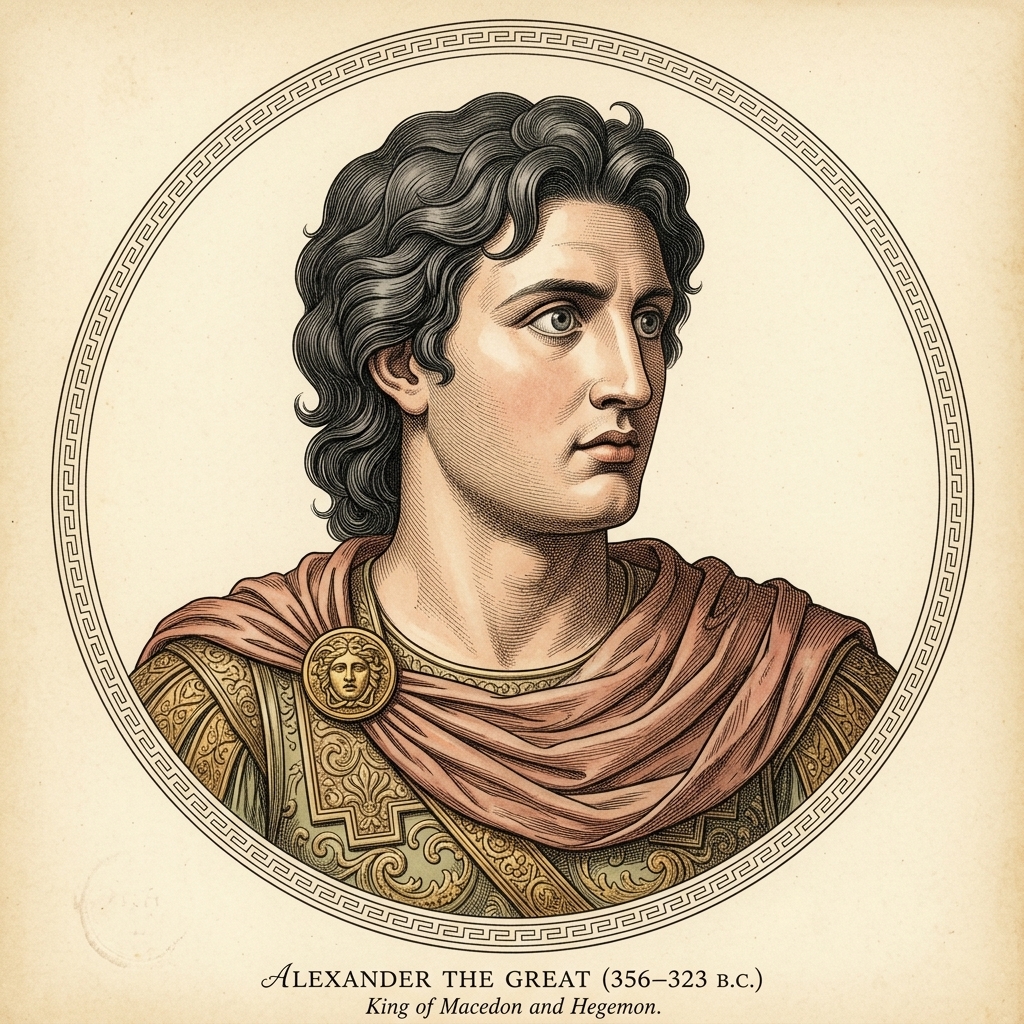 Alexander
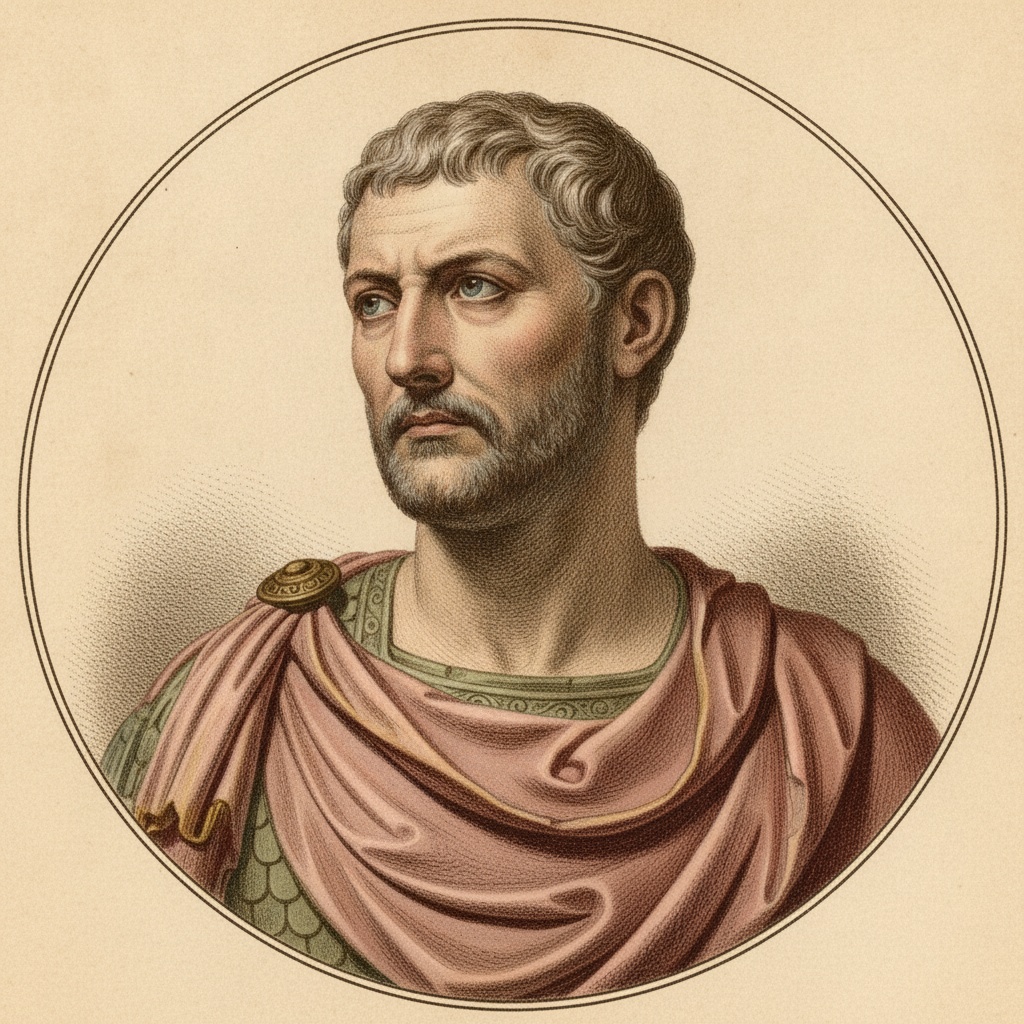 Hannibal
VThe Republic comes apart
133–31 B.C.A century of civil conflict, from the first tribune killed in the street to the last battle between Roman fleets. This is the core of the atlas, and the densest stretch of the line.
Tiberius Gracchus
A tribune carries a land law over the Senate's head, seeks re-election, and is clubbed to death with three hundred followers. Political killing has entered Roman life. The same year Attalus III wills Pergamum to Rome. Blood in the Forum.
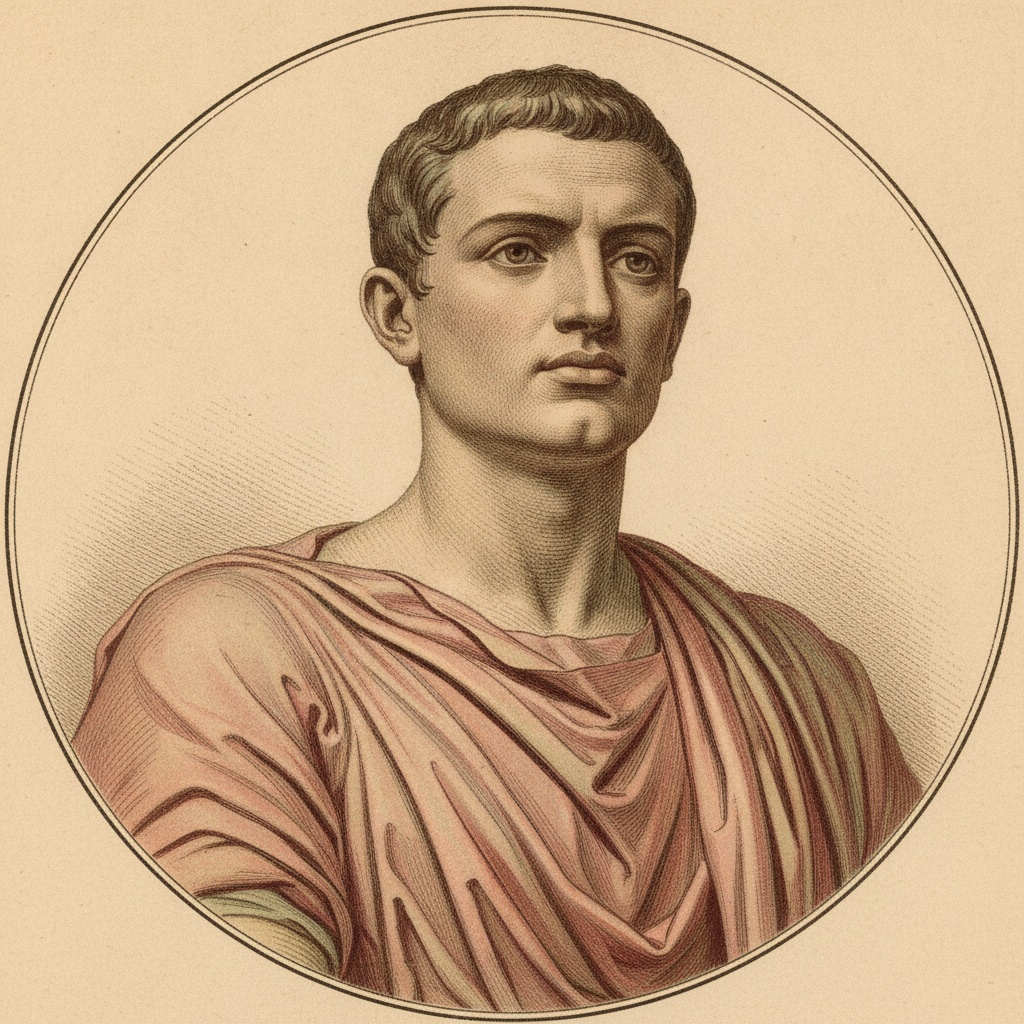 Ti. Gracchus
Gaius Gracchus
His brother builds a whole programme: cheap grain, colonies, roads, the courts handed to the equestrian order, citizenship offered to the Italians. He dies under the Senate's first emergency decree.
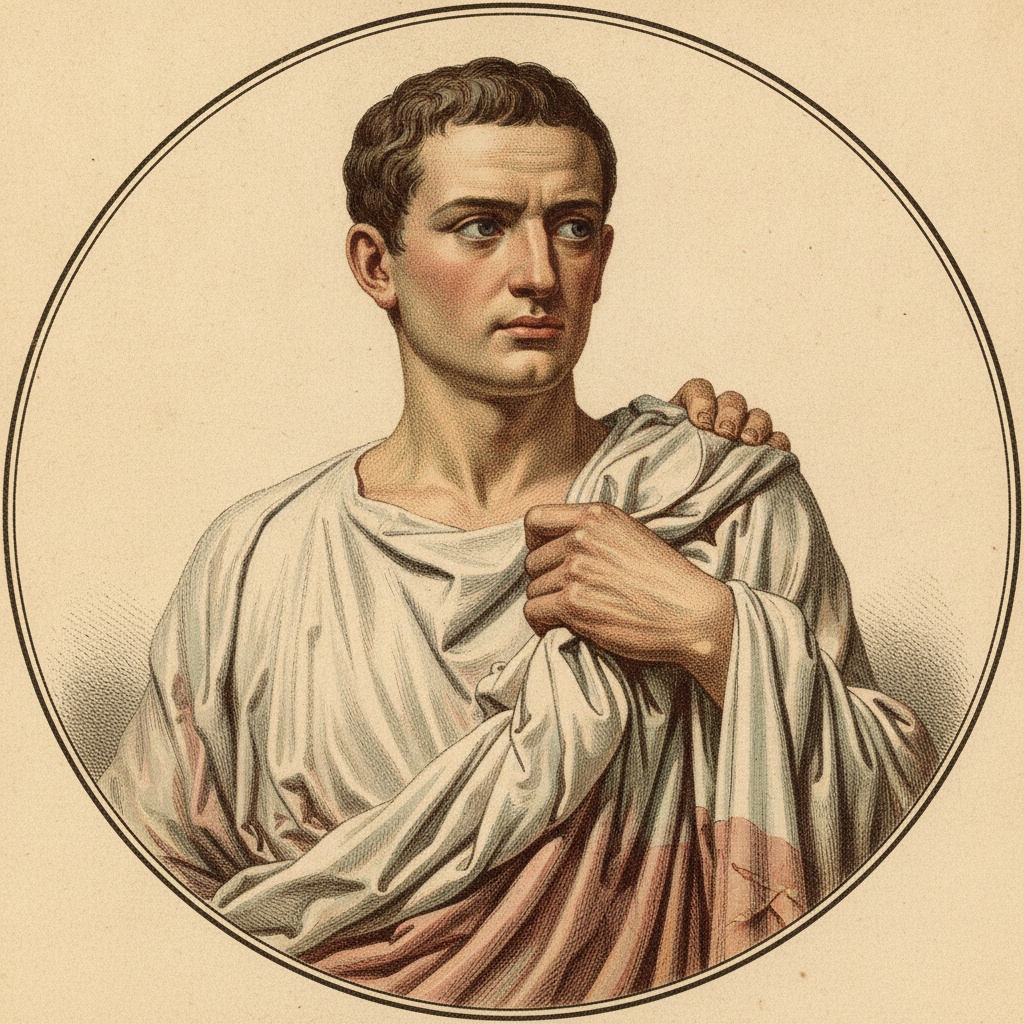 C. Gracchus
The Jugurthine war
A Numidian king buys senators and defies Rome for years. Marius, a new man, takes the command from the nobility and ends the war; his quaestor Sulla takes Jugurtha's surrender.
Marius and the new army
Marius enrols volunteers with no property, men whose future depends on their general. After the disaster at Arausio (105) he destroys the migrating Teutones at Aquae Sextiae and the Cimbri at Vercellae. Theme: the army.
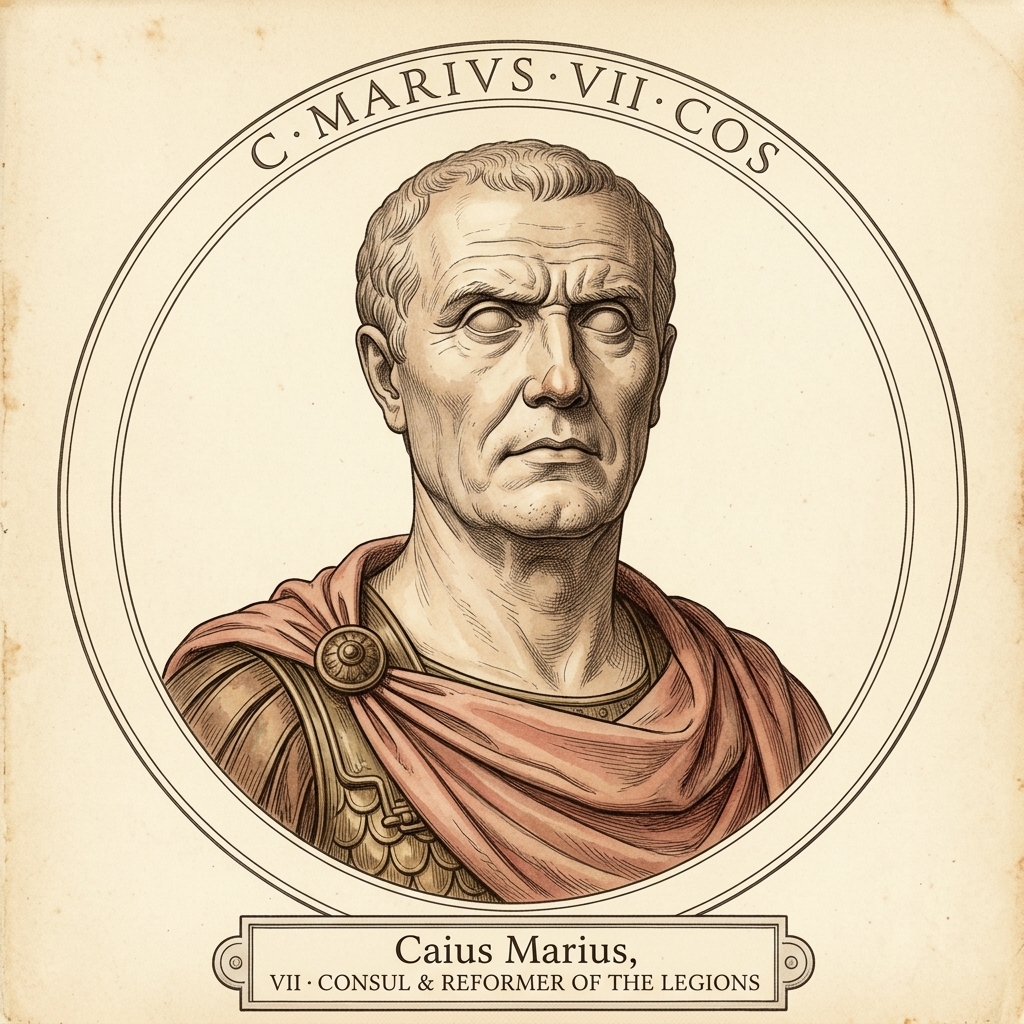 Marius
The Social War
The Italian allies, refused citizenship, rise and found a rival state at Corfinium. Rome wins the war by conceding the demand: all Italy south of the Po becomes Roman. Map.
Sulla marches on Rome
Deprived of the eastern command by a tribune's law, the consul Sulla leads his legions into the city, the first Roman to do so. In Asia, Mithridates of Pontus has thousands of resident Romans killed in a single day. Map: Sulla in the East.
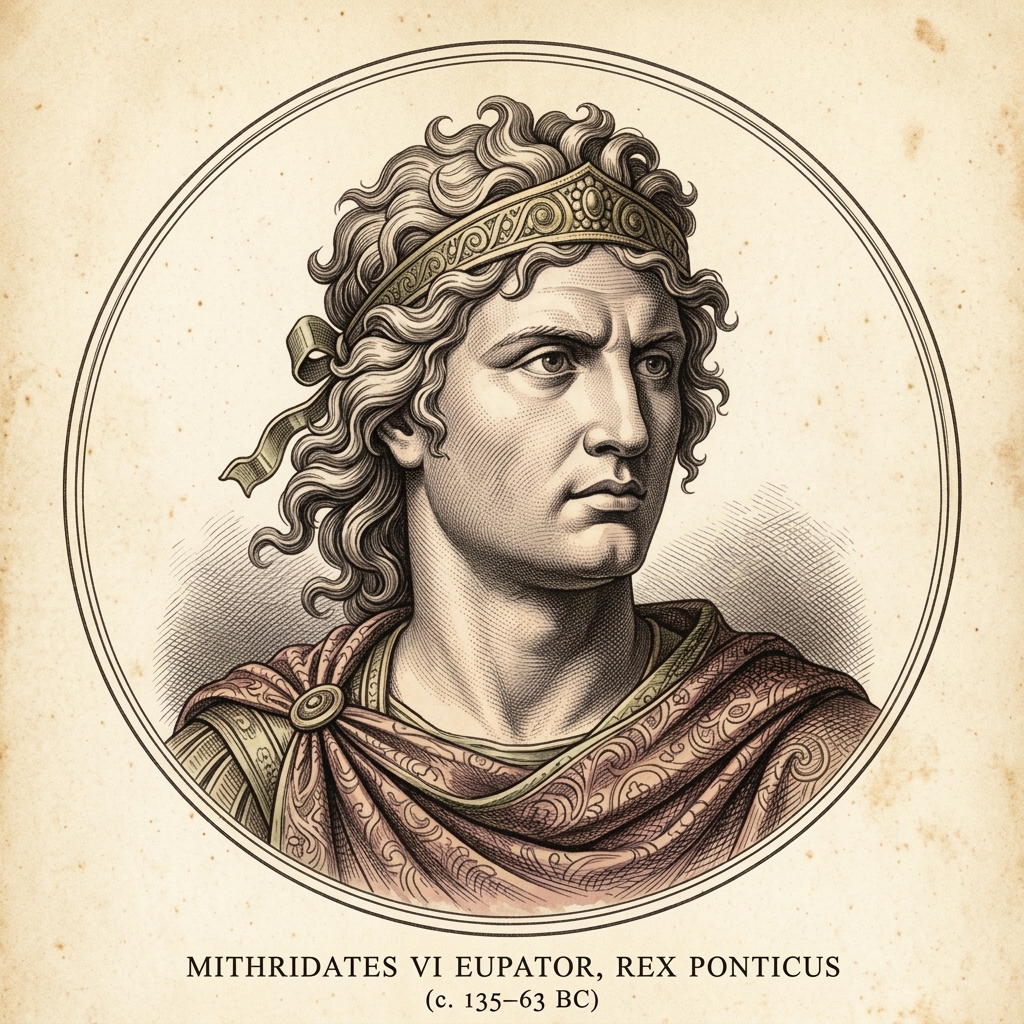 Mithridates
Sulla's dictatorship
Victor in civil war at the Colline Gate, Sulla posts proscription lists, kills thousands, doubles the Senate, muzzles the tribunes, and then retires. The settlement lasts a decade.
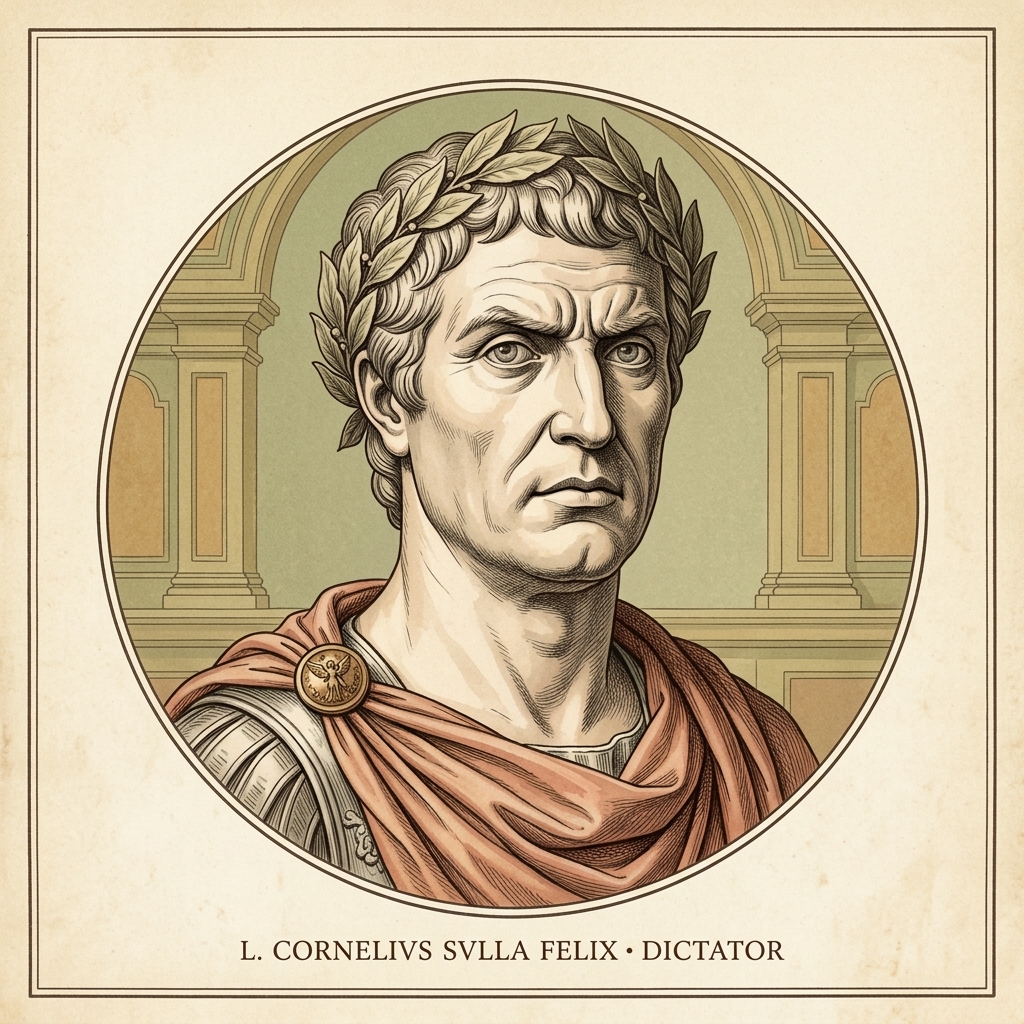 Sulla
SullaSertorius in Spain
A Marian officer builds a Roman government in exile among the Spanish tribes and holds off Metellus and Pompey for eight years, until his own officers murder him. Episode.
Spartacus
Gladiators escape from Capua and gather an army of slaves that beats consular forces before Crassus corners it in the south. Six thousand crucified along the Appian Way, Appian reports.
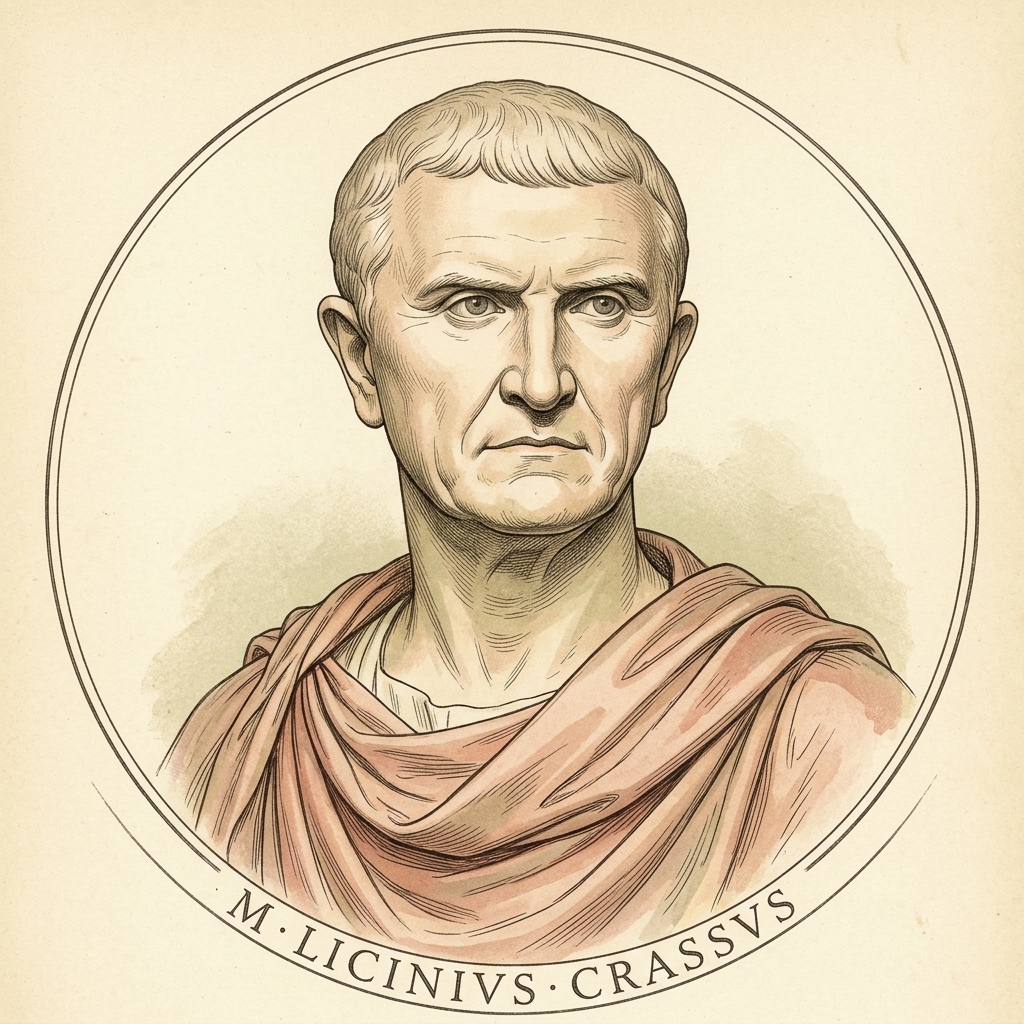 Crassus
Pompey's East
Given extraordinary commands by popular vote, Pompey clears the sea of pirates in one season, finishes Mithridates, ends the Seleucid kingdom, and takes Jerusalem in 63. Pompey and Caesar.
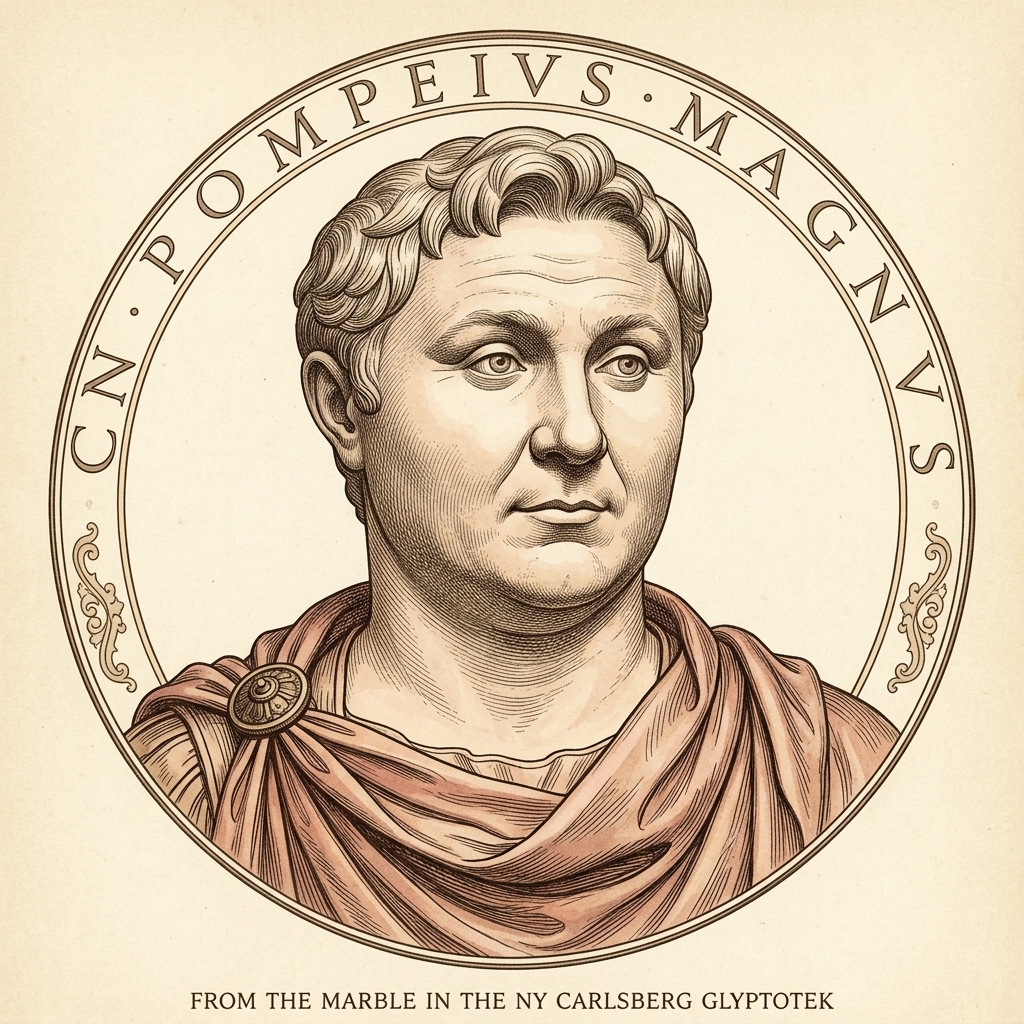 Pompey
Cicero and Catiline
The consul Cicero exposes a conspiracy of ruined nobles and has the ringleaders executed without trial. He never lives it down.
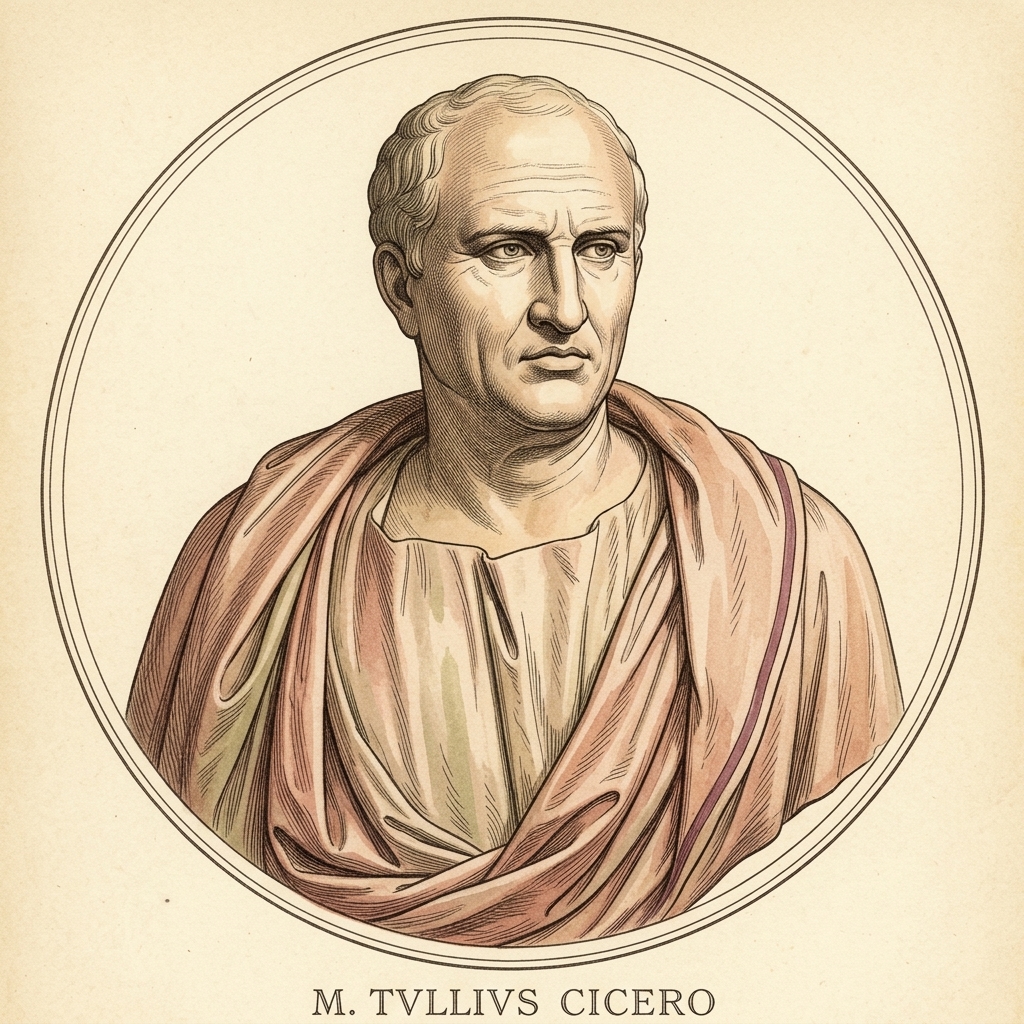 Cicero
The pact of Pompey, Crassus and Caesar
Three men agree privately to run the state; historians later called it the first triumvirate. Caesar's consulship of 59 delivers what each wanted and gives him Gaul for five years.
Caesar conquers Gaul
Eight campaigns from the Helvetii to the siege of Alesia (52), where Vercingetorix surrenders. Caesar's own commentaries are the main source, and they were written to be read in Rome. Gaul, people by people.
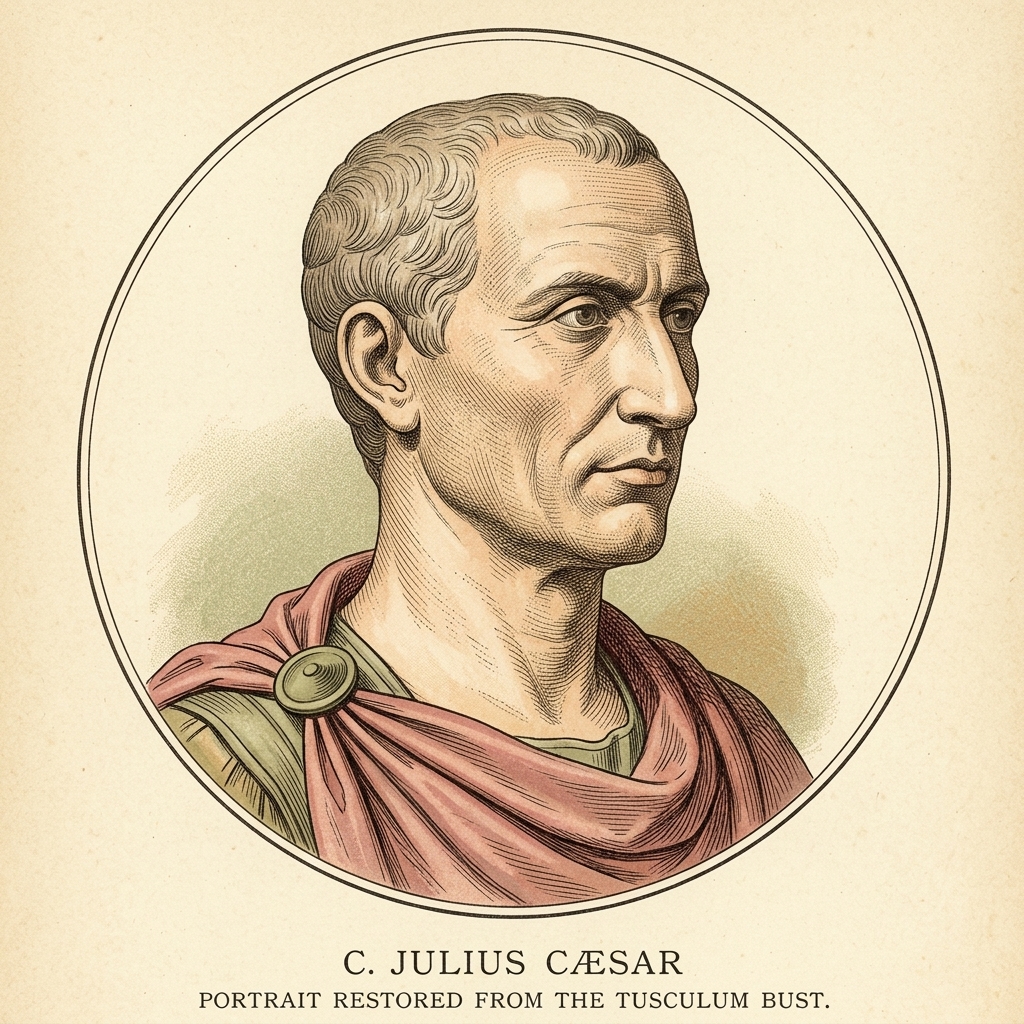 Caesar
Carrhae
Crassus invades Parthia and loses his army and his life to horse-archers in the Mesopotamian desert. Rome's eastern frontier has found its limit.
The civil war
Caesar crosses the Rubicon in January 49. Pharsalus (48), Pompey murdered in Egypt, Thapsus (46), Munda (45). Caesar is dictator for life. Map.
The Ides of March
Some sixty senators led by Brutus and Cassius stab Caesar at a meeting of the Senate. They have no plan for what follows.
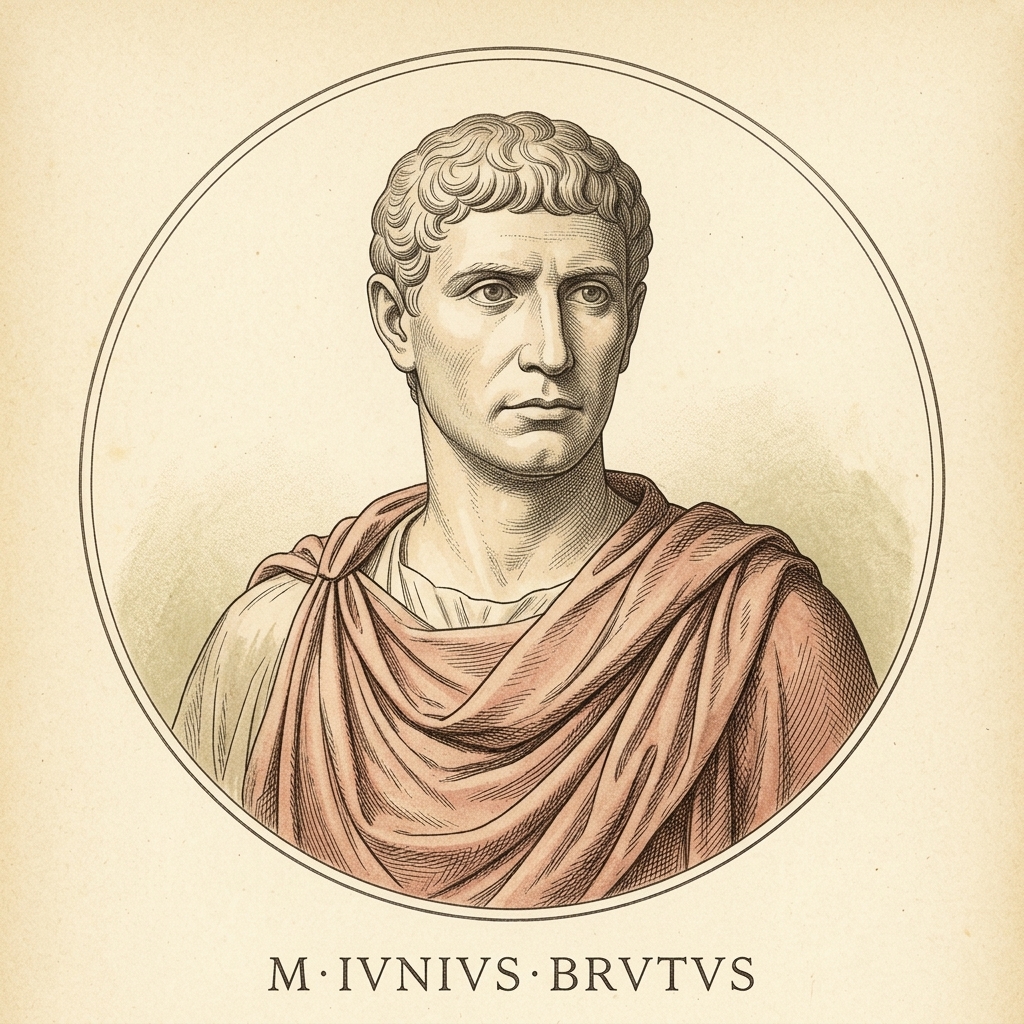 Brutus
The triumvirate and Philippi
Antony, Lepidus and the young Caesar (Octavian) take legal power together and proscribe their enemies; Cicero is killed. At Philippi in 42 Brutus and Cassius are defeated and die.
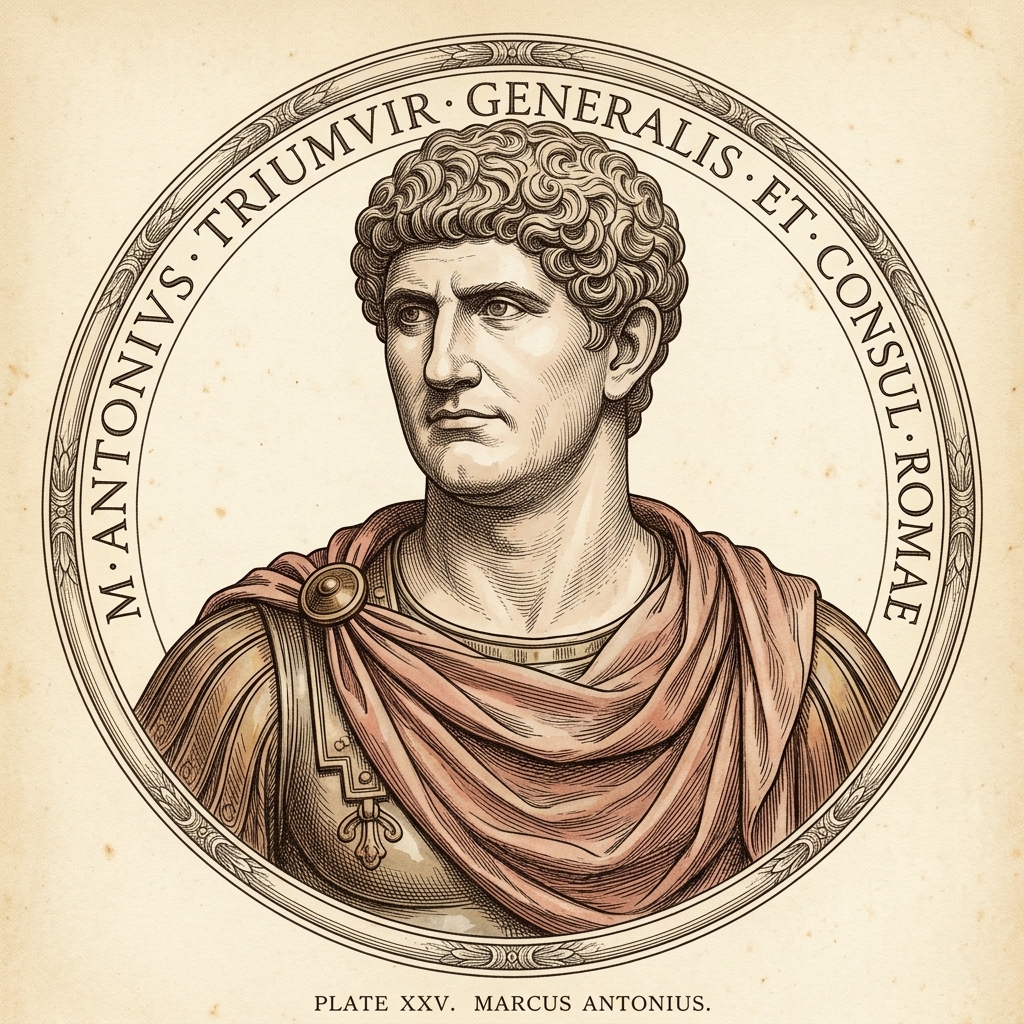 Antony
Actium
Agrippa's fleet defeats Antony and Cleopatra off the coast of Epirus. Both take their own lives at Alexandria the next year, and Egypt becomes the young Caesar's possession.
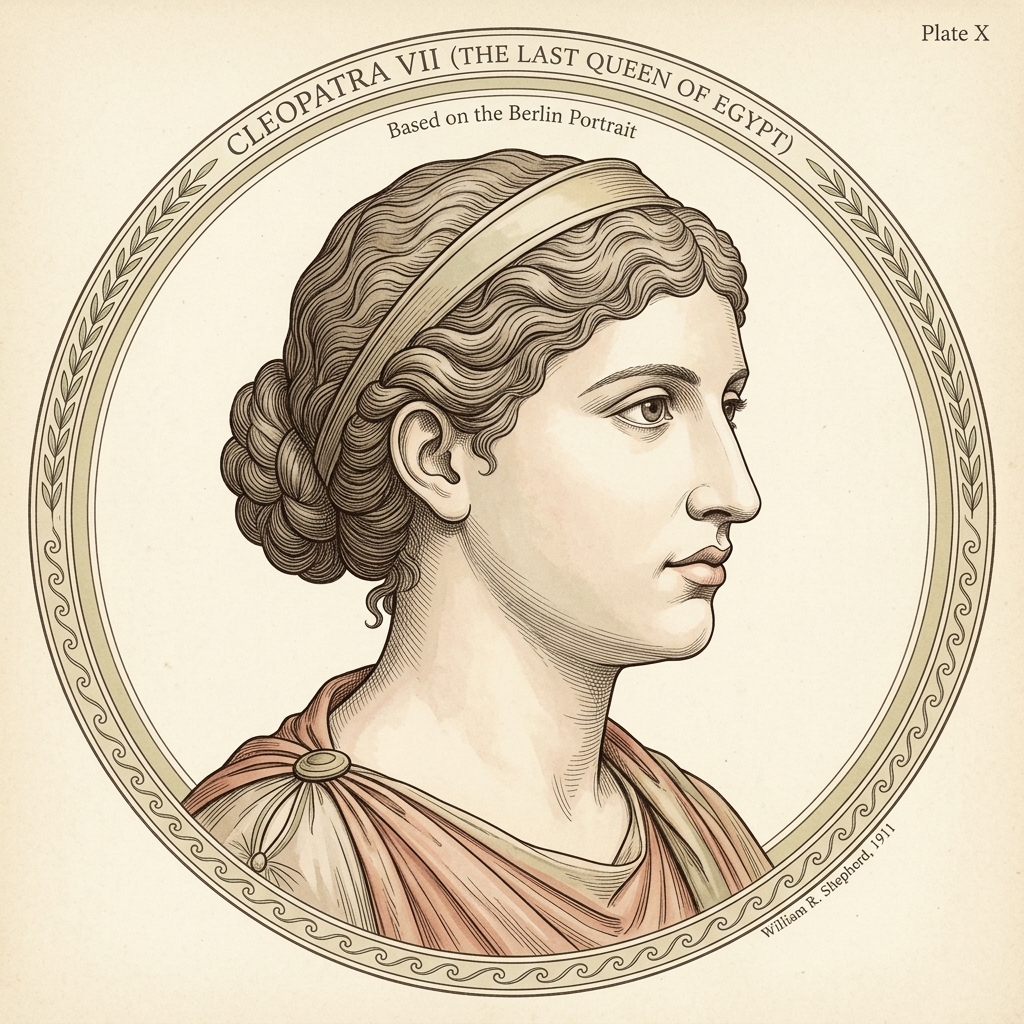 Cleopatra
VIThe Principate
27 B.C.–A.D. 192One man rules while the Republic's forms continue. Two centuries of internal peace, the empire at its widest, and a succession that works only when there is no son.
Augustus
The Senate votes the young Caesar the name Augustus and a ten-year command over the frontier provinces. He calls it the restored Republic; it is the beginning of the monarchy. Chapter XVIII.
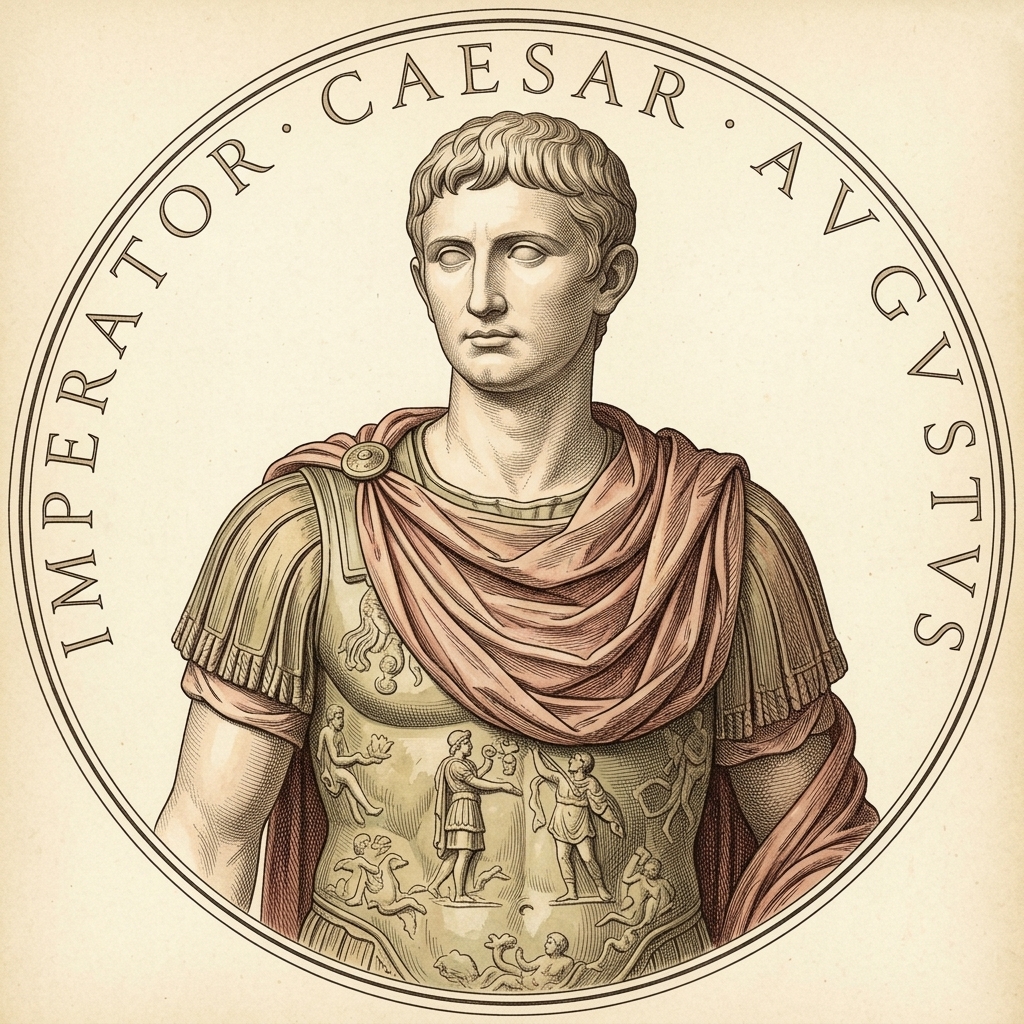 Augustus
The Teutoburg Forest
Arminius destroys three legions under Varus. Rome keeps the Rhine, not the Elbe, as its frontier for the rest of its history.
Tiberius succeeds
Augustus dies at seventy-five after forty-one years of sole rule. The succession of his stepson shows that the new order can outlive its founder. Deep edition: Tiberius.
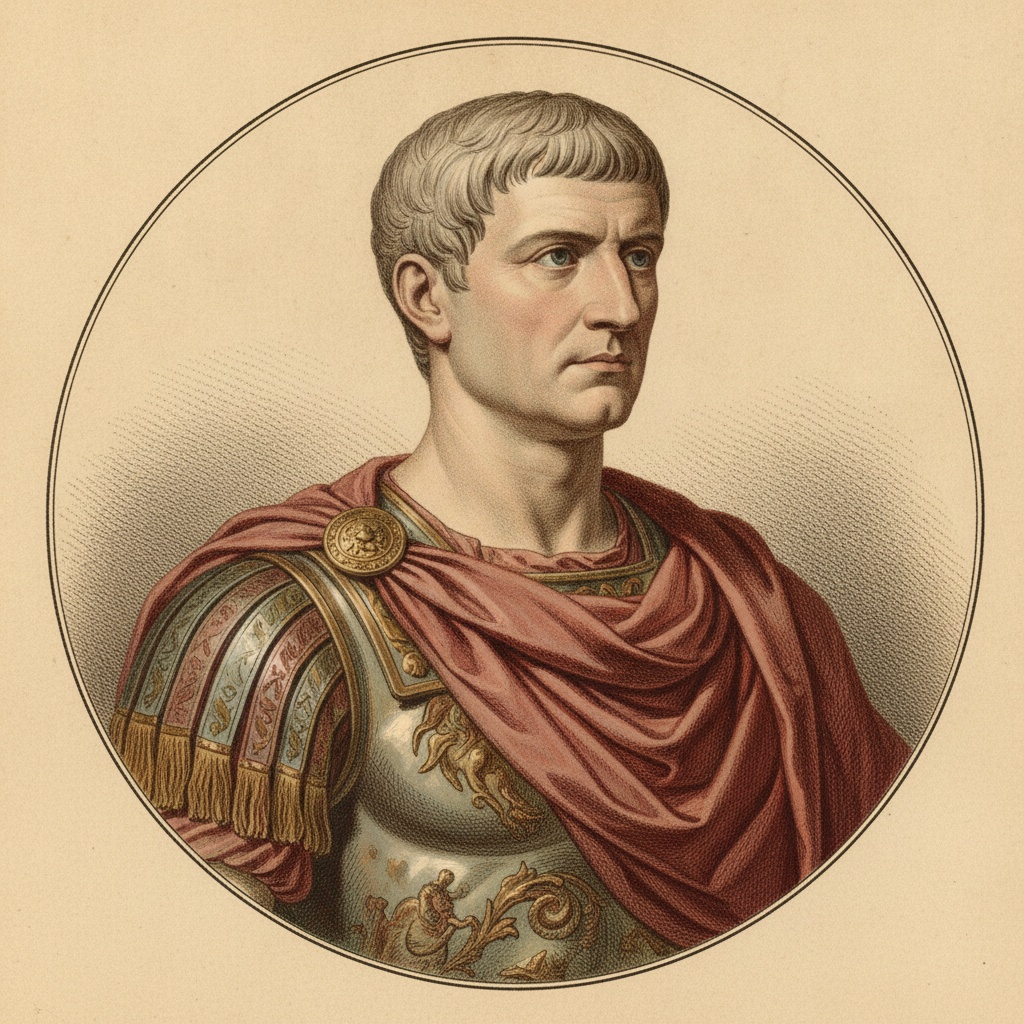 Tiberius
Nero's fire and fall
The Great Fire of Rome; Christians blamed, Tacitus reports. Revolt in Gaul and Spain leaves Nero abandoned, and he kills himself in 68, ending the Julio-Claudian line. Chapter XIX.
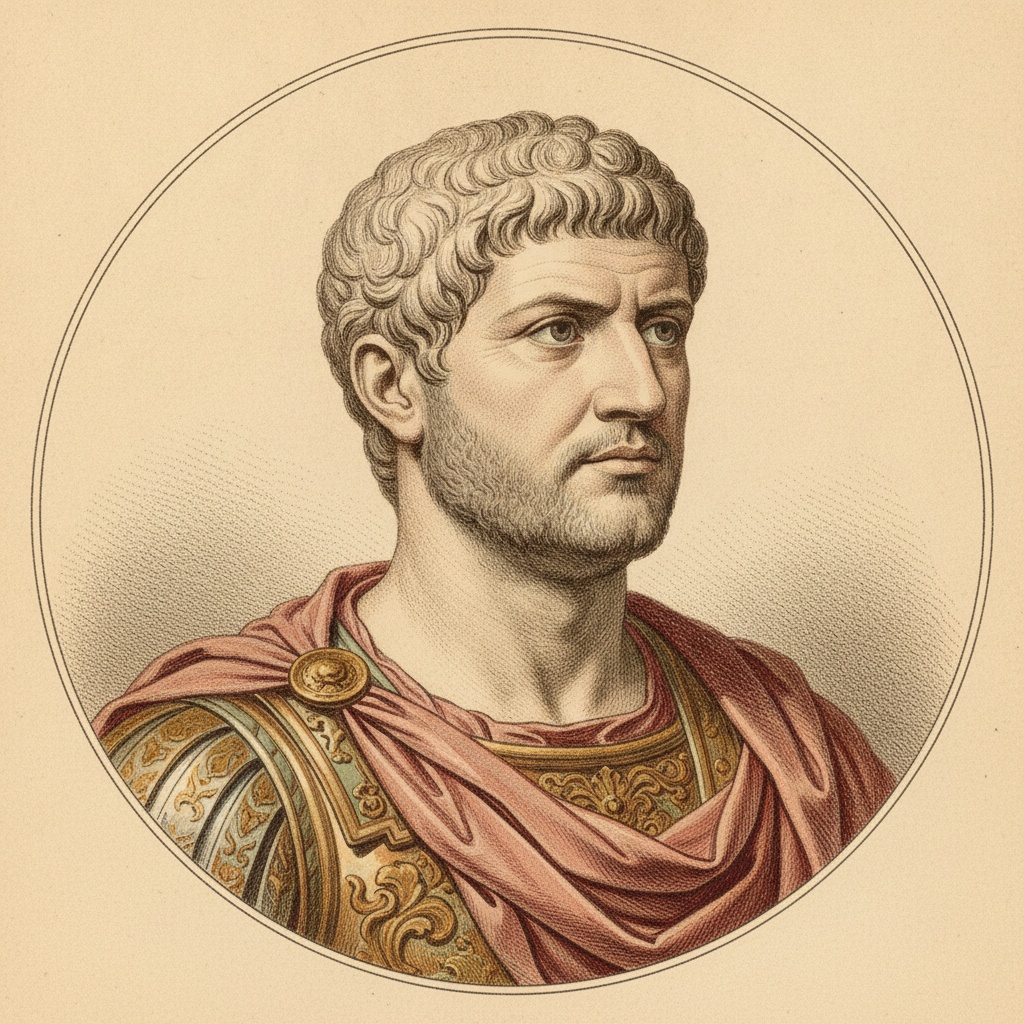 Nero
NeroThe year of four emperors
Galba, Otho, Vitellius and Vespasian in turn. Tacitus's secret of empire: an emperor could be made elsewhere than at Rome. The Flavian dynasty follows.
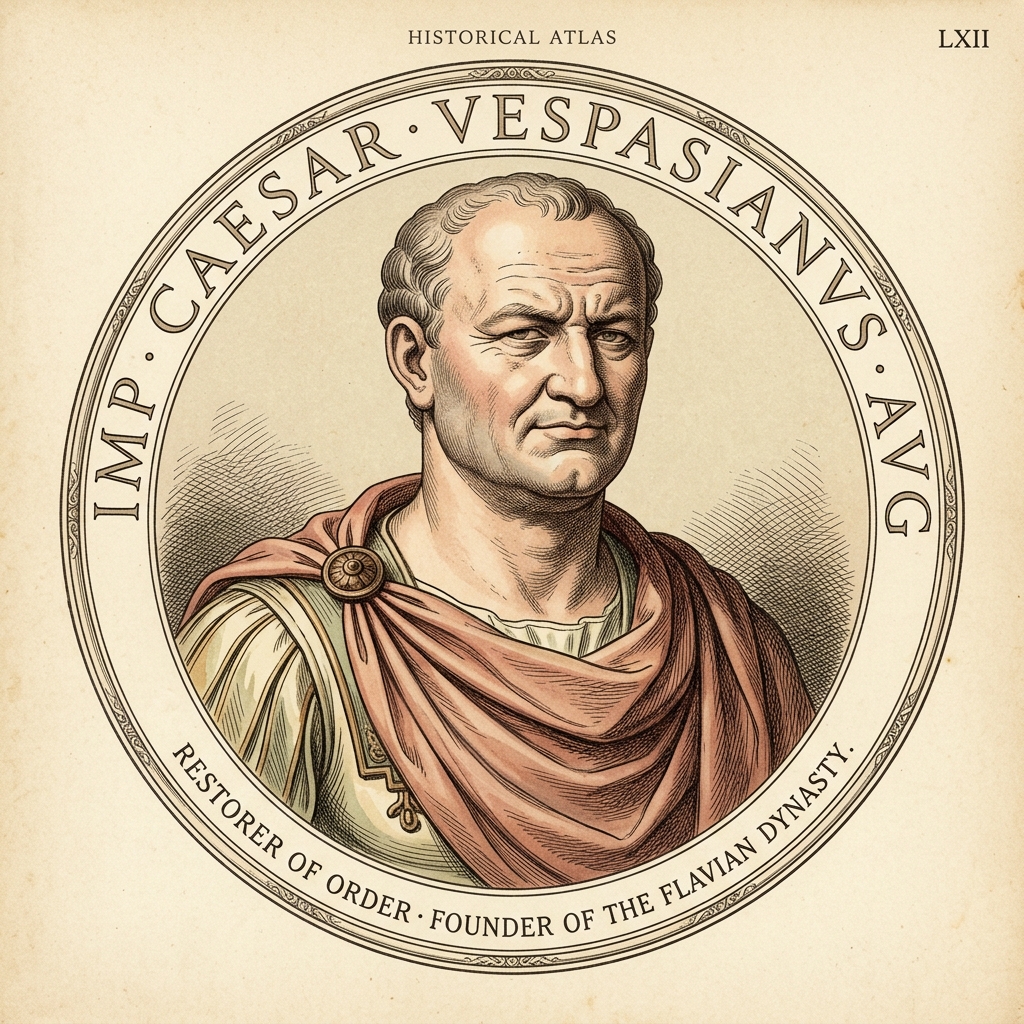 Vespasian
Jerusalem falls
Titus takes the city after a five-month siege and the Temple burns. Masada holds out until 73 or 74. Chapter XX.
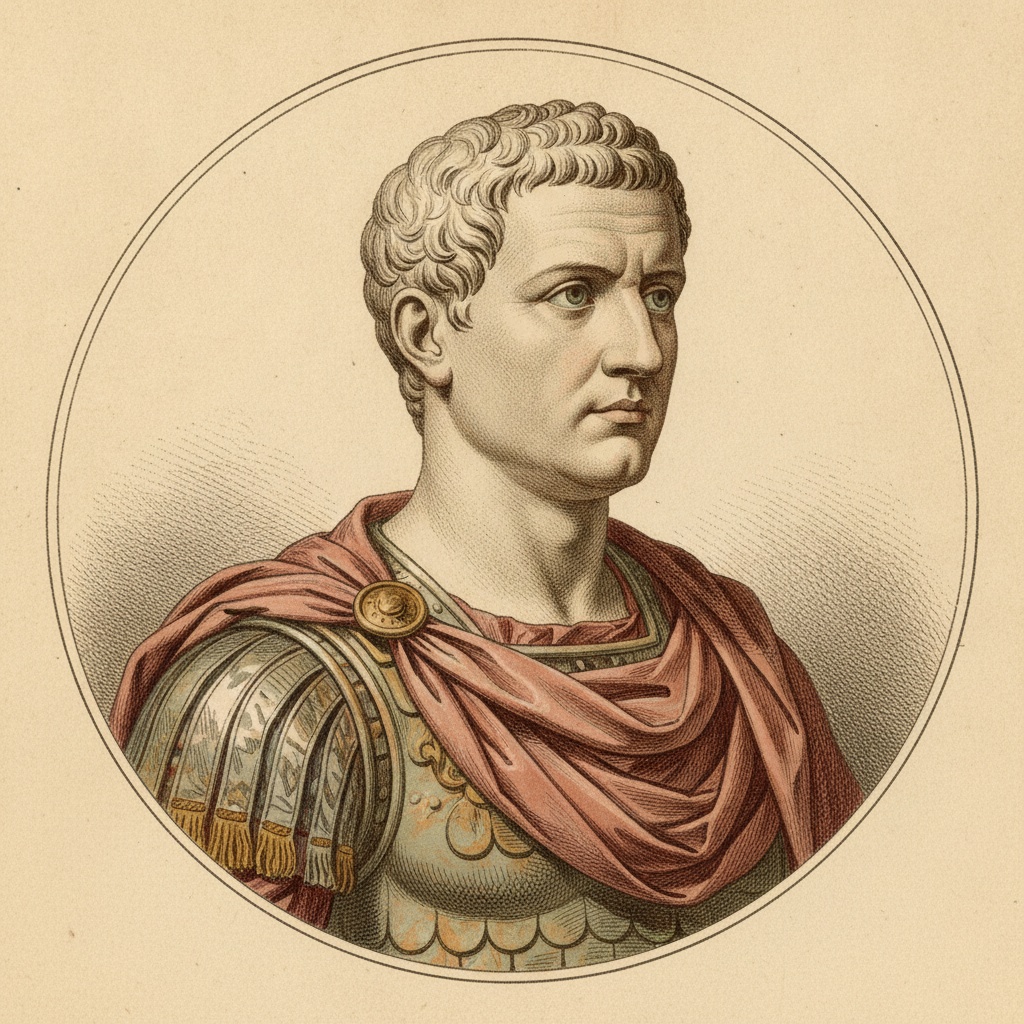 Titus
TitusVesuvius, and the Colosseum
Pompeii and Herculaneum are buried; Pliny the Younger describes his uncle's death. The next year Titus opens the Flavian amphitheatre.
Nerva adopts Trajan
Domitian is murdered; the elderly Nerva adopts the commander of the Rhine armies. For eighty years each emperor chooses his successor, and none has a surviving son.
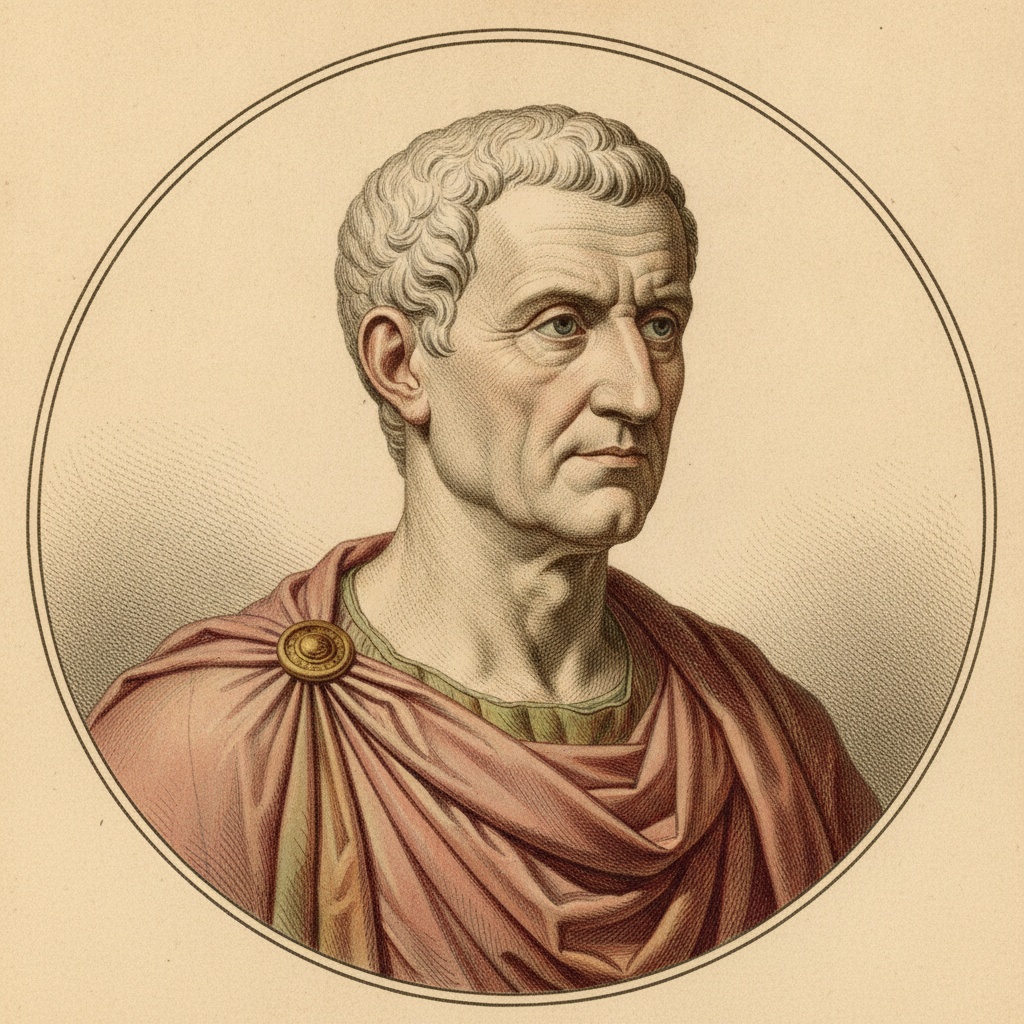 Nerva
NervaTrajan conquers Dacia
Two wars across the Danube end the kingdom of Decebalus. Dacian gold pays for Trajan's Forum and column. Chapter XXI.
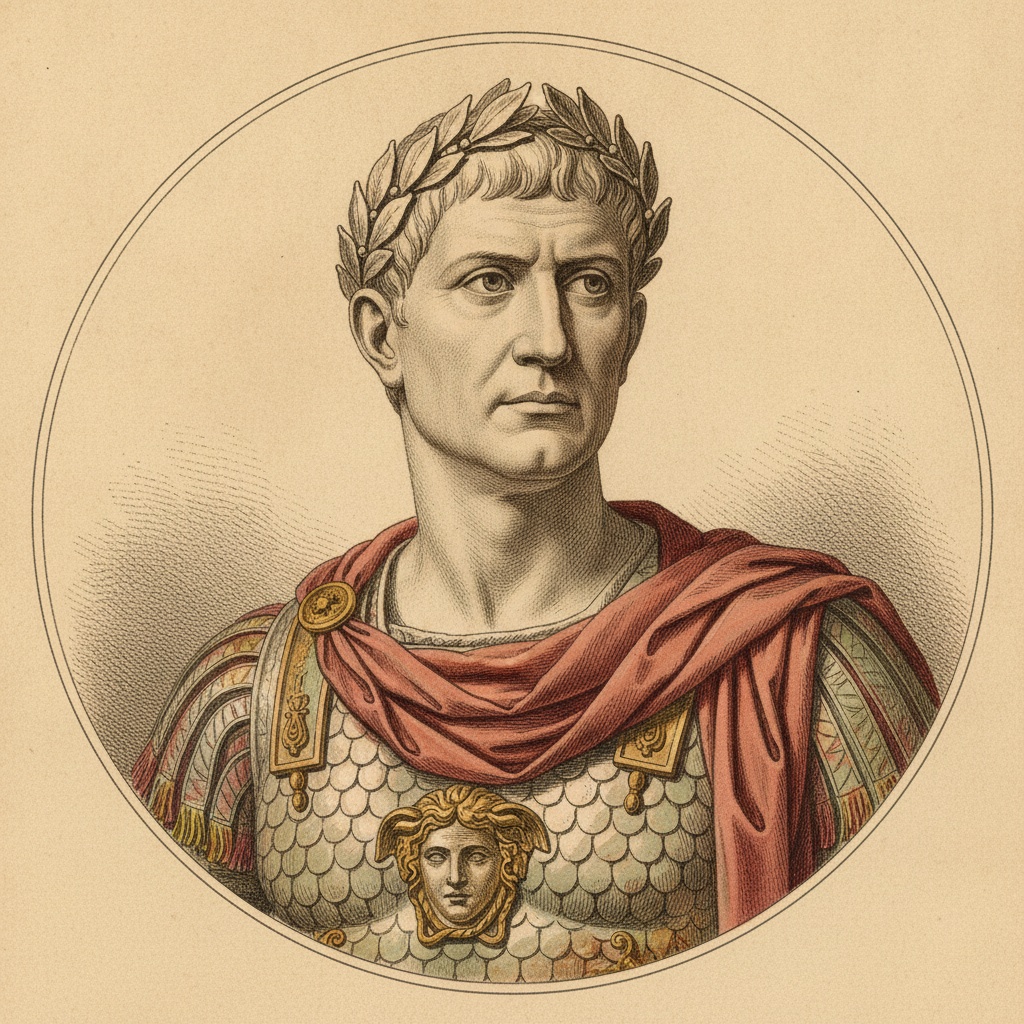 Trajan
The empire at its widest
Trajan dies with Armenia and Mesopotamia briefly annexed. Hadrian gives them up, builds his wall in Britain from 122, and spends his reign inspecting the frontiers.
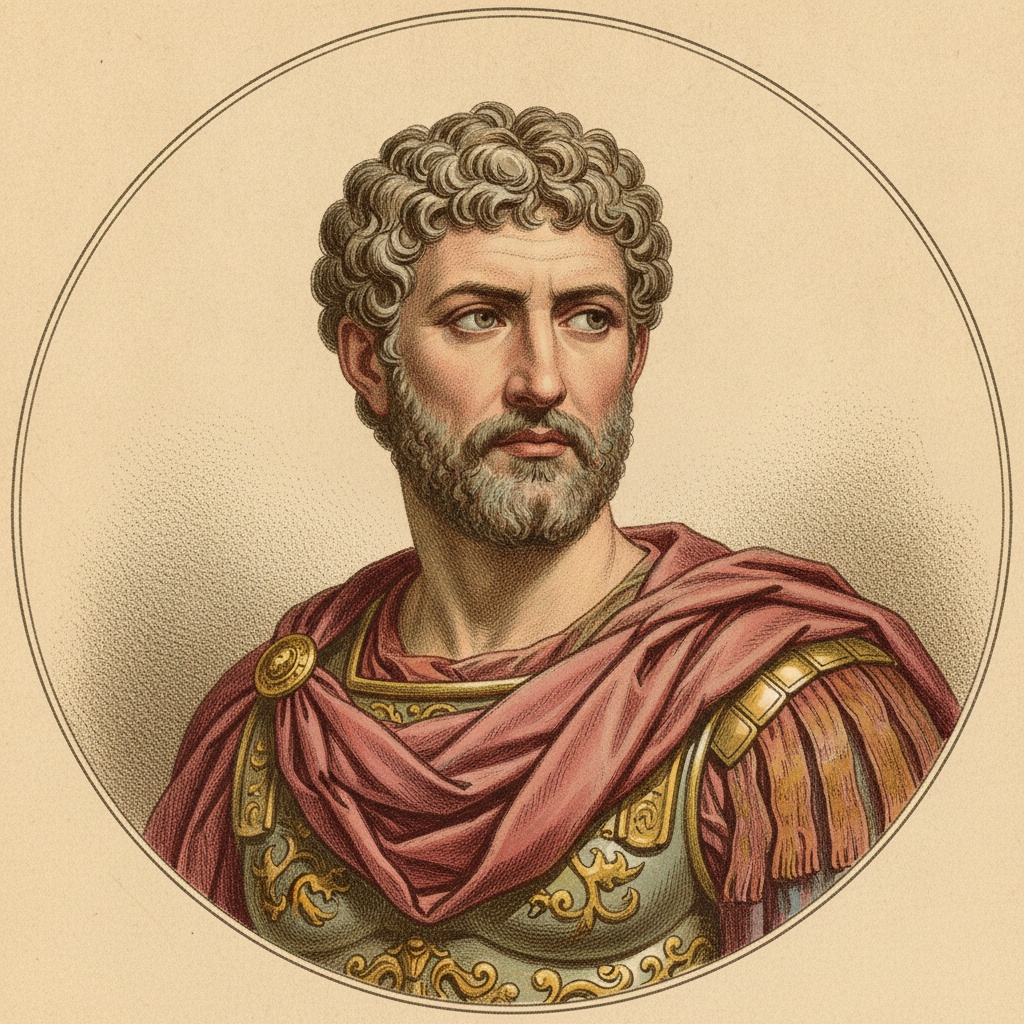 Hadrian
Bar Kokhba
The last Jewish revolt is crushed; Jerusalem is refounded as a Roman colony. Map: Roman arms in Judaea.
Plague and the Marcomannic wars
Troops returning from Parthia bring an epidemic that recurs for years. Marcus Aurelius spends the rest of his reign on the Danube and dies there in 180, leaving the empire to his son.
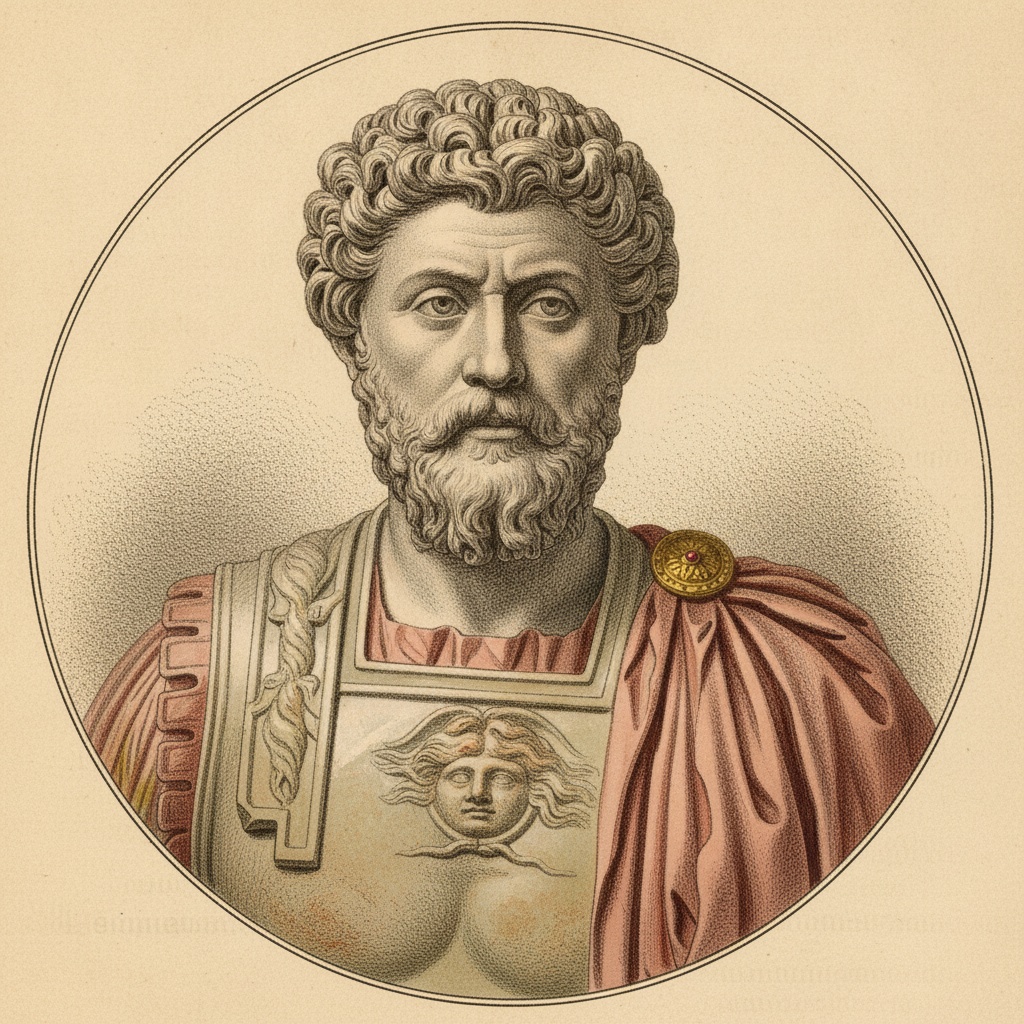 Marcus Aurelius
Commodus murdered
The end of the Antonine peace. Five men claim the throne in 193; Septimius Severus, commander in Pannonia, wins and founds a military dynasty. Provinces held and lost, 192–700.
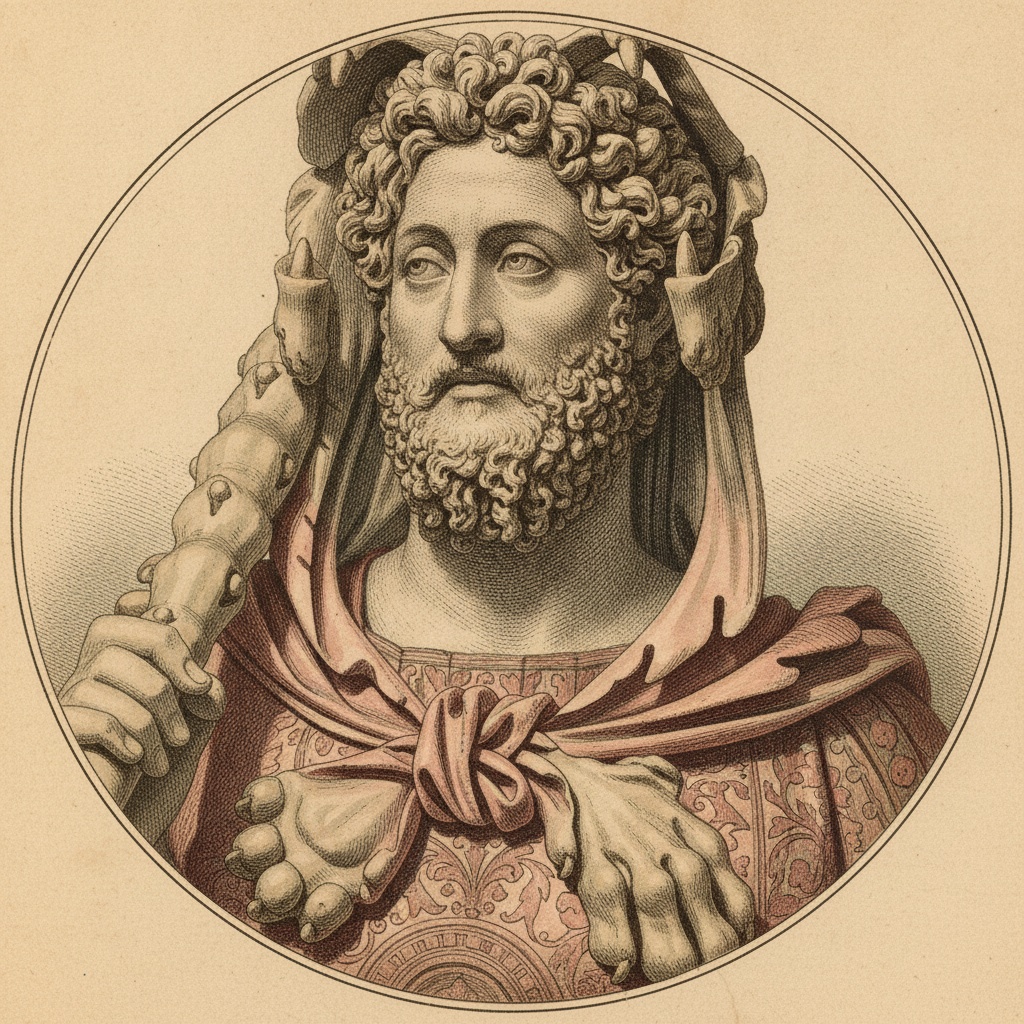 Commodus
 Claudius
VIICrisis and recovery
A.D. 193–395The third century nearly ends the empire; the soldier-emperors of Illyricum save it. Diocletian and Constantine rebuild it as a different state, Christian and centred on the East.
Citizenship for all free inhabitants
Caracalla's edict makes nearly every free man in the empire a Roman citizen. Cassius Dio thought it was done for the inheritance tax.
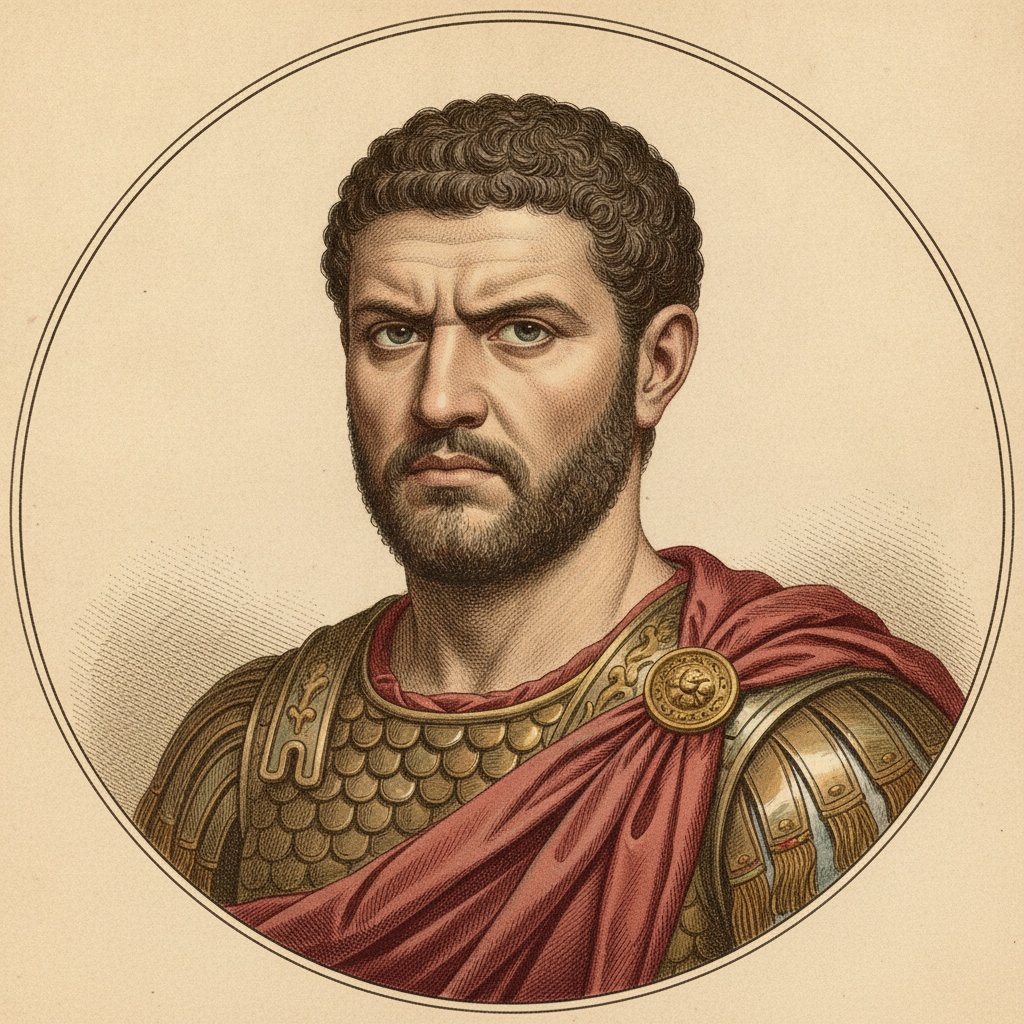 Caracalla
The Sasanian revival of Persia
Ardashir overthrows the Parthians. His son Shapur I will defeat three Roman emperors and capture one.
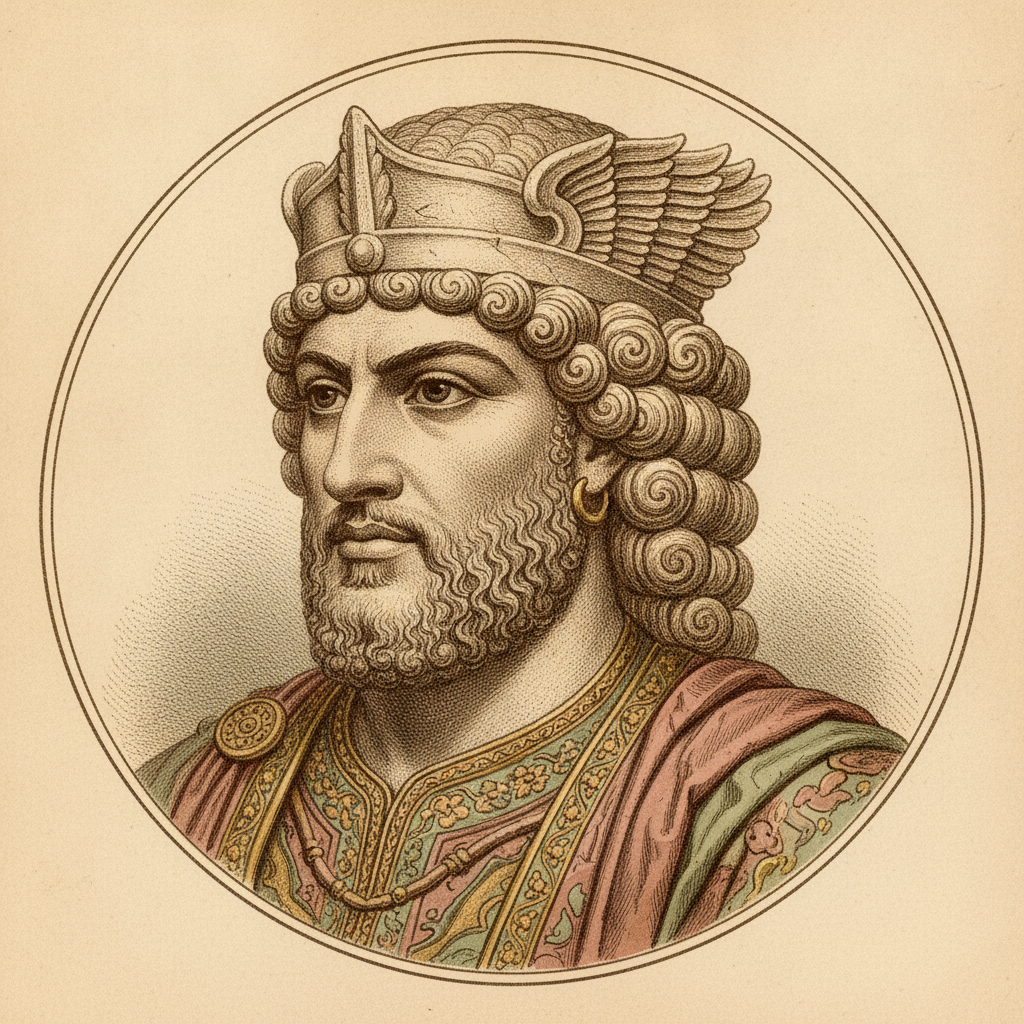 Shapur I
The crisis of the third century
Fifty years, some twenty emperors, most killed by their own troops. Decius falls to the Goths in 251; Valerian is captured by Shapur in 260; Gaul and Palmyra break away. The coinage collapses.
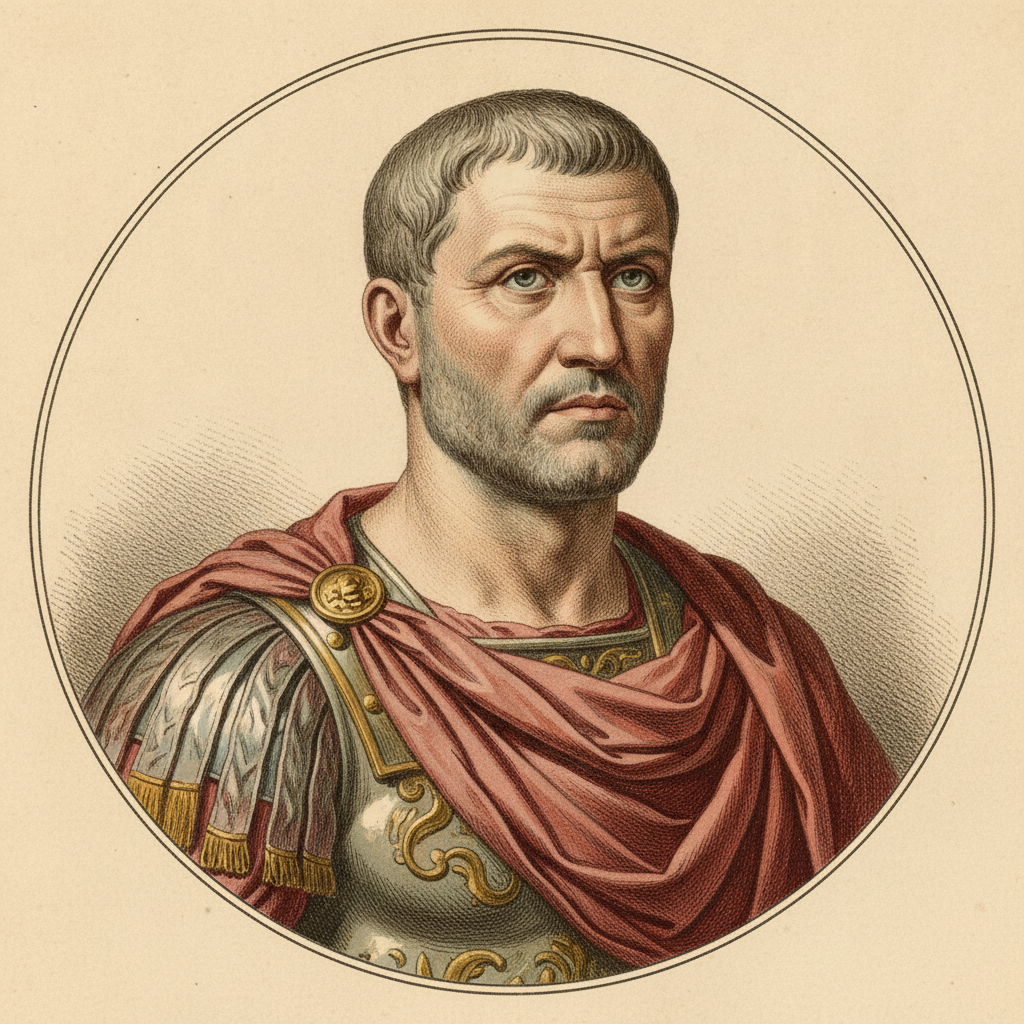 Maximinus Thrax
Aurelian restores the empire
In five years Aurelian abandons Dacia, walls Rome, and recovers Palmyra and Gaul. Murdered by his officers. Chapter XXIV.
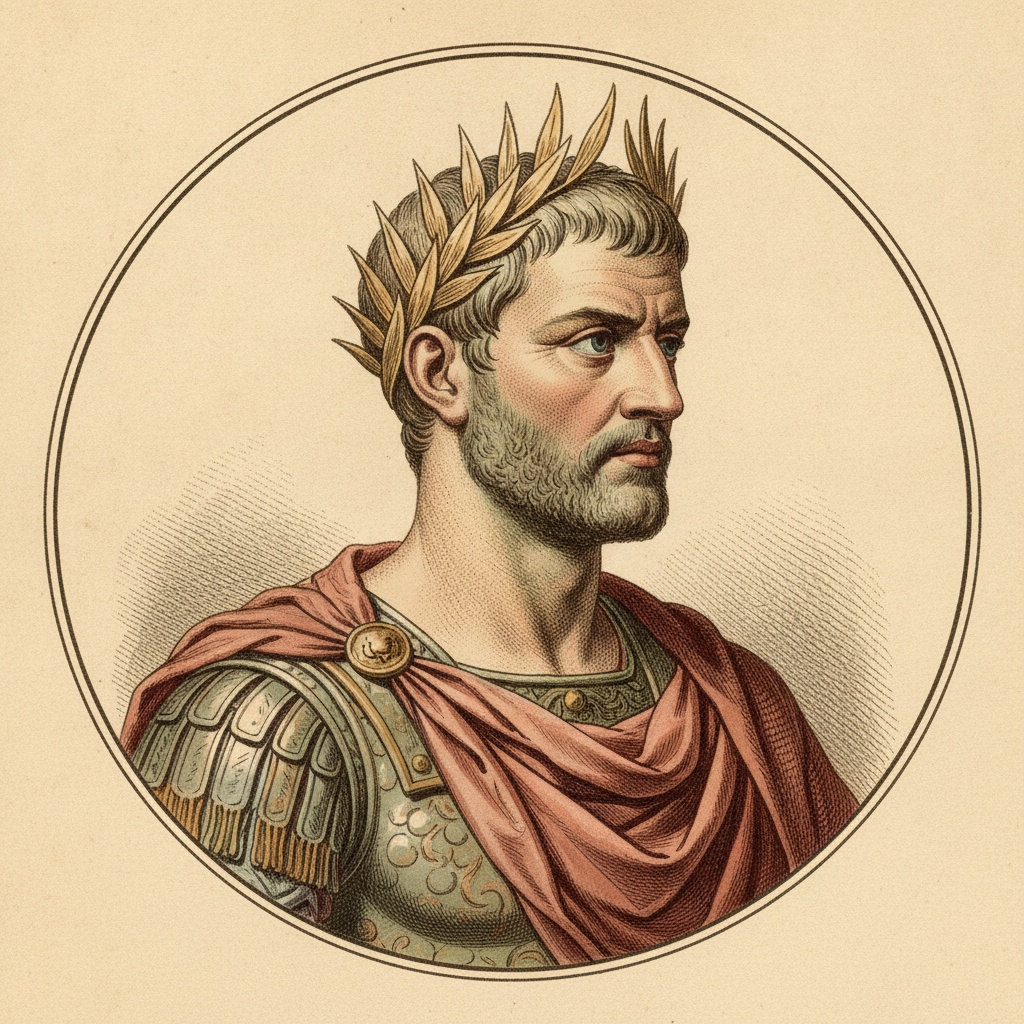 Aurelian
Diocletian
Four emperors, a hundred small provinces, an army doubled, taxes assessed by census, prices fixed by edict (301), Christians persecuted (303). Then, uniquely, he retires. Chapter XXV.
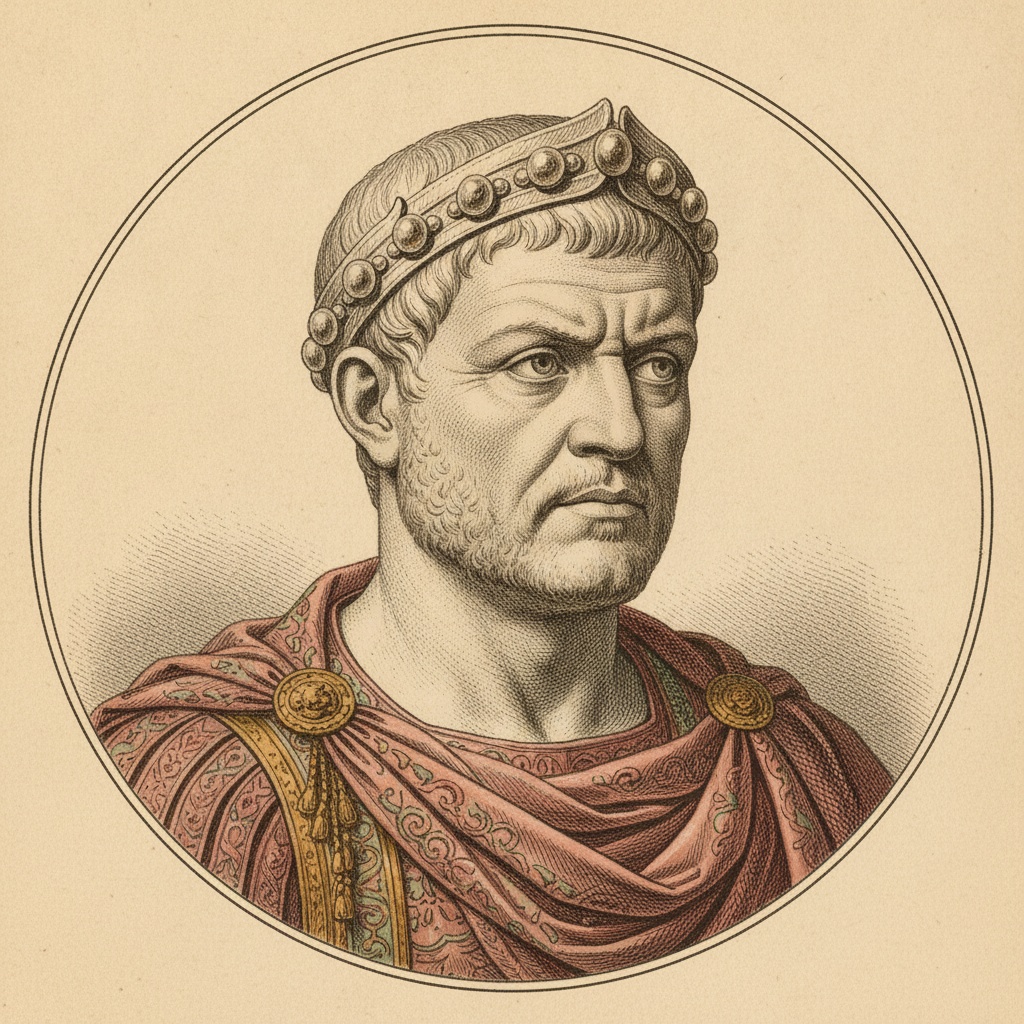 Diocletian
The Milvian Bridge
Constantine wins Italy at the gates of Rome, under a sign Eusebius and Lactantius describe differently. The next year he and Licinius grant Christians freedom of worship.
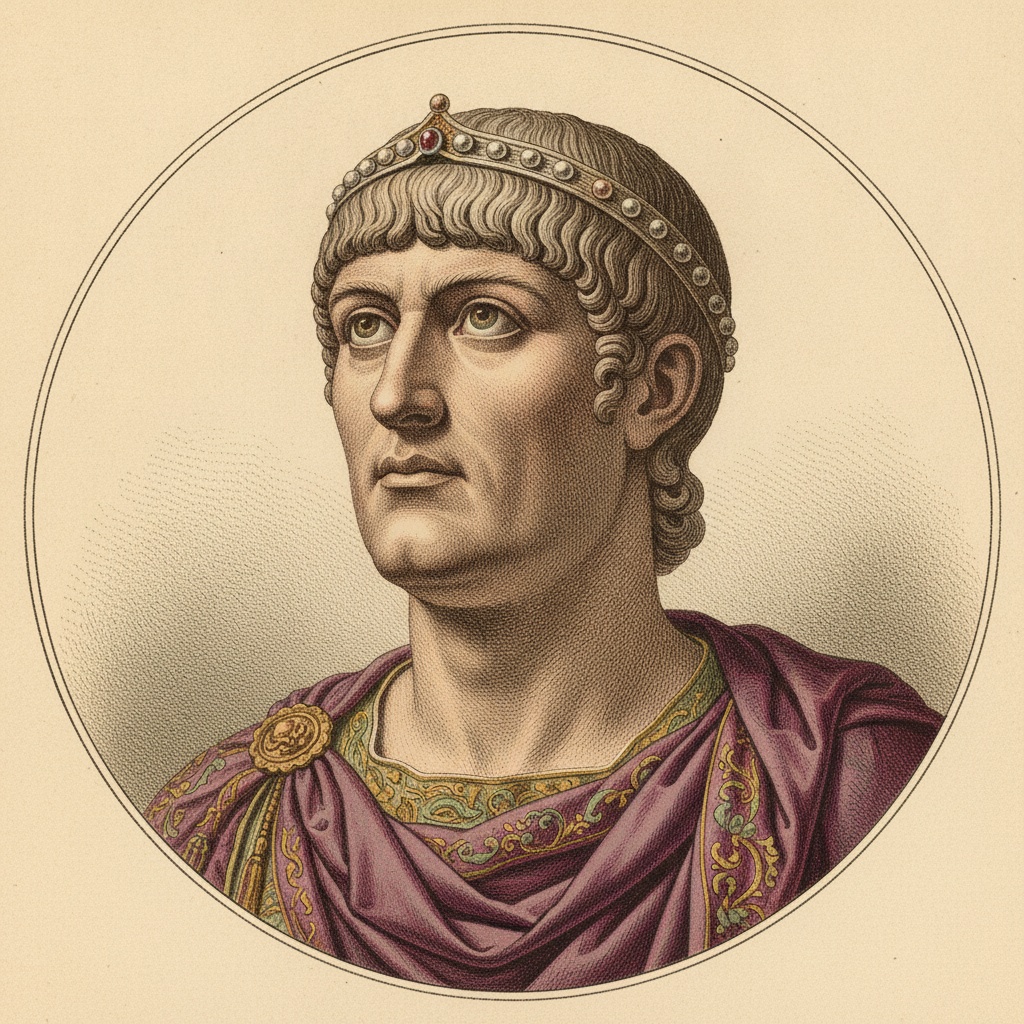 Constantine
Nicaea and Constantinople
Constantine presides over the first general council of the Church, then dedicates a new capital on the Bosporus. The centre of the empire has moved east for good.
Julian
The last pagan emperor tries to revive the old cults and dies invading Persia after nineteen months.
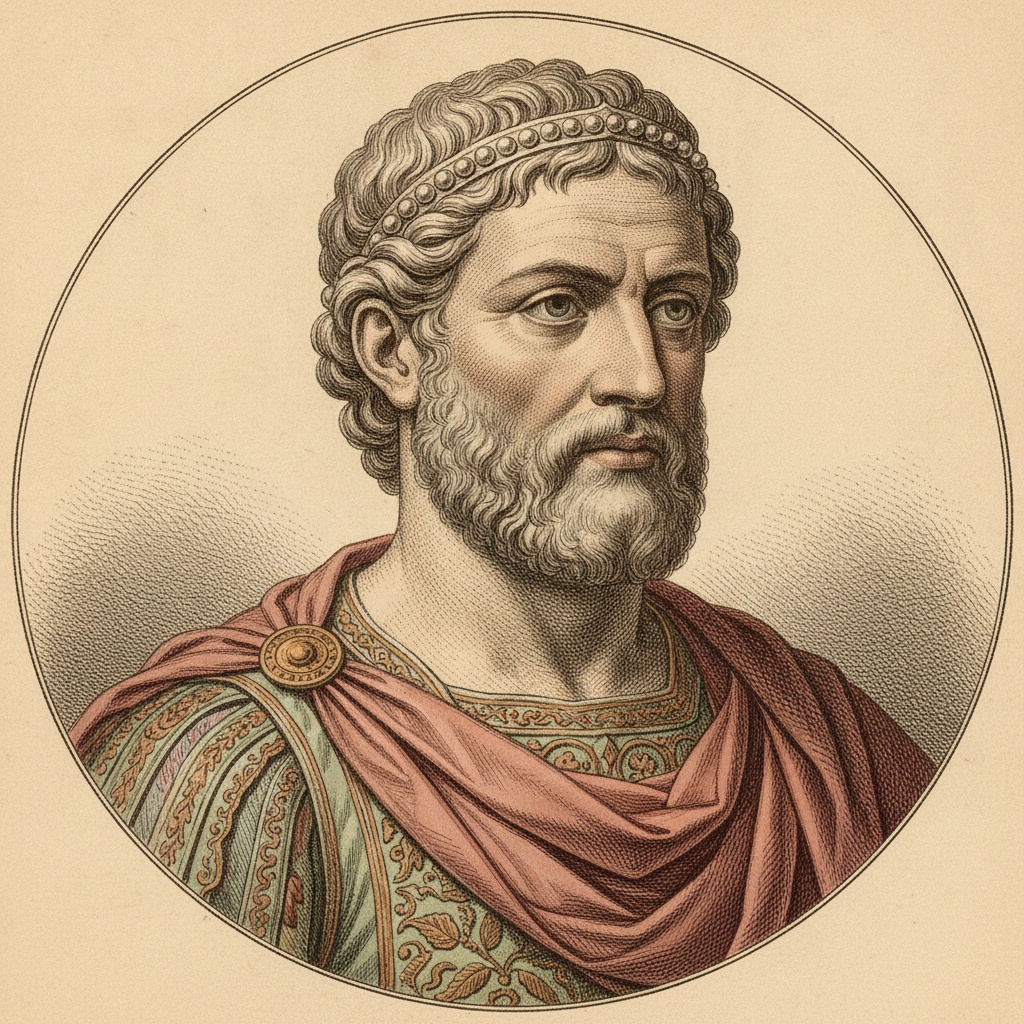 Julian
Adrianople
Goths fleeing the Huns are admitted across the Danube, mistreated, and rise. At Adrianople they destroy the eastern field army and kill the emperor Valens. Chapter XXVI.
Theodosius
Nicene Christianity becomes the religion of the state; the pagan temples are closed. At his death in 395 the empire is divided between his two young sons, and it is never reunited.
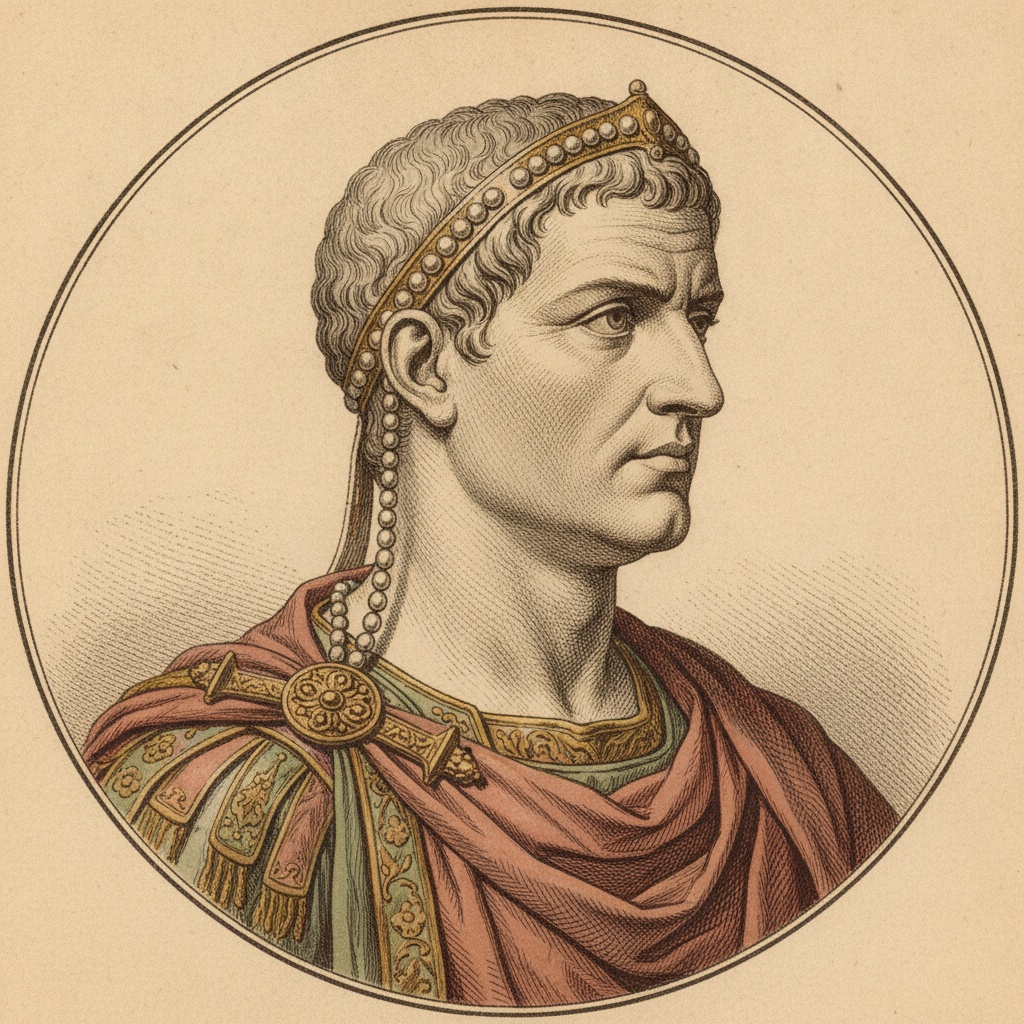 Theodosius
VIIIThe fall of the West
A.D. 395–476Eighty years in which the western government loses its provinces one by one to peoples it had let inside, until there is nothing left to govern.
The Rhine crossing
Vandals, Alans and Sueves cross the frozen river into Gaul. Britain is abandoned to its own defence within a few years.
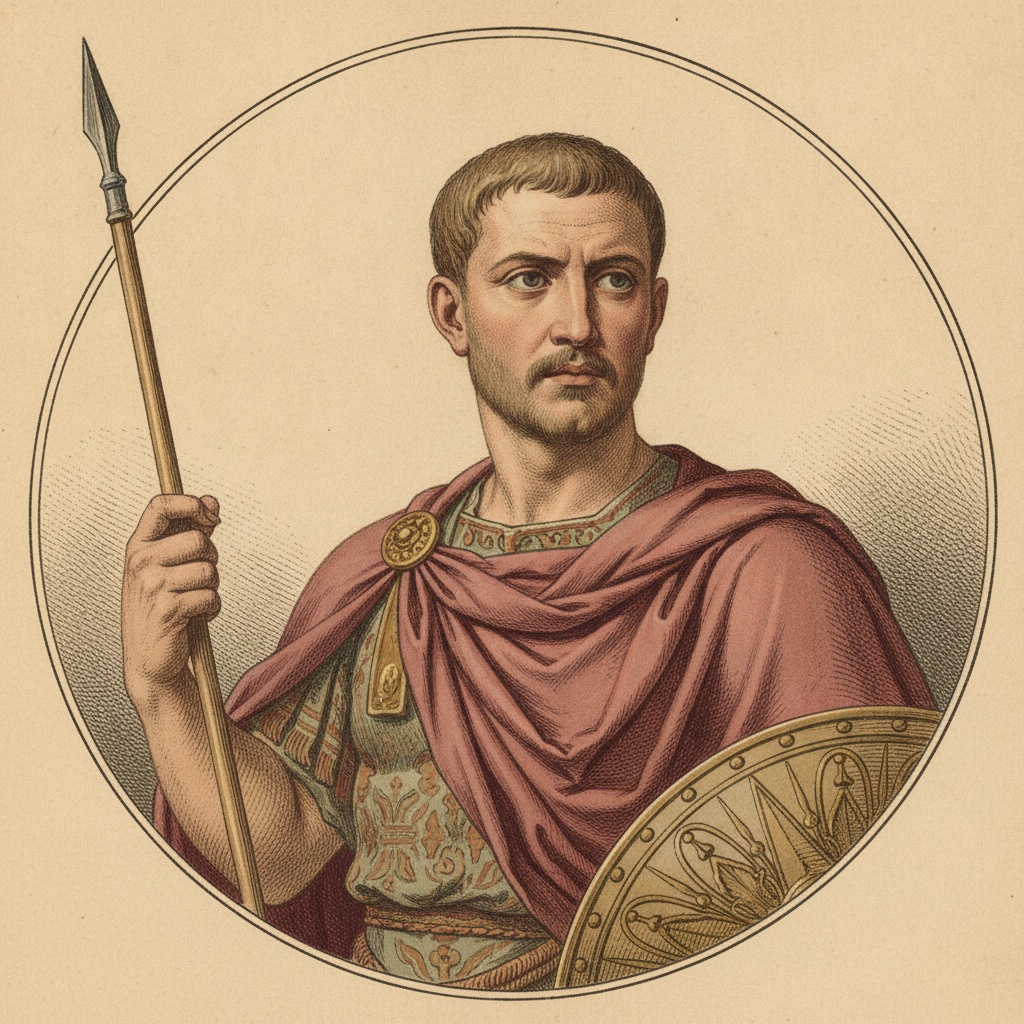 Stilicho
Alaric sacks Rome
The Visigoths enter the city for three days, the first foreign army since Brennus eight centuries before. Jerome in Bethlehem said his voice failed him at the news. Map: the invasions.
The Vandals take Africa
Gaiseric crosses from Spain and takes Carthage in 439. Rome loses the grain and taxes of its richest western province.
Attila
Aetius, with Visigothic allies, halts the Huns at the Catalaunian Plains. Attila raids Italy the next year and dies in 453; his empire dissolves at once.
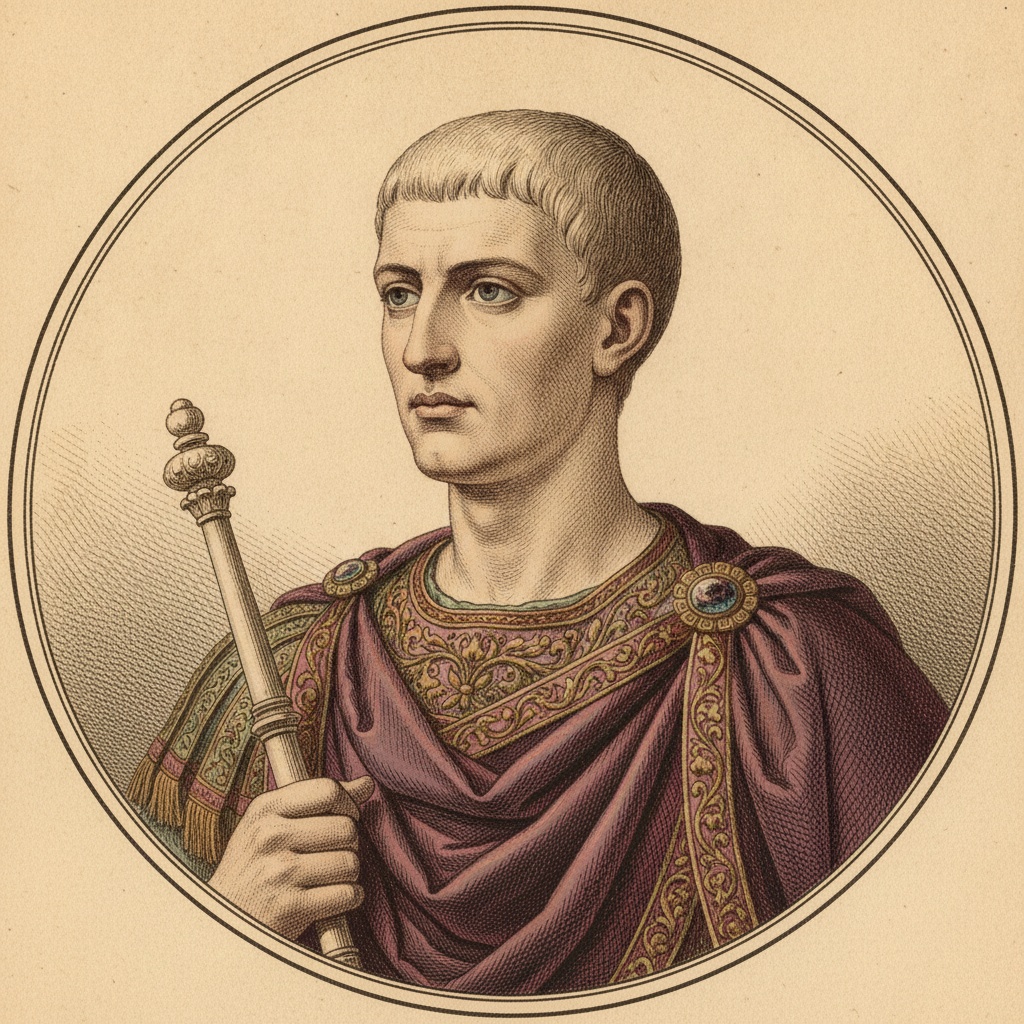 Aetius
The last western emperor deposed
Odoacer, commander of the barbarian troops in Italy, removes the boy Romulus Augustulus and sends the imperial insignia to Constantinople. No one at the time called it the end of anything. Peoples and nations after 476.
IXJustinian, Islam and the Franks
A.D. 476–814The East tries to take the West back and nearly succeeds; then Islam takes half of the East. In the ruins of Gaul the Franks build the kingdom that will crown itself an empire.
Theodoric rules Italy
The Ostrogothic king kills Odoacer at a banquet in Ravenna and governs Italy for thirty years with Roman ministers and Roman law.
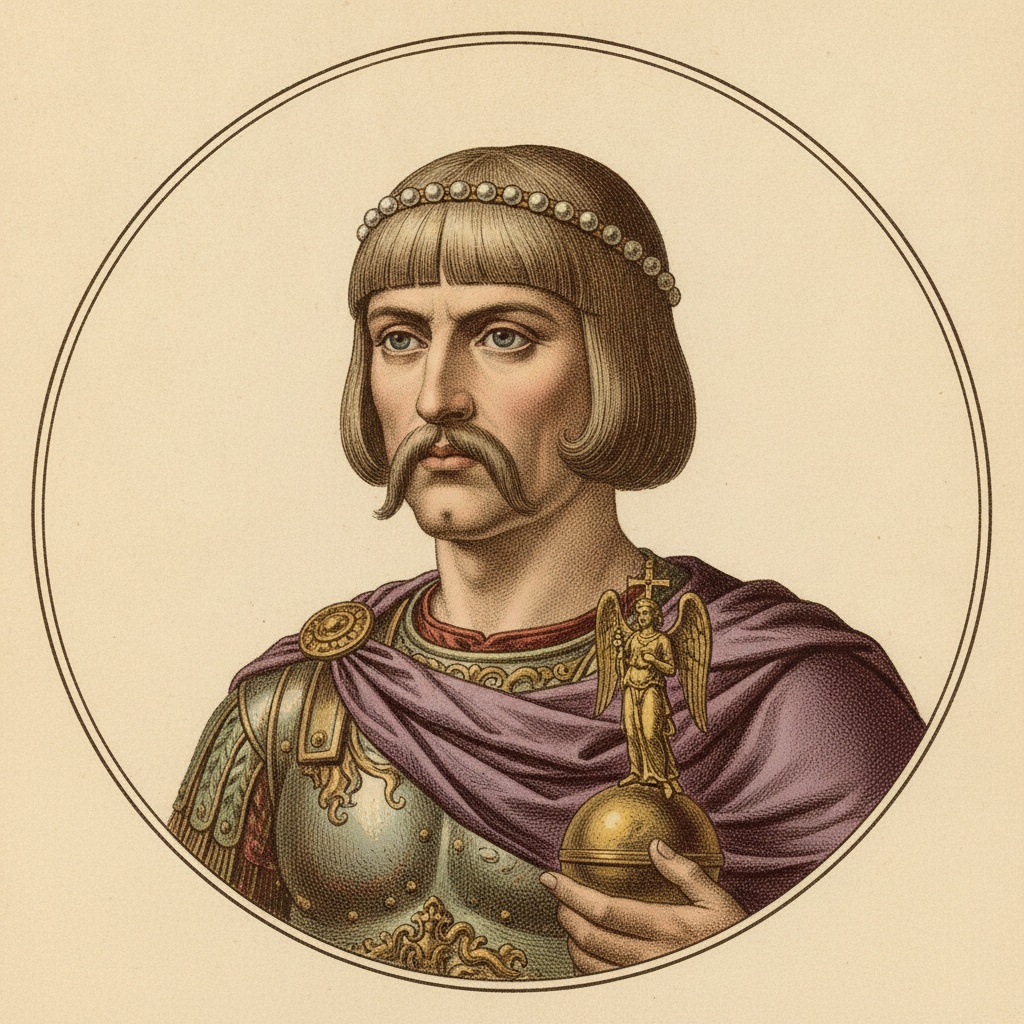 Theodoric
Clovis and the Franks
Clovis unites the Franks, accepts Catholic baptism, and at Vouillé in 507 drives the Visigoths out of most of Gaul. The Merovingian kingdom will last two and a half centuries.
Justinian
Roman law is codified in the Digest and Code (529–534), the Nika riot nearly costs him the throne (532), Hagia Sophia rises (537), and plague strikes in 541. Chapter XXVII.
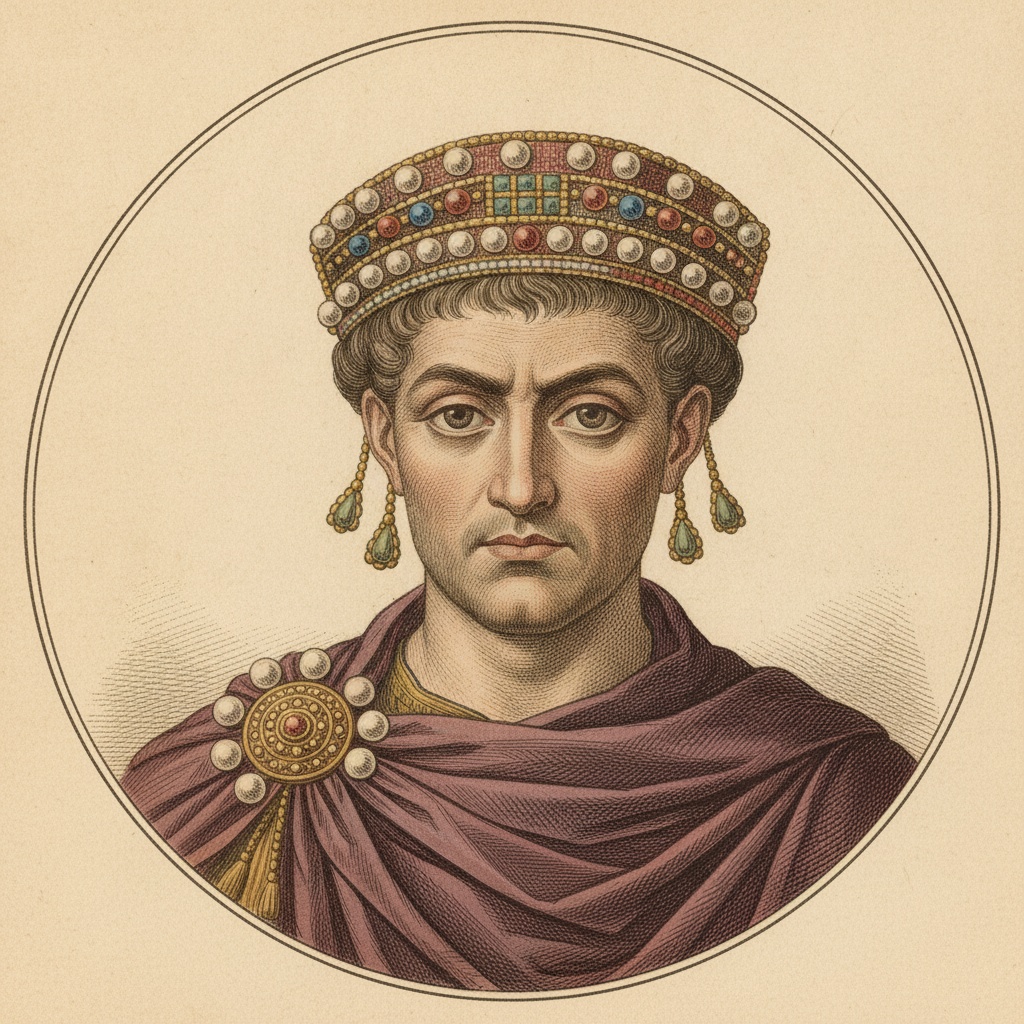 Justinian
Belisarius and the reconquest
Vandal Africa falls in a single year; Ostrogothic Italy takes twenty and is left in ruins. Spain's coast follows. The Mediterranean is a Roman lake once more, briefly.
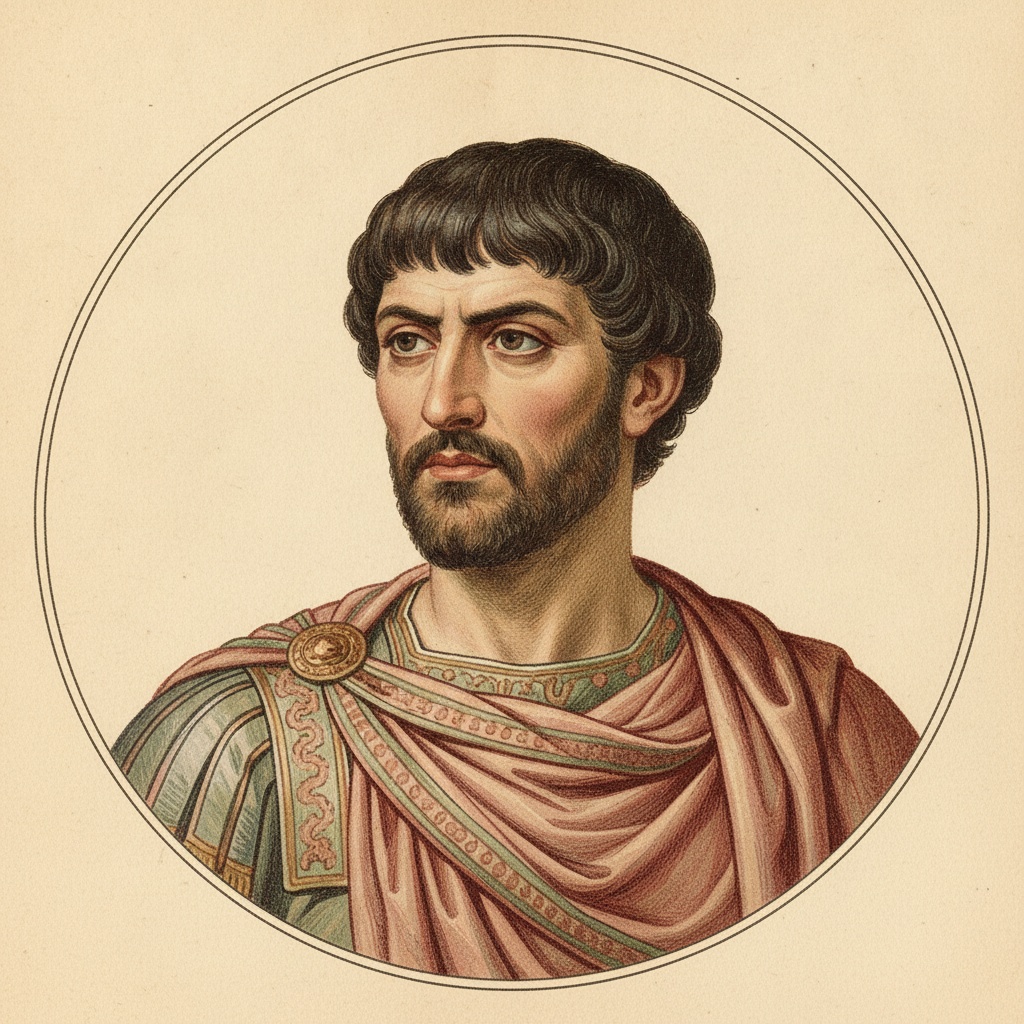 Belisarius
The Lombards enter Italy
Three years after Justinian's death a new people takes the Po valley and much of the interior. Italy is divided between Lombard dukes and imperial Ravenna for two centuries.
Gregory the Great
A Roman senator turned monk governs the Church, feeds the city, negotiates with the Lombards, and sends a mission to the English. The papacy begins to act as a state.
The Hijra
Muhammad moves from Mecca to Medina, the year from which the Islamic calendar counts. The same year Heraclius begins the campaigns that will destroy Sasanian Persia by 628.
The Arab conquests
The Roman army is destroyed at the Yarmuk (636); Jerusalem, Syria, Egypt (642) and all of Persia (651) are lost within a generation. The empire keeps Anatolia and the sea.
Constantinople besieged
Two Arab sieges fail against the walls, the fleet and Greek fire. The second, 717–718, is often reckoned the turning point that saved the eastern empire.
The Arabs cross into Spain
The Visigothic kingdom collapses after one battle. Within a decade Muslim rule reaches the Pyrenees.
Tours
Charles Martel, mayor of the palace, defeats an Arab raiding army between Tours and Poitiers. The Carolingian family now rules the Franks in all but name.
Pippin becomes king
With papal approval Pippin deposes the last Merovingian. He then rescues the pope from the Lombards and gives him the lands around Ravenna and Rome: the origin of the Papal States.
Charlemagne's wars
The Lombard kingdom taken (774), the disaster at Roncevaux (778), the Avars destroyed, and thirty years of war to conquer and baptise the Saxons. Chapter XXX.
Crowned emperor at Rome
Pope Leo III crowns Charlemagne in St Peter's. Einhard claimed the king would not have entered the church had he known what was intended; historians have argued about that sentence ever since.
Charlemagne dies at Aachen
Buried in his palace chapel. His empire stretches from the Ebro to the Elbe; within thirty years his grandsons divide it. The timeline ends here, where the atlas's medieval chapters begin.